
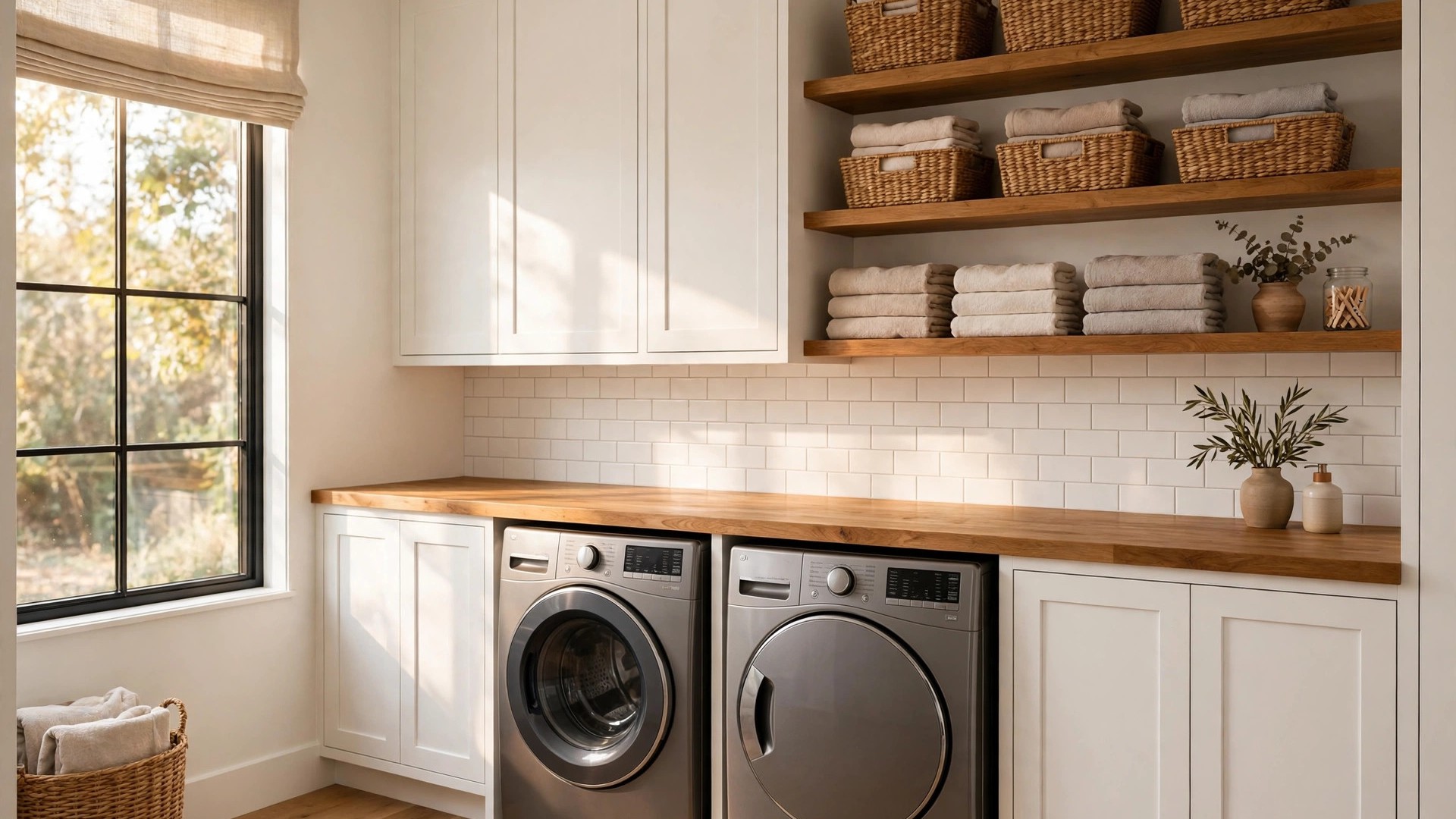

Few rooms work as hard — or get as little love — as the laundry room. A thoughtful laundry room makeover turns a purely functional corner into a space that actually makes the chore feel lighter. Whether you are working with a dedicated room, a hallway closet, or a basement corner, the same principles apply: plan the layout around how you really sort, wash, dry, and fold, then layer in storage and finishes that make the room pleasant to stand in.
This guide covers what a makeover involves at every budget level, the layout rules that matter most, and the details — counters, shelves, lighting, and flooring — that separate a pretty laundry room from a practical one. Most projects fall somewhere between a weekend refresh and a full renovation, and both are covered here.
Plan Your Laundry Room Makeover Around the Workflow
Before you pick paint colors, map the laundry workflow in order: drop off dirty clothes, sort, treat stains, wash, dry, fold, and carry away. Every makeover decision gets easier once the path is clear. Keep sorting near the door, the machines side by side or stacked in the middle, folding space within a step or two of the dryer, and finished laundry on a clear path out.
Standard dimensions help the planning:
- Most full-size washers and dryers are about 27 inches wide each, so a side-by-side pair needs roughly 54 inches of wall, plus an inch or so of breathing room.
- Front-loading machines stand about 38 to 39 inches tall, which is why countertops above them land near comfortable folding height.
- Leave at least 4 feet of open floor in front of the machines when you can, so doors open fully and baskets have somewhere to sit.
- A utility sink needs roughly 24 inches of cabinet width and is easiest to use right beside the washer.
If storage is your biggest headache, our guide to laundry room shelving goes deep on the shelf, cabinet, and counter combinations that fit above and between machines.
Laundry Room Renovation Ideas by Budget
A laundry room renovation can scale gracefully. Here is how the three common budget tiers usually break down, using typical US price ranges rather than promises.
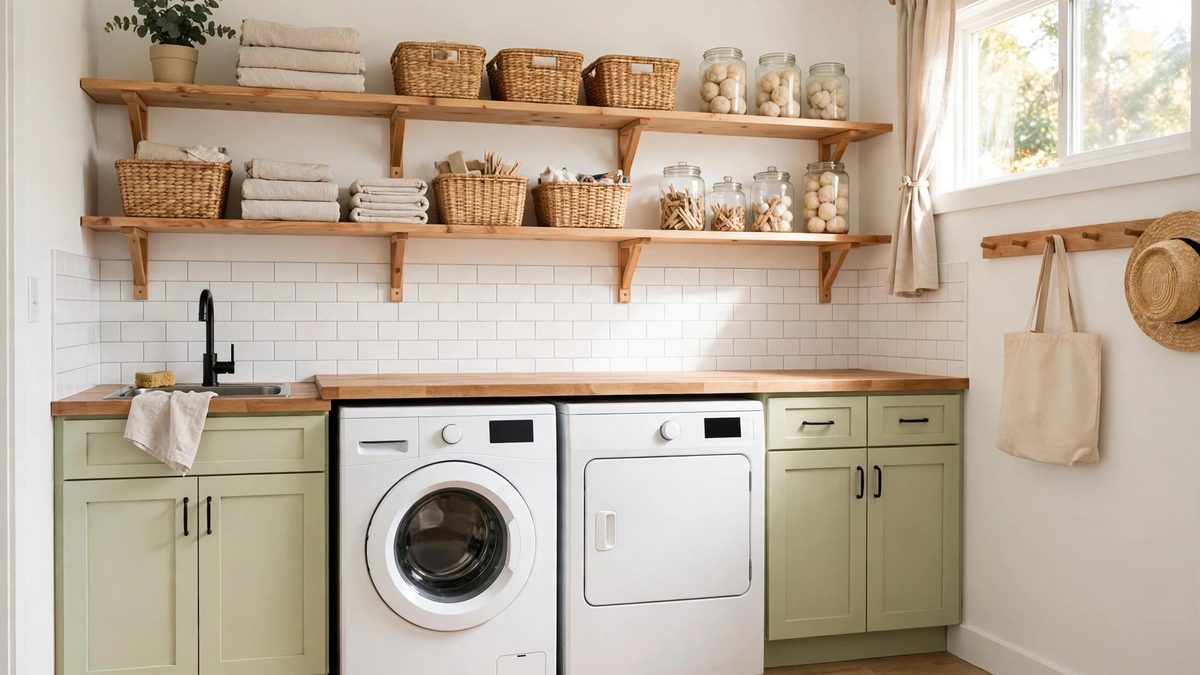
The weekend refresh (typically a few hundred dollars). Paint, a peel-and-stick floor or backsplash, new cabinet hardware, matching jars and baskets, and a fresh light fixture. This tier changes how the room feels without touching plumbing or electrical.
The mid-range makeover (typically $1,500–$5,000). Everything above, plus new upper cabinets or open shelving, a countertop over front-loaders, a new utility sink and faucet, and luxury vinyl plank flooring. Most satisfying laundry makeovers live in this tier because storage and work surfaces are what the room was missing.
The full renovation (typically $5,000 and up). Moving plumbing or electrical, tile floors, custom cabinetry, a built-in folding station, and new machines. At this level, plan the room like a small kitchen: get quotes, expect permits for moved plumbing or electrical in many areas, and sequence the work so flooring goes in before cabinets.
Whichever tier you choose, reserve about 10 percent of the budget for surprises — laundry rooms hide corroded shut-off valves and tired drain lines more often than most rooms.
Layouts That Work: Side-by-Side, Stacked, and Closet Setups
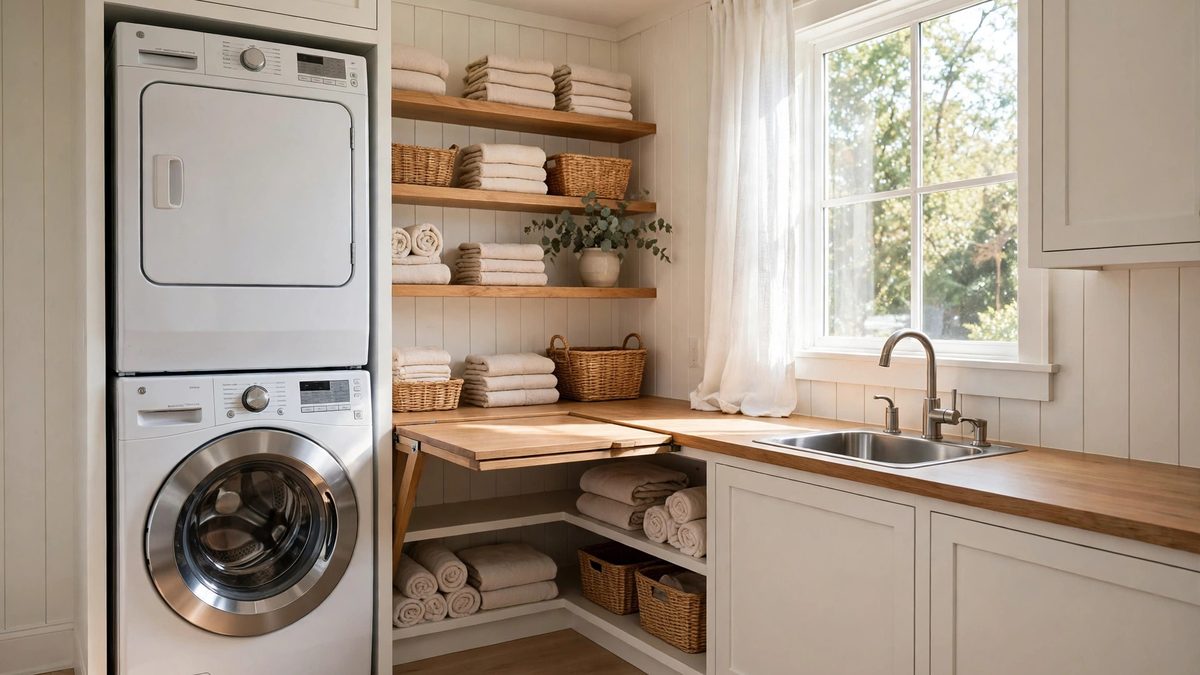
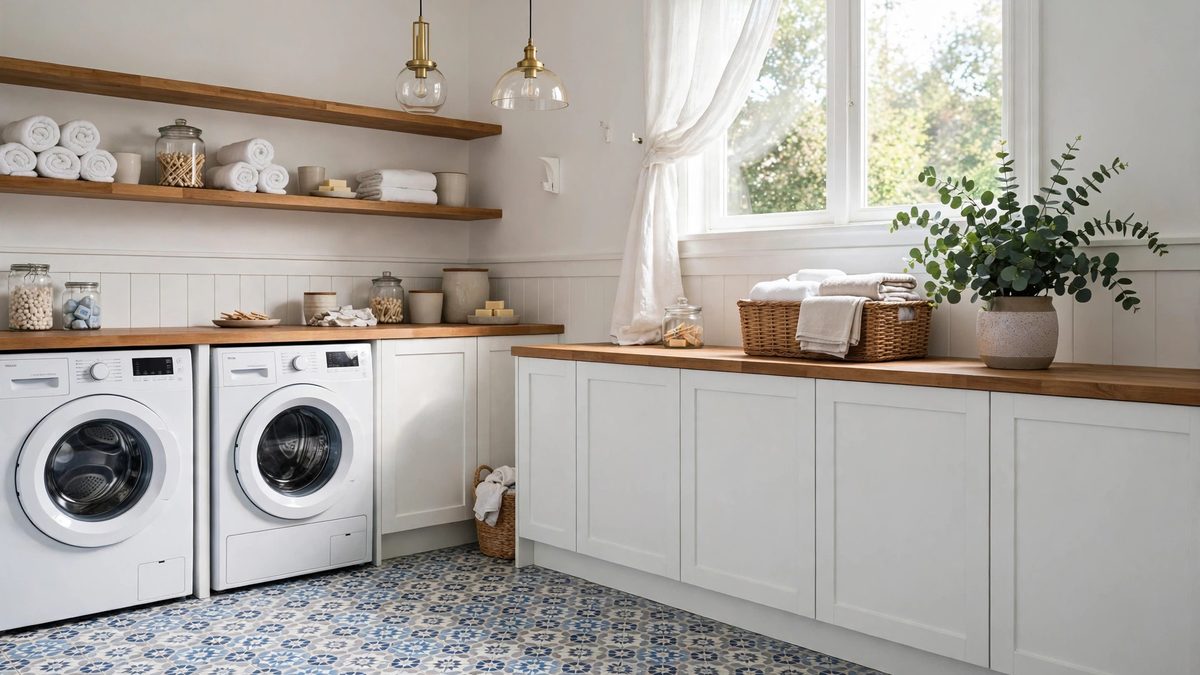
Side-by-side machines under a counter remain the most popular layout because the counter doubles as a folding table and the wall above can hold cabinets or shelves. Stacked machines free up floor space for a sink, a tall cabinet, or a drying rack, which makes them the go-to in closets and small rooms. Galley layouts, with machines on one wall and storage on the other, suit narrow rooms as long as you keep about 36 to 42 inches of walkway between the two sides.
A few layout rules apply everywhere:
- Put the washer on the side closest to the sink so hoses and transfers stay short.
- Raise front-loaders on pedestals only if you skip the counter; pedestals and countertops solve the same bending problem differently.
- Vent the dryer with the shortest, straightest run you can manage — long, kinked vents dry slowly and are a maintenance headache.
- If the laundry shares space with a water heater or furnace, leave the clearances the appliance manuals call for. Crowding mechanicals is the one makeover shortcut to avoid.
Laundry Room Ideas Top Loader Owners Need
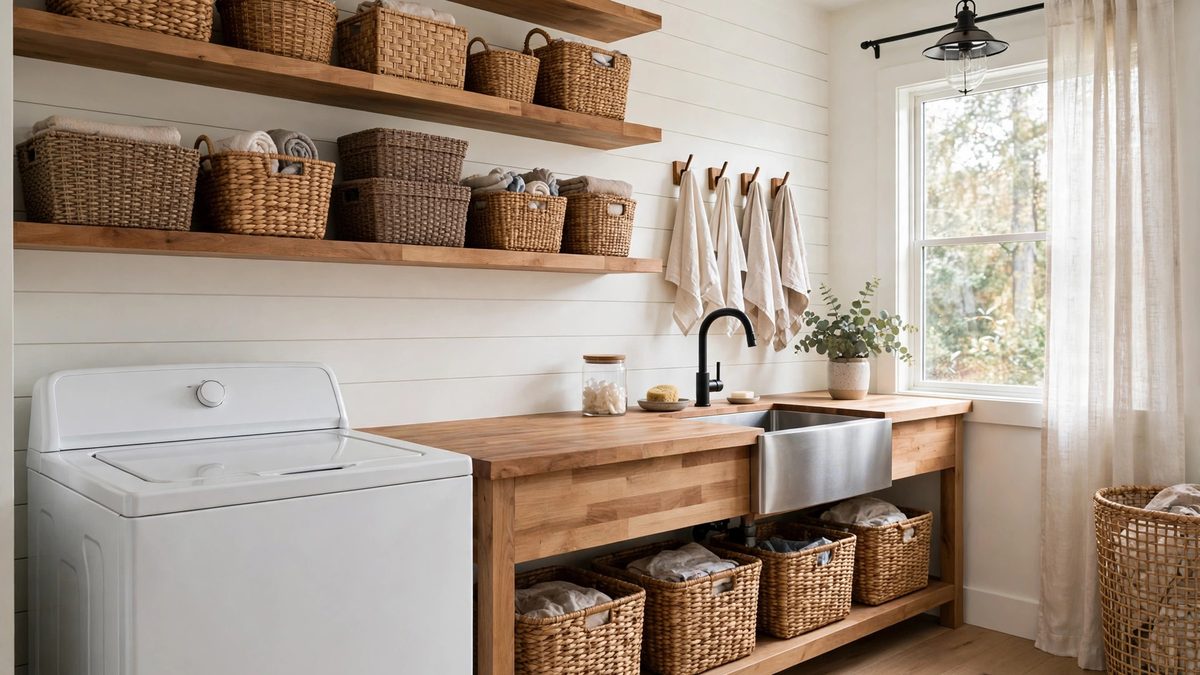
Top-loading washers are still the most common machines in American homes, and they change the makeover math. The lid needs to swing fully open — typically the open lid reaches around 52 to 57 inches high — so the countertop-over-the-machines trick does not work, and low shelves directly above the washer will block the lid or get bumped daily.
Smart top-loader-friendly ideas include:
- A folding table beside the machines instead of above them: a freestanding table or wall-mounted drop-leaf at about 36 inches high gives you the same folding surface without fighting the lid.
- High cabinets or a tall shelf mounted so its bottom clears the open lid comfortably; measure your own lid at its highest point and add a few inches.
- A rolling cart in the gap between washer and dryer or beside them, holding detergent and stain supplies at grab height.
- Wall-mounted drying racks on the opposite wall, where dripping delicates will not rain on the machine tops.
None of this makes a top-loader room second-class — it just means the vertical space plan differs from the front-loader photos that dominate social media.
Storage, Counters, and Surfaces That Earn Their Space
The most useful laundry room storage is boring in the best way: a cabinet that hides detergent, a hamper system that pre-sorts the wash, and a surface that is always clear for folding. Open shelves look airy but collect dust in a room full of lint; if you love the look, store things in matching baskets or glass jars so the shelf reads tidy. Closed cabinets cost more and hide everything, which many people prefer.
For counters, butcher block is the warm, budget-friendly classic over front-loaders, while quartz and laminate offer easier wiping. Whatever you choose, add a backsplash or a bead of caulk where the counter meets the wall — laundry rooms splash. A hanging rod under a cabinet or shelf is a five-minute upgrade with outsized value: shirts can drip-dry on hangers and come off the dryer straight onto the rod.
Small spaces respond to the same logic as the rest of the house, and many of the principles in our small room decor ideas — vertical storage, light colors, multi-use pieces — translate directly to a compact laundry.
Flooring, Lighting, and Finishing Touches
Laundry floors must tolerate water. Luxury vinyl plank and tile are the two most forgiving choices; both handle drips, detergent spills, and the occasional hose leak better than laminate or hardwood. Sheet vinyl is the budget champion and has no grout lines to scrub. Add a washable low-pile runner in front of the machines for comfort during long folding sessions.
It helps to remember this little room earned its upgrades: as the Wikipedia history of laundry shows, wash day once consumed an entire day of hauling and heating water by hand — a dedicated, pleasant room is a historically recent luxury.
Lighting is the most underrated makeover element. One bare ceiling bulb leaves the sorting corner in shadow. A bright flush-mount fixture (around 3000K to 4000K so whites look white, not yellow), plus a small task light or under-cabinet strip near the sink and folding area, makes stains visible before they go through the wash. Finish with the touches that make the room feel finished: framed prints, a clock, matching hampers, and a door that closes on the mess when guests arrive.
Our broader bathroom renovation guide covers the same wet-room planning — waterproof flooring, sequencing trades, and budgeting for surprises — and most of it applies to laundry renovations too, since both are small, plumbed, hard-working spaces.
Mistakes to Avoid in a Laundry Room Makeover
- Blocking access to shut-offs and the drain. Panels and cabinets must open; valves must stay reachable.
- Forgetting the lint factor. Open shelving and dark grout show lint and dust faster than in any other room.
- Skipping a floor drain pan. A washer pan with a drain is cheap insurance, especially on an upper floor.
- Choosing style over clearance. Measure machine doors, lid swing, and your own laundry baskets before ordering pretty storage.
- Under-lighting the room. Stains missed in dim light set permanently in the dryer.
Frequently Asked Questions
How much does a laundry room makeover cost?
A cosmetic refresh — paint, hardware, storage, and lighting — typically runs a few hundred dollars. A mid-range makeover with cabinets, a countertop, and new flooring commonly lands between $1,500 and $5,000, while full renovations with moved plumbing can exceed $5,000 to $10,000 depending on your area and finishes.
Can I put a countertop over a top-loading washer?
Not directly over the machine, because the lid must open fully. Use a freestanding or wall-mounted folding table beside the machines instead, at about 36 inches high.
What is the best flooring for a laundry room?
Luxury vinyl plank and porcelain tile are the most water-tolerant and durable options. Sheet vinyl is the most affordable. Avoid standard laminate and hardwood where water sits regularly.
Where should shelves go above a top-loading washer?
High enough that the shelf bottom clears the fully open lid with room to spare. Measure your machine’s lid at its highest point and mount the shelf several inches above that.
Should a laundry room makeover include a sink?
If space and plumbing allow, yes. A deep utility sink is the single most-used upgrade for soaking, hand-washing, and treating stains — and it is far cheaper to add during a makeover than later.
Conclusion
A successful laundry room makeover is mostly about respecting the workflow: sort, wash, dry, fold, and store, each with a home within a step or two. Pick the budget tier that matches your house and your patience, plan storage and light as carefully as finishes, and measure your machines before you fall for any inspiration photo. Do that, and wash day gets a little easier every single week.
