
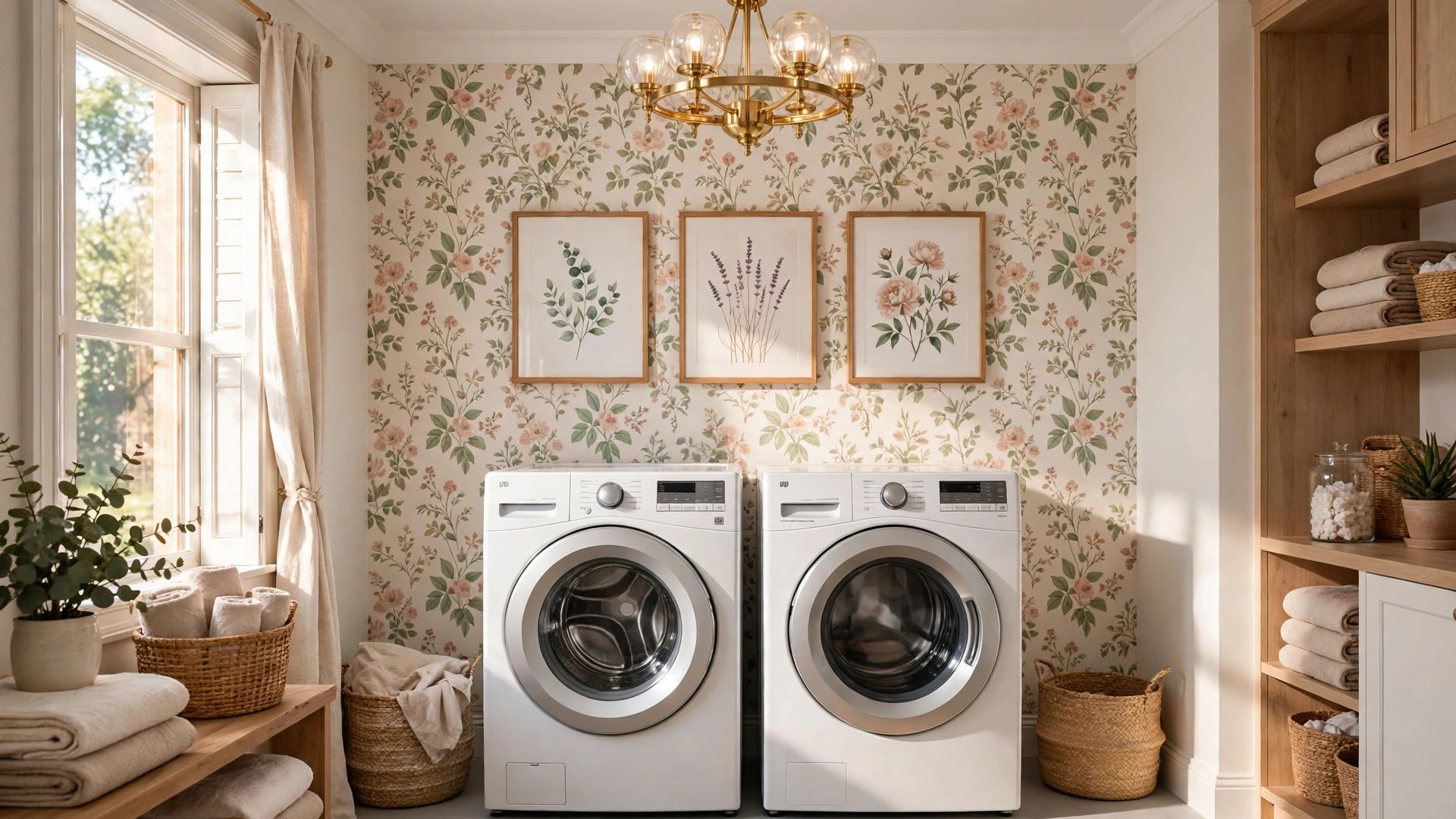

Most laundry rooms are lit by a single tired bulb, and it shows — literally. Stains get missed, whites look dingy, and sorting navy from black becomes guesswork. The right laundry room lighting fixes all of that, and it is one of the cheapest parts of any laundry refresh. Because the room is small, one or two well-chosen fixtures and the right bulb temperature transform how the space works and feels.
This guide covers the fixture types that suit laundry rooms, where to place them, and which bulbs make clothes look true to color. We will also look at the finishing layers — wallpaper and art — that turn a bright laundry room into a genuinely pleasant one, and how lighting and decor choices play together.
Why Laundry Room Lighting Matters More Than You Think
Laundry is a color-judgment task. You are checking whether a stain lifted, whether whites stayed bright, and whether the load you are folding is actually clean. Dim or yellowish light hides all three answers, and heat from the dryer then sets whatever you missed. Bright, neutral light at the machines and the folding surface prevents that expensive mistake.
There is also a mood argument. Laundry rooms are often windowless interior spaces or basement corners, and people spend real time in them every week. A room lit like a closet feels like a chore; a room lit like a small kitchen feels like part of the home. If you are planning a bigger refresh, our laundry room makeover guide shows where lighting fits into the overall budget and sequence.
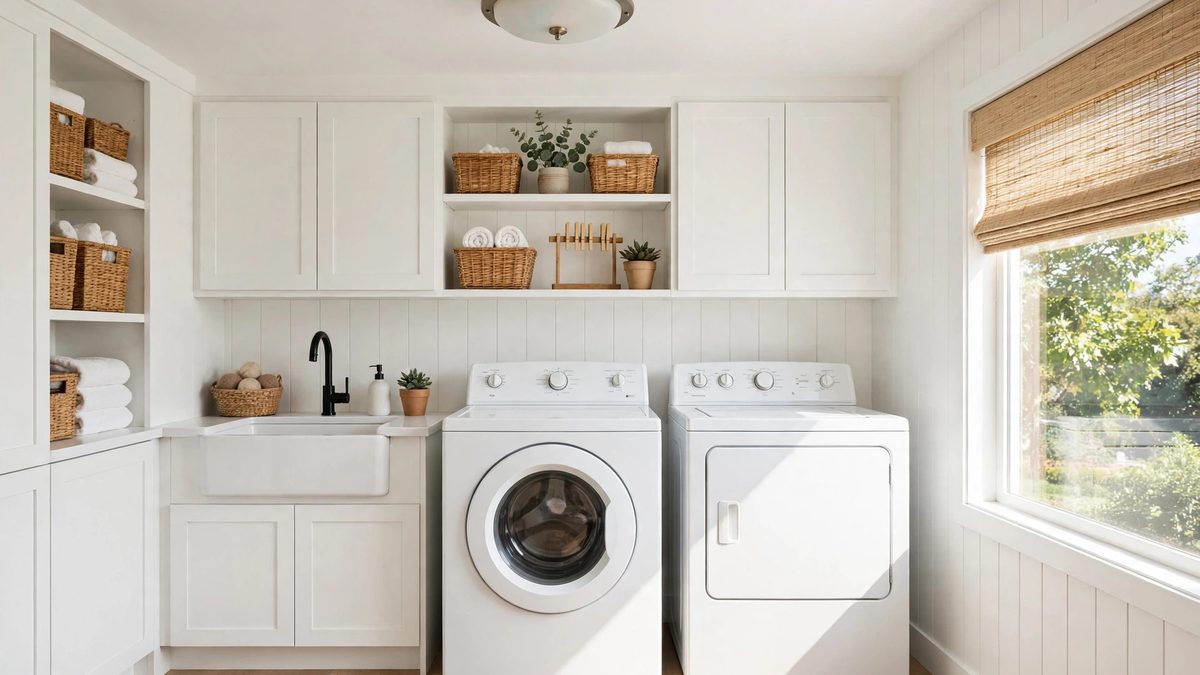
Choose the Right Bulb Temperature and Brightness
Bulbs matter more than fixtures in this room. Here is what to look for:
- Color temperature: Choose bulbs in the 3000K to 4000K range. Below 3000K, light turns yellow and whites look cream; above 4500K, light can feel blue and clinical. Around 3500K to 4000K is the sweet spot where fabrics read true.
- Color rendering (CRI): Look for a CRI of 90 or higher on the package. High-CRI bulbs reveal color differences — that navy sock versus black sock problem — far better than standard bulbs.
- Brightness: A small laundry room typically feels well lit with about 2,000 to 3,000 lumens total across all fixtures. One bright ceiling fixture plus a task light usually gets you there.
- LED everything: LEDs stay cool in a room that already runs warm, use little power, and last for years — important for a fixture you do not want to climb up and change often.
Ceiling Fixtures: The Backbone of the Room
The main ceiling light does most of the work, so choose it deliberately. Flush-mount and semi-flush LED fixtures are the practical standard: they sit close to the ceiling in rooms that are often barely 8 feet tall, spread light evenly, and come in styles from simple discs to schoolhouse and drum shades that actually look decorative.
If your laundry room has a low ceiling and a single central box, a wide, shallow drum fixture softens shadows better than a small dome. In a larger laundry room, two smaller flush mounts — or recessed lights spaced over the machines and the folding area — beat one central fixture, because your own body will not cast a shadow over the work. Track lighting is a flexible middle ground in a room with one junction box: aim one head at the machines, one at the sink, and one at the folding counter. For background on how fixture styles and terms work, the Wikipedia overview of lighting is a solid primer on the vocabulary you will see on packaging.
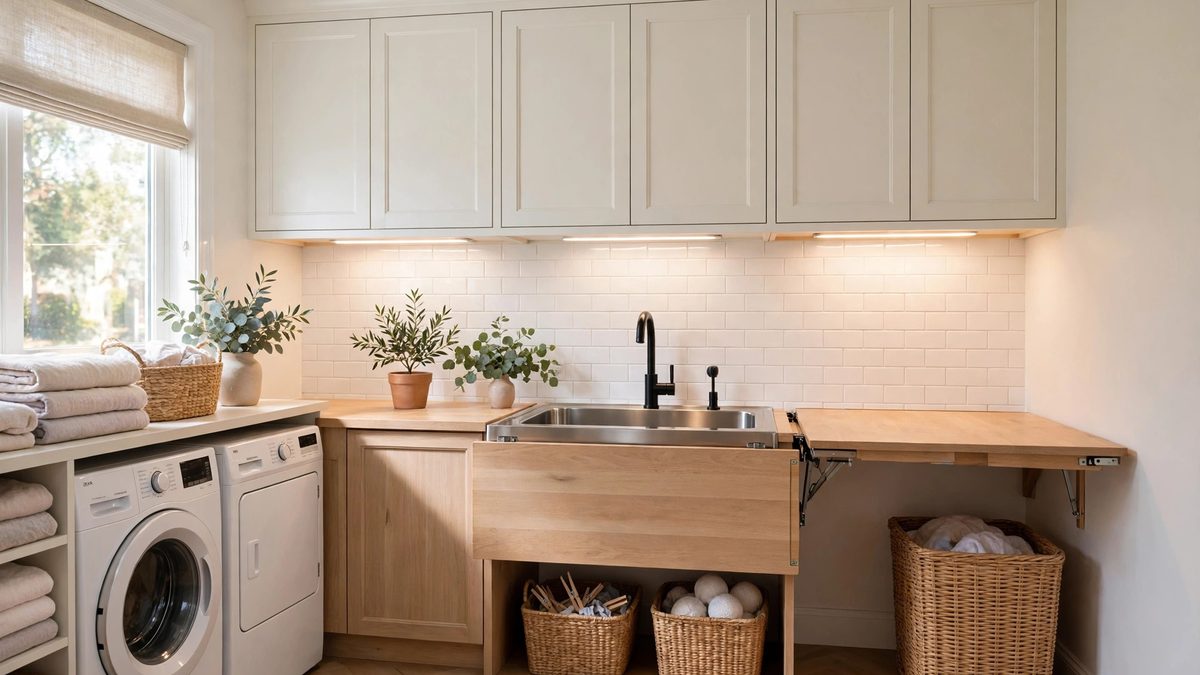
Task Lighting for Folding, Sorting, and the Sink
Overhead light alone leaves the actual work surfaces in your own shadow. Task lighting fixes the three spots where eyes need help:
- Under-cabinet LED strips or pucks above a folding counter wash the surface in even, shadow-free light.
- A small fixture over the utility sink makes soaking and stain-spotting easier and safer around water.
- Battery or plug-in motion lights inside deep cabinets and above the machines help in windowless rooms, and they cost very little.
Keep switches reachable and simple. In a laundry room, one switch for the ceiling light and one for the task lights is all the complexity anyone needs — your hands are often full of laundry baskets.
Laundry Room Wallpaper That Handles Humidity
Once the lighting is sorted, walls are the next-biggest visual upgrade, and laundry room wallpaper has become the favorite trick for making this small room feel designed. The laundry room is an ideal wallpaper candidate: the walls are few, the room is small so a roll or two covers it, and a bold pattern that would overwhelm a bedroom is charming at this scale.
Choose the right material for a room that steams. Vinyl and vinyl-coated wallpapers wipe clean and tolerate humidity best; they are the safe pick behind and beside machines. Peel-and-stick wallpaper works well on the wall opposite the machines or as an accent behind open shelves, and it is removable for renters. Traditional non-woven papers are fine in a dry, well-ventilated laundry room — just keep paper products away from the sink splash zone. Bold botanicals, small-scale geometrics, classic ticking stripes, and playful laundry-themed prints all work; keep the palette light if the room has no window, since your new lighting will make pale patterns glow and dark ones moody.
Thinking about wallpaper elsewhere too? Our bathroom wallpaper ideas cover the same moisture questions for an even wetter room.
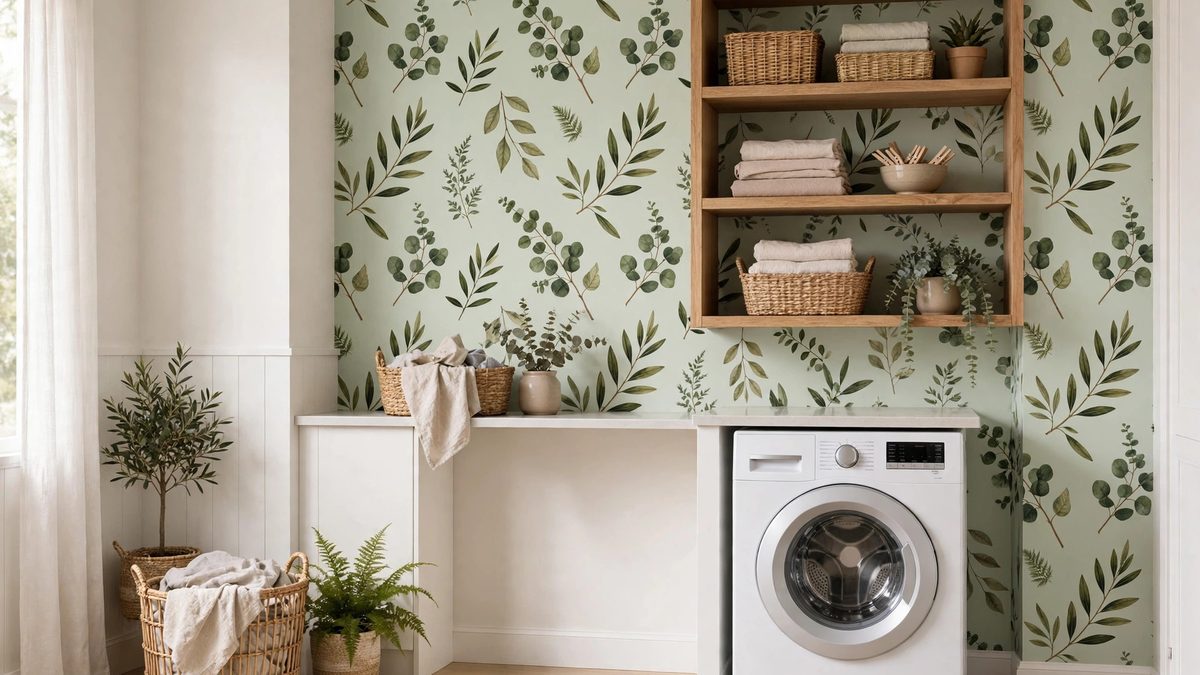
Laundry Room Art and Finishing Touches
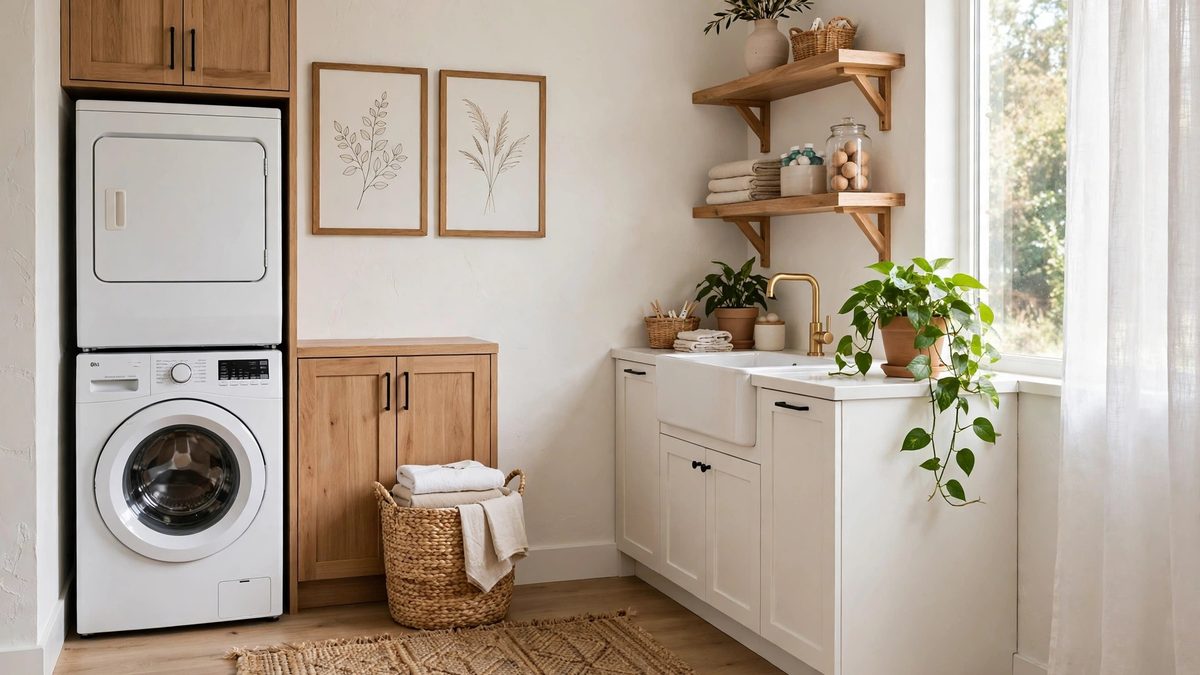
Laundry room art sounds like a punchline until you hang some — then the room suddenly feels intentional instead of ignored. The laundry room is a forgiving place to experiment: one or two framed prints, a small gallery over the folding counter, or a vintage-style sign can carry the whole decor scheme.
Practical art tips for this hard-working room:
- Choose frames with glazing (glass or acrylic) rather than bare canvas, since humidity and lint are unkind to unprotected art.
- Hang pieces where they will not be bumped by baskets — above the folding area or on the wall opposite the machines.
- Metal and painted wood frames handle steamy air better than raw wood.
- Keep the palette connected to your wallpaper or cabinet color so the room reads as one idea.
Finish with matching hangers on a wall rod, labeled jars for detergent pods and clothespins, and a small rug or mat with a washable cover. These are the details that make people say a laundry room is “cute” — and they all show up better under good light. Storage pieces like baskets and jars also live happily on the shelves in our laundry room shelving guide, which pairs well with the lighting plan here.
Lighting Mistakes to Avoid
- One bare bulb for the whole room. It shadows every work surface and makes the room feel smaller.
- Mismatched bulb temperatures. A warm bulb in the ceiling and a cool one over the sink makes everything look off; pick one temperature and repeat it.
- Fixtures that hang too low. Pendant lights are charming, but in an 8-foot laundry room with tall people carrying baskets, flush mounts win.
- Ignoring the switch location. If the switch is behind the door swing or across the room, you will curse it weekly.
- Dark paint plus dim light. Moody colors are fine in laundry rooms — but only once the lighting is bright enough to support them.
Frequently Asked Questions
What color light is best for a laundry room?
Neutral white light between 3000K and 4000K, with a CRI of 90 or higher. It shows fabric colors accurately, so you can spot stains and sort darks reliably.
How bright should laundry room lighting be?
As a rule of thumb, aim for roughly 2,000 to 3,000 lumens total in a small laundry room, split between a ceiling fixture and task lighting over the counter or sink.
Can I use a pendant light in the laundry room?
Yes, if the ceiling is high enough that the fixture clears tall users and open cabinet doors. In most 8-foot rooms, a semi-flush mount gives the same style with fewer head bumps.
Is peel-and-stick wallpaper OK in a laundry room?
Yes on walls away from direct splashes, especially the accent wall behind shelves. For the wall right behind a sink, vinyl wallpaper is the more durable choice.
Where should I hang art in a laundry room?
Above the folding counter, opposite the machines, or over the sink — anywhere it is visible while you work but out of the path of baskets and hampers. Framed pieces with glazing handle the humid air best.
Conclusion
Laundry room lighting is a small project with an outsized payoff: stains get caught, colors read true, and the room stops feeling like a utility closet. Start with neutral, high-CRI bulbs in a good ceiling fixture, add task light where you fold and soak, then let wallpaper and a piece or two of art finish the story. For a few hundred dollars and a free afternoon, wash day gets noticeably brighter.
