
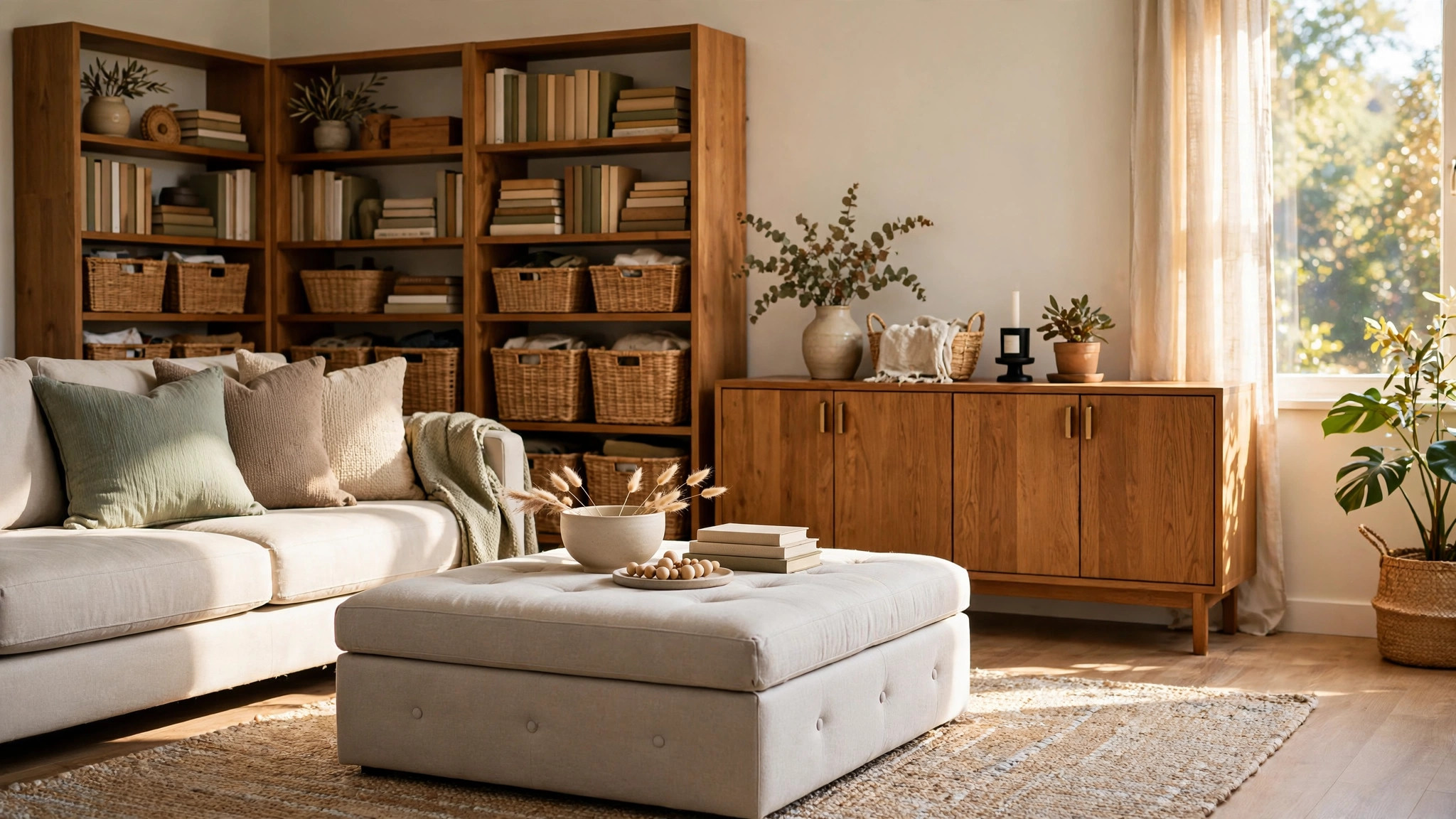

Every living room has two inventories: the furniture you chose, and the stuff that accumulates — remotes, chargers, blankets, toys, magazines, game controllers, and the mystery cable nobody can identify. Living room storage is how you reconcile the two without turning your prettiest room into a warehouse. The secret is furniture that works double duty: tables with compartments, ottomans that swallow blankets, and credenzas that hide the electronics tangle. This guide walks through the best storage furniture by category, the real sizes to look for, and the styling tricks that keep storage looking like decor instead of overflow.
Start With a Clutter Audit
Before buying anything, gather everything that lives in your living room but has no home. Group it into piles: daily items (remotes, coasters, current reading), weekly items (games, craft projects), and seasonal or rarely used items (extra blankets, party supplies).
Daily items need storage within arm’s reach of the sofa. Weekly items can live in closed furniture across the room. Rarely used items probably should not live in the living room at all — a closet or under-bed bin serves them better. This audit tells you how much storage you actually need, and it pairs well with a broader plan for the room; if you are rethinking the whole space, our ideas for designing a living room guide covers layout and flow first.
Be honest about the mystery pile, too — the chargers for devices you no longer own, the magazines you will never reread, the third throw blanket nobody likes. In most living rooms, a full third of the homeless stuff can leave the house entirely, which means you may need less new furniture than you think.
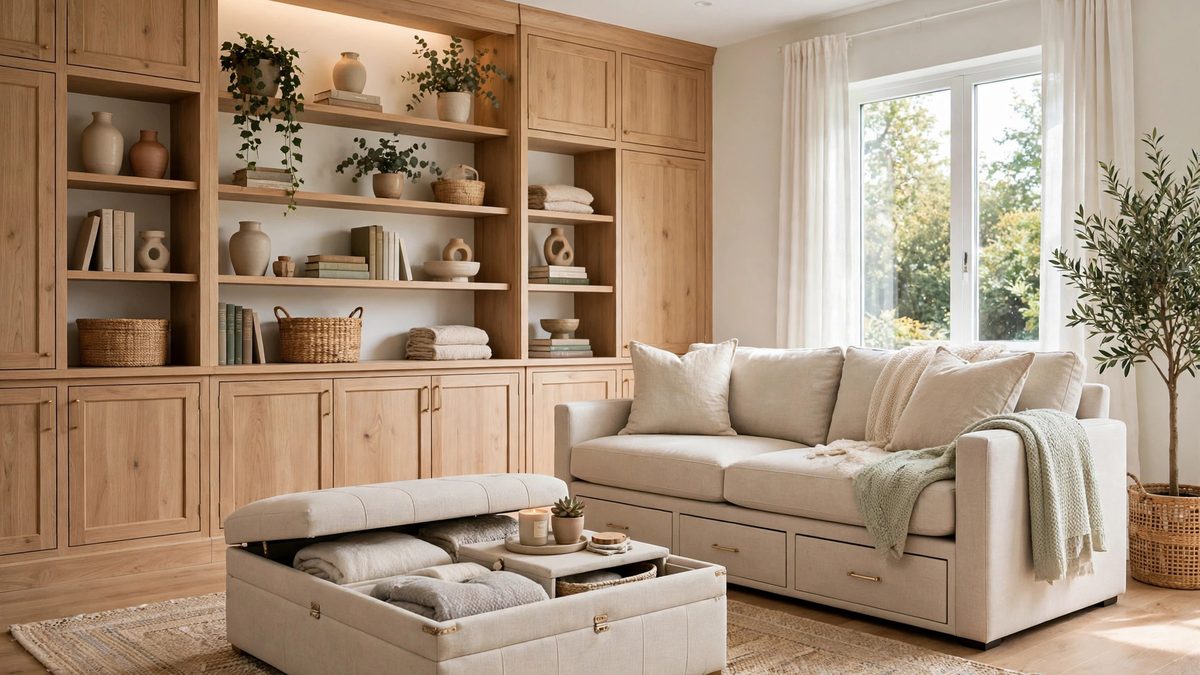
Storage Furniture Living Room Staples
When people search for storage furniture living room pieces, these are the workhorses worth your money:
- Storage ottomans. The single hardest-working piece: footrest, extra seat, coffee-table stand-in, and a hollow interior that swallows blankets and toys. Hinged ottomans with storage have been around for centuries — the classic ottoman was designed from the start to double as a storage chest.
- Credenzas and media consoles with doors. Closed cabinets hide routers, game consoles, and cable clutter. Look for cord cutouts in the back panel.
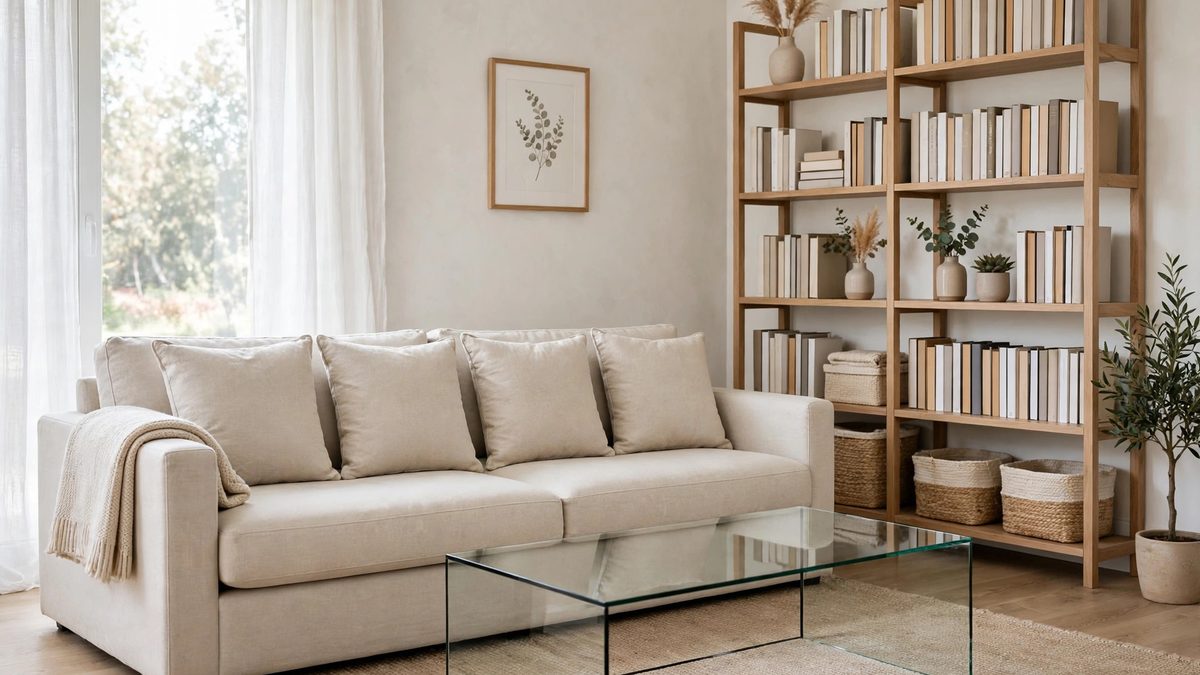
- Bookcases with a mix of open and closed sections. Display books and objects up top; hide the messy categories in lidded baskets or boxes on lower shelves.
- Storage benches. Perfect under a window or behind a sofa, holding board games, extra throws, or seasonal items.
- Nesting tables and C-tables. Small footprints that expand when guests arrive and tuck away after.
Choose closed storage for at least two-thirds of your pieces. Open storage shows everything; closed storage forgives everything.
Living Room Tables With Storage: The Coffee Table Upgrade
The coffee table sits at the center of the room, so living room tables with storage built in deliver the most impact per square foot. The main styles:
- Lift-top coffee tables. The top rises toward you for laptop work or snacks, revealing a deep compartment for remotes, chargers, and blankets. Most coffee tables stand about 16 to 18 inches high; lift-tops add a few inches when raised.
- Drawer coffee tables. One or two drawers on the sofa side corral the small stuff that usually scatters across the surface.
- Shelf-and-basket tables. A lower shelf lined with matching baskets reads as styling while hiding games and toys.
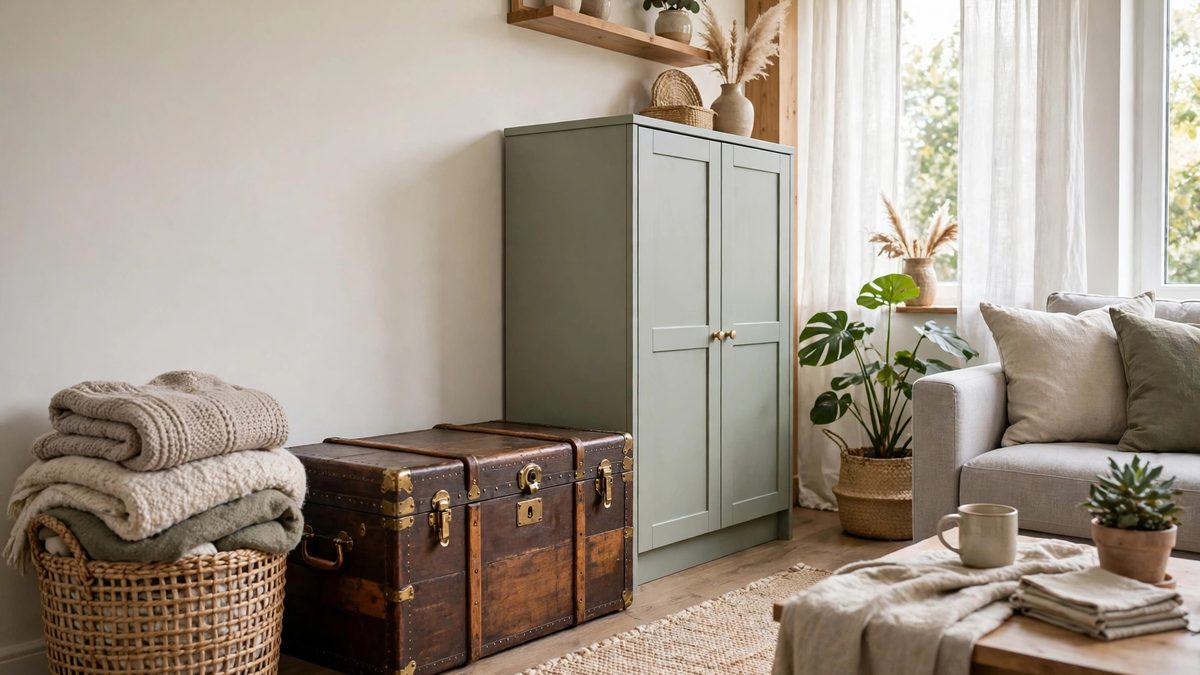
- Trunk-style tables. A vintage-look trunk offers the biggest single cavity — great for bulky quilts and board games.
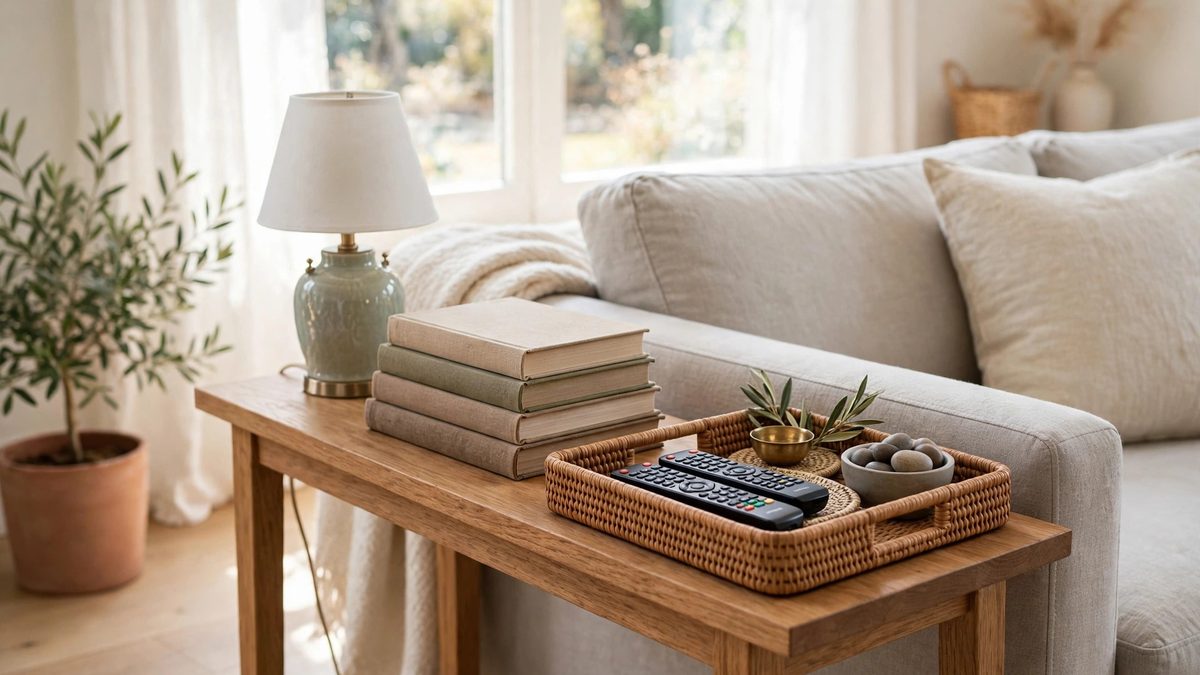
Keep the top one-third styled and two-thirds clear: a tray for remotes, a small stack of books, and one decorative object is the classic, livable formula.
Decoration Table Living Room: Making Side Surfaces Work
Every sofa needs a side surface, and a decoration table living room setup should do more than hold a lamp. Console tables behind the sofa are the most underused storage in the room: a console with drawers or a lower shelf of baskets can hold everything from board games to the household’s charging station, all out of sight from the seating.
Styling rule for decorative surfaces: group in threes, vary heights, and give every group a container. A tray turns three loose objects into a vignette; a lidded box turns clutter into decor. Leave at least half of any decorative table empty — that negative space is what makes the styled half look intentional.
End Tables With Storage: Small Pieces, Big Difference
End tables with storage solve the arm’s-reach problem. The right height matters most: an end table should sit within about 2 inches of your sofa’s arm height — most sofa arms are roughly 24 to 32 inches high, and end tables typically range from 22 to 30 inches — so drinks land comfortably without reaching up or down.
For storage capacity, rank your options:
- Cabinet end tables — a door and an interior shelf; the best for hiding chargers, tissues, and the book pile.
- Drawer end tables — one or two drawers for remotes, coasters, reading glasses.
- Drum and basket tables — hollow interiors with a removable top; great for yarn, toys, and throws.
- Open-shelf end tables — weakest for storage; add a lidded basket on the shelf to make them work.
Buy end tables in pairs only if your layout is symmetrical; mismatched-but-coordinated tables with the same height look collected and let you choose the storage type each side actually needs.
Hidden Storage for Blankets, Toys, and Tech
Three categories cause most living room mess, and each has a designated fix. Blankets belong in a storage ottoman, a lidded basket by the sofa, or a bench — our dedicated blanket storage guide compares every option from ladders to chests. Toys do best in one closed piece with a “everything fits or it rotates out” rule; a low cabinet or ottoman kids can open themselves keeps cleanup fast.
Tech clutter — routers, power strips, charging cables — hides in a media console with a ventilated back or a cable management box on the floor behind it. Coil excess cord length, label the chargers, and the tangle disappears. For books and display storage that still looks styled, our bookshelves for living room guide shows how to mix storage with decor on open shelving.
Common Living Room Storage Mistakes to Avoid
- All open storage. Baskets and shelves look great in photos and chaotic by Friday. Mix in doors and drawers.
- Storage that’s too far away. If the remote’s home is across the room, the remote will live on the sofa. Storage must sit where the clutter happens.
- Buying pieces before auditing. One ottoman may solve your whole problem; a console you did not need just becomes another surface to clutter.
- Ignoring vertical space. Tall bookcases and wall-mounted cabinets store plenty while using inches of floor.
- No lid, no home. Open bins invite overflow. Lidded boxes and closed cabinets enforce a natural limit.
A Quick Storage Routine That Keeps It Working
Storage only stays tidy when it takes less than a minute to maintain. Give every item a home that is reachable in one motion, return things the moment you are done with them, and do a five-minute reset once a week. Small, steady habits protect all the organizing work you have done.
Frequently Asked Questions
What is the best storage furniture for a small living room?
A storage ottoman is the top pick — it replaces a coffee table or footrest while hiding blankets and toys. After that, a lift-top coffee table and a slim media console with doors give the most hidden capacity per square foot.
How do I hide TV and electronics clutter?
Use a media console with doors and a cord cutout, route cables through a cable management box, and mount a power strip inside or behind the console. Coil and label cords so the inside stays as tidy as the outside looks.
How much storage do I actually need in a living room?
Audit your homeless items first. For most households, one large closed piece (console or credenza), one ottoman or trunk, and drawer or cabinet end tables cover daily and weekly clutter. Seasonal items belong in closets, not the living room.
Can storage furniture still look stylish?
Yes — choose pieces in the same wood tone or color family as your existing furniture, keep tops two-thirds clear, and style with trays and lidded boxes. Closed, coordinated furniture reads as a designed suite, not as storage units.
Where should I store extra blankets in the living room?
Inside a storage ottoman or bench for daily use, in a lidded basket beside the sofa for a softer look, or folded in a closed cabinet for seasonal extras. The best spot is whichever closed space sits closest to where people actually curl up.
Conclusion
Living room storage works when it is close to where clutter happens, mostly closed, and sized to what you own after an honest audit. Start with one hero piece — a storage ottoman or a console with doors — add end tables that hide the small stuff, and give blankets, toys, and tech each a designated home. The room will look calmer, clean faster, and finally feel as good as it looks in your head. Start this weekend with the audit — any buying can wait until you know exactly what needs a home.
