
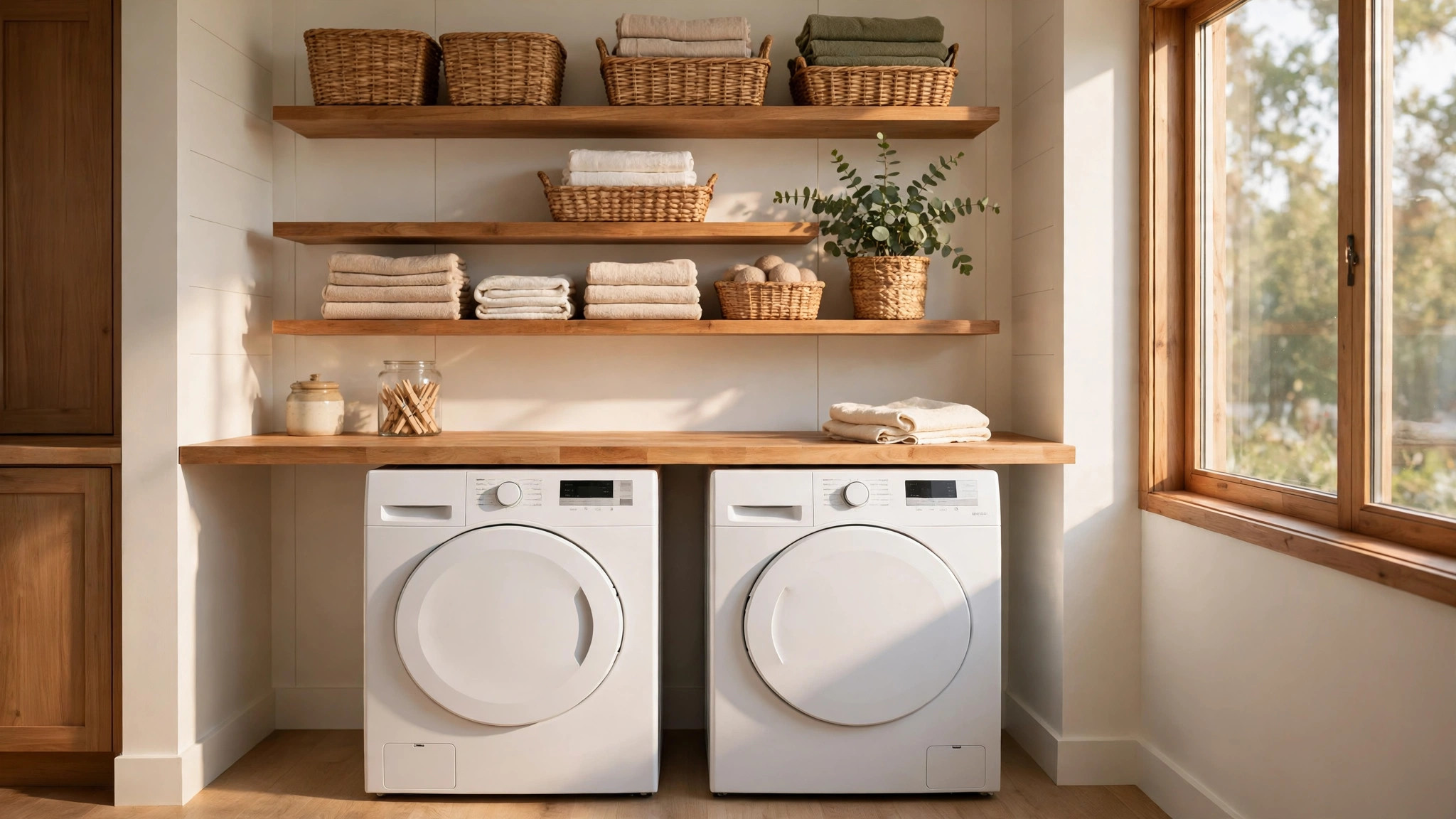

Good laundry room shelving turns a cramped corner into a room that actually helps you get laundry done. In most US homes the laundry area is small, often just a closet or pass-through, yet it has to hold detergent, baskets, cleaning supplies, and folded clothes. Wall storage is usually the only place that storage can go.
This guide covers the combinations that work in real laundry rooms, from floating shelves to a full countertop over your machines, with real dimensions and placement heights that keep supplies within reach.
If you are planning a bigger refresh, pair this guide with a full laundry room makeover plan so storage, lighting, and layout decisions support each other.
Floating Shelves Laundry Room Ideas That Keep Walls Light
Open floating shelves laundry room setups are popular for a good reason: they add storage without the visual weight of a closed cabinet, and they keep daily items visible at a glance.
Most laundry floating shelves work best at 12 to 16 inches deep, with 10 to 12 inches safer in a very narrow closet. That depth fits a detergent bottle, basket, or stack of towels without jutting too far over the machines. Thicker wood shelves with hidden steel brackets anchored into studs handle heavy bottles far better than thin hollow shelves.
Plan the vertical layout before you drill:
- Leave about 18 to 24 inches between the top of front-load machines and the first shelf if you need room to open detergent drawers and pour comfortably, or 12 to 18 inches for a lower, easy-reach shelf over top-load machines where the lid opens upward and needs checking first.
- Space additional shelves about 12 to 14 inches apart, which clears tall detergent bottles plus hand room.
- Keep the lowest shelf within comfortable reach for the person who does most of the laundry. Storage no one can reach becomes forgotten storage.
Style open shelves so they stay tidy. Decant powder and pods into labeled jars, corral small bottles in one tray, and group by job: wash, treat stains, fold, and clean. The everyday process behind laundry on Wikipedia is a reminder that this is a working room first, so function should lead.
Expect to pay typically $25 to $75 per ready-made floating shelf, depending on length and material. Two or three well-placed shelves are usually enough — more just gives clutter more places to collect.
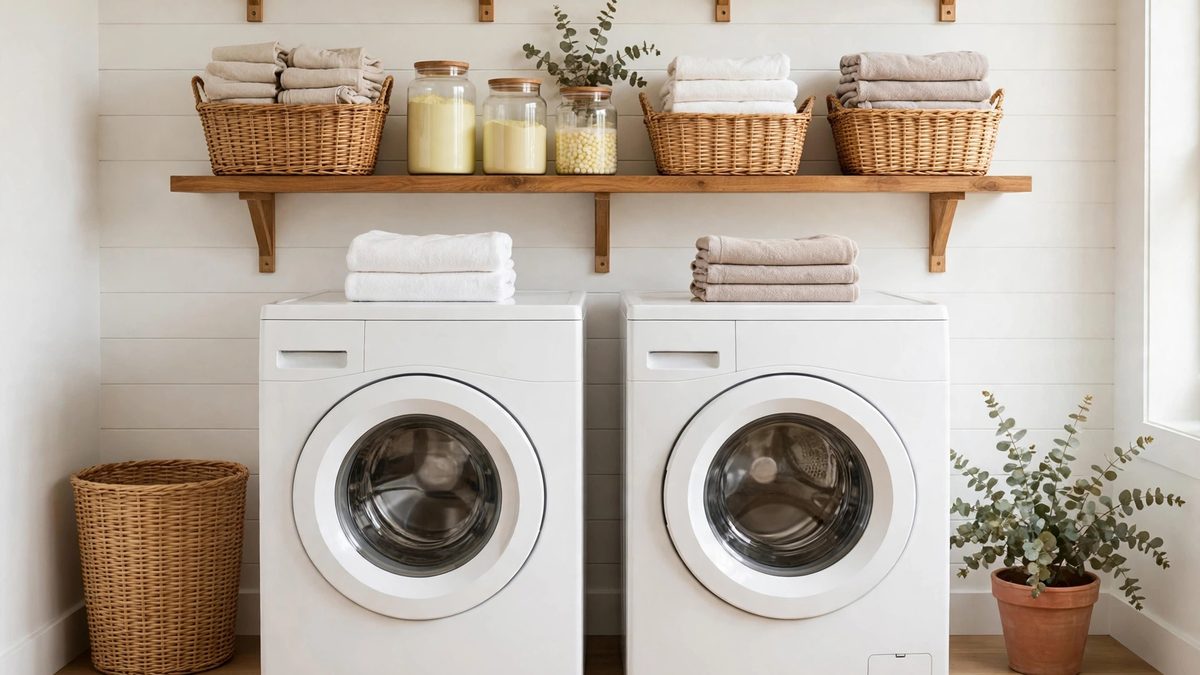
Shelf Above Washer and Dryer: Heights and Depths That Work
The shelf above washer and dryer is the hardest-working spot in the room, because it uses wall space that would otherwise go to waste. Standard washers and dryers are each about 27 inches wide, so a side-by-side pair needs roughly 54 to 60 inches including breathing room. A single long shelf spanning both machines looks clean and gives you one continuous surface.
Measure three things before you buy or build:
- Machine height: Most standard machines are about 38 to 39 inches tall, with pedestals adding significant extra height if you have them.
- Lid and door clearance: A top-load lid needs full upward clearance, and front-load doors need swing room. Never fix a low shelf that blocks either.
- Reach: The best everyday shelf sits where you can grab detergent without a step stool. Higher shelves are for bulk refills and rarely used items only.
A single shelf at a comfortable height, plus one higher shelf for back-stock, beats three crowded shelves. If your laundry is in a closet, check door clearance too. A 16-inch shelf that stops doors closing is worse than a 12-inch shelf that works every day.
For renters, a freestanding over-machine rack provides a similar shelf without drilling. It will not look as built-in, but it is a practical alternative that moves with you.
Cabinet Ideas Laundry Room Planners Use Again and Again
Open shelves are great for daily items, but every laundry room benefits from some closed storage. The best cabinet ideas laundry room designers return to are simple: hide the visual mess, protect supplies from dust, and keep cleaning products behind a door that can be latched if young children are in the home.
Proven cabinet layouts include:
- One upper cabinet centered over the machines for cleaning chemicals and medicines, with open shelves on either side for towels and baskets.
- A tall, narrow cabinet or tower at one end of the run for a broom, mop, ironing board, and vacuum accessories.
- A sink base cabinet, if you have a utility sink, which hides plumbing and stores scrub brushes and rags underneath.
- A cabinet over a folding area only, leaving the wall over the machines open so the room feels less top-heavy.
Standard upper cabinets are typically 12 inches deep, shallower than most open shelves. That helps over machines, because you can reach the back without leaning far over a washer. Always confirm head and reach clearance in your own room rather than copying a kitchen measurement.
Shaker and flat-panel cabinets in warm white, sage green, or light wood suit most laundry rooms and are easy to find in stock sizes. If the room has no window, lighter colors keep it from feeling like a cupboard.
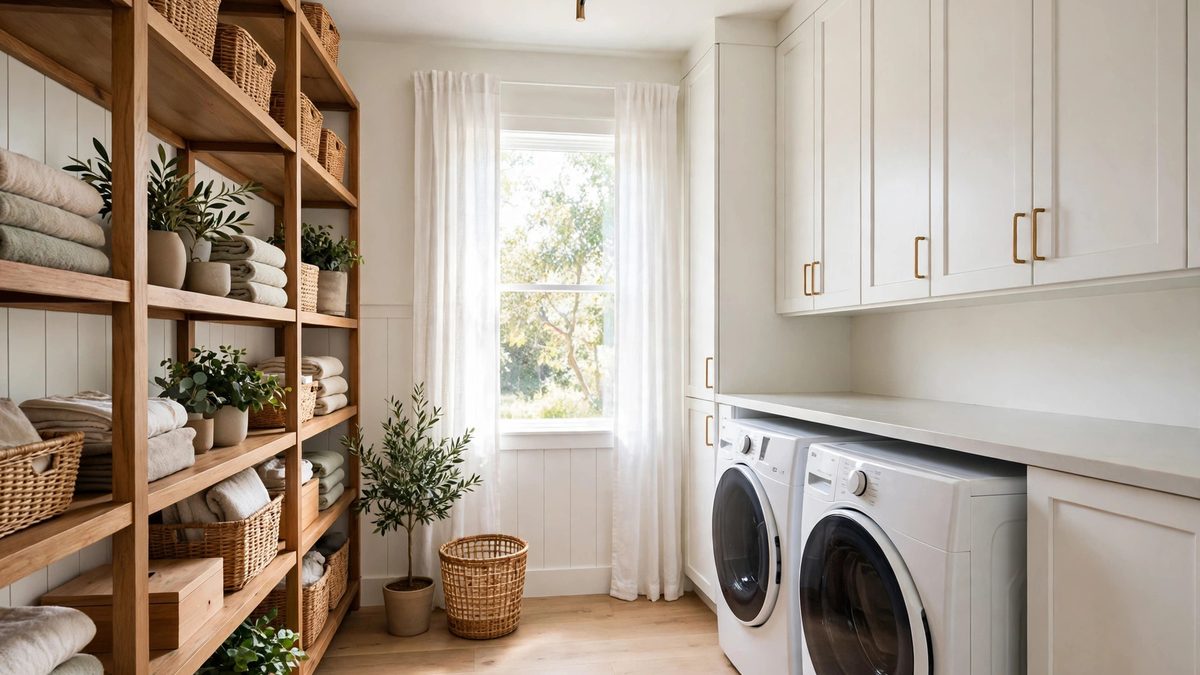
Laundry With Cabinets vs. Open Shelves: How to Choose
A laundry with cabinets looks calmer in photos, but that does not automatically make it better for your household. The right answer is usually a mix, decided by what you store and how tidy the room stays between laundry days.
Choose more cabinets if:
- You store a lot of mixed cleaning products that look messy in the open
- Your laundry room is visible from a kitchen or hallway and needs to look tidy for guests
- You prefer to close a door on visual clutter at the end of the day
- Dust is a problem in your home and you want folded linens protected
Choose more open shelving if:
- The room is very small and cabinets would feel bulky and dark
- You do laundry for a large household and need daily items instantly visible
- Your budget is tight, since open shelves typically cost less than cabinets
- You like using baskets and jars as part of the room’s look
Cost is a real factor. Expect to pay typically $100 to $300 per stock wall cabinet before installation, while open shelving usually costs less. A balanced plan is closed cabinets for chemicals and clutter, open shelves for towels, baskets, and daily products.
Good lighting makes either choice work better. If shelves cast the counter into shadow, review your laundry room lighting options and consider under-shelf lighting in the same project.
Washer and Dryer Countertop Ideas for Folding and Sorting
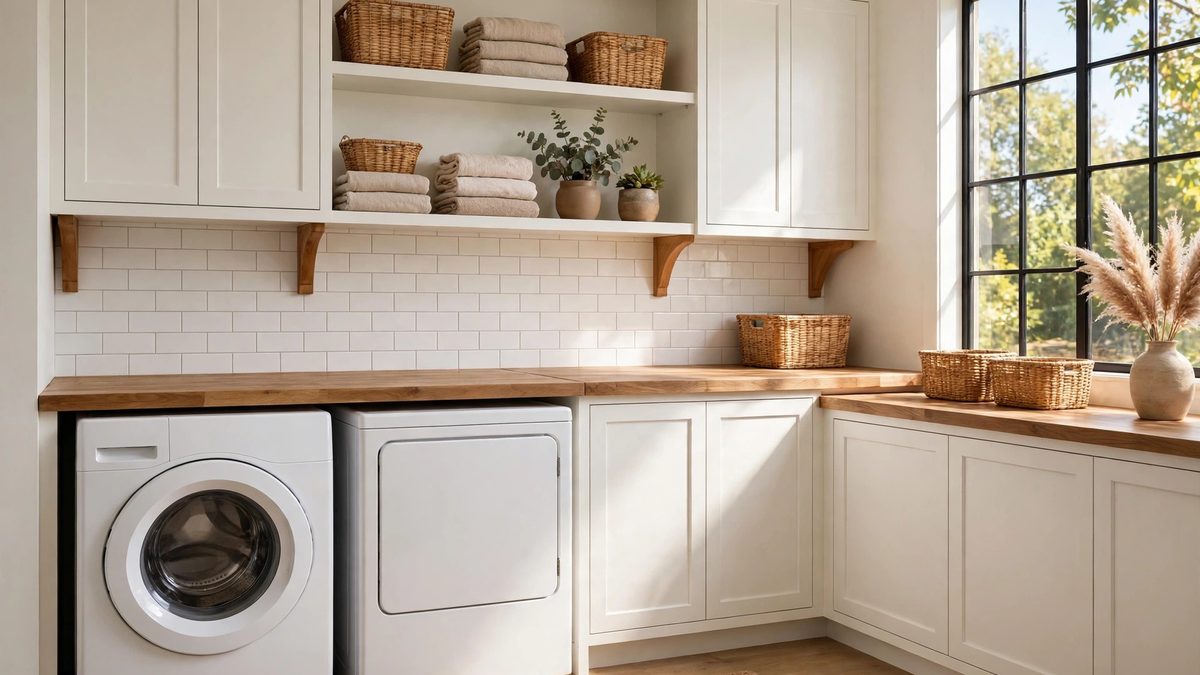
Adding a washer and dryer countertop over a side-by-side front-load pair creates the folding station most laundry rooms are missing. You can fold straight from the dryer, sort into baskets by family member, and treat stains right at the machine.
A countertop over standard machines needs to span roughly 54 to 60 inches wide and about 27 to 30 inches deep, depending on hoses and wall clearance. Always leave access to water shut-off valves and outlets. Many homeowners choose a removable top that rests on cleats, rather than a permanently fixed slab that must be destroyed to reach a leaking hose.
Material choices for this hard-working surface:
- Butcher block: Warm, affordable, and forgiving. Needs sealing and periodic care, especially around water.
- Laminate: Budget-friendly, easy to wipe, and available in stone and wood looks. A practical choice for a first countertop.
- Plywood with a finished edge: The DIY favorite. Sand, seal, or paint it well and it can look surprisingly polished for very little money.
- Stone or quartz remnants: Beautiful and durable, but heavy and typically more expensive. Confirm the machines and floor can support the weight and that the top can be removed for servicing.
Leave a gap or removable section at the back for hoses and cords, and never cover a top-load pair with a fixed counter. For top-load machines, a wall-mounted fold-down table nearby gives the same folding benefit without blocking lids.
The same zone-and-basket approach in this guide to organizing small spaces applies directly to laundry closets and narrow utility rooms.
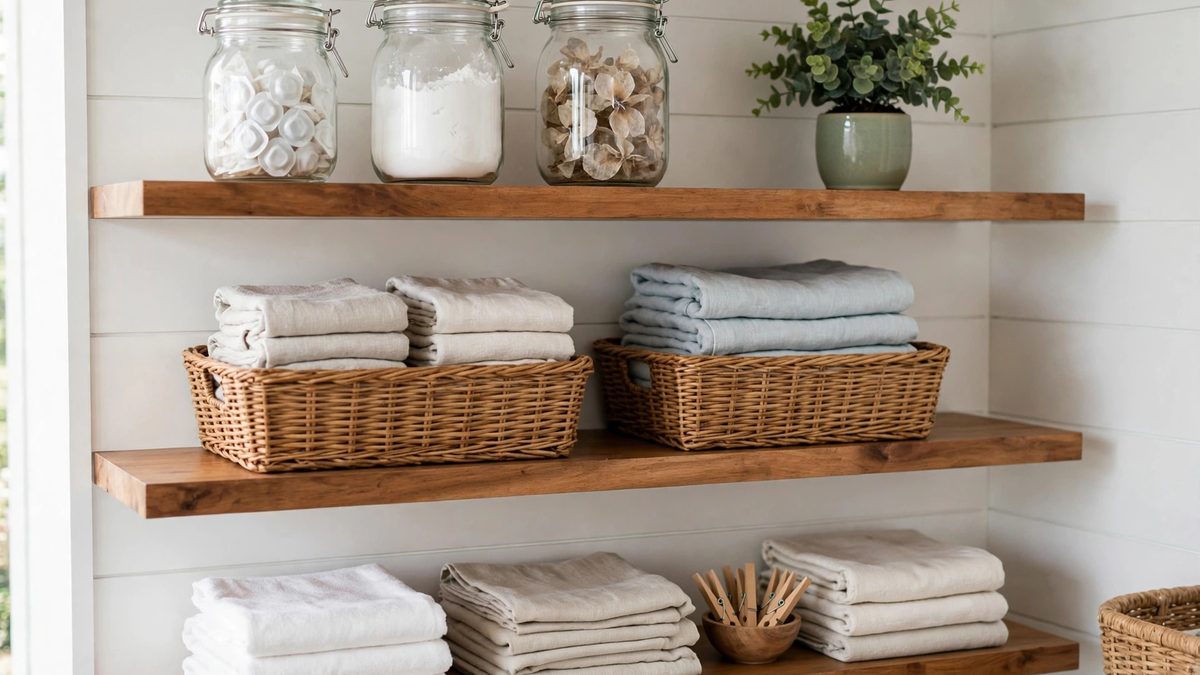
Tips for Shelving That Stays Organized
Shelves do not stay organized by themselves. A few simple systems will keep yours useful instead of becoming a dumping ground.
- Give every shelf a job. Top shelf for back-stock, middle shelf for treatment and cleaning, lowest shelf for daily detergent and dryer supplies.
- Use containers with limits. A basket or bin that is full is your signal to stop buying, not to start stacking in front of it.
- Label, even if it feels unnecessary. Labels help other household members put things back in the right place without asking.
- Keep heavy bottles low. Gallon detergent and refill jugs belong on the lowest, strongest shelf or on the countertop, never overhead.
- Anchor into studs for heavy loads. Floating shelves and cabinets holding liquids must be fixed properly. If you cannot find studs where you need them, use appropriate heavy-duty anchors or get help with the installation.
- Edit every few months. Laundry rooms quietly collect empty bottles, single socks, and products no one liked. A five-minute clear-out keeps the system working.
Measure twice, fix once, and leave yourself access to valves, vents, and machine service panels. Pretty storage that blocks basic maintenance will cost you more than it saves.
Frequently Asked Questions
How deep should laundry room shelves be?
For most rooms, 12 to 16 inches deep is the practical range. Use 12 inches in narrow closets or over machines where reach is limited, and 14 to 16 inches only where you have the depth for larger baskets and bins. Standard upper cabinets are shallower, at about 12 inches deep.
How high should the first shelf be above the washer and dryer?
It depends on your machines and how you load them. Many homeowners place the first shelf about 18 to 24 inches above front-load machines for comfortable working room, and check top-load lid clearance carefully before fixing anything. The key test is simple: you should reach daily detergent easily without a stool, with all lids and doors fully open.
Can floating shelves hold heavy detergent bottles?
Yes, if they are solidly built and anchored into studs or with proper heavy-duty fixings and hidden steel brackets. Keep the heaviest bottles on the lowest shelf, spread weight across the shelf rather than stacking it in the center, and do not use lightweight hollow shelves for gallon containers.
Is a countertop over a washer and dryer a good idea?
For side-by-side front-load machines, yes. It adds a valuable folding and sorting surface and stops items falling behind the machines. Choose a removable design so you keep access to hoses and valves, and measure depth carefully. Do not fit a fixed counter over top-load machines.
How much does laundry room shelving typically cost?
Simple ready-made floating shelves typically cost $25 to $75 each, stock wall cabinets typically $100 to $300 each before installation, and a basic DIY countertop can range widely by material. Custom cabinetry and stone tops cost significantly more. Get your measurements right first, because the cheapest shelf is the one you only buy once.
Conclusion
The best laundry room shelving is not the most shelving. It is the right mix of open shelves for daily items, closed cabinets for clutter and chemicals, and, if machines allow it, a countertop for folding. Keep depths between 12 and 16 inches for most shelves, and place supplies where you can reach them.
Start with the wall over your machines, measure carefully, and build one well-planned run. A single organized wall will make every wash day feel calmer, faster, and a little less like a chore.
