


Choosing the right types of curtains can completely change how a room feels. The same window can look formal, cozy, bright, or private depending on the fabric, heading, and length you pick. Curtains do more than decorate. They control light, add privacy, soften hard edges, and can even make a low ceiling feel taller.
This guide walks through the main curtain types in US stores, how each style works, and where it works best, with real standard lengths and rod placement rules.
Before you buy, it helps to understand what a window treatment covers and to follow a step-by-step guide to measuring your windows for curtains before you fall in love with a panel that is six inches too short.
Curtain Styles: Headings, Fabrics and How They Hang
When people talk about curtain styles, they usually mean two things: the heading at the top, which controls how the curtain hangs and moves, and the fabric, which controls light and privacy. Getting both right matters more than chasing a trend.
Common headings include:
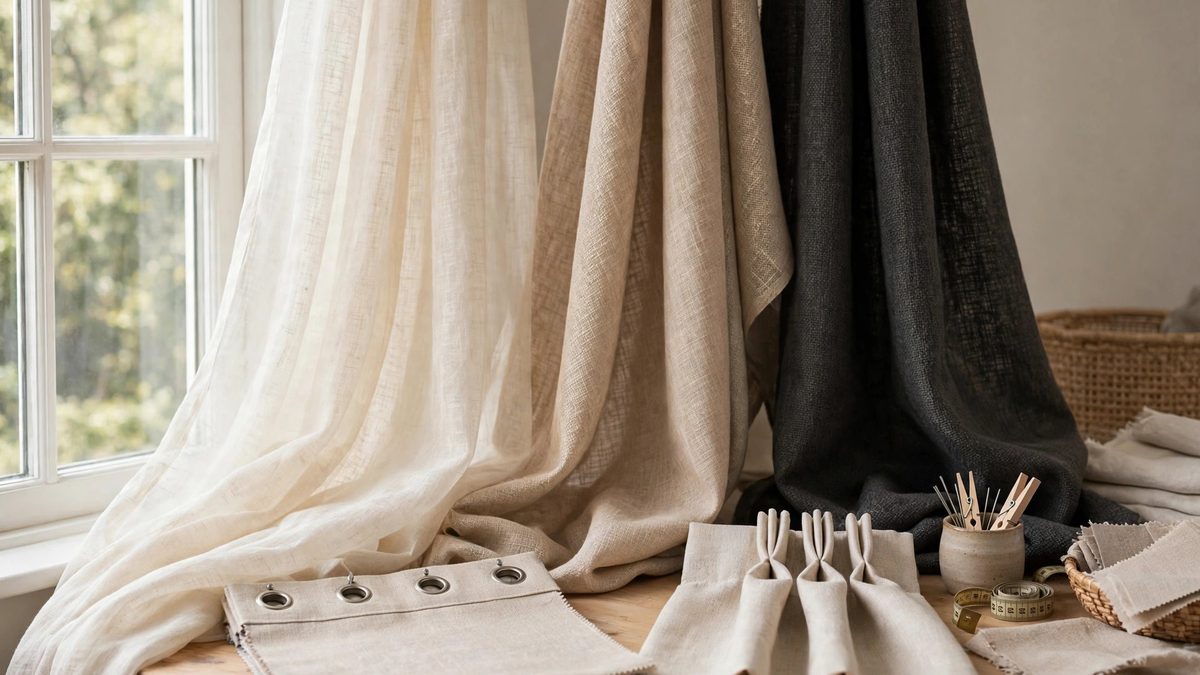
- Grommet or eyelet: Metal rings punched into the top. The rod threads through, creating large, even folds. Easy to open and close, good for modern rooms.
- Rod pocket: A sewn channel the rod slides through. Soft and traditional, but harder to slide daily.
- Pinch pleat: Pleats pinched and stitched near the top for a tailored, formal look, usually hung from rings or hooks.
- Pencil pleat: Tight, small gathers made with heading tape. Versatile and widely available ready-made.
- Tab top: Fabric loops slip over the rod. Relaxed and informal, but not ideal where you open curtains daily.
- Ripple fold and wave: Flat panels that glide on a track in smooth S-shaped folds. Clean and contemporary.
Fabric controls what the curtain does. Sheers filter light and soften a view while offering daytime privacy. Light-filtering blends block glare but still glow in sunlight. Blackout panels have a coated or tightly woven backing that blocks most light, which is why they suit bedrooms and media rooms.
The Curtain overview on Wikipedia explains how sheer, uncoated, coated, and lined fabrics differ in light and heat control.
Match the heading to how often you will move the curtain. Daily-use curtains need grommets, rings, or a track that glides. Stationary side panels can use almost any heading, because you will rarely touch them.
Cafe Curtain Ideas for Kitchens and Bathrooms
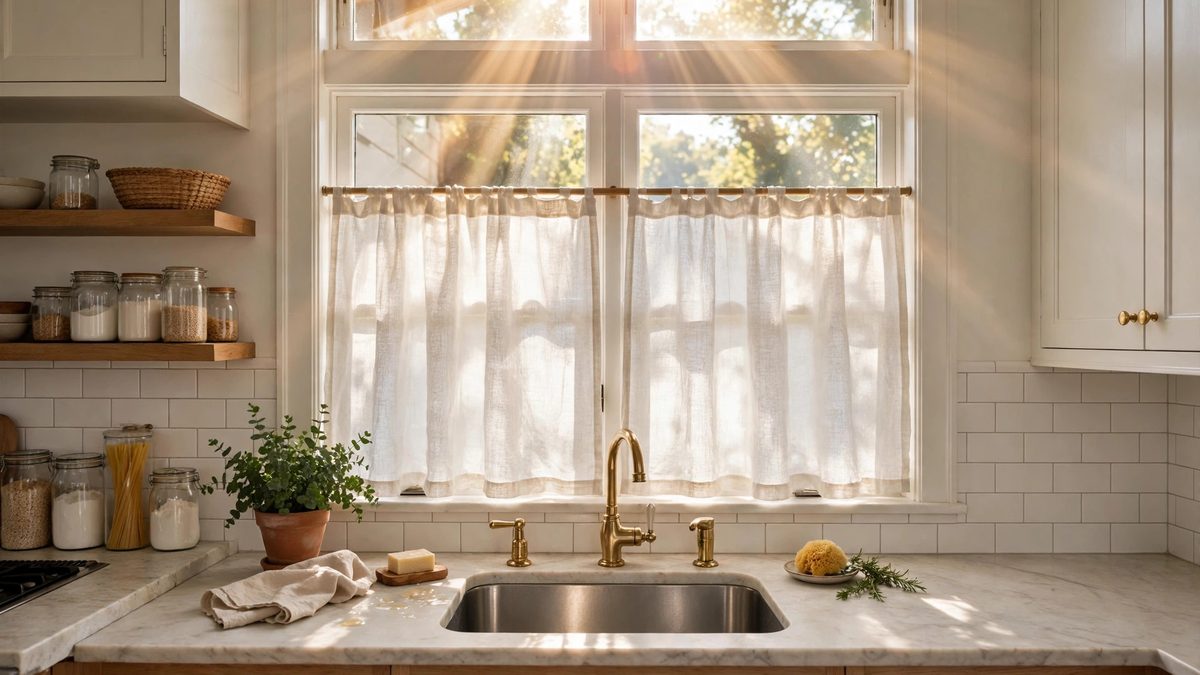
A cafe curtain covers only the lower half of a window. The rod mounts across the middle of the frame, so the bottom is private while daylight pours in over the top. You can wash dishes at a sink window without feeling overlooked.
Standard cafe tiers are typically sold in 24-inch and 36-inch drop lengths. For a gathered look, choose a combined panel width of about 1.5 to 2 times the window width. Cotton, linen blends, and easy-wash polyester are most practical above a sink, where splashes and steam are daily life.
Cafe curtains work best in:
- Kitchen windows over the sink
- Ground-floor bathrooms where privacy matters but light is limited
- Breakfast nooks and casual dining corners
- Laundry rooms and mudrooms with a street-facing window
You can pair a cafe tier with a short matching valance for a more finished look. Avoid heavy, lined fabrics at this small scale — they overwhelm the window and block the light the style is meant to preserve.
For renters, a tension rod inside the frame is simplest. It needs no drilling and removes cleanly.
Curtains for Small Windows That Make Them Feel Bigger
Small windows are common in bathrooms, basements, and older bedrooms, and the wrong curtain can make them disappear. The goal with curtains for small windows is simple: do not cover more glass than you have to, and use placement to borrow visual size from the wall.
Mount the rod 4 to 6 inches above the frame and extend it 6 to 10 inches beyond each side. Open curtains will then stack on the wall instead of over the glass, so the window reads larger. This high-and-wide trick is the single most effective change for a small window.
Then choose length with care:
- Sill length: Panels end at or just below the sill for a neat, practical finish in kitchens and bathrooms.
- Apron length: Panels fall a few inches below the sill, which softens the look without dragging near counters or radiators.
- Floor length on a narrow window: If the wall below is clear, a full-length panel can make a short, wide window feel taller and more intentional.
Light colors and light-filtering fabrics help too. A heavy blackout panel on a tiny window can look like a dark patch. If you need darkness, layer a roller shade behind a lighter curtain instead.
Avoid very large prints on small windows. Small-scale patterns, subtle texture, and vertical stripes sit more comfortably at this size.

Floor to Ceiling Drapes for a Tall, Polished Look
Floor to ceiling drapes hang from just below the ceiling all the way to the floor. They are the fastest way to make standard 8-foot ceilings feel taller, and they give living rooms and bedrooms a calm, hotel-like finish.
Standard ready-made lengths in the US are 63, 84, 95 or 96, and 108 inches. For 8-foot ceilings, 95 or 96-inch panels with the rod near the ceiling usually land correctly. For 9-foot ceilings, 108-inch panels are the typical starting point. Always measure from your planned rod position to the floor before ordering.
Decide how you want the hem to meet the floor:
- Kiss length: The panel just touches the floor. Clean, tailored, and the easiest to keep dust-free.
- Slight break: The panel breaks by about 1 inch on the floor, like a well-fitted pair of trousers. Relaxed but still polished.
- Puddle: Several extra inches pool on the floor. Dramatic and formal, but only practical in low-traffic rooms where no one will trip or vacuum over them daily.
Fullness matters as much as length. For a rich look, plan on total panel width of 2 to 2.5 times the rod width. Flat, stretched panels are the most common reason expensive drapes look cheap.
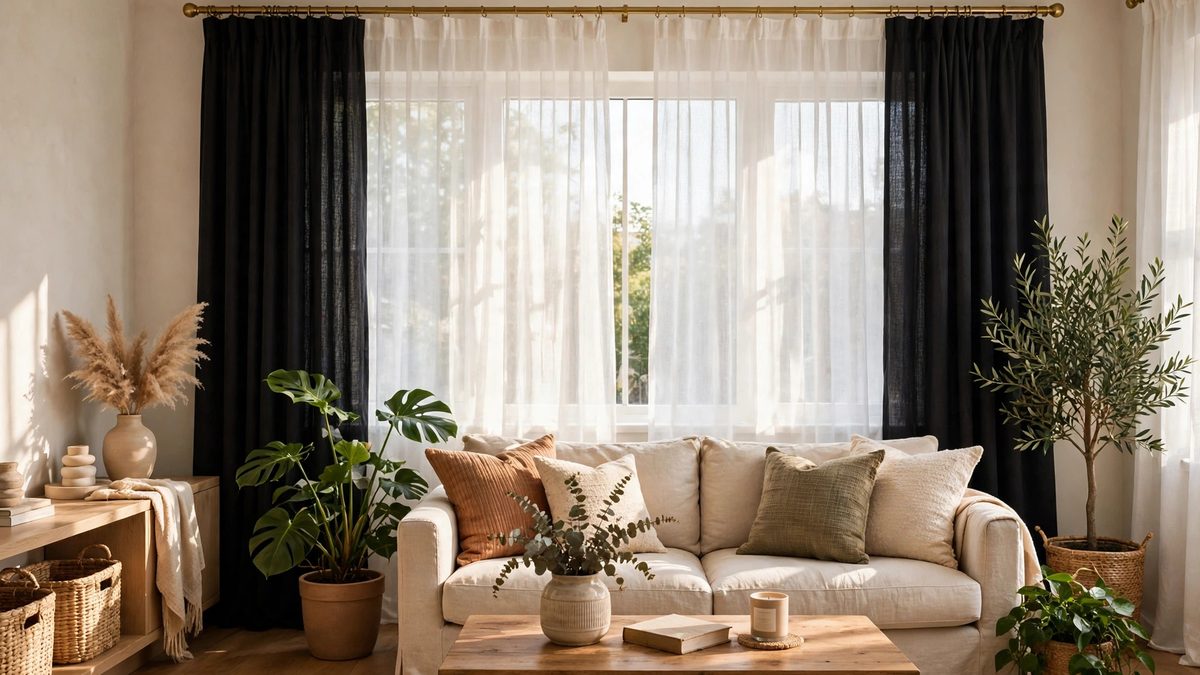
For a main living space, browse living room curtain and drape ideas for color and layering inspiration. A popular combination is a sheer close to the glass for daytime light, with heavier drapes on top for evening privacy.
Kids Curtains That Are Fun, Practical and Easy to Clean
Kids curtains need to do three jobs: feel playful, block enough light for naps and early bedtimes, and survive real life. That usually means blackout or room-darkening fabric first, pattern second.
For nurseries and young children’s bedrooms, blackout panels keep the room dark during summer evenings and naps. Check that the panel is actually lined or coated. A cute print on thin, unlined cotton will glow at 7 p.m. in June, however charming it looks online.
Practical details to prioritize:
- Machine-washable fabric: Polyester and polyester blends usually wash and hang back up with the least fuss.
- Shorter lengths where safety and play matter: In play corners, sill or apron length keeps fabric off the floor and away from crawling babies and toy clutter.
- Cord safety: Use cordless shades underneath, or keep any cords completely out of reach with cleats and tension devices. Curtains themselves on a rod avoid the cord issue for the main panel.
- Room to grow: Neutral panels with colorful tiebacks, or a classic stripe or star print, will last longer than a character print a child outgrows in a year.
Expect to pay typically $20 to $60 per ready-made blackout panel for kids’ rooms, depending on size and lining. Buying one extra panel for fullness often looks better than stretching two panels thin.
As children get older, let them help choose color or pattern from a shortlist you have already vetted for washability and light control.
Mistakes to Avoid When Buying Curtains
Most curtain disappointments are not about taste. They are about a few repeatable measuring and hanging mistakes that are easy to avoid once you know them.
- Hanging the rod too low and too narrow. A rod fixed right at the top of the frame makes ceilings feel lower and windows feel smaller. Go higher and wider whenever the wall allows it.
- Ordering too little width. If the combined panels are not at least 1.5 times the rod width, and ideally 2 to 2.5 times for full drapes, they will look flat when closed.
- Guessing the length. A 84-inch panel is not automatically right for an 8-foot ceiling. Your rod height decides the length you need, so measure from rod to floor every time.
- Ignoring the stack. Thick, lined panels take up more rod space when open. On wide windows, allow extra rod length so the open stack does not cover the glass.
- Forgetting how the room is used. Sheers alone in a street-facing bedroom, or delicate dry-clean-only silk in a steamy bathroom, will frustrate you within weeks.
Steam or iron panels before the final hang, and let them settle for a day. Wrinkles from packaging often fall out on their own, and you will judge the length more accurately once the fabric relaxes.
Frequently Asked Questions
What is the most popular curtain length?
For living rooms and bedrooms, floor length is the most popular choice. In practice that usually means 84-inch panels for lower rod positions and 95 or 96-inch panels when the rod is mounted high. Kitchens and bathrooms more often use 63-inch, sill, or cafe lengths.
How much wider should curtains be than the window?
Plan on total curtain width of 1.5 to 2.5 times the width you need to cover. Use the lower end for cafe curtains and casual sheers, and 2 to 2.5 times for full drapes where you want deep, soft folds when the curtains are closed.
Are curtains and drapes the same thing?
In everyday US shopping, the words are often used interchangeably. Traditionally, drapes are longer, heavier, and more formal, often lined, while curtains are lighter and more casual. What matters more than the label is the fabric weight, lining, length, and heading described on the product itself.
Should curtains touch the floor or float above it?
Most designers prefer panels that just kiss the floor or break slightly. Floating 2 or 3 inches above the floor usually looks like a measuring mistake in a living room or bedroom. Shorter sill and apron lengths are the intentional exception in kitchens, bathrooms, and over radiators.
What curtains are best for blocking light?
Blackout curtains with a coated backing or a separate blackout lining block the most light. For the best result, mount the rod wider and higher than the frame so light does not leak around the edges, and choose a wrap-around rod or side returns if the room needs to be very dark.
Conclusion
There is no single best curtain, only the best match for the window, the room, and how you live in it. Start with the job: light filtering, privacy, darkness, or pure decoration. Then pick the style and heading that move the way you need, measure for a high, wide rod, and order enough width and the right standard length for a full, finished hang.
From a simple cafe tier in the kitchen to tall, layered drapes in the living room, getting those basics right will make even budget-friendly panels look thoughtful and complete.
