
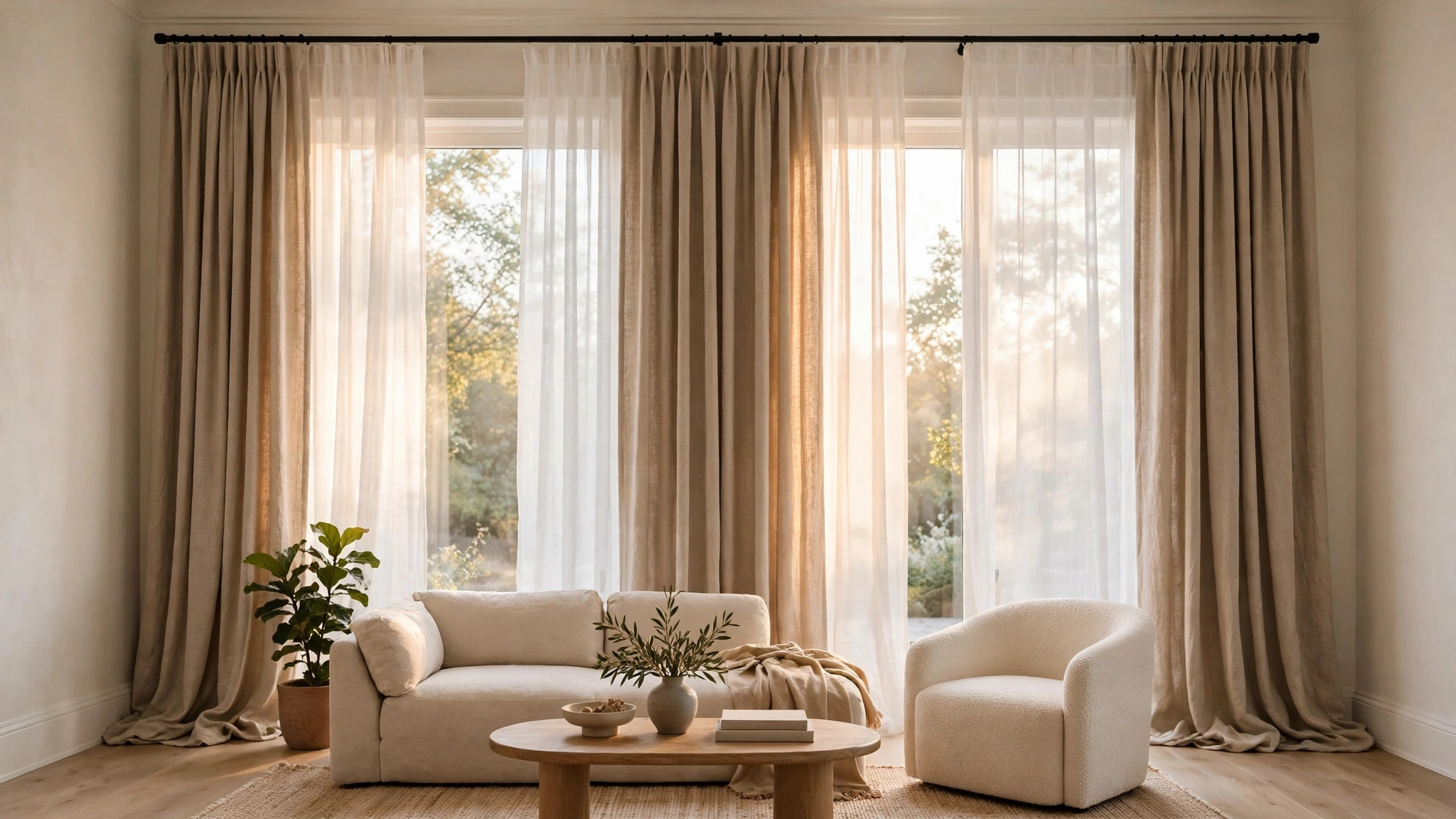

Nothing changes a living room’s proportions like well-hung curtains. The same window can look squat or soaring depending on where the rod sits and how the fabric falls, which is why designers treat window fabric as architecture, not accessory. If you are gathering living room drapes and curtains ideas, the most useful ones are not exotic. They are the fabric choices, lengths, and hanging rules that make any window look taller, wider, and more expensive than it is.
This guide walks through each decision in the order you will make it: where the rod goes, how much fabric you need, which materials suit a busy living room, and how to layer and style panels so the whole wall feels composed.
Hang High and Wide: The Rules Before the Fabric
Before choosing a single fabric, fix the geometry. Mount the curtain rod 4 to 6 inches above the window frame at minimum, or halfway between the frame and the ceiling. With standard 8-foot ceilings, many designers go nearly to the ceiling line. A high rod draws the eye upward and makes both the window and the room feel taller.
Extend the rod beyond the frame on each side, typically 3 to 6 inches and up to 8 to 12 inches on wide windows. That extra width lets the open panels stack mostly on the wall instead of covering the glass, so you keep your daylight and the window reads wider than it is. Bob Vila’s guide to how high to hang curtains adds a useful cap: keep the rod no more than about one-third wider than the window, or the proportions start to look strained.
Measure your length from the rod’s final position, not from the frame, and only after the rod is up. If measuring is new to you, our step-by-step how to measure for curtains guide covers every number you need before ordering.
Lengths and Fullness: The Two Numbers That Matter
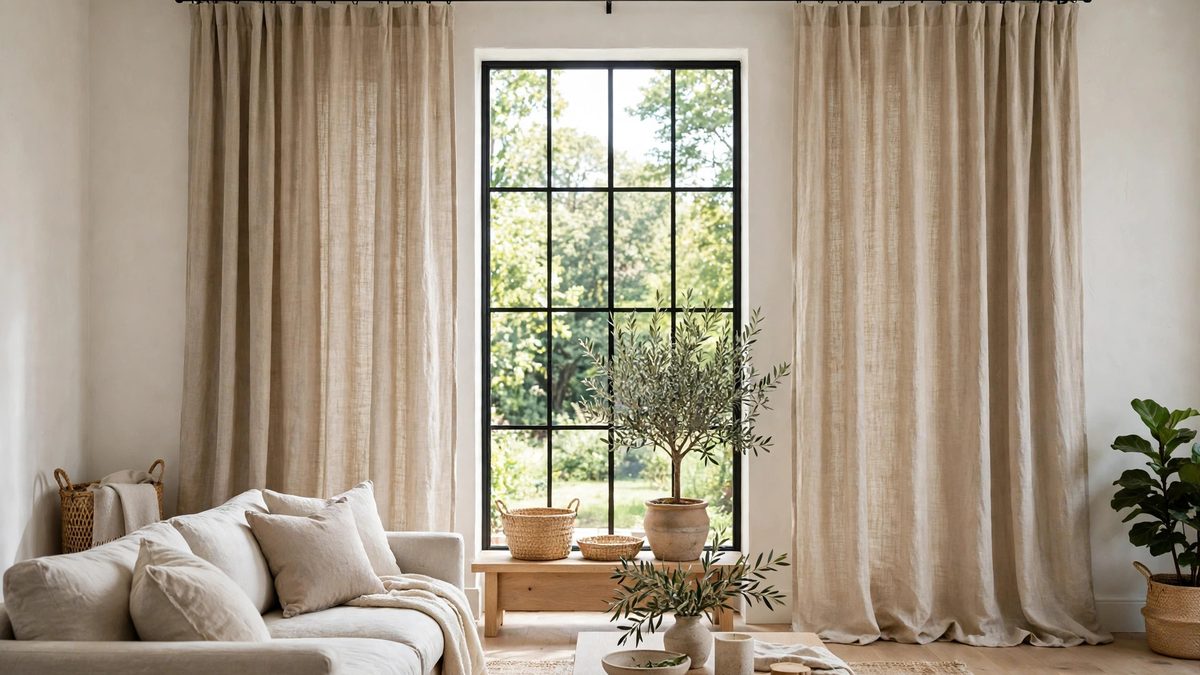
Standard ready-made curtain lengths are 63, 84, 95 or 96, 108, and 120 inches. For living rooms, floor length is almost always the right call: 63-inch sill-length panels can work over a radiator or in a kitchen, but on a living room window they tend to look unfinished. As a quick guide, a rod mounted high on an 8-foot ceiling usually pairs with 96-inch panels; a 9-foot ceiling points to 108 inches.
Where the hem lands is a style choice:
- Float: the hem hovers about 1/2 inch above the floor. Crisp, modern, and easy to clean under.
- Kiss: the hem just grazes the floor. The tailored, can’t-go-wrong standard.
- Break or puddle: 1 to 3 extra inches rest on the floor for a soft, romantic feel. Lovely with linen, annoying with robot vacuums and high-traffic doors.
Fullness is the other half of the equation. Panels that are too narrow hang flat and skimpy. As a rule, the combined width of your panels should be at least 1.5 to 2 times the width of the rod for gentle waves, and 2 to 2.5 times for the rich, deep folds of pinch pleats and heavier fabrics. Ready-made panels often come in widths around 50 to 54 inches, so a wide window frequently needs two panels per side, not one.
Drapes for Living Room Windows: Fabrics That Earn Their Place
With the math settled, fabric decides the mood. The most useful drapes for living room life balance beauty with practicality, because this is the room where sunlight, guests, and daily wear all concentrate.
- Linen and linen blends are the modern favorite: airy texture, beautiful drape, and a relaxed elegance that suits most styles. Pure linen wrinkles; blends keep the look with less fuss.
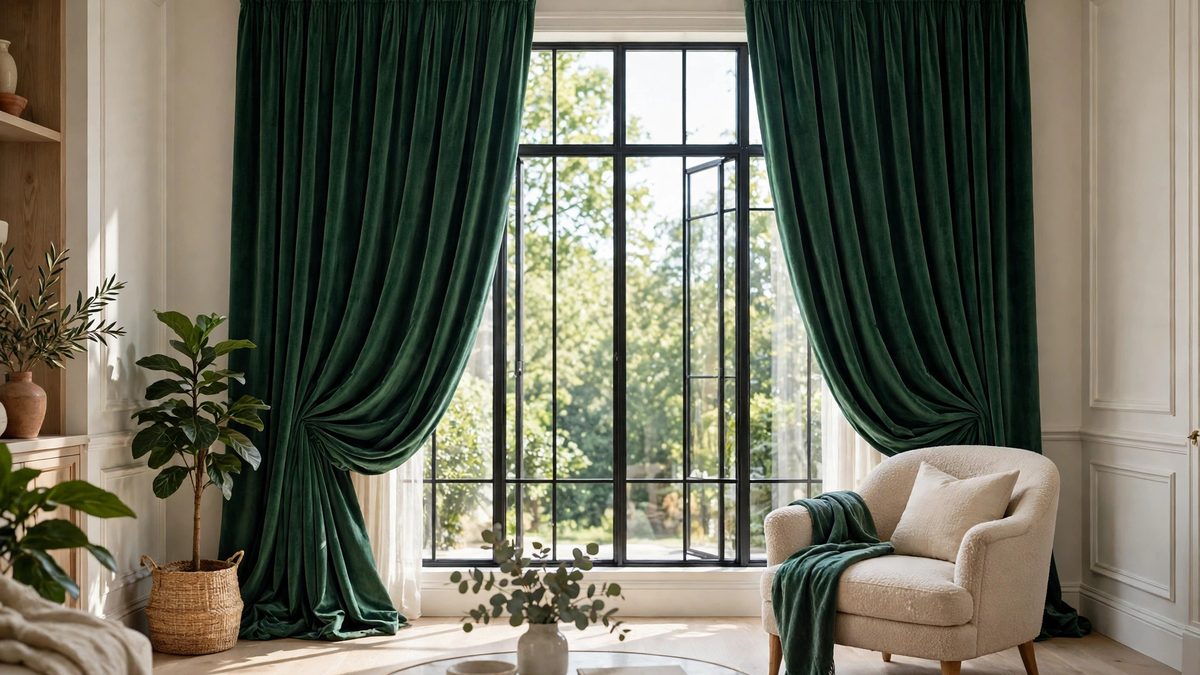
- Velvet brings drama, weight, and real light-blocking ability. It suits formal and moody rooms and hangs in lush folds, especially in deep green, navy, or rust.
- Cotton and cotton canvas are the versatile middle ground: crisp, washable in many cases, and available in every pattern imaginable.
- Sheers and voile filter light into a soft glow and protect privacy in the daytime, but they do not block views at night and are rarely enough alone.
- Faux silk and polyester blends mimic expensive fabrics at friendly prices and resist fading better than natural fibers in strong sun.
Lining is the quiet upgrade. A simple lining helps fabric hang better and last longer; blackout lining adds darkness for movie nights and protects the face fabric from UV; thermal lining helps on drafty windows. If you want the vocabulary for header styles and fabric types in one place, our guide to types of curtains is the companion piece to this one.
Color, Pattern, and Layering Strategies
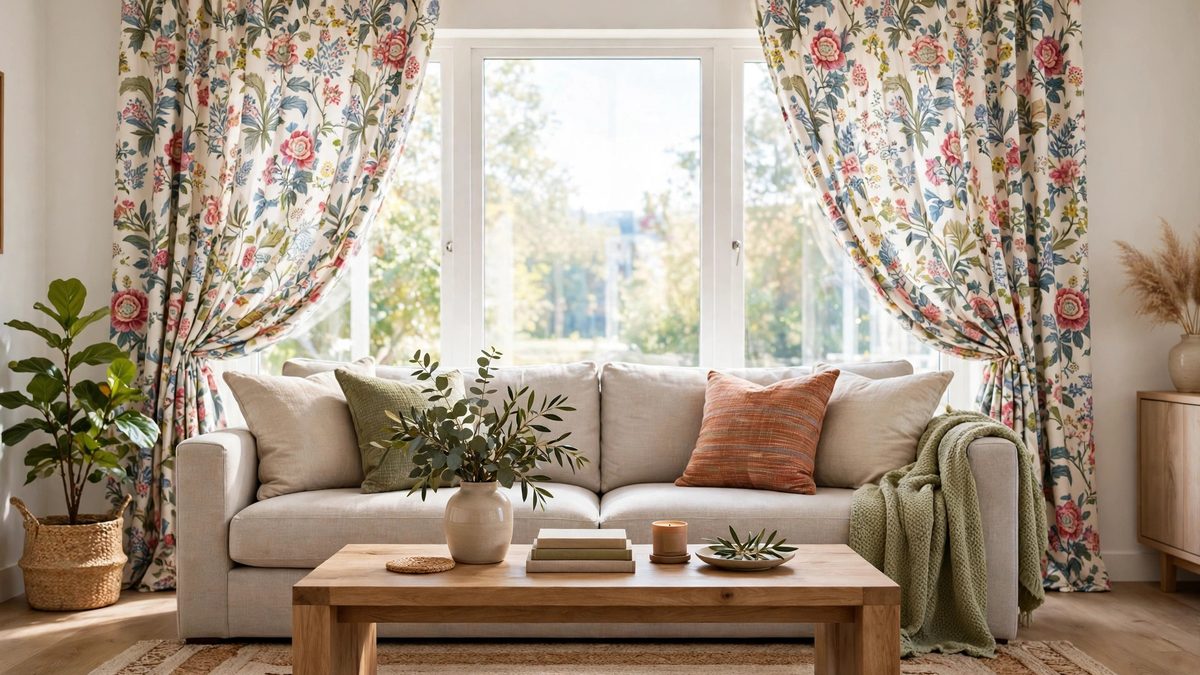
Three color strategies cover almost every living room. Tone-on-tone panels, a shade or two deeper than the walls, create a calm, expansive backdrop and are the safest choice in small rooms. Contrast panels in a bold color turn the windows into the room’s feature, and work best when that color repeats somewhere else, in a pillow, the rug, or art. Pattern panels, stripes, subtle geometrics, botanical prints, add energy to plain furniture, but keep the scale generous; tiny prints can look busy from across a room.
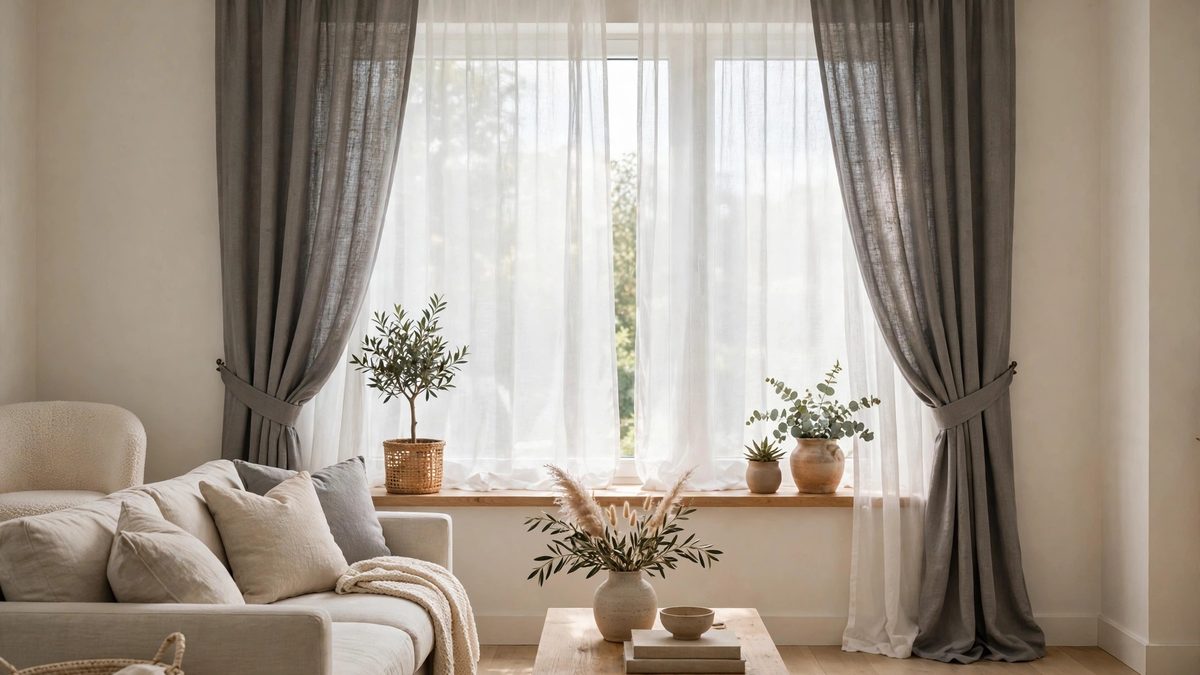
Layering multiplies your options. The classic living room stack is a sheer panel closest to the glass for daytime softness, plus working drapes on top for night privacy and insulation, often on a double rod. Another designer trick: stationary side panels that never close, paired with a functional shade behind them. You get the full-drapery look for a fraction of the fabric cost, while the shade does the daily work.
Tiebacks and holdbacks are optional finishing touches that shape the drape’s silhouette during the day. Simple metal holdbacks suit modern rooms; fabric tiebacks soften traditional ones. Steam or iron panels before hanging and let them hang for a few days; most creases relax on their own, and weighted hems settle into place.
Hardware deserves one last thought. Clip rings make panels easy to slide and add a few inches of length, which can rescue panels that measure slightly short. For windows that run nearly to the ceiling, a ceiling-mounted track gives the cleanest line of all and lets panels glide past awkward trim. Match the hardware finish to the room’s other metals so the rod reads as part of the scheme, not an afterthought.
Curtain Mistakes to Avoid
- Mounting the rod right at the frame. This is the most common error, and it shrinks the window visually. Go higher and wider.
- Buying panels before the rod is installed. Length depends on the rod’s real position. Rod first, tape measure second, fabric third.
- Not enough fullness. One narrow panel per side is the classic skimpy look. Budget for at least 1.5 times the rod width in total fabric.
- Stopping at sill length in the living room. Short panels belong in kitchens and over radiators. Living rooms want floor length.
- Forgetting how the room will be used. If the home theater corner needs darkness, plan blackout lining or a shade from the start, not as a regret purchase. For the bigger picture of how windows fit a whole scheme, see our living room design ideas.
Frequently Asked Questions
How long should living room curtains be?
Floor length is the standard for living rooms. With the rod mounted high, that usually means 96-inch panels for 8-foot ceilings and 108-inch panels for 9-foot ceilings. Hem them to float about 1/2 inch above the floor, just kiss it, or break slightly for a softer look.
What is the difference between drapes and curtains?
In everyday speech they are the same thing. Traditionally, drapes are heavier, lined, and more formal, often reaching the floor and designed to close fully, while curtains are lighter and can be any length. Retailers use the words loosely, so shop by weight, lining, and length rather than by the label.
Should living room curtains match the walls or contrast?
Both work, for different effects. Panels close to the wall color make a room feel larger and calmer. Contrasting panels make the windows a focal point. If you contrast, repeat the curtain color in at least one other element so it feels planned.
How wide should curtain panels be?
The combined panel width should total at least 1.5 to 2 times the rod width, and 2 to 2.5 times for fuller, more formal pleats. Since many ready-made panels are around 50 to 54 inches wide, wide windows often need two panels per side.
Can I use curtains and blinds together in a living room?
Yes, and it is one of the most practical combinations. A shade or blind inside or just outside the frame handles daily light and privacy, while drapery panels add softness, color, and height. This layering also improves insulation on older windows.
Conclusion
Great living room curtains come down to sequence: rod high and wide first, measurements from that rod second, floor-length panels with real fullness third, and fabric chosen for how the room actually lives. Add a lining that matches your light and insulation needs, echo your colors with intent, and steam the panels before the final reveal. Follow that order and your windows will stop being holes in the wall and start being one of the room’s best features.
