


The living room is where a home proves itself. It is where guests gather, where movie nights happen, and where most of us spend our waking hours at home — yet it is also the room that most often feels “not quite right.” The fix is rarely a full renovation. The best ideas for designing a living room are about order and intention: a layout that fits how you live, one clear focal point, layers of light and texture, and furniture scaled to the space. This guide walks through the process step by step, from the first measurement to the final styling touches, with ideas that work in houses, apartments, and everything in between.
Start With a Plan: Measure, List, and Prioritize
Before buying anything, measure the room — length, width, ceiling height, and the position of windows, doors, and outlets. Sketch a rough floor plan on paper or in a free room-planning app. A typical three-seat sofa runs about 84 inches long, and you will want walkways of roughly 30 to 36 inches so people can move around furniture without sidestepping.
Next, list what the room must do. Movie watching? Kids playing? A reading corner? Working from home twice a week? Rank the activities, because the top one should drive the layout. Finally, set a realistic budget order: seating first, then the rug, then lighting, then tables, then decor. Decor is the fun part, but it cannot rescue uncomfortable seating or glaring light.
How Do You Decorate Your Living Room? Build Around a Focal Point
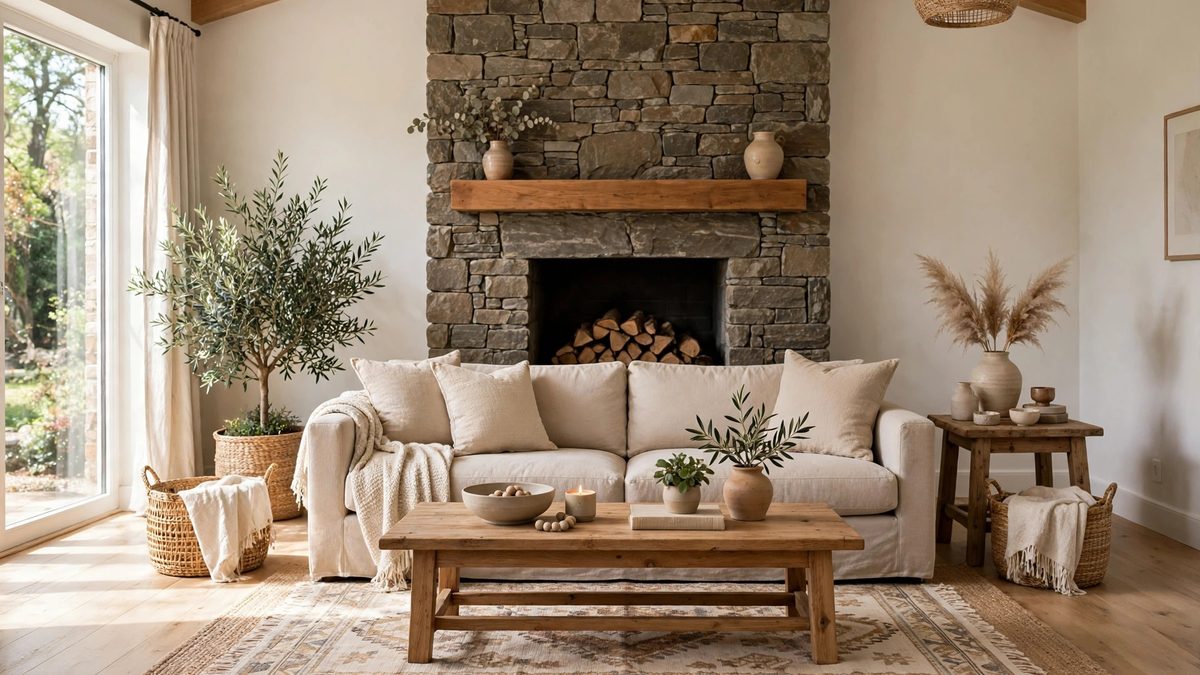
Every settled-looking room has one thing the eye lands on first: a fireplace, a big window, a media wall, or a statement piece of art. Decorate your living room by arranging the main seating to face or flank that focal point, then let everything else support it.
Anchor the seating group with a rug. Standard rug sizes are 5×8 feet for small groupings, 8×10 for most living rooms, and 9×12 for large or open-plan spaces. At minimum, the front legs of the sofa and chairs should sit on the rug — that single detail is what makes a furniture arrangement look intentional instead of scattered.
Place the coffee table so it sits about 14 to 18 inches from the sofa — close enough to set down a drink, far enough to stretch your legs. A good rule is a coffee table about two-thirds the length of your sofa. For styling ideas that make that surface work harder, see our guide to coffee table decor ideas.
Decorate a Living Room With Color That Connects
Color is the thread that ties mismatched furniture together. A reliable approach is the 60-30-10 guideline: about 60 percent of the room in a dominant neutral (walls, rug, large upholstery), 30 percent in a supporting color (curtains, accent chairs, throws), and 10 percent in an accent (pillows, art, objects) that you can swap seasonally.
If you are nervous about color, start with a warm white or soft greige on the walls and bring color in through textiles, which are cheap to change. Repeat your accent color at least three times around the room — a pillow, a book spine, a vase — and it will look deliberate rather than random. Paint is the lowest-cost transformation in the room, so sample generously and check swatches in morning and evening light before committing.
Sitting Room Decor Ideas for a More Formal Feel
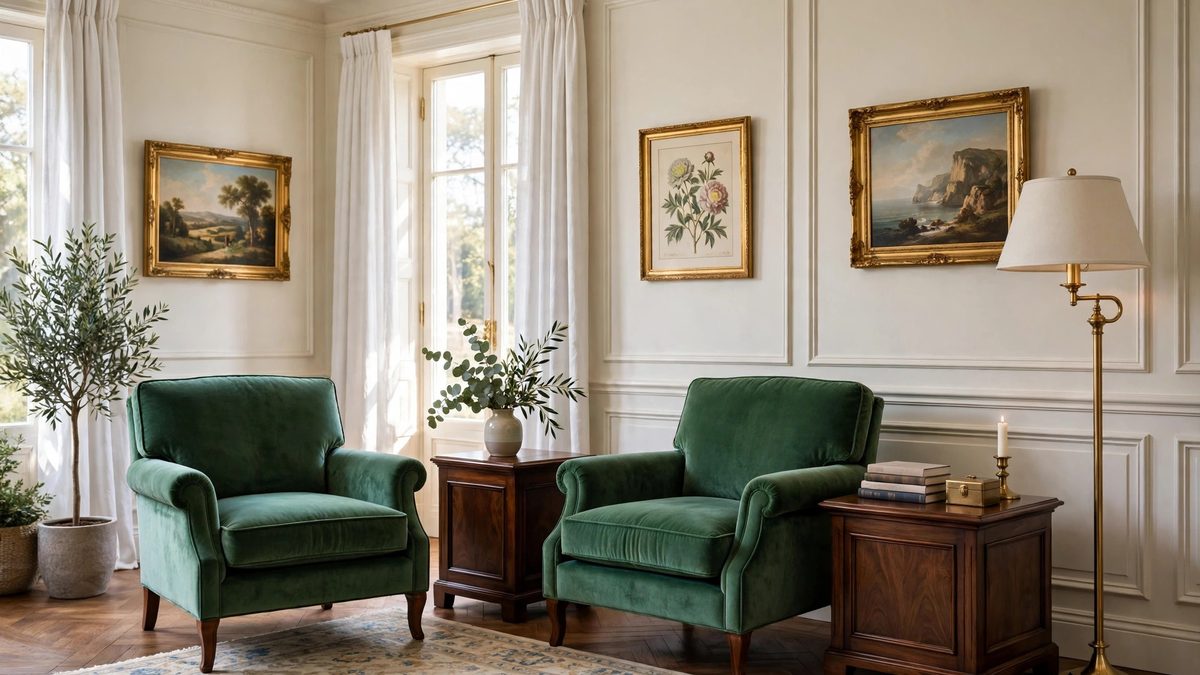
In many homes the sitting room is the grown-up, guest-facing space — no TV, no toys, just conversation. Sitting room decor ideas lean on symmetry and polish: a pair of matching armchairs, a sofa centered on the fireplace or a large mirror, and side tables with lamps at matching heights.
Layer in the details that make formality feel warm rather than stiff: a tray on the ottoman with a small stack of books and a candle, fresh or faux greenery in a ceramic pot, and curtains hung high and wide so the windows feel grand. A single beautiful object — a brass floor lamp, a vintage rug, an inherited cabinet — gives the room a story. If you are working with a smaller footprint, our small room decor ideas show how to keep that polished feeling without crowding the space.
Artistic Living Room Touches That Show Personality
An artistic living room is not about expensive art; it is about pieces that mean something, displayed with confidence. Hang the center of a picture or grouping at about 57 inches from the floor — the gallery standard — so it meets the eye naturally.
Try these personality-forward moves:
- One oversized piece of art above the sofa instead of a scatter of small frames
- A gallery wall that mixes photos, prints, and one unexpected object, like a woven basket or a vintage plate
- Books arranged by color on one shelf, with horizontal stacks used as risers for objects
- A handmade or thrifted piece with a story — pottery, a quilt over the sofa back, a travel find
Lighting matters here too: a picture light or a well-aimed floor lamp turns a favorite piece into a feature. Our guide to living room lamps covers how to mix floor, table, and accent lighting without glare.
Modern Room Decor: Clean Lines, Warm Materials
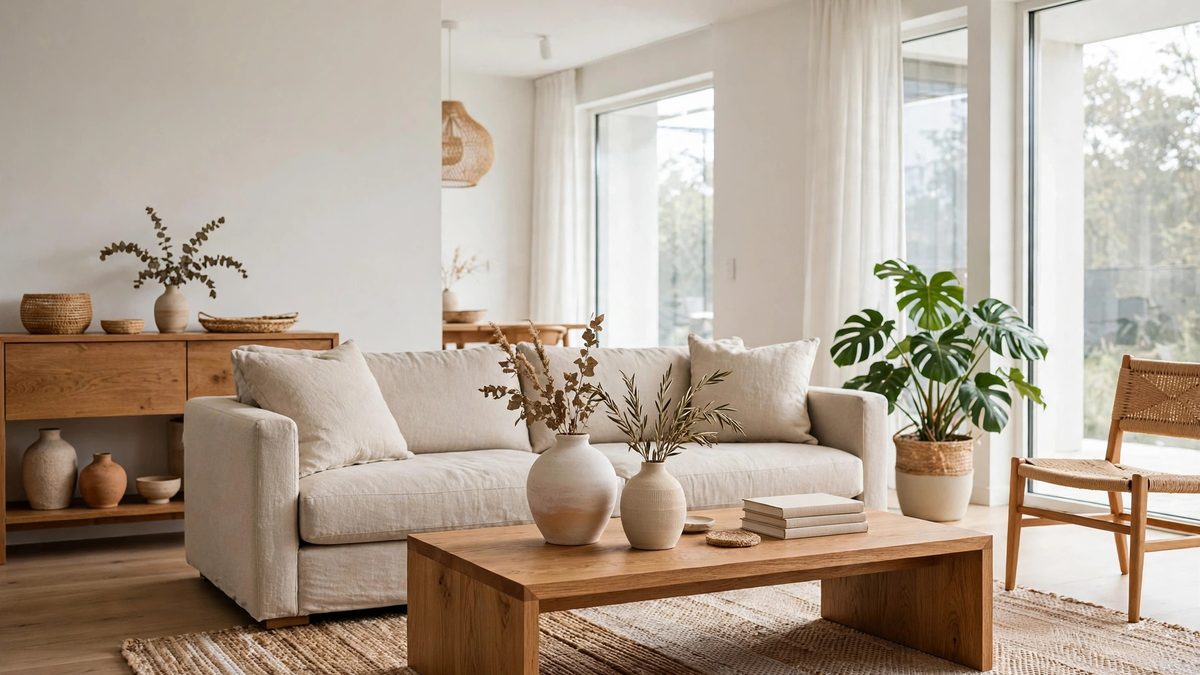
Modern room decor works when it balances restraint with warmth. Choose furniture with simple silhouettes and slim legs, which keeps the floor visible and the room feeling airy. Limit the palette to two or three colors plus one metal finish, and repeat that finish — matte black, brushed brass, or chrome — across lamp bases, hardware, and frames.
Then soften the geometry. Modern rooms fail when they turn cold, so add texture deliberately: a nubby wool throw, a jute or sisal rug underfoot, linen curtains, and at least one plant. Keep surfaces about one-third empty; the breathing room is what makes modern styling look calm instead of stark. Closed storage — a credenza or lidded baskets — hides the everyday clutter that modern rooms show mercilessly.
Room Ideas That Solve Real-Life Problems
Beyond style, the best room ideas fix daily annoyances:
- Dim, cave-like room: layer three kinds of light — overhead, task, and accent — and use warm bulbs (2700K) so evenings feel cozy.
- Echoey open plan: add a large rug, upholstered pieces, and curtains; soft surfaces absorb sound.
- Rental with white walls: lean on oversized art, a colorful rug, and removable peel-and-stick details instead of paint.
- Long, narrow room: float the sofa off the wall, place the rug crosswise, and create two zones — seating at one end, a desk or reading chair at the other.
- No entryway: a console table and a row of hooks behind the sofa zone creates a landing strip for keys and bags.
For a bit of background on how this hardest-working room in the house evolved, Wikipedia’s living room article traces it from formal parlour to everyday family space.
Common Living Room Mistakes to Avoid
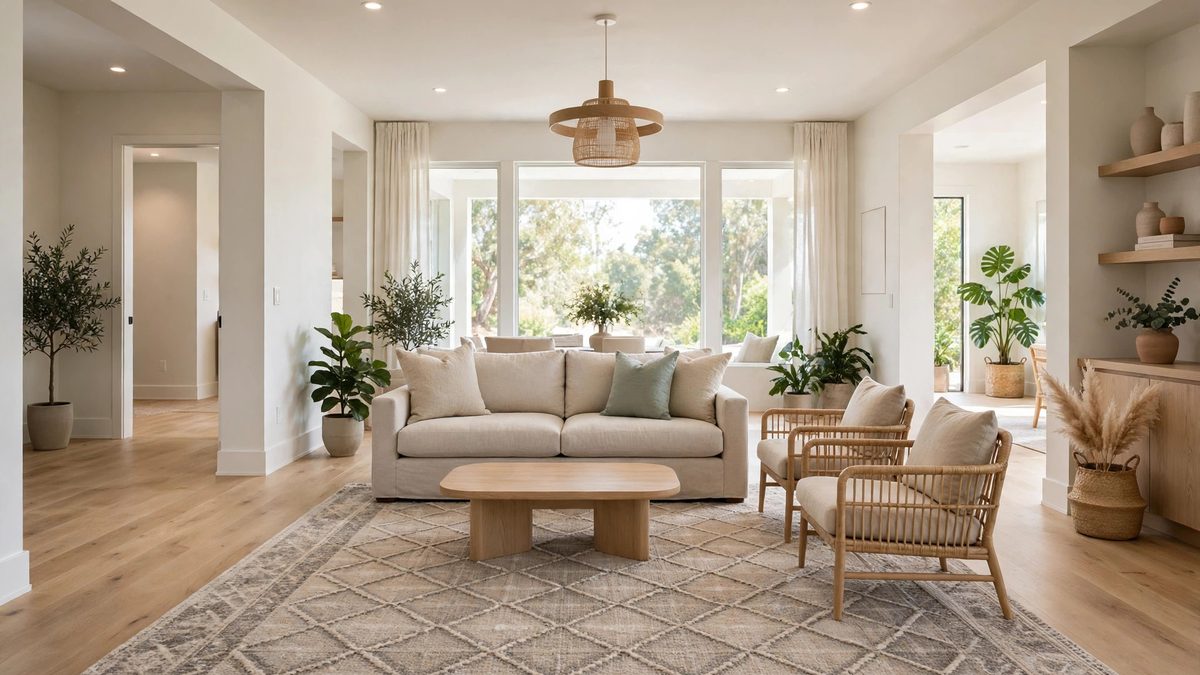
- Pushing all furniture against the walls. Floating the sofa even a few inches into the room makes conversation easier and the space feel designed.
- A rug that is too small. A postage-stamp rug under only the coffee table fragments the room; size up so front legs of seating rest on it.
- One harsh overhead light. Add lamps at seated eye level and put lights on dimmers where you can.
- Art hung too high. Aim for the center at about 57 inches, and keep the bottom of a piece 6 to 8 inches above a sofa back.
- Buying a matching furniture set. Rooms look richer when pieces coordinate rather than match exactly.
Frequently Asked Questions
What should I buy first when designing a living room?
Start with the sofa, since it is the biggest piece and the one you use most. Then the rug sized to the seating area, followed by lighting and tables. Decor and art come last and are the easiest to change.
How do I design a living room on a small budget?
Paint first, rearrange second, and shop your own house third — pieces from other rooms often solve living room problems for free. Then spend on textiles: curtains, pillows, and a throw can transform the room for the cost of a single chair.
What colors make a living room feel bigger?
Light, warm neutrals on walls reflect the most light, and using one continuous color for walls and trim reduces visual breaks. You can still use deeper colors on furniture and accents for contrast.
How far should the sofa be from the TV?
A common guideline is about 1.5 to 2 times the screen’s diagonal measurement — so roughly 8 to 10 feet for a 65-inch TV. Comfort matters more than the exact number; you should see the whole screen without turning your head.
How many patterns can I mix in one room?
Two or three patterns at different scales work well — one large, one medium, one small — tied together by a shared color. Keeping the palette limited is what lets the patterns play nicely.
Conclusion
Designing a living room is less about following a style label and more about making a series of good, practical decisions: measure first, anchor the seating on a rug around one focal point, connect the colors, layer the light, and leave room for the pieces that tell your story. Start with the layout and the big pieces, then style slowly. A room that works beautifully for your everyday life will always look beautiful too.
