
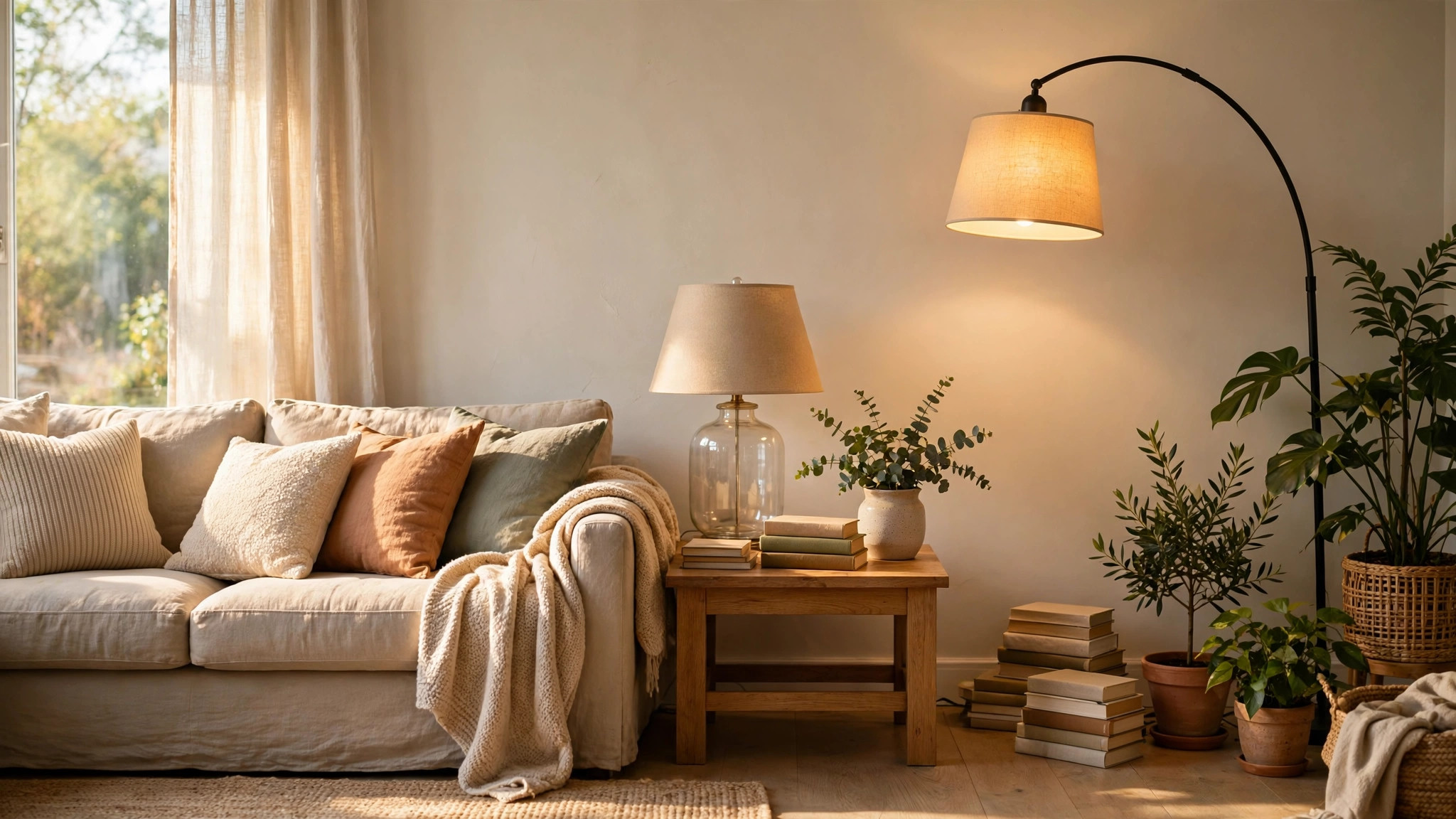

Overhead lighting alone rarely makes a living room feel inviting. It flattens everything, casts shadows in the corners, and leaves the seating area looking unfinished. The right living room lamps fix all of that in one move: they add warm pools of light exactly where you sit, read, and relax, and they give the room the layered, finished look you see in styled photos.
The good news is that choosing lamps is mostly about a few simple measurements and one clear idea of what each lamp needs to do. This guide walks you through sizes, styles, and placement so you can buy with confidence the first time, whether your room is a compact apartment corner or a large open-plan space.
The Right Size: Lamp Height Rules That Never Fail
Most lamp mistakes are really size mistakes. A lamp that is too short looks lost on the table, and an oversized lamp crowds everything around it. Start with the surface the lamp will sit on. A standard living room end table is about 22 to 28 inches tall. On a table in that range, a table lamp with a total height of roughly 28 to 34 inches usually lands in the sweet spot.
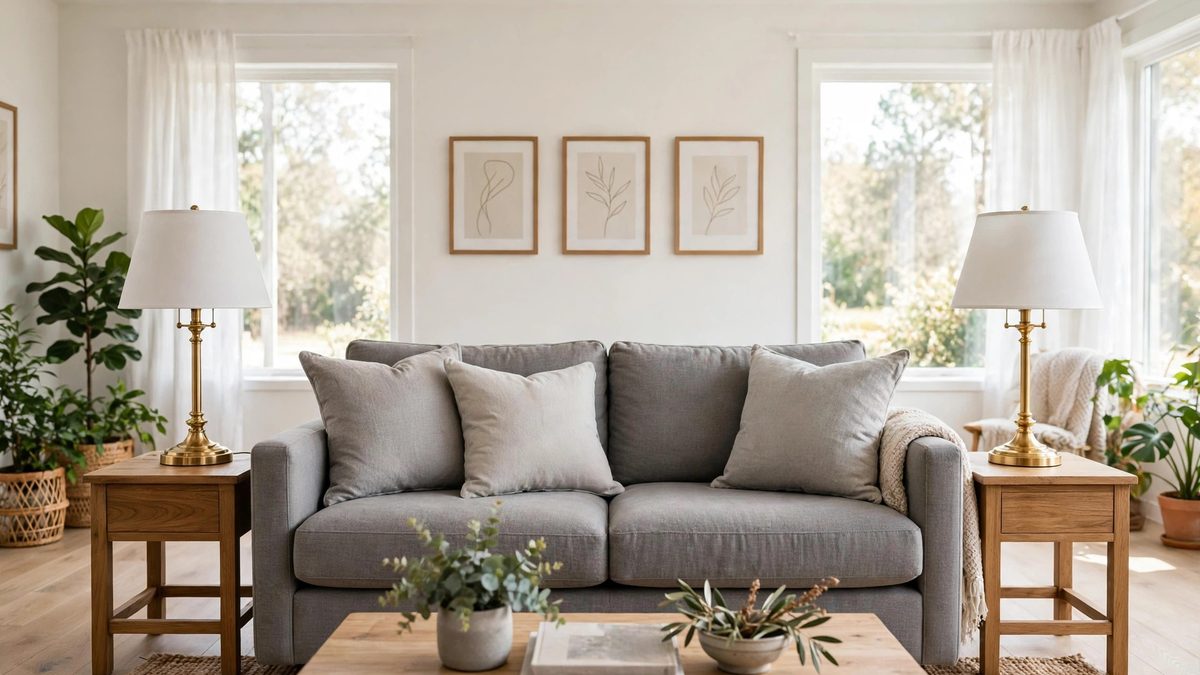
The combined height of table plus lamp should fall between about 58 and 64 inches from the floor. That range matters because it puts the bottom of the lampshade close to eye level when you are seated, which is roughly 40 to 48 inches high for most people on a sofa. When the shade bottom sits at seated eye level, you get light on your book and your lap instead of glare in your eyes.
Shade proportions matter just as much. A common formula is a shade height of about two-thirds the height of the lamp base, with a shade diameter that is noticeably wider than the base itself. The shade should also stay well inside the edge of the table below it. For a deeper walkthrough of proportion formulas, the table lamp guide at Lightopia is a helpful reference.
Floor lamps follow their own rule. Most standard floor lamps stand 58 to 68 inches tall, which places the light above seated heads and spreads it softly across the seating area. In a room with low ceilings, stay toward the shorter end. In a room with tall ceilings, a taller lamp helps fill the vertical space so the room does not feel top-heavy with empty air.
Unique Living Room Lamps That Double as Decor
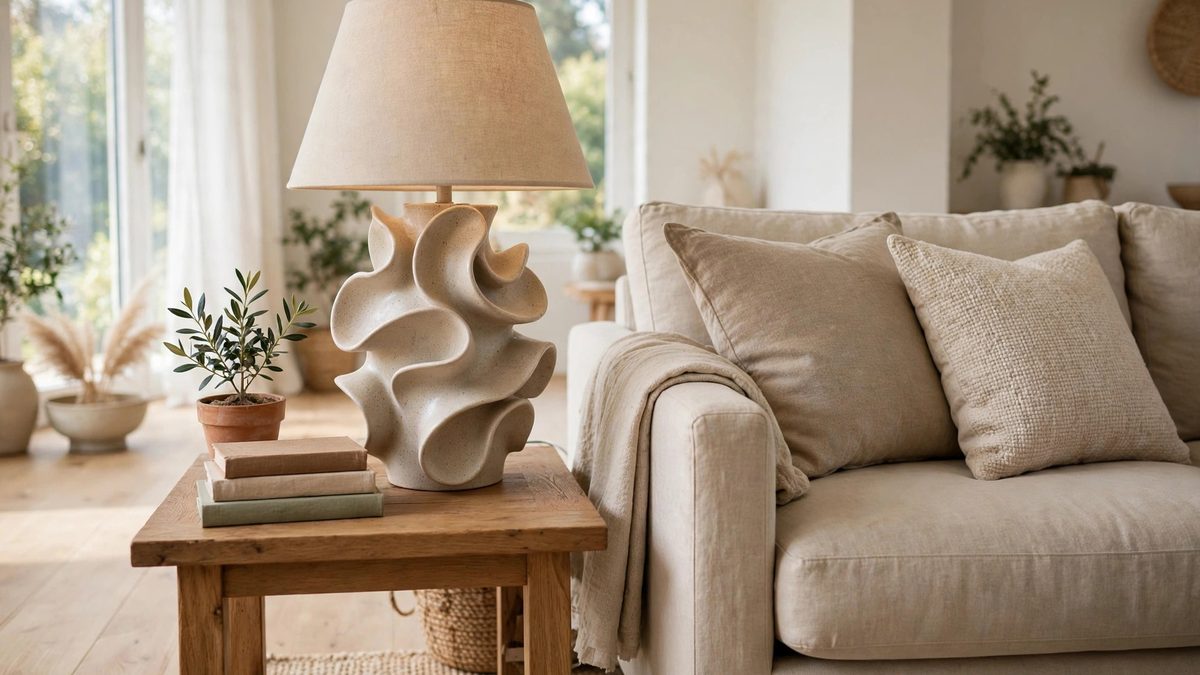
Once the size is right, a lamp can become one of the most interesting objects in the room. Unique living room lamps earn that label through shape, material, or silhouette rather than loud color, so they stay stylish for years. Think of a sculptural ceramic base with a handmade texture, an arched metal floor lamp that reaches over the sofa, or a pleated shade that casts a patterned glow.
A few styles that consistently work well:
- Sculptural ceramic and stone bases in cream, clay, or charcoal tones that read like small pieces of pottery.
- Arc floor lamps that curve over a reading chair and free up the side table entirely.
- Globe and mushroom lamps that give a soft, mid-century glow and look great on consoles.
- Paper and fabric lantern styles that diffuse light gently and suit calm, minimalist rooms.
- Vintage-inspired pharmacy lamps in aged brass for a focused beam of reading light.
The trick is to choose one statement lamp per seating zone, not three competing for attention. If your sofa area already has a bold rug or colorful art, let the lamp be the quiet texture piece. If the room is mostly neutral, a distinctive lamp can carry the personality. Our guide to ideas for designing a living room shows how statement pieces like these fit into a whole-room plan.
Glass Table Lamps for Living Room Sparkle
Glass table lamps for living room spaces are a favorite for a reason: glass adds shine and color without adding visual weight. In a small room, a clear glass base almost disappears, so the table feels open while the light still does its job. In a larger room, seeded, smoked, or colored glass brings in a subtle tint that echoes other accents.
Mercury glass and lightly textured glass hide fingerprints and dust better than perfectly clear glass, which is worth knowing if the lamp sits in a busy family room. Colored glass in amber, smoke gray, or soft blue works beautifully when it repeats a color that already exists in your pillows, art, or rug.
Styling a glass lamp is simple. Set it on a stack of two books or beside a small plant so the light catches something alive next to it. Keep the shade simple, usually white or natural linen, because the base is the star. And because glass lamps often sit near seating, choose a warm white bulb around 2700K so the glow reads cozy rather than clinical.
Tall Floor Decor for Living Room Corners
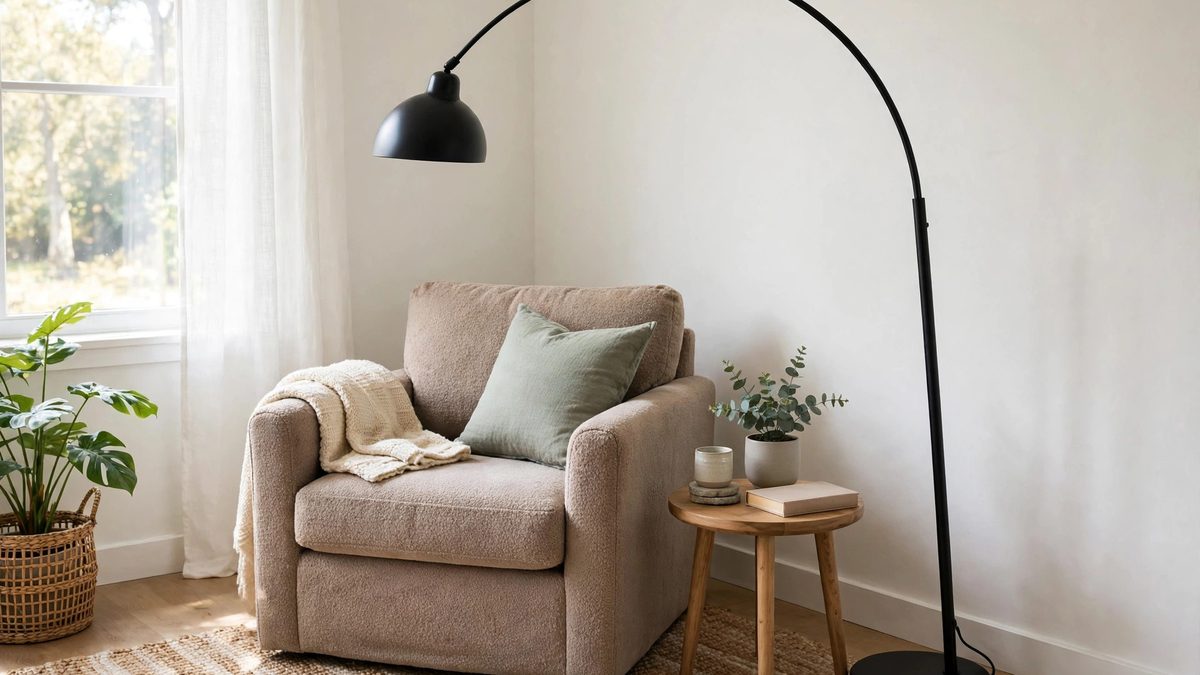
Every living room has at least one corner that swallows furniture and still looks empty. Tall floor decor for living room corners solves that problem by adding height where the eye naturally stops. A floor lamp is the hardest-working option, but it is not the only one.
Consider these corner fillers, alone or in pairs:
- A tall arc or tripod floor lamp, which adds both height and usable light.
- A fiddle leaf fig or olive tree in a substantial planter, real or good-quality faux.
- A tall vase with pampas grass, branches, or eucalyptus stems for soft, sculptural height.
- A ladder shelf or narrow etagere styled with books, baskets, and one small plant.
- A floor-length mirror leaned against the wall to bounce lamp light around the room.
Whichever piece you choose, aim for something that rises at least two-thirds of the way toward the ceiling line of your other furniture groupings. Pieces that stop at chair height tend to look like clutter, while one confident tall piece reads as a deliberate design choice. Leave a few inches of breathing room around it so it feels curated rather than stuffed in.
Layering Lamp Light With the Rest of the Room
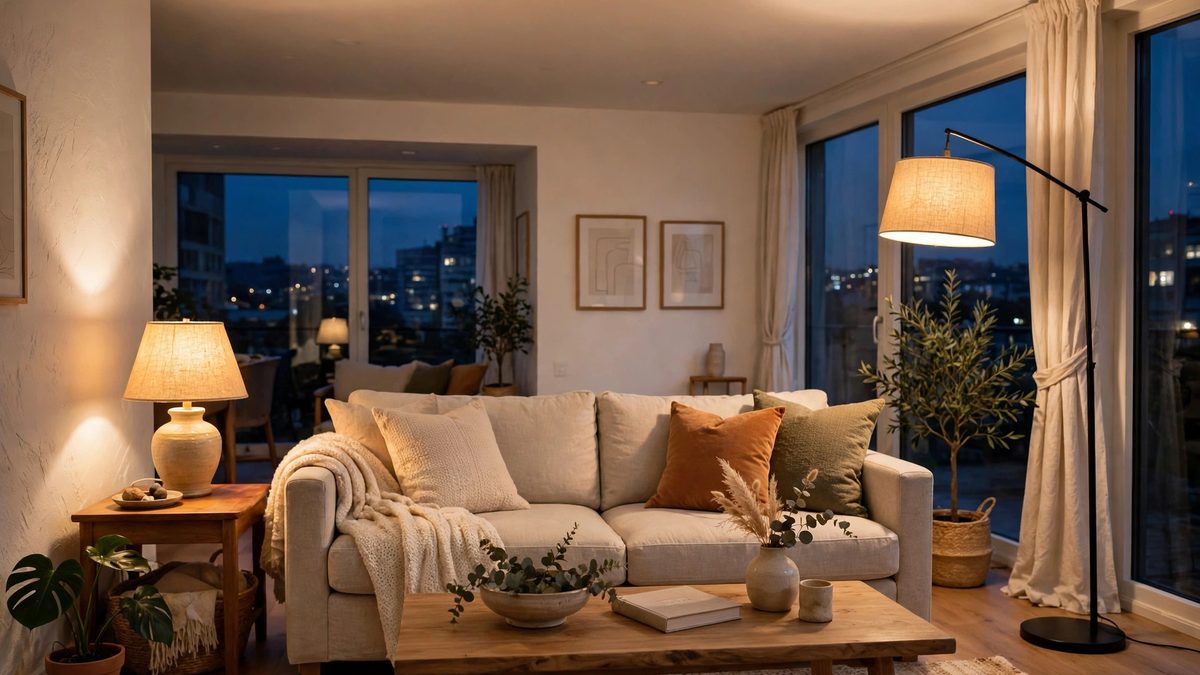
Designers talk about three layers of light: ambient (the overall glow), task (focused light for reading or work), and accent (light that highlights art, plants, or architecture). Lamps handle the second and third layers beautifully, and they soften the first. A practical living room usually needs at least two lamps in the seating area, plus more for a large room.
Place lamps in a loose triangle around the seating so no one sits in a pool of darkness. A lamp on each end of the sofa is the classic arrangement, but an arc lamp on one side and a table lamp on the other can feel more relaxed and modern. If your room includes a dining corner, the same layering logic applies there too, and our over dining table lighting ideas can help you match the mood across both spaces.
Bulb choice ties it all together. Warm white bulbs around 2700K keep living rooms feeling restful, and a dimmer or three-way bulb lets one lamp serve movie night and reading night equally well. Many people like roughly 450 to 800 lumens from a table lamp used for ambience, and more for a dedicated reading lamp.
Common Lamp Mistakes to Avoid
- Buying one lamp when the room needs two or three. A single lamp creates one bright island and dark corners.
- Choosing by looks alone and ignoring height. Check the total height against your table before ordering.
- Matching every lamp exactly. Coordinated is good; identical triplets can look like a hotel room.
- Forgetting the cord. Plan where the cord runs so it does not cross a walkway or dangle visibly.
- Skipping the styling around the base. A lamp plunked alone on a bare table looks unfinished; a book, small tray, or plant nearby completes it, the same trick that makes coffee table decor work.
- Using mismatched bulb color temperatures. Keep every bulb in the room in the same warm range so the light feels unified.
Frequently Asked Questions
How many lamps should a living room have?
Most living rooms look and feel best with at least two or three lamps in the seating area, plus overhead or natural light. A small room may need only two, while a large or open-plan room can comfortably use four spread across different zones.
How tall should a living room table lamp be?
On a typical end table of 22 to 28 inches, look for a lamp about 28 to 34 inches tall overall, so the table and lamp together measure roughly 58 to 64 inches. The bottom of the shade should land near seated eye level.
What color light bulb is best for a living room?
Warm white, around 2700K, is the most flattering and relaxing choice for living rooms. Avoid mixing warm and cool bulbs in the same room, because the mismatch is easy to see and hard to unsee.
Can I mix different lamp styles in one room?
Yes, and it usually looks better than a matched set. Keep one element consistent, such as the metal finish, shade color, or general height, and let the shapes vary. That balance reads as collected rather than chaotic.
Where should a floor lamp go in the living room?
Beside a reading chair, at the end of a sofa, or in an empty corner are the classic spots. Position it so the light falls on the seat next to it and the cord can reach an outlet without crossing a walkway.
Conclusion
Great living room lamps are equal parts measurement and personality. Get the heights right first, table plus lamp between 58 and 64 inches, shade at seated eye level, and then have fun with the fun part: a glass base that catches the afternoon sun, one sculptural piece with real presence, and a tall lamp that finally finishes the corner. Layer two or three lamps around your seating, keep the bulbs warm and consistent, and your room will feel welcoming at every hour of the day.
