
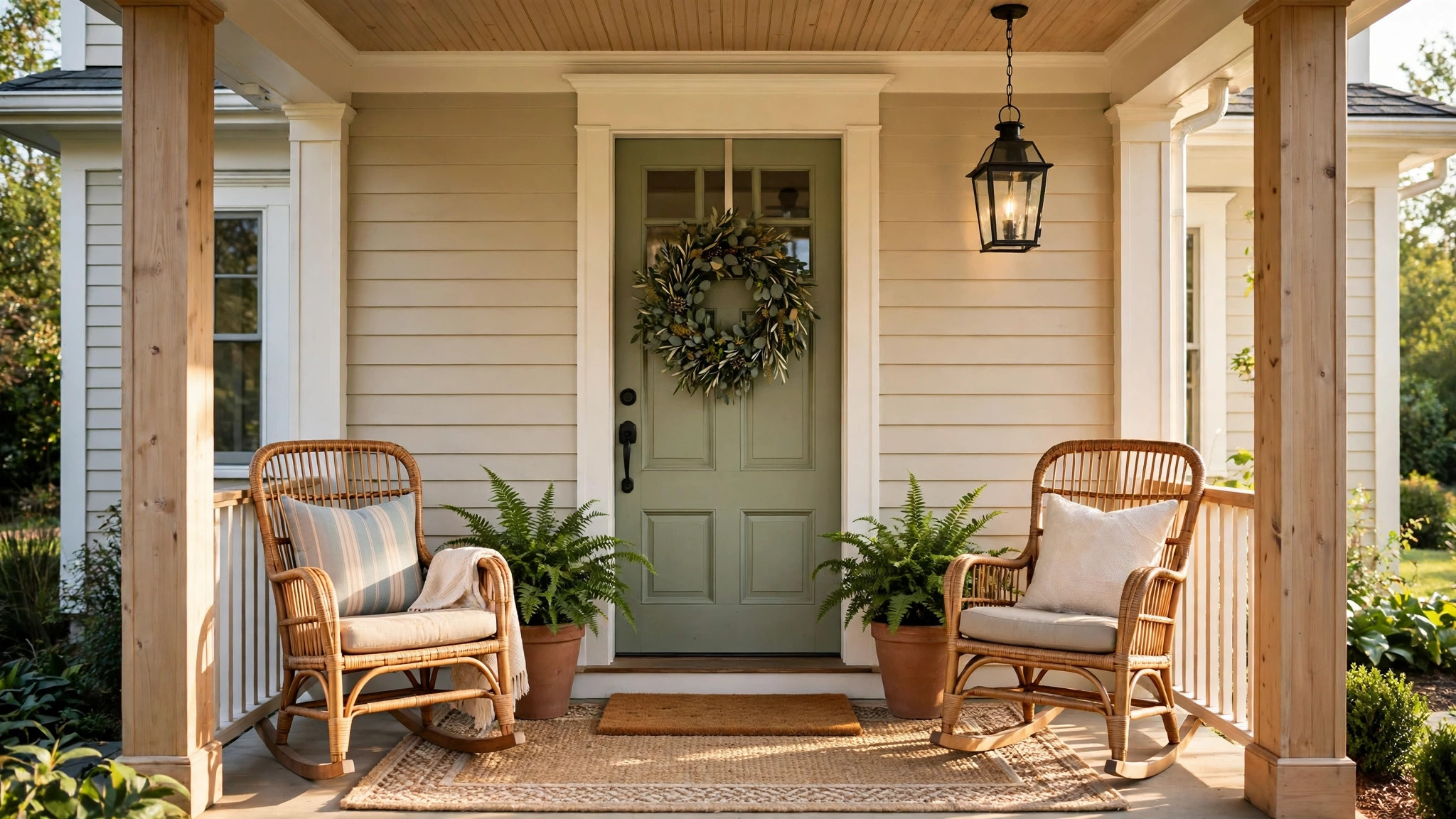

Your porch is the first five seconds of your home. Before a guest reaches the doorbell, they have already decided whether the house feels cared for, welcoming, or a little forgotten. The best front porch ideas do not require a renovation or a big budget. They rely on a few well-chosen layers: something soft underfoot, something green, something glowing, and one or two pieces that say people actually live here.
Whether your porch is a wide wraparound, a simple covered stoop, or a narrow strip in front of a townhouse, the same principles apply. Start at the door and work outward, keep a clear path, and choose pieces that can handle weather. Here is how to build a porch that works hard in every season.
Front Porch Decorating Ideas That Start at the Door
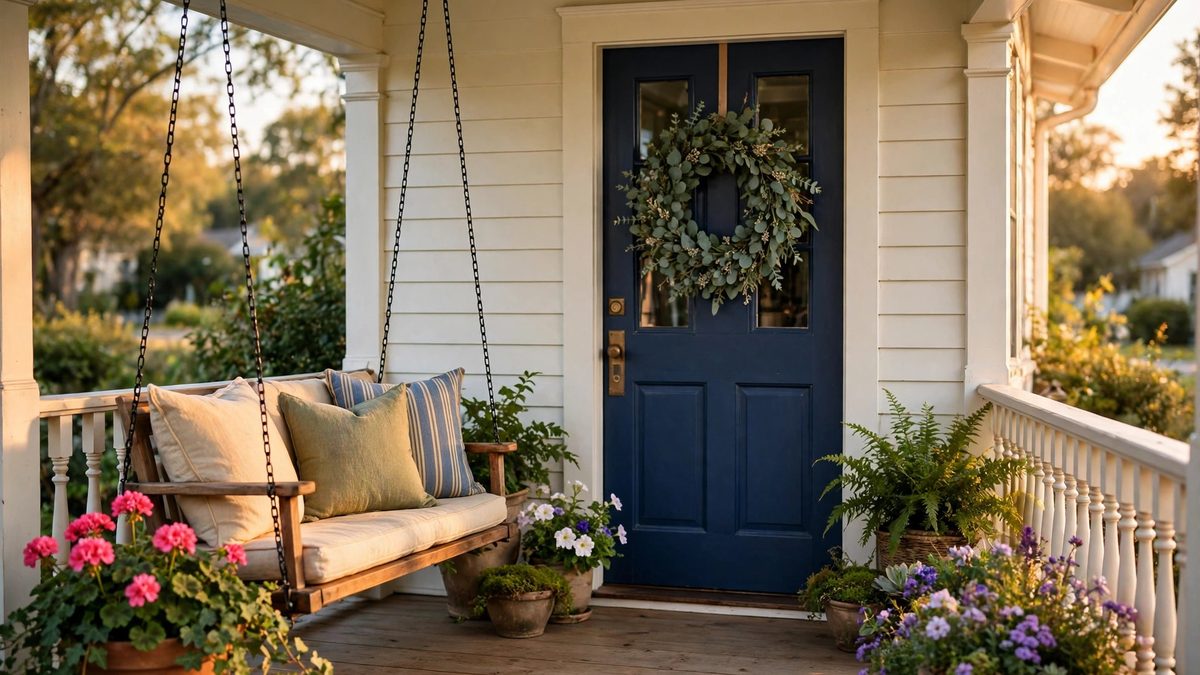
The front door is the anchor of the whole porch, so begin there. A door painted in a confident color, deep green, classic black, warm red, or a cheerful blue, instantly lifts plain siding. If painting feels like too much, a seasonal wreath and updated hardware can do a surprising amount of work on their own.
Frame the door with symmetry, the oldest trick in porch decorating. A matching pair of planters, lanterns, or topiaries on either side makes even a modest entry look intentional. A standard single door is about 36 inches wide, so planters in the 14- to 20-inch range usually suit it without crowding the swing of the door.
Underfoot, layer your welcome. An outdoor rug in the 3-by-5-foot range under a coir doormat is the combination stylists reach for again and again. A typical doormat for a single door measures about 18 by 30 inches; double doors call for a wider mat, around 24 by 36 inches or more. The rug adds color and pattern, while the coir mat does the gritty work of catching dirt.
Finish the doorway with numbers and light. House numbers at least 4 inches tall are far easier to read from the street, which guests and delivery drivers both appreciate. A wall lantern or pendant near the door, on a warm bulb, makes the whole entry glow after dark. For more ways to make the door itself the star, see our front door decor ideas.
Seating That Turns a Pass-Through Into a Destination
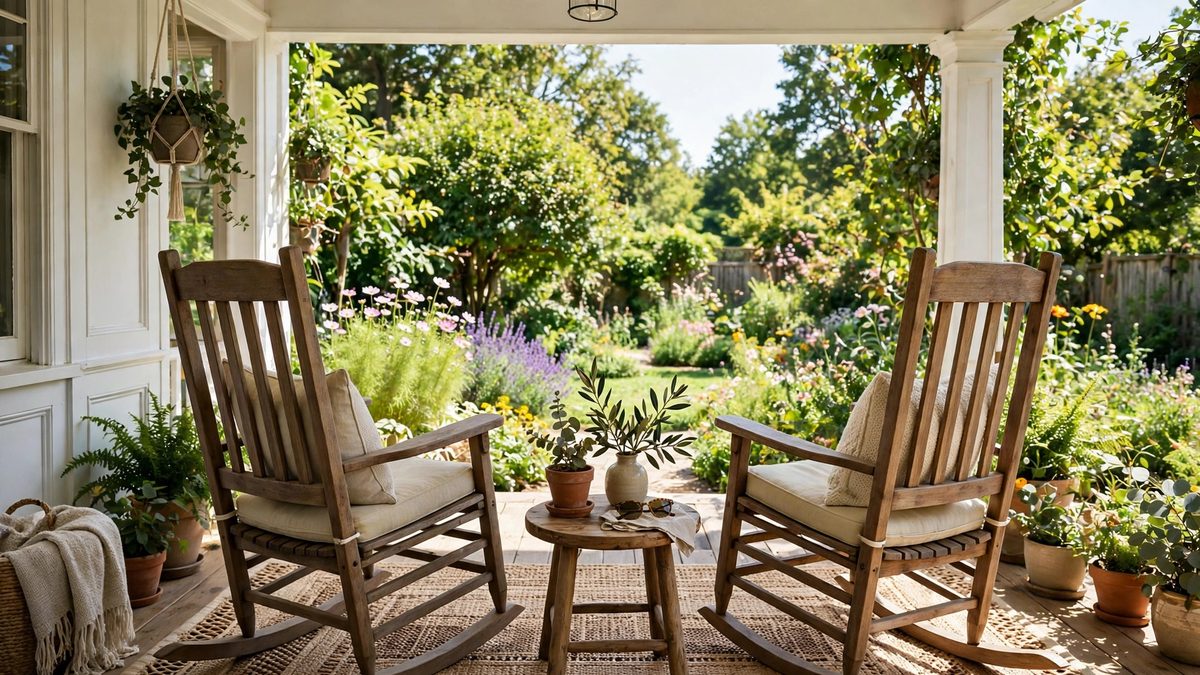
If your porch is at least about 6 feet deep, you have room for real seating, and real seating changes how a porch gets used. A porch swing is the classic: most swings are 4 or 5 feet long, and they need roughly 2 feet of clearance behind and in front to rock comfortably. Two rocking chairs angled toward each other with a small side table between them create the same invitation on porches where a swing will not fit.
Dress seating like an outdoor room, but with materials that can take the weather. Outdoor cushions in solution-dyed acrylic or polyester shrug off sun and the occasional rain shower. One throw pillow per seat is plenty; a pile of pillows looks lush in photos and becomes a storage problem in real life.
Add a surface for drinks and books, a drink table, garden stool, or small bench, and the porch becomes the spot for morning coffee and evening unwinding instead of just a route to the mailbox. A ceiling fan, if your porch has a ceiling with an outdoor-rated fixture box, keeps air moving on still summer evenings and is one of the most appreciated upgrades porch owners make.
Greenery, Planters, and Finishing Touches
Plants soften architecture and signal that a home is tended. The reliable formula is a thriller, filler, and spiller in each large planter: something tall in the center, something mounding around it, and something trailing over the edge. Ferns thrive on shaded porches, while sun-loving options like geraniums, petunias, and ornamental grasses handle bright exposures.
Hanging baskets and a window box or two repeat the greenery at eye level, which makes a shallow porch feel deeper. If your thumb is not green, good faux plants have become convincing enough for porch use, especially in spots too shady or too hot for anything real to survive.
Small touches complete the scene:
- A lantern grouping with flameless candles for a safe, windproof glow.
- A woven basket by the door for shoes, garden tools, or a rolled throw.
- A seasonal sign or flag, swapped a few times a year to keep things fresh.
- A bench or boot tray under the eaves for muddy-day practicality.
For endless photo inspiration organized by style, browsing the porch galleries on Houzz is a great way to spot combinations you would never think of on your own.
Small Front Porch Ideas for Tight Spaces
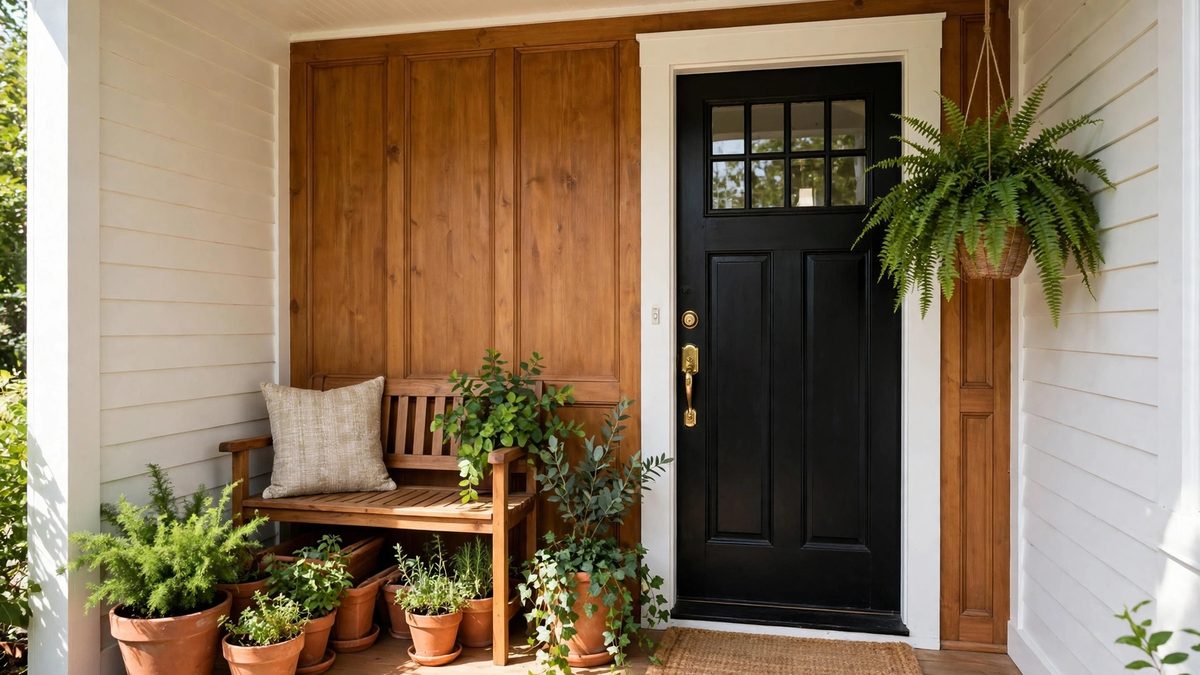
A small porch or plain stoop can still make a strong first impression; it just needs every inch to earn its place. Think vertical. A tall, narrow planter, a wall-mounted mailbox, and a wreath draw the eye up and add presence without eating floor space. Wall-mounted lantern sconces beat tabletop lanterns when there is barely room to stand.
Choose one compact seat if any: a single bistro chair, a small bench, or a folding stool that can move aside. If even that is too much, let a pair of potted plants flank the door and call it done. Symmetric greenery reads as a complete design at almost any scale.
Keep the walkway ruthlessly clear. Guests carrying bags, kids on scooters, and delivery boxes all need the same path, and a cramped porch feels smaller when people have to sidestep decor. A slim layered mat combo, one bold door color, and clean, swept surfaces will always beat a crowd of small objects.
Seasons are your secret weapon on a small porch. One planter can carry spring bulbs, summer annuals, fall mums, and winter evergreen branches in turn. Our decorating tips for fall include porch-ready ideas that scale down beautifully to a stoop.
Back Porch Ideas for Private, Lived-In Comfort
The back porch plays a different role: it is private, relaxed, and usually bigger in spirit even when it is not bigger in size. Back porch ideas lean toward comfort and long evenings. Start with the best seating you can fit, a deep lounge chair, an outdoor sofa, or a simple daybed-style bench with cushions, and arrange it for conversation rather than for viewing the house.
Privacy makes a back porch feel like a retreat. Outdoor curtains on one side, a lattice panel with climbing vines, tall planters with grasses, or a shade sail overhead can screen neighbors without building a fence. The same tricks that make a balcony privacy screen work in an apartment scale up nicely here.
Plan for the hours you will actually use it. String lights or a couple of lanterns extend the porch past sunset. A small outdoor rug under the seating defines the zone, and a weatherproof storage box keeps cushions, throws, and citronella supplies at hand instead of in the garage. Add a side table for every seat, because a drink with nowhere to land is the fastest way a pretty porch stops being used.
Porch Mistakes to Avoid
- Blocking the path. Decor should frame the walkway, never narrow it. Keep at least a comfortable shoulder width of clear passage to the door.
- Choosing indoor fabrics outdoors. Regular cushions and rugs fade, mildew, and fall apart fast. Outdoor-rated materials cost a little more and last seasons longer.
- Forgetting lighting until dark. A porch that glows looks welcoming and is safer to navigate. Solar path lights and one good door lantern cover most needs.
- Overdoing seasonal decor. A few strong pieces read as festive; a yard-sale jumble reads as clutter. Edit until each item has room to breathe.
- Skipping maintenance. A swept floor, a wiped-down door, and deadheaded plants do more for curb appeal than any new purchase.
Frequently Asked Questions
How do I decorate a front porch on a budget?
Start with paint, which is the cheapest transformation available: a freshly painted door and swept, clean surfaces change everything. Add one layered doormat combo, two planters you fill seasonally, and a wreath. Thrifted rocking chairs and end-of-season outdoor cushions stretch the budget further.
What size rug should go on a front porch?
A 3-by-5-foot outdoor rug works under a standard 18-by-30-inch doormat for most single-door entries. Wider entries and double doors can take a 4-by-6-foot rug with a mat around 24 by 36 inches. Leave a border of porch floor visible around the rug so it looks placed, not wall-to-wall.
How much seating can a small porch hold?
Measure depth first. Porches about 6 feet deep or more can hold chairs or a swing with comfortable clearance. Shallower stoops are better served by a slim bench or a single chair, or by skipping seating and investing in plants and lighting instead.
What plants are easiest for a front porch?
Ferns are famously forgiving on shaded porches. For sun, geraniums, petunias, and ornamental grasses are hard to kill with regular watering. In very hot or very shady spots, high-quality faux plants are a perfectly respectable shortcut.
How can I make my porch feel welcoming at night?
Layer warm light: a lantern or pendant by the door, a couple of flameless candles or solar lights along the steps, and, if you have seating, string lights overhead. Warm bulbs around 2700K keep the glow inviting rather than harsh.
Conclusion
A memorable porch is built in layers, not in a shopping spree. Anchor the door with color, symmetry, and a layered mat. Add seating if the depth allows, dress it in outdoor fabrics, and bring in plants at more than one height. Light it warmly for the evening, keep the path clear, and let the seasons rotate through one or two planters. Do those things, front or back, large or small, and your porch will do its real job: making people glad they arrived.
