
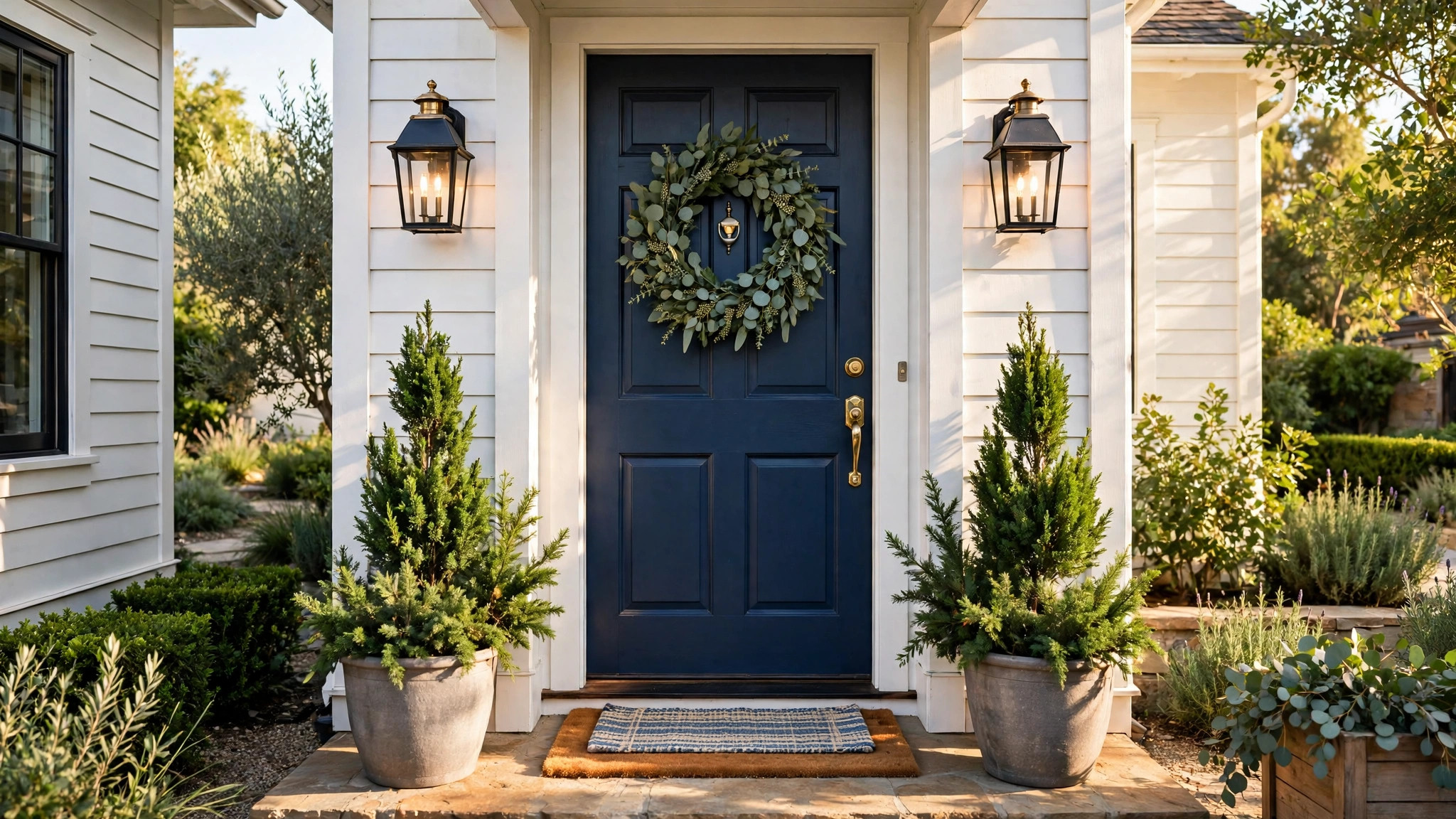

Your front door is the hardest-working square footage in your home’s appearance. It is in every listing photo, every holiday card backdrop, and every first impression your house makes. The good news is that front door decor ideas do not require a renovation. A coat of paint, a right-sized wreath, a couple of planters, and better lighting can transform an entry in a single weekend, often for less than the cost of a nice dinner out.
This guide moves from the door itself outward: color and hardware first, then wreaths, mats, planters, and the small details like numbers and lighting that make an entry look finished rather than decorated as an afterthought. If your porch beyond the door needs attention too, our front porch ideas guide picks up where this one leaves off.
Start With the Door Itself: Color and Hardware
Paint is the single biggest lever in entry decor. A standard front door, typically 36 inches wide by 80 inches tall, is a small surface, so a quart of exterior paint usually covers it with paint to spare. Color choice sets the tone for everything else:
- Classic black or deep charcoal: formal, timeless, and striking against light siding and brick alike.
- Deep navy: softer than black, beautiful with brass hardware and white trim.
- Heritage red or burgundy: the traditional welcome color, at home on colonial and farmhouse exteriors.
- Sage or olive green: calm and current, lovely with natural wood and stone.
- A bold personal pick, like teal or mustard: best when the rest of the entry stays simple so the door is the whole statement.
Hardware is the jewelry. Swap dated handles and kick plates for a coordinated set in matte black, satin nickel, or unlacquered brass, and make sure the finish echoes your house numbers, mailbox, and light fixture. A dated door with fresh hardware and paint regularly passes for a new door.
Wreaths for Every Season
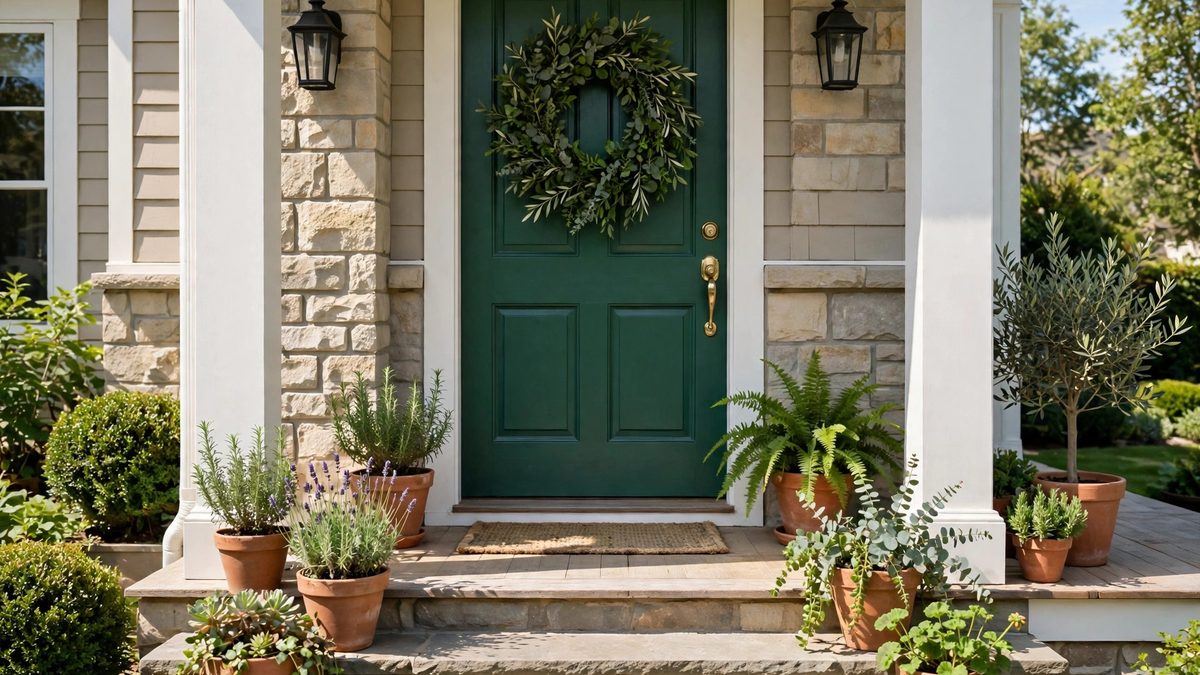
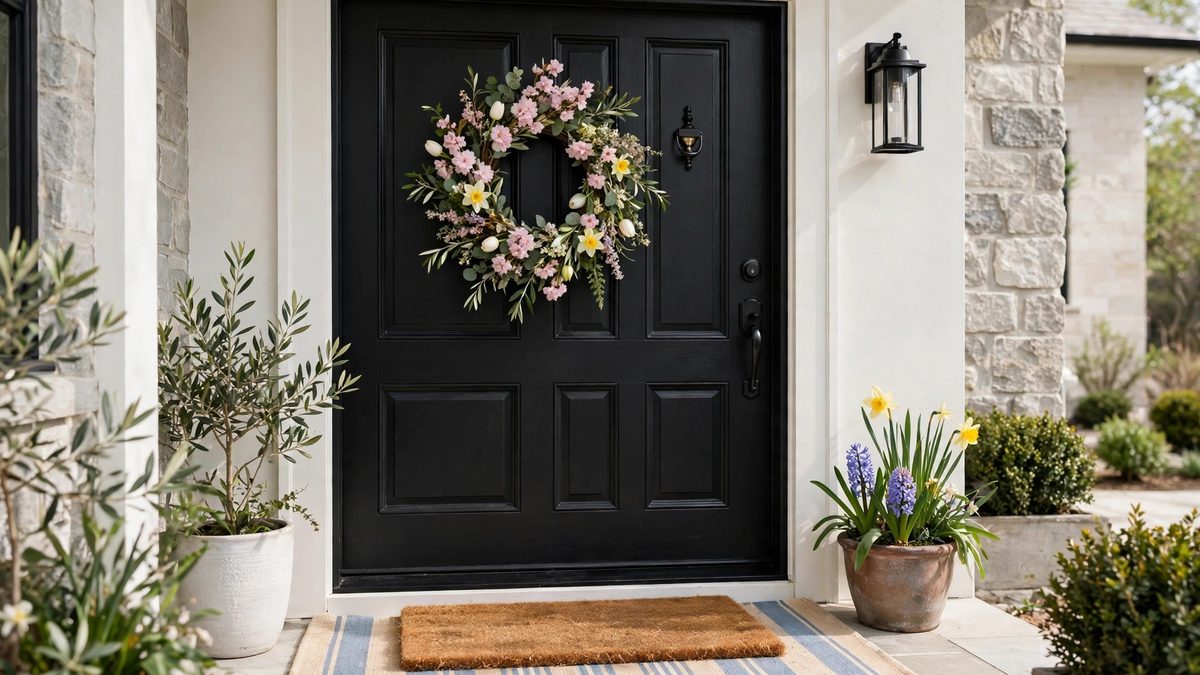
A wreath is the fastest decor change in the business, and sizing is the detail most people get wrong. On a standard 36-inch door, a wreath of about 24 inches across typically looks balanced, filling the center panel without crowding the edges or hiding the hardware. Go up to 28 inches for an oversized, lush look on a wide or double door, and down to 20 inches for narrow doors.
The wreath has been a symbol of welcome and celebration for centuries, which is why it still reads as the friendliest thing you can hang. Build a small rotation:
- Year-round base: a simple green wreath, like faux eucalyptus or boxwood, that works in every month.
- Spring and summer: add fresh or faux flowers, or swap in a wreath with lemons, lavender, or greenery and a bow.
- Fall: dried grasses, mini pumpkins, or warm foliage tones.
- Winter holidays: classic evergreen with pinecones, berries, or a simple ribbon.
Hang the wreath so its center sits at about eye level, roughly 57 inches from the threshold, using an over-door hanger or a removable hook that will not damage the finish. Store off-season wreaths in bags or boxes so they keep their shape for years.
Doormats and Layered Entry Rugs
The doormat area is small but mighty. A standard doormat is about 18 by 30 inches, which can look skimpy on a wide entry. Two fixes work well. First, size up to a 24 by 36 inch mat if your door is wide or you have sidelights. Second, layer: place the coir or rubber doormat on top of a larger flat-weave outdoor rug, around 2 by 3 feet or bigger, in a stripe or simple pattern. The layered look frames the door, adds color, and makes even a plain mat look styled.
Choose a mat with real scraping texture, since its job is catching dirt before it enters the house. Keep patterns simple and colors that hide soil between cleanings, and shake or hose the whole setup monthly. If your entry opens to a small foyer, carry the welcome inside with the styling ideas in our entryway decor guide so the look is continuous from the street to the hall.
Planters, Lanterns, and Symmetry
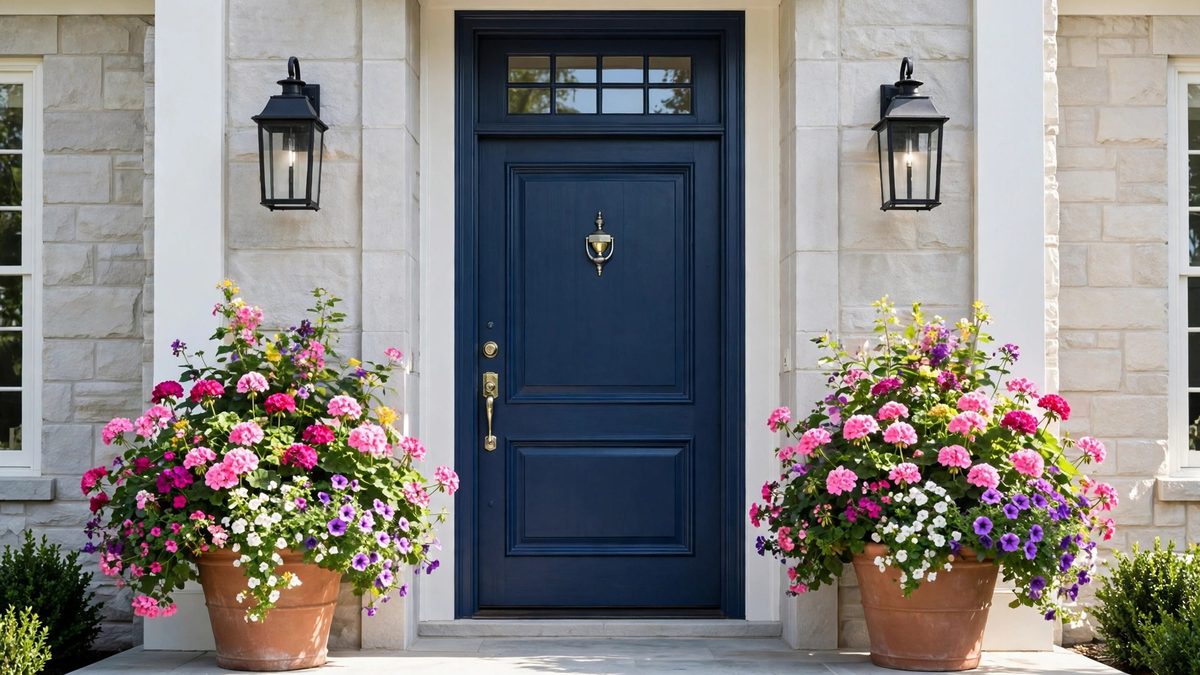
Plants soften the hard edges of doors, steps, and siding. The classic arrangement is a matched pair of planters flanking the door, which suits traditional and symmetrical houses. Fill them with:
- Small evergreen shrubs or topiary forms for year-round structure.
- Seasonal flowers layered around the evergreen for color.
- Trailing plants to soften the planter edges in spring and summer.
Asymmetrical entries can skip the matched pair and group three planters of different heights on the wider side instead. Add lanterns for the second layer of the look: one or two by the door with battery candles on timers, so the entry glows at dusk without any wiring. Keep planters scaled to the door; a pair of substantial planters, around 16 to 20 inches tall or more, reads as intentional, while tiny pots tend to look lost. Water and refresh plants on a schedule, because one dead planter undoes the whole welcome.
House Numbers, Mailbox, and Small Details
The finishing details are what separate a decorated door from a designed entry. House numbers should be large enough to read from the street, typically 4 to 6 inches tall, in a finish that matches your hardware. Mount them on the door, beside it, or on a small plaque or planter for a modern look.
Give the mailbox the same treatment: a fresh coat of paint or a replacement in the hardware finish ties it into the scheme. A door knocker, a kick plate, and clean, swept steps all quietly signal care. Even the doorbell, swapped for a finish-matching or modern video model, counts. In fall, these basics pair beautifully with the porch styling in our fall porch decor ideas, where pumpkins and mums build on the foundation you have already set.
Lighting That Makes the Entry Glow
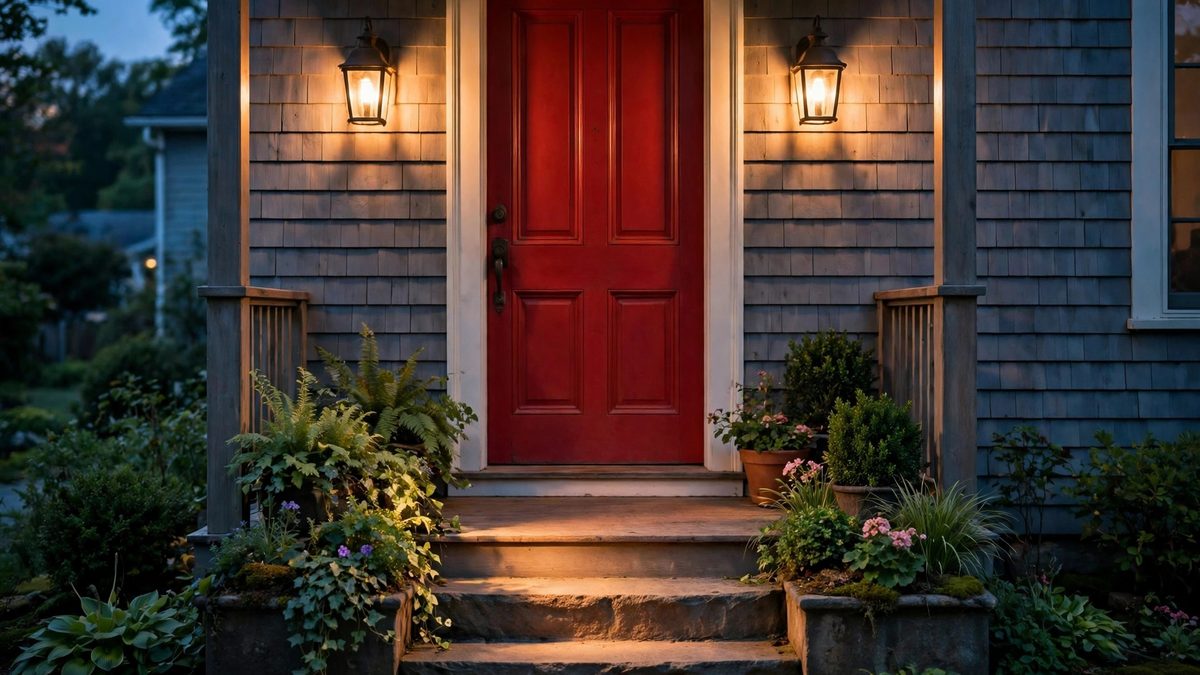
More entries are ruined by a single bare bulb than by any lack of decor. Aim for warm, layered light. A wall lantern or pendant at the door, on a warm-white bulb, is the base layer. Lanterns with candles on timers add the flicker layer at ground level. If your entry has steps or a walkway, low path lights or a lit house number improve both looks and footing after dark.
Two practical notes: choose fixtures rated for outdoor use and sized in proportion to the door, since undersized lanterns are the most common entry mistake, and put the porch light on a timer or dusk-to-dawn bulb so the welcome is on when you come home, not only when you remember.
Front Door Mistakes to Avoid
- A wreath that is too small. A 16-inch wreath on a wide door looks like an afterthought. Measure, and let the wreath fill the center of the door.
- Ignoring scale in planters and fixtures. Tiny pots and a small lantern disappear against a full-size door and siding. Go bigger than your instinct.
- Clashing finishes. Brass numbers, a chrome handle, and a black lantern fight each other. Pick one finish family and repeat it.
- Decorating only for holidays. If the entry looks bare eleven months a year, build the year-round base first: paint, mat, planters, numbers, light.
- Letting plants die in place. Dead greenery by the door sends the opposite message of welcome. Choose hardy or quality faux plants if watering is not realistic.
Frequently Asked Questions
What size wreath should I buy for a standard front door?
For a standard 36-inch-wide door, a wreath about 24 inches in diameter usually looks balanced. Choose 26 to 28 inches for a fuller statement or a wide door, and around 20 inches for narrow doors. Hang it so the center is near eye level.
What is the best front door color?
The best color depends on your siding and style, but black, deep navy, heritage red, and sage green are the most reliable choices. They photograph well, pair with common brick and siding colors, and suit most hardware finishes. Test a sample on the door and view it in morning and evening light.
How can I decorate my front door on a budget?
Paint is the cheapest transformation, often under the cost of a single planter. Then layer what you likely own: a seasonal wreath, one or two planters from elsewhere in the yard, and a new doormat. Fresh hardware can wait; a good cleaning and paint cannot be beaten for value.
Should both sides of the door match if I have double doors?
Treat double doors as one composition: matching paint and hardware, one larger wreath centered where the doors meet or a matching pair, and symmetrical planters. A layered mat centered under both doors ties it together.
How do I decorate a front door with no porch?
Use the door itself as the whole canvas: strong paint color, a right-sized wreath, an oversized layered mat, a pair of wall-mounted lanterns or planters that do not need floor space, and bold house numbers. A small step or stoop can hold one substantial planter.
Conclusion
A welcoming front door is built in layers: paint and hardware for the foundation, a right-sized wreath for personality, a layered mat underfoot, planters and lanterns for life and light, and clean numbers and details to finish it. None of it takes more than a weekend, and every piece keeps working long after the season changes. Start with the paint, and let the rest follow.
