
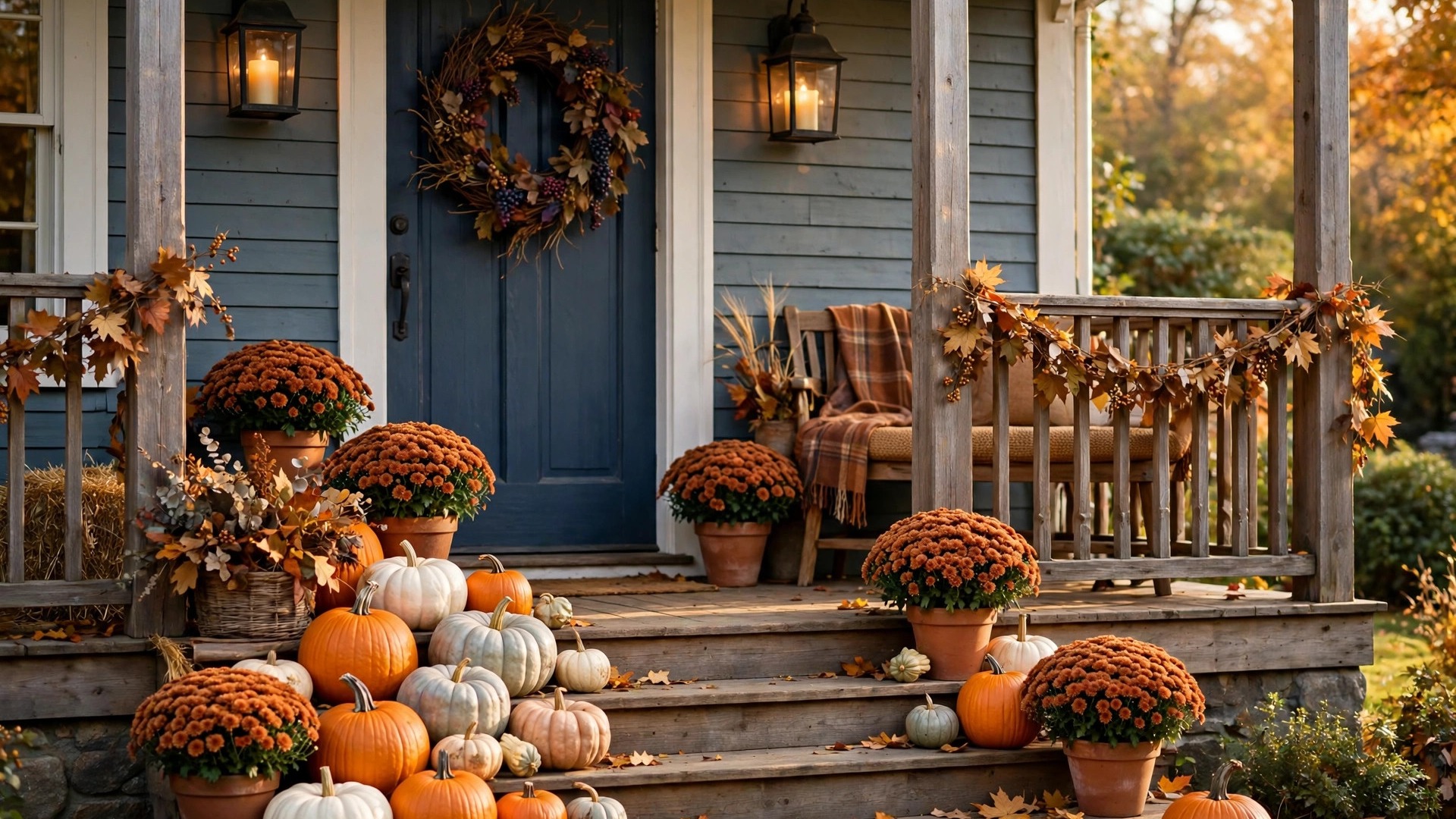

Fall decorating is not about turning your house into a pumpkin patch. The homes that feel most welcoming in autumn have simply leaned into the season: warmer colors, heavier textures, softer light, and natural elements gathered from the yard and the farmers market. The best decorating tips for fall work with swaps rather than renovations — change the textiles, edit the centerpiece, add a wreath — and they take an afternoon, not a budget. This guide moves from the front porch through the living room to the dining table, so your whole home feels like the season in the best possible way.
Start With the Fall Palette
Autumn color is warm and earthy. Build your palette from rust, amber, mustard, olive, warm brown, and cream, with deep burgundy or plum as the rich accent. You do not need all of them — pick two main colors and one accent, then repeat them around the house so rooms feel connected.
The simplest way in is through textiles. Swap summer’s cotton and linen in pale colors for throws and pillow covers in nubby wool blends, plaid flannel, corduroy, and velvet. One plaid throw draped over the sofa arm and two rust-colored pillow covers can change the whole temperature of a living room. Natural materials — wood, leather, woven baskets, dried grasses — layer in the texture that makes fall rooms feel grounded.
Fall Porch Decor That Welcomes Before the Door Opens
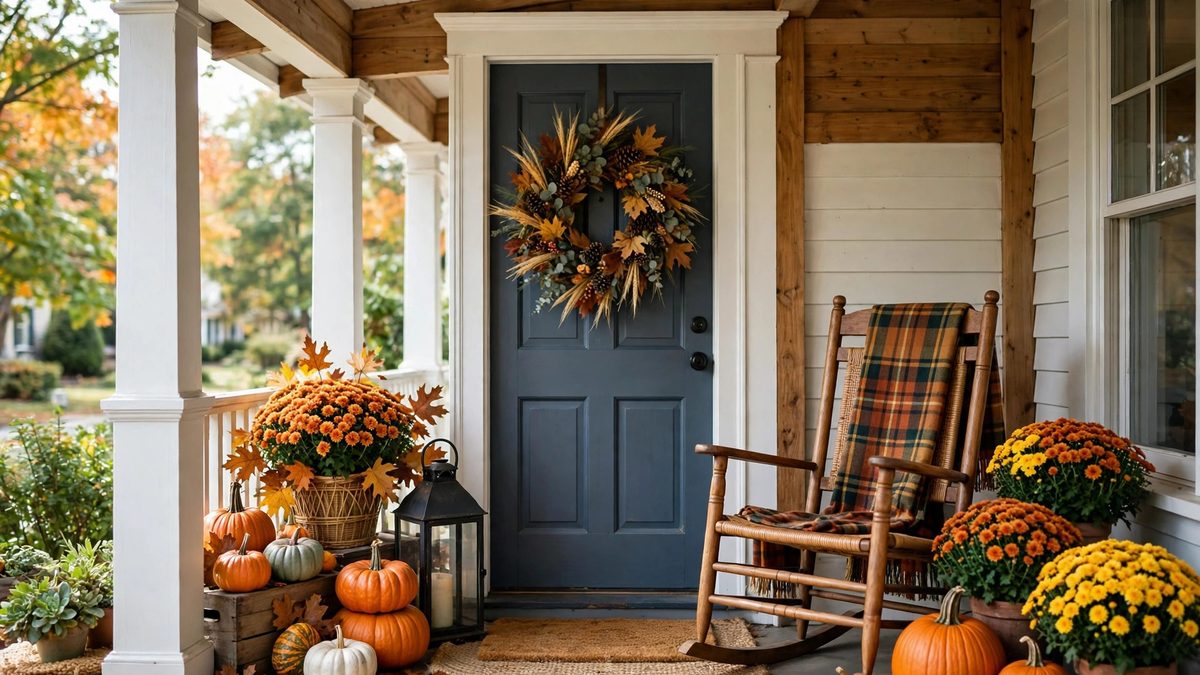
Your porch is the first impression, and fall porch decor is famously forgiving: the ingredients are inexpensive, hardy, and easy to arrange. Start with pumpkins in a mix of sizes and colors — classic orange, plus white and pale heirloom varieties — grouped in odd numbers on the steps and beside the door. Three or five always looks better than an even row.
Add height and structure with some of these:
- A pair of planters with mums, ornamental kale, or tall dried grasses
- A hay bale or wooden crate as a riser for smaller pumpkins and lanterns
- A fall wreath on the door — grapevine, dried leaves, berries, or mini pumpkins
- Lanterns with flameless candles that glow at dusk
Keep it proportional: a small porch needs one strong cluster, not a crowd. And plan for weather — real pumpkins last weeks in cool weather but soften after hard freezes, while quality faux pumpkins can be stored and reused for years. For year-round porch structure ideas that make seasonal decorating easier, see our guide to front porch ideas.
Outdoor Fall Decor Beyond the Porch
Outdoor fall decor extends the welcome into the yard and garden. A few well-placed touches beat a scattered collection:
- Garden beds and borders: tuck pumpkins and gourds among late-season plants, and add pots of mums where summer annuals have faded.
- The walkway: line it with lanterns or small pumpkin clusters to guide guests at dusk.
- Trees and fences: a wreath on a garden gate, a swag of dried corn husks or a plaid bow on the mailbox, or a vintage ladder leaning on the porch with folded throws.
- The backyard: a fire pit area with plaid blankets over chairs and a stack of firewood becomes an outdoor room in fall.
Corn stalks and hay bales give strong harvest character but break down fast outdoors, so place them where cleanup is easy. As with the porch, flameless candles are the safe, weatherproof choice for any glow outside.
Cozy Layers Inside: The Living Room
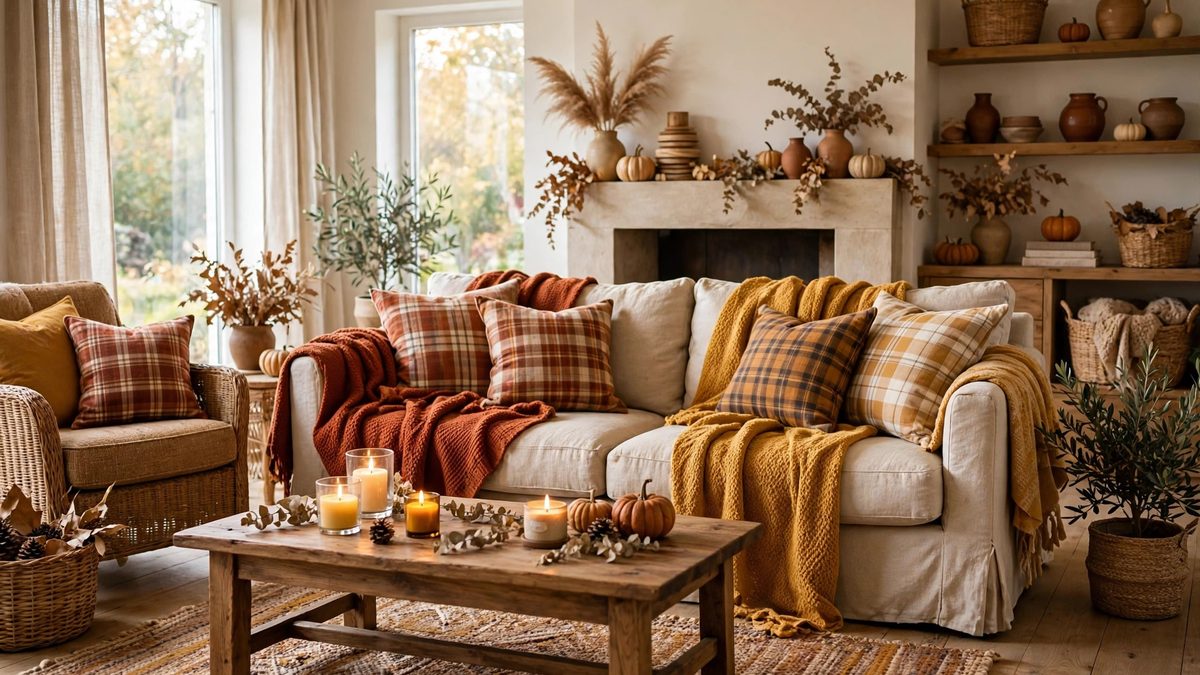
Once guests step inside, continue the same palette and textures. Beyond the throws and pillows, these small moves have outsized impact:
- The hearth: stack firewood in a basket or log holder, even if you rarely light a fire. Drape a simple garland of dried leaves, pinecones, or faux maple across the mantel with a few candlesticks.
- Lighting: days get shorter, so lean on warm lamplight. Swap in warm bulbs (2700K), light candles at dinner, and let the room glow rather than glare.
- Natural arrangements: a wooden bowl of apples, pears, or pinecones on the coffee table; a vase of dried wheat, eucalyptus, or pampas grass on a console; branches with colored leaves in a tall crock.
- Scents: simmer pots, cedar, and cinnamon-scented pinecones deliver the feeling of fall before eyes even register the decor.
Many beautiful fall pieces are simple to make yourself — wreaths, garlands, and painted pumpkins among them. Our collection of DIY home decor ideas is a good starting point for projects that cost almost nothing.
The Fall Table: Gather Around It
Fall is eating season, and the dining table deserves a moment. A simple runner in linen, burlap, or plaid down the center is the foundation. On it, build a low centerpiece that guests can see over: a line of small pumpkins and gourds, pillar candles in glass hurricanes, and greenery or dried leaves woven between.
Place settings get cozy with woven chargers, cloth napkins in warm colors, and amber or smoky glassware if you have it. A sprig of rosemary or a single leaf under each napkin ring is the kind of detail that makes an ordinary Tuesday dinner feel like an occasion. For more ways to style the surface itself, browse our dining room table decor ideas.
Small Spaces and Budgets: Fall Decorating That Still Works
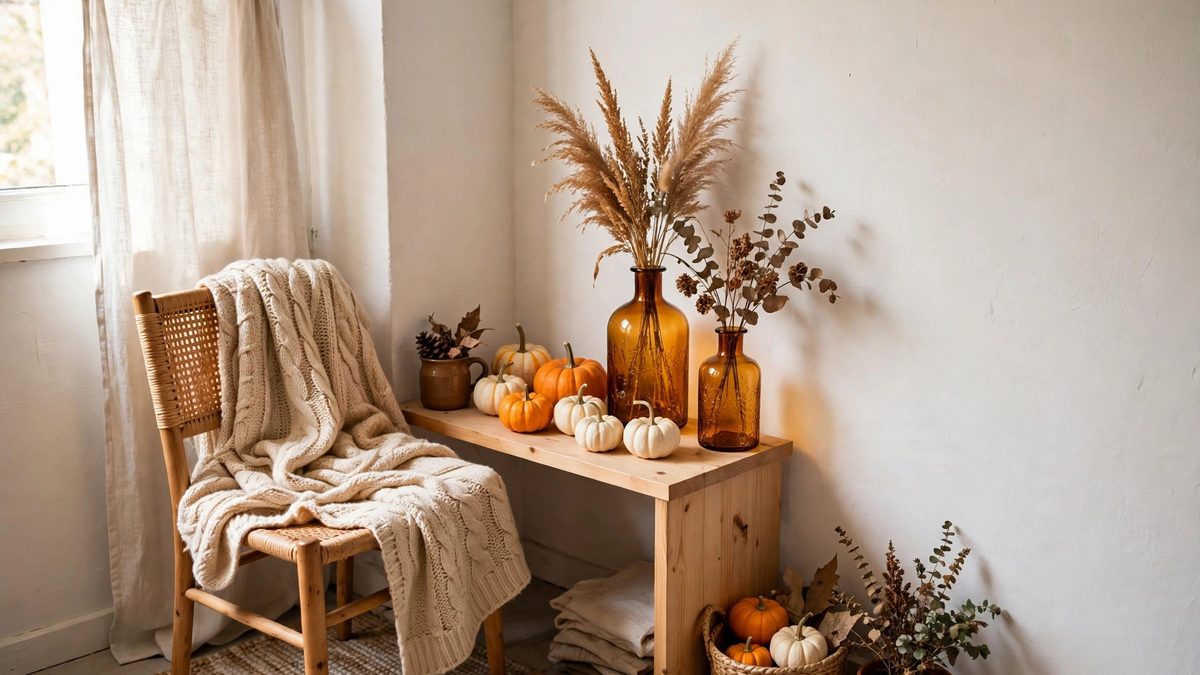
You do not need a big house or a big spend for a fall feeling. In small spaces, concentrate your decorating in two or three spots — the entry, the coffee table, the dining surface — and let each one be complete rather than scattering small items everywhere. Mini pumpkins are your friend: a trio on a bathroom counter or bookshelf reads as intentional. In fact, a single fall wreath, one plaid throw, and a bowl of pinecones is a complete small-space formula — three items, three locations, a whole-home effect.
On a budget, nature is free: pinecones, acorns, branches, and colorful leaves cost nothing but a walk. Grocery-store pumpkins and mums are inexpensive, and thrift stores overflow with baskets, brass candlesticks, and plaid blankets this time of year. Buy a few quality faux stems — maple leaves, berries — and they will mix with fresh finds for years. Store them flat in a labeled bin, and next year your fall decorating takes twenty minutes instead of a shopping trip. If you’d like more photo inspiration for scaled-down fall spaces, Houzz is full of real-home fall decorating examples to browse.
Common Fall Decorating Mistakes to Avoid
- Going all orange. Orange alone reads Halloween. Warm neutrals, cream, olive, and burgundy make it feel like fall, all season long.
- Decorating only one room. A wreath on the door plus touches in the living and dining rooms make the whole home feel in-season.
- Forgetting texture. Fall is a tactile season; if everything is smooth and shiny, it will feel cold no matter the colors.
- Blocking the glow. Tall centerpieces that block views across the table and candles crowded near dried arrangements both backfire — keep arrangements low and flames (or flameless candles) safely spaced.
- Buying everything new each year. Build a small stored collection — wreath, garland, a few faux stems — and add fresh natural elements annually.
Decorating Tips for Fall That Tie Everything Together
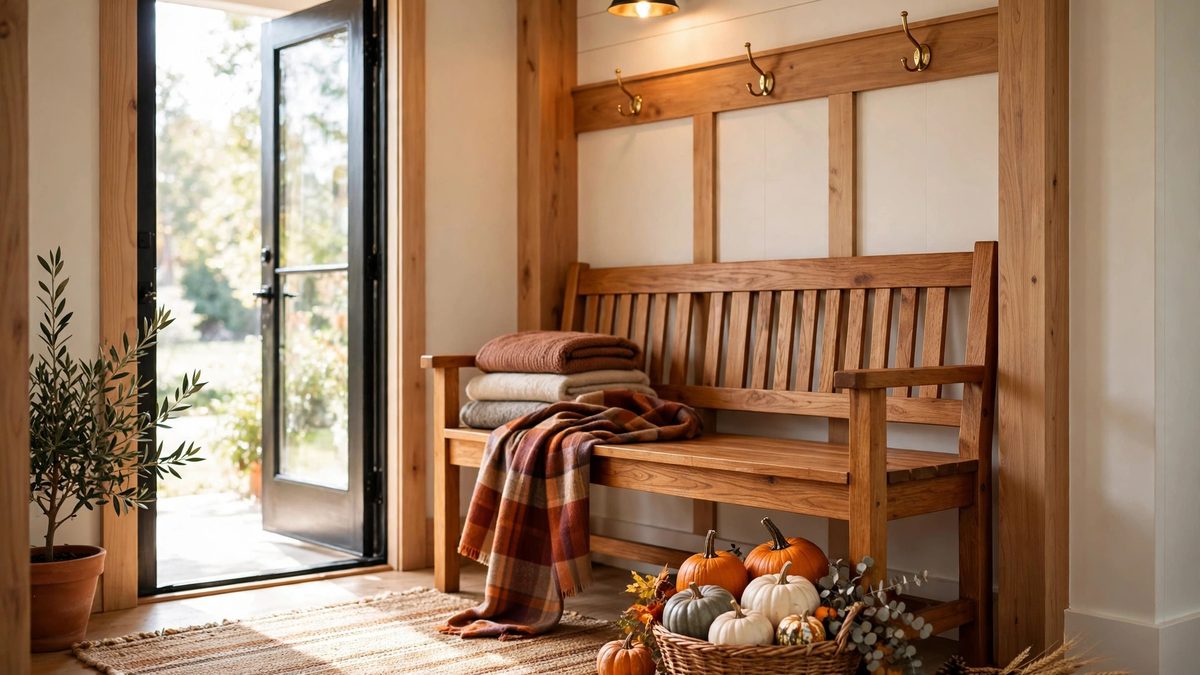
The most pulled-together fall homes repeat the same two or three colors and textures from the porch through the entryway into the living room. Carry one plaid throw, one wood tone, and one metallic accent through each space and the whole house feels decorated on purpose, not room by room.
Frequently Asked Questions
When should I put out fall decorations?
Many people start in early September, leaning on apples, greenery, and warm textiles first, then add pumpkins as the weather cools. If you decorate for Halloween, swap the spooky pieces out afterward and the harvest elements — pumpkins, plaid, dried grasses — carry through Thanksgiving.
How do I decorate for fall without pumpkins?
Use texture and color instead: plaid and velvet textiles, dried wheat and pampas grass, wooden bowls of apples or pears, branches with turning leaves, amber glass, and warm candlelight. The effect is unmistakably autumn without a single gourd.
How long do real pumpkins last as decor?
Uncarved pumpkins kept cool and dry typically last several weeks to a couple of months outdoors. Bring them in before hard freezes, keep them off damp surfaces, and discard them at the first soft spot.
What are the best fall colors if my home is mostly gray or white?
Warmth is the key: rust, camel, mustard, and burgundy textiles pop beautifully against cool neutrals, and natural wood and brass warm things further. Cream instead of bright white keeps the palette soft.
How can I make fall decor feel elegant instead of crafty?
Limit the palette to two or three colors, use odd-numbered groupings, choose natural materials over novelty items, and add metallic accents — brass, copper, or antique gold — for polish.
Conclusion
Decorating for fall is really about hospitality: a porch that glows at dusk, a living room layered with warm texture, and a table that invites people to linger. Choose your palette, work from the front porch inward, lean on natural and reusable pieces, and let candlelight do the rest. A few thoughtful changes are all it takes for your home to feel like the coziest version of the season.
