
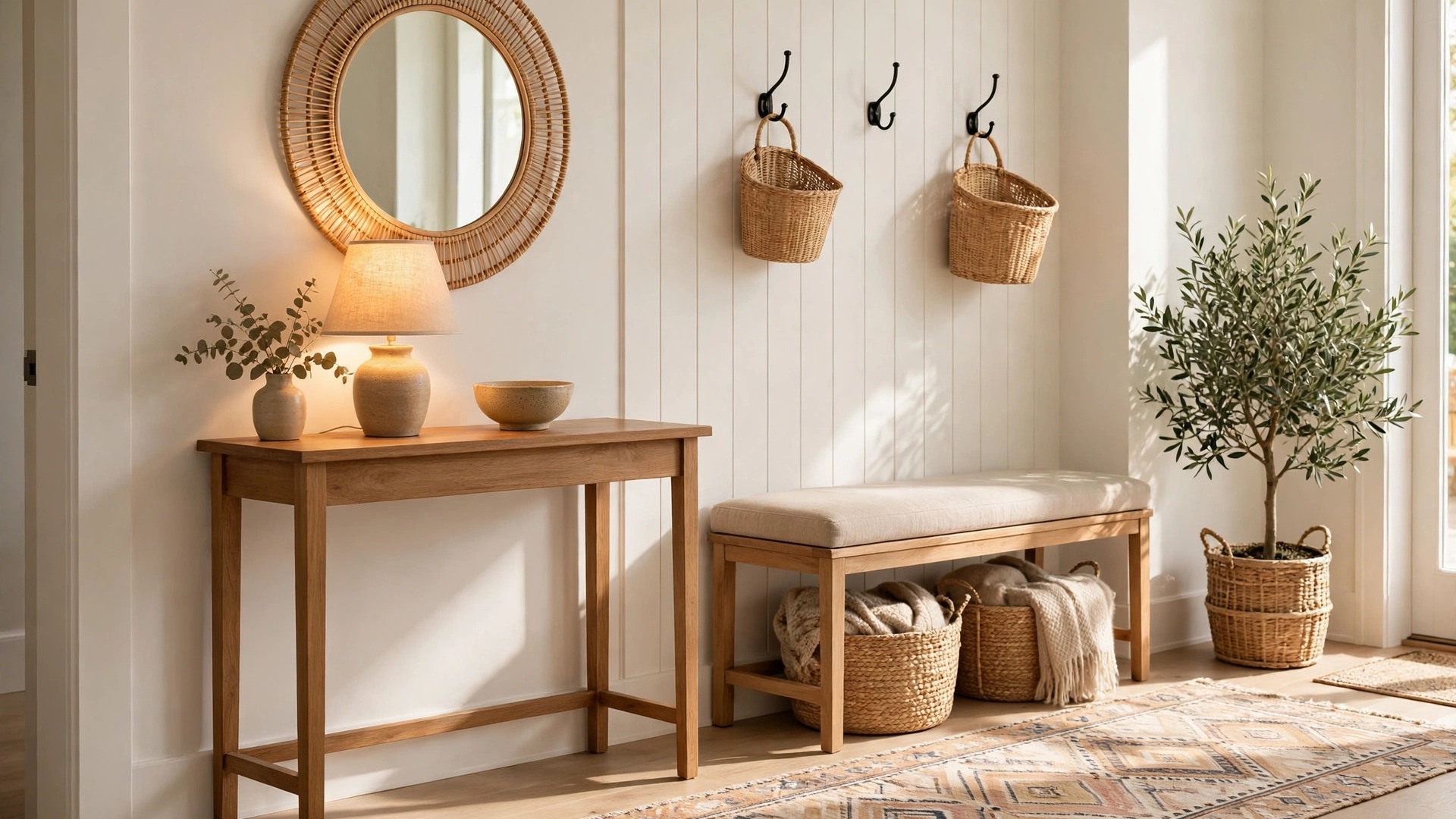

The entryway is the hardest-working few square feet in your home and, too often, the most neglected. It is where keys land, shoes pile up, and guests form their first impression, all in the same small space. Good entryway decor has to do two jobs at once: look welcoming and quietly organize the daily traffic of coats, bags, mail, and muddy boots.
The encouraging part is that a functional, beautiful entry does not need much space or money. It needs the right few pieces at the right sizes, a place for everything that comes through the door, and a little warmth in the form of light, texture, and one personal touch. Here is how to pull that together, whether you have a grand foyer or a slice of wall by the door.
Entry Way Decor Essentials: The Five Pieces Every Foyer Needs
Most successful entryways are built from the same short list. This core set of entry way decor covers the landing strip, the mirror check, and the soft welcome underfoot.
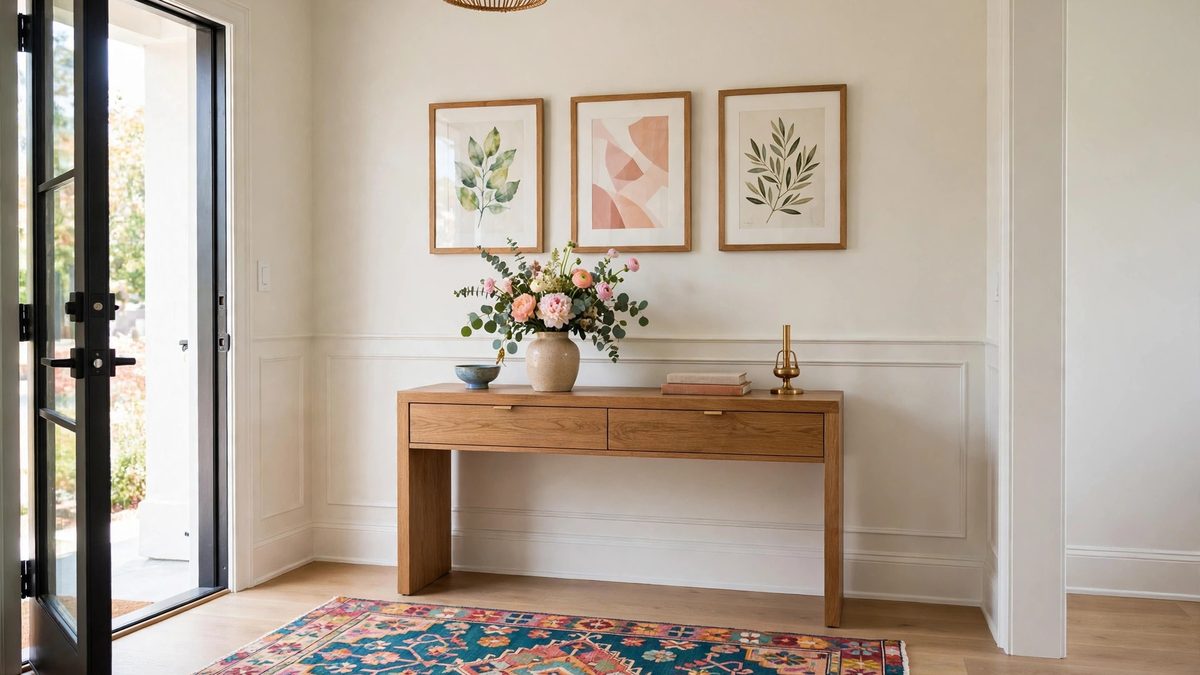
1. A console table or landing surface. A standard entryway console is 28 to 32 inches tall and only 12 to 18 inches deep, so it hugs the wall without blocking the walkway. In a very tight hallway, look for a depth closer to 10 to 14 inches. One drawer or a lower shelf doubles its usefulness instantly.
2. A mirror or piece of art above it. Hang a mirror so its bottom edge sits about 6 to 8 inches above the table surface, with the center of the piece around eye level. A mirror earns its place by bouncing light into a space that often has no window, and by giving everyone a last look before heading out.
3. A runner. Runners soften hard floors, catch dirt, and define the entry zone. Common sizes are about 2 to 2.5 feet wide and 6 to 10 feet long. Leave a few inches of floor showing on each side, and choose a low-pile, washable style that can survive real life.
4. A tray, bowl, or small basket. This is the clutter trap: keys, sunglasses, and mail land here instead of spreading across the table.
5. Warm light. A small table lamp on the console or a wall sconce keeps the entry from feeling like a cave at night, and it is far more flattering than a lone overhead bulb.
If you prefer built-in-looking storage over a table, a cabinet does the same job with doors that hide everything; our guide to entryway cabinet options compares the main styles.
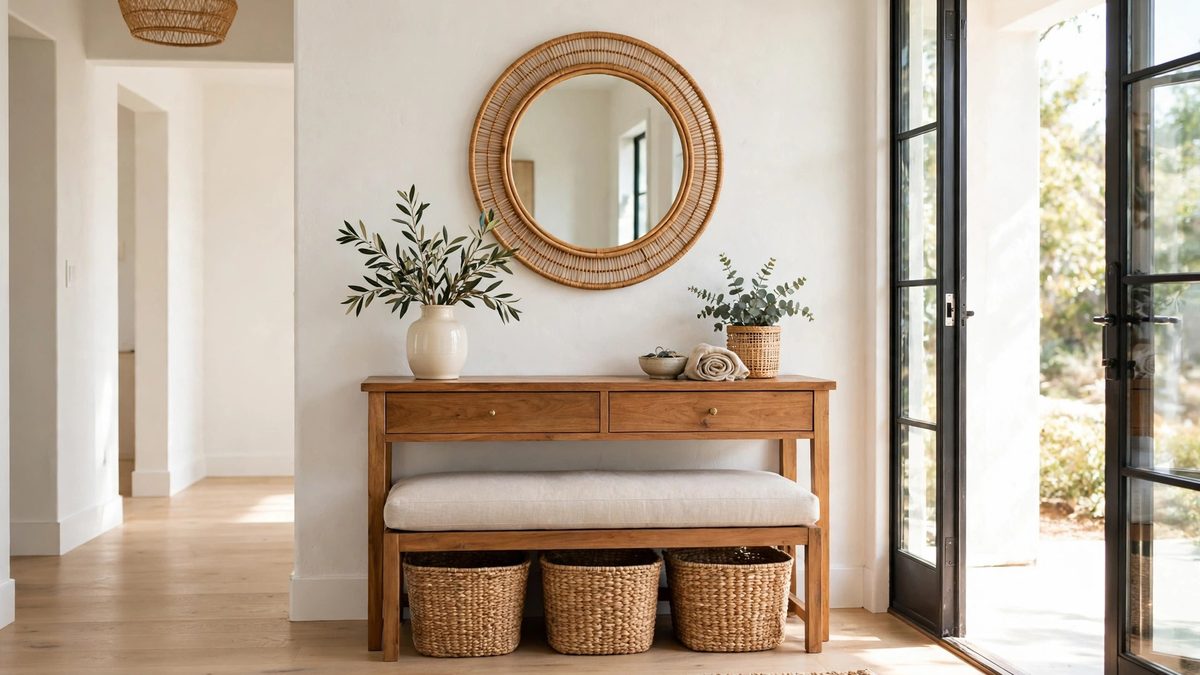
Entry Way Ideas for Storage That Actually Stays Tidy
Pretty entries fail when storage does not match real habits. The most reliable entry way ideas start by watching what your household actually drops at the door for one week, then giving each category a home within arm’s reach of the door.
- Shoes: a low bench with room for pairs underneath, a slim shoe cabinet, or a lidded basket for the overflow. Seat height around 18 to 20 inches makes the bench genuinely useful for putting shoes on.
- Coats and bags: wall hooks mounted around 5 feet high handle adults comfortably; add a second, lower row near 3.5 feet for kids. Hooks beat a coat closet for everyday items because nobody has to open a door.
- Mail and paper: one small tray or wall pocket, emptied weekly. Paper is the clutter that multiplies fastest when it has no single home.
- Seasonal gear: a basket per season for gloves, sunscreen, dog leashes, and umbrellas, rotated as the weather changes.
Closed storage is the secret weapon for busy households. A console with drawers, a cabinet with doors, or even baskets on an open shelf all let the entry look calm in the ten seconds between the doorbell ringing and a guest stepping in. Styling the surface itself, with the lamp, a plant, and one stack of books, is covered in our entry table decor ideas.
Foyer Decor Ideas for Small and Awkward Entries
Not every home has a foyer at all. Many doors open straight into the living room, and plenty of hallways are barely wider than the door swing. These foyer decor ideas are designed for exactly those situations.
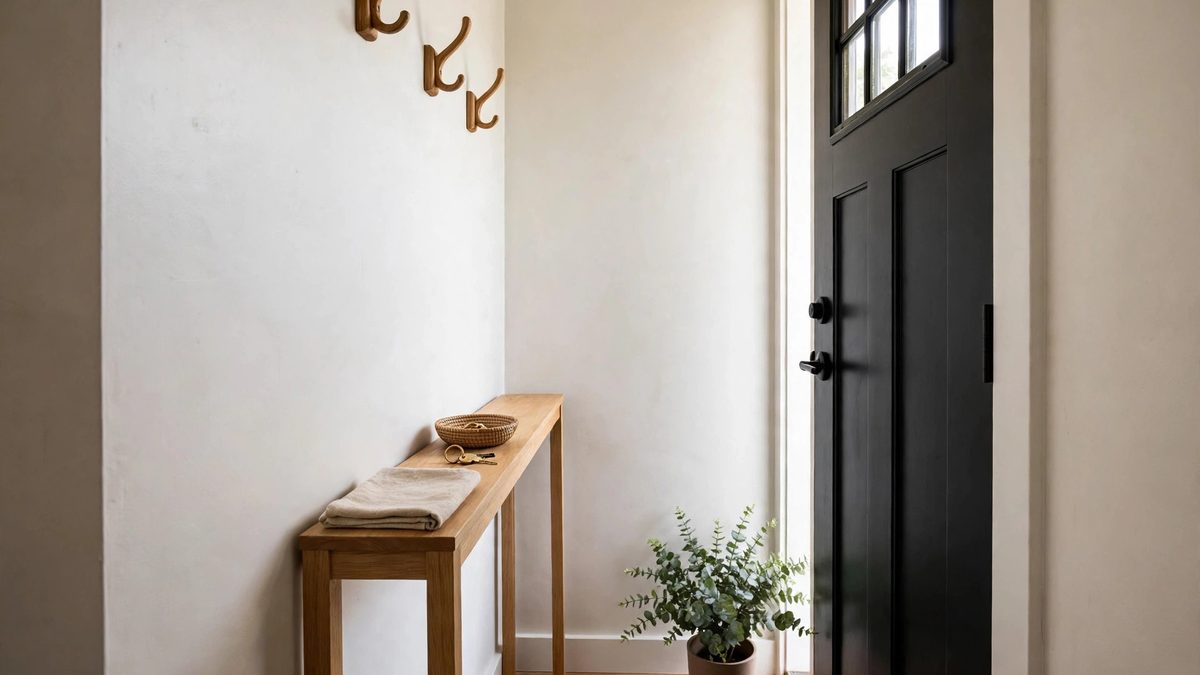
Create a zone without walls. A runner, a narrow console or floating shelf, and a mirror carve an “entry” out of the first few feet of a room. A folding screen or a bookcase placed perpendicular to the wall can strengthen the boundary in an open-plan space.
Go vertical and slim. A floating shelf at console height gives you the landing strip with zero floor footprint. Wall hooks, a peg rail, or a slim leaning ladder for throws and bags use height instead of width. Choose one statement piece, such as a bold mirror or a colorful runner, rather than several small ones competing in a tight space.
Keep the palette light and the floor as clear as possible. In a small entry, visual calm matters more than in any other room, because the space is seen up close and all at once. Closed shoes storage, one plant, and good light will make even a 3-foot patch of wall feel like a designed moment. The same zone thinking works down the hall, too, as our corridor decoration ideas show.
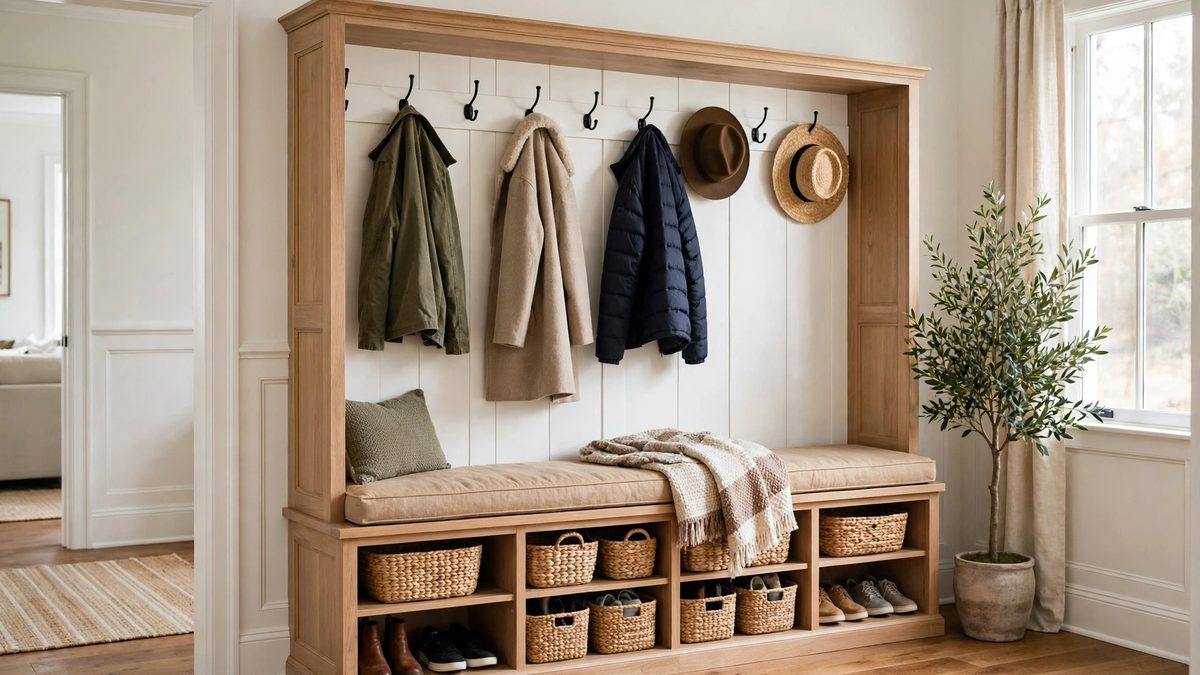
Foyer Ideas for Light, Color, and Personality
Once function is handled, the foyer ideas that make an entry memorable are about mood. Entries are small, so they can carry bolder choices than a big room: a saturated paint color on the walls or the inside of the front door, a patterned runner, or wallpaper on a single wall all feel exciting rather than overwhelming at this scale.
Layer light at two heights if you can. An overhead pendant or flush mount handles the general brightness, while a small lamp on the console adds the warm, low glow that makes evening arrivals feel good. Keep bulbs warm, around 2700K, and on the same temperature as the rooms the entry opens into.
Finally, add one thing that is unmistakably yours: a framed photo, a piece of travel art, a vintage umbrella stand, a plant you love. Entries styled only from a catalog feel like lobbies. One personal object turns the same space into a home’s opening sentence. For whole-room inspiration in different styles, the foyer galleries on Houzz are worth a browse before you commit to a look.
Entryway Mistakes to Avoid
- Blocking the door swing or walkway. Measure the open door’s arc and keep furniture out of it. Leave roughly 36 inches of clear passage wherever possible.
- Choosing a rug that is too small or too plush. A tiny mat floats awkwardly, and a high-pile runner becomes a dirt trap and a tripping edge. Low pile, sized to the space, wins.
- Skipping a landing spot for keys and mail. Without one designated tray, every flat surface becomes the drop zone.
- Relying on one harsh overhead light. A single ceiling bulb makes entries feel institutional. Add a lamp or sconce for warmth.
- Decorating before solving storage. A beautiful entry that cannot absorb a day’s worth of shoes and bags will look messy by dinner.
Frequently Asked Questions
How big should an entryway console table be?
Most entryway consoles are 28 to 32 inches tall and 12 to 18 inches deep, with length matched to your wall, often around two-thirds of the wall’s width. In narrow halls, choose the shallow end of the depth range so the walkway stays clear.
What do you put in an entryway with no closet?
Use hooks or a peg rail for coats, a bench or slim cabinet for shoes, one basket for seasonal gear, and a tray for keys and mail. Wall-mounted and closed pieces keep a closet-free entry tidy without taking floor space.
How high should a mirror hang above a console table?
Leave about 6 to 8 inches between the table surface and the bottom of the mirror or artwork. In most entries that places the center of the piece near eye level, around 57 to 64 inches from the floor.
What size runner is best for an entryway?
A runner about 2 to 2.5 feet wide and 6 to 10 feet long suits most entries. It should leave a few inches of floor visible on both sides and stop short of the door swing. Choose low-pile and washable for this high-traffic spot.
How can I make a dark entryway feel brighter?
Add a mirror to bounce light, choose a warm lamp in addition to overhead lighting, paint the inside of the door or the walls a lighter color, and pick a runner with a lighter pattern. Each change is small, but together they transform the feel.
Conclusion
An entryway that works is a small system, not a shopping list: a landing surface at the right size, a mirror to catch light, a runner to catch dirt, one tray to catch the clutter, and closed or wall-mounted storage for everything you carry in. Solve the function first, then give the space one bold or personal touch. Your entry will greet guests warmly and, just as importantly, make your own arrivals and departures calmer every single day.
