
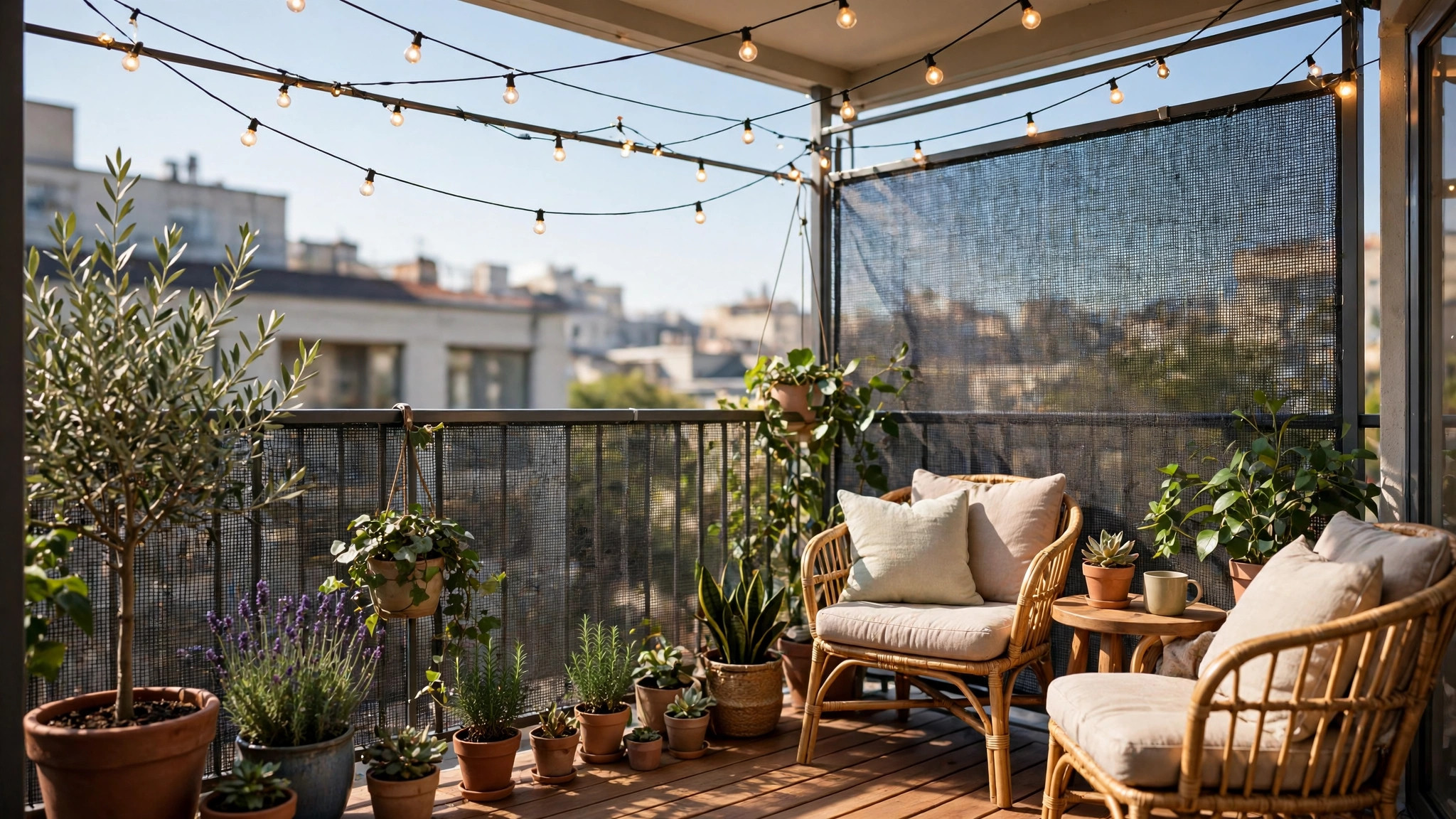

A balcony should feel like a small retreat, not a stage. If neighbors can see straight onto your chair, a well-chosen balcony privacy screen changes everything. It blocks direct sightlines, softens wind, and makes even a tiny apartment balcony feel like a room of its own.
Before you buy anything, check your lease and HOA rules. Many buildings limit screen height, colors, materials, and anything attached to the railing, and some ban drilling entirely. Measure your railing length and height, note which side feels most exposed, and sit in your usual chair to find the exact sightline you need to block. A short panel in the right place often works better than wrapping the whole balcony.
Choosing the Right Balcony Privacy Screen
There is a screen for almost every budget and building rule. Fabric railing screens are the most popular renter-friendly option. Woven mesh panels tie or clip to the railing, let some breeze through, and typically cost less than freestanding options. Choose a neutral color that matches your building so the screen looks quiet from the street.
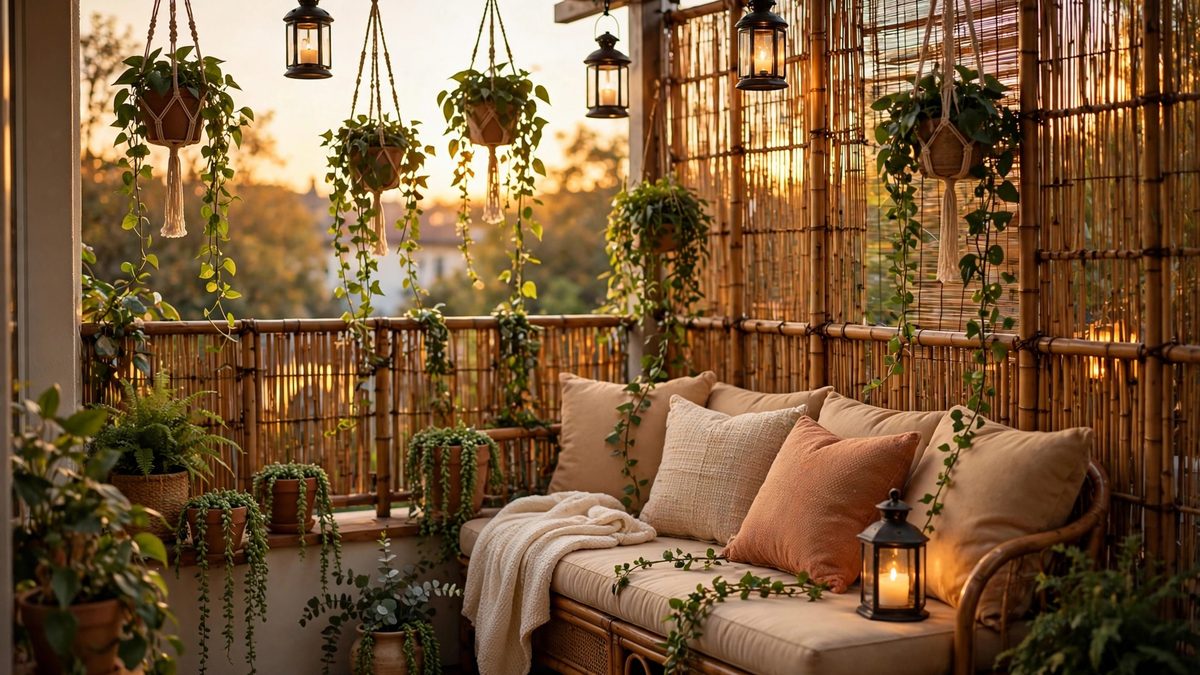
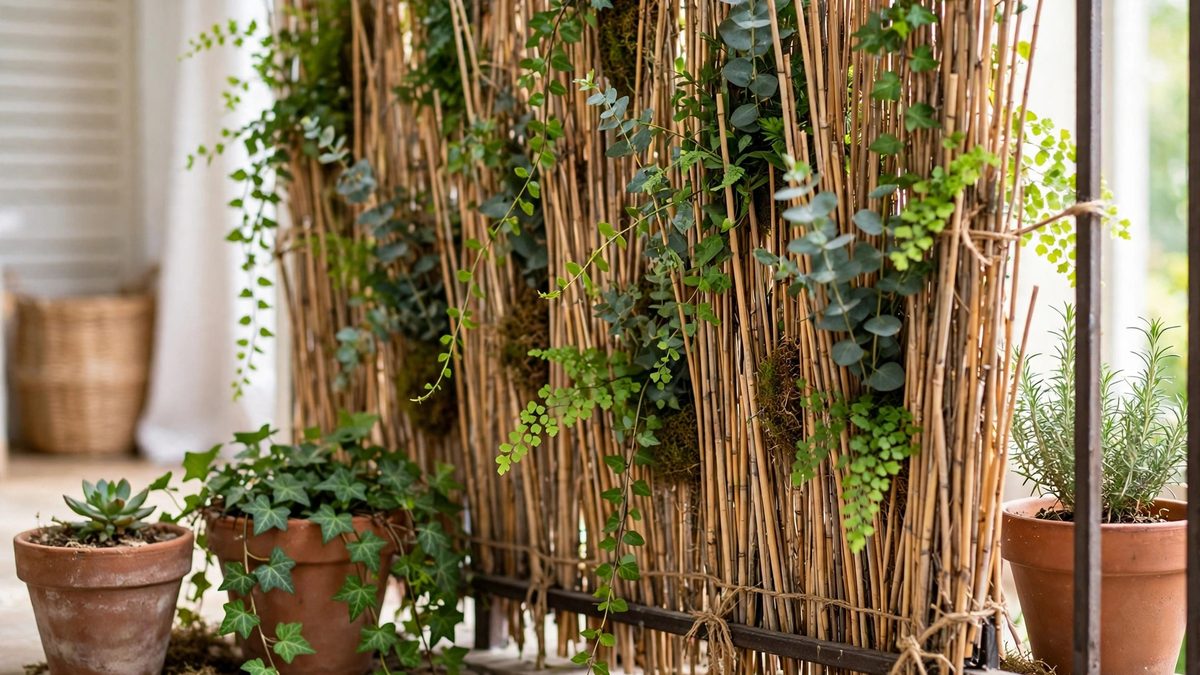
Bamboo, reed, and willow rolls offer a natural look and fast coverage. They are light and easy to trim, but they weather faster than synthetic fabrics, so expect to replace them more often in harsh sun or rain. Secure them at several points so they do not rattle or sag in the wind.
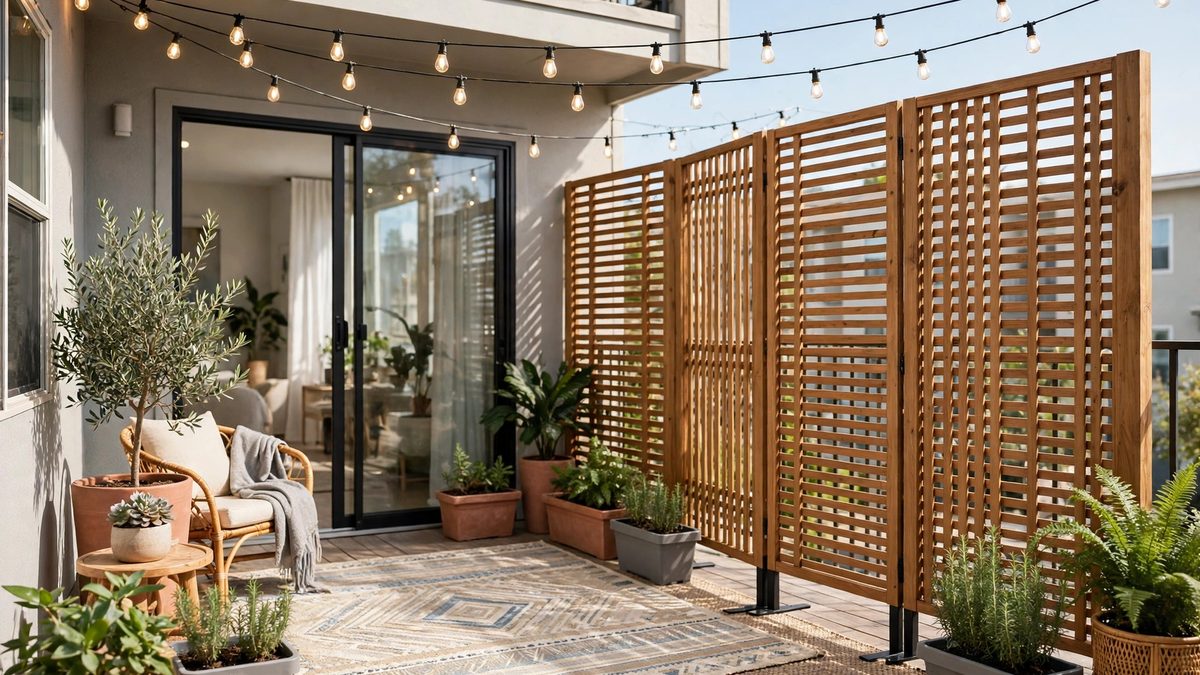
Slatted wood and composite panels give the strongest, most finished look. Freestanding slatted screens need no attachment at all, which helps in strict buildings, but they take up floor space and need a stable, weighted base. Outdoor curtains on a tension rod or ceiling track add softness and shade, and you can open them whenever you want the view back.
Plants make the most forgiving screen of all. Tall planters with grasses, a trellis with a climbing plant, or a row of leafy pots filter views without building a solid wall. As the Wikipedia overview of balconies notes, balconies have long served as light-filled outdoor extensions of the home, and greenery keeps that open feeling while adding privacy.
Whichever type you choose, leave some airflow. Solid panels can catch wind like a sail, trap heat on sunny afternoons, and make a small balcony feel boxed in. Partial coverage on the exposed side usually gives the best balance.
Balcony Design Ideas That Make Small Spaces Work
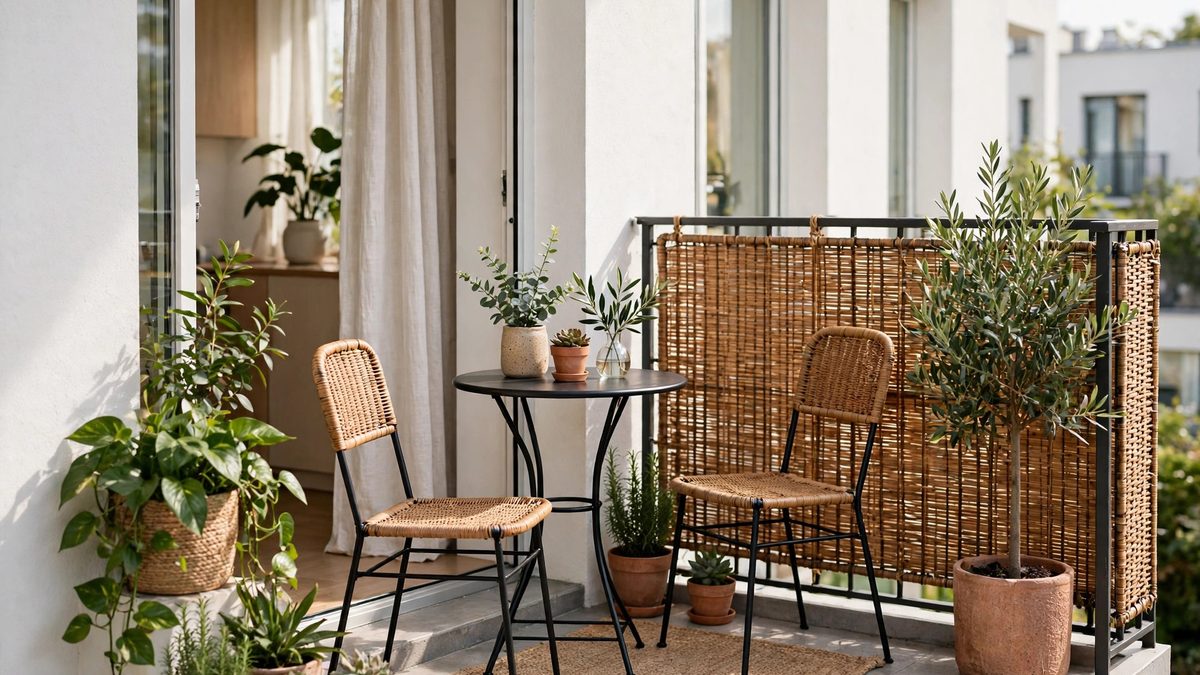
Good balcony design ideas start with a clear purpose. Decide whether your balcony is mainly for morning coffee, reading, container gardening, or dinner for two. That one decision controls your furniture size, your screen placement, and how much floor you should leave open.
Measure before you shop, and tape the furniture footprint on the floor to test it. On a narrow balcony, choose slim pieces: a folding bistro set, a bench along one wall, or two low chairs with a small side table. Keep a clear path of about 24 to 30 inches to the door so the space never feels like an obstacle course.
Think in layers, from the floor up:
- Flooring: Interlocking deck tiles or an outdoor rug define the seating zone and feel warmer underfoot than bare concrete.
- Seating level: Cushions in one or two colors keep the look calm. Too many patterns shrink a small space visually.
- Eye level: Your screen, plants, and a small shelf or rail planter do the decorative work here.
- Above: String lights or a shade sail add a sense of ceiling without permanent construction.
Keep the palette limited to two or three finishes that echo your indoor rooms. A balcony that visually connects to the living room feels larger, and carrying a few interior decor plants outdoors in summer makes that connection even stronger. Store cushions in a slim deck box or bring them inside during storms to extend their life.
Cozy Balcony Ideas for Evenings and Slow Mornings
Privacy makes a balcony usable, but comfort makes you stay. The best cozy balcony ideas rely on soft layers. Add an outdoor rug, two weather-resistant cushions, and a throw for cool evenings. A small side table for a mug and a book matters more than an extra chair you rarely use.
Lighting sets the mood after dark. Warm string lights along the railing, a solar lantern on the table, or a battery candle in a hurricane holder all work without wiring. Avoid harsh white light, which flattens the space and attracts more insects. One or two gentle light sources are enough for a small balcony.
Add one living element at close range: a pot of herbs by your chair, a small lavender plant, or trailing greenery from a rail box. Scent and movement make the space feel like a garden rather than a ledge. If noise from the street bothers you, soft textiles and dense plants help take the edge off, though they will not soundproof the space.
For chilly or windy spots, place your most sheltered seat in the corner protected by your screen, and keep a folded blanket in a weatherproof box nearby. The same sheltered-corner thinking used in front porch ideas applies here: block the dominant breeze first, then add softness.
Apartment Patio Decorating Ideas for Renters
Ground-floor patios and apartment balconies share the same challenge: you want a finished look without permanent changes. The most useful apartment patio decorating ideas are all reversible. Use clamp-on rail planters, freestanding screens, tension rods for curtains, and furniture you can fold or stack when you move.
Start with one anchor piece, usually seating, then build around it. A compact loveseat or bench with washable covers suits a patio, while a pair of folding chairs suits a narrow balcony. Add a weatherproof storage bench if you have room; it hides cushions, watering cans, and plant food in one place.
Decorate the vertical surfaces you are allowed to use. A leaning trellis in a heavy planter, hanging pots from approved hooks, and a small outdoor-safe mirror or metal wall piece can fill a blank wall without a single screw. Always confirm weight limits before hanging anything heavy, and never overload a railing.
Renters should also plan for water. Use saucers under pots, avoid blocking drainage, and lift planters slightly so moisture does not sit against the floor or wall. If you are comparing a patio with a yard, many of the layout lessons in guides to small backyard ideas scale down surprisingly well: define zones, repeat a few plants, and leave breathing room.
Budget-wise, expect to pay typically $30 to $90 for a fabric railing screen, $80 to $250 for a freestanding slatted screen, and $25 to $60 per outdoor curtain panel, depending on size and material. Plants and planters vary widely, so buy the screen and seating first, then fill in greenery over time.
Mistakes to Avoid With Balcony Privacy and Decor
A few common errors can make a balcony feel smaller, darker, or harder to keep. Watch for these before you spend:
- Skipping the rules. Installing a screen your lease or HOA forbids can mean removing it at your own cost. Get the rules in writing first.
- Covering every side. Full wraps block light and breeze. Screen the exposed sightline and leave the rest open.
- Ignoring wind. Tall, solid, or loosely tied panels flap, tear, and stress the railing. Choose breathable mesh or slats in windy spots and secure every corner.
- Overloading the balcony. Heavy planters, water-filled pots, and stone furniture add up. Distribute weight, prefer lightweight pots, and ask your building if you are unsure.
- Buying indoor items for outdoor use. Indoor fabrics and untreated wood fade, mildew, and warp quickly. Choose outdoor-rated materials.
- Blocking drainage or sprinklers. Keep drains clear and never cover building fixtures. Standing water damages floors and annoys neighbors below.
Frequently Asked Questions
How high should a balcony privacy screen be?
Aim to block your seated eye level, plus a few extra inches. For many balconies, a railing screen combined with a taller panel on one side is enough. Always stay within your lease or HOA height limits, and never raise or modify the guard railing itself.
What is the most renter-friendly privacy option?
A fabric mesh screen tied to the inside of the railing is usually the easiest: no drilling, low cost, and simple to remove. Freestanding planters with a trellis are another good no-attachment option. Keep your ties neat and check them after storms.
Will a privacy screen make my balcony too dark?
It can if you choose a solid, dark wrap on every side. Semi-sheer fabrics, slatted panels, and partial coverage block views while letting light through. Test with a bedsheet for a day before buying to see how the light changes.
Which plants work best for balcony privacy?
Choose plants suited to your sun and wind. Tall ornamental grasses, compact shrubs in large pots, and climbing plants on a trellis all filter views well. Use sturdy, weighted planters on high floors, water regularly, and confirm that trailing plants are allowed by your building.
Can I hang curtains on my balcony?
Often yes, if you use a tension rod, clamp mounts, or an approved track and outdoor-rated fabric. Tie curtains back in wind, choose a weighted hem, and check that your building allows them. Remove or secure them before severe storms.
Conclusion
A private balcony does not need a big budget or a big footprint. Find the one sightline that bothers you, choose a screen your building allows, and layer in slim furniture, soft textiles, warm light, and a few plants. Keep airflow, drainage, and weight in mind, and your balcony can become the most relaxing few square feet in your home, morning and evening alike.
