
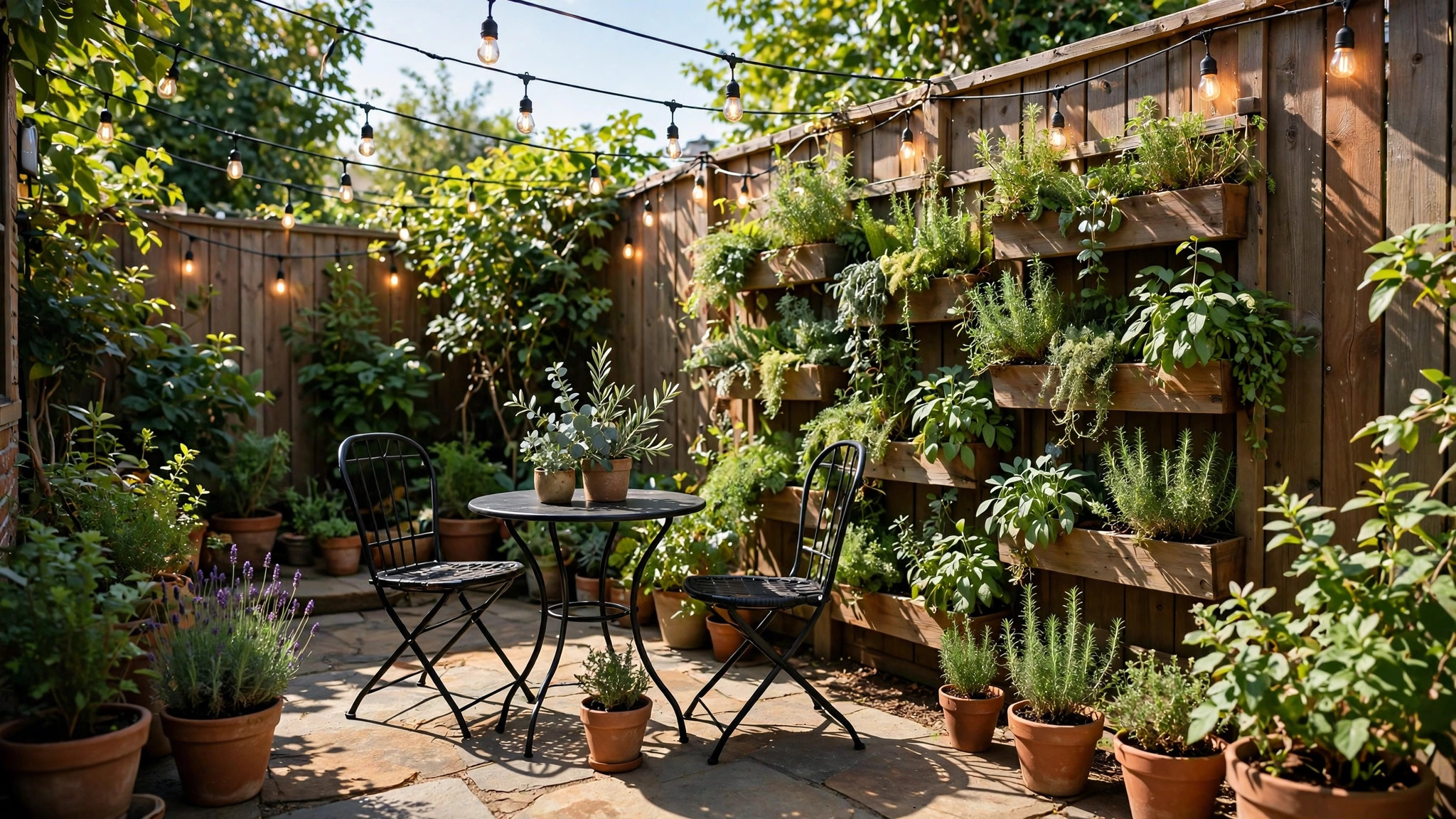

A small yard does not have to feel like an afterthought. With the right small backyard ideas, even a narrow townhouse lot can hold a place to eat, a place to relax, and a corner full of green. The secret is not buying more things. It is giving every square foot a clear job, choosing pieces that fit the scale, and building upward instead of outward.
Start by noticing where sun falls morning and afternoon, where water pools after rain, and which views you want to screen. A backyard is simply the private outdoor space behind your home, and that privacy is its biggest strength. Once you understand light, drainage, and sight lines, the rest of the plan falls into place.
Start With a Simple Layout and Clear Zones
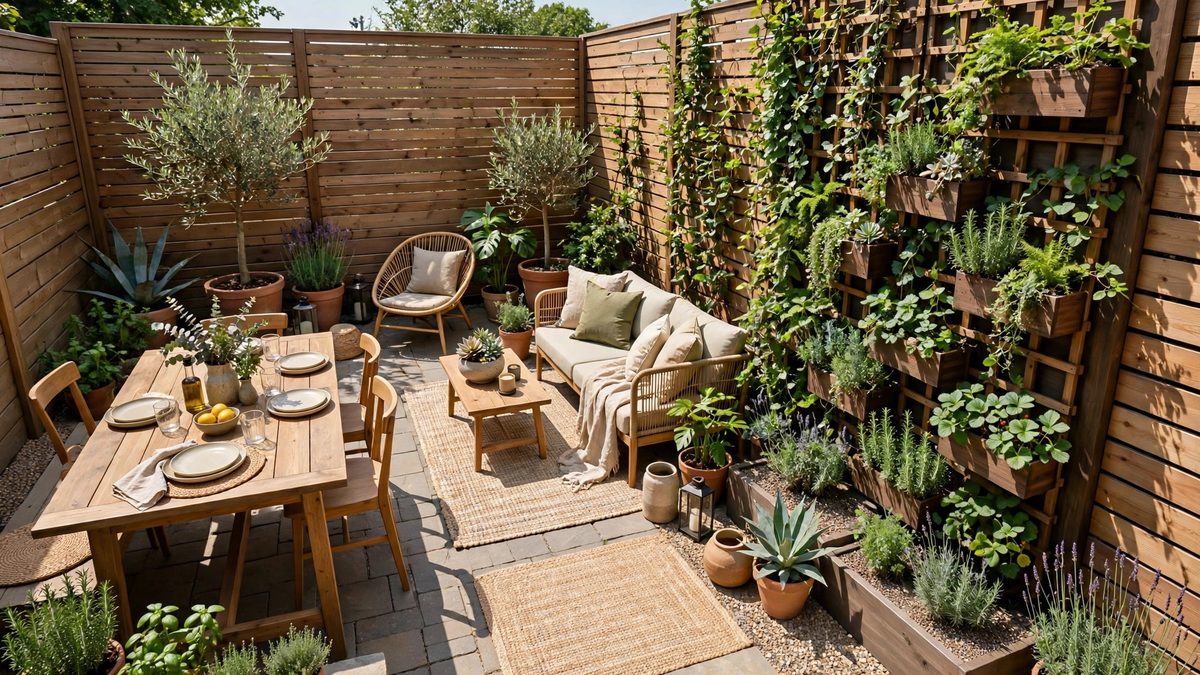
Dividing a tiny yard into zones sounds backwards, but it makes the space feel larger and more useful. When one area is clearly for dining, another for lounging, and a third for plants, your eye reads them as separate outdoor rooms instead of one cramped patch.
Keep the plan to two or three zones. Put dining near the back door for easy carrying, lounging in the sunniest or shadiest spot depending on your climate, and planting along the fence to soften the edges.
Use low-key dividers so the yard still flows. An outdoor rug, a change from gravel to pavers, a row of pots, or a low raised bed can mark a boundary without a wall. Leave a clear walking path, ideally at least 3 feet wide, so you are not squeezing past furniture.
Sketch the layout before you buy anything. Measure the yard, draw it to scale, and move paper shapes for the table, chairs, and planters. Moving paper is free, and it quickly shows whether that loveseat will block the gate or crowd the grill.
Choose a Small Patio or Deck That Fits
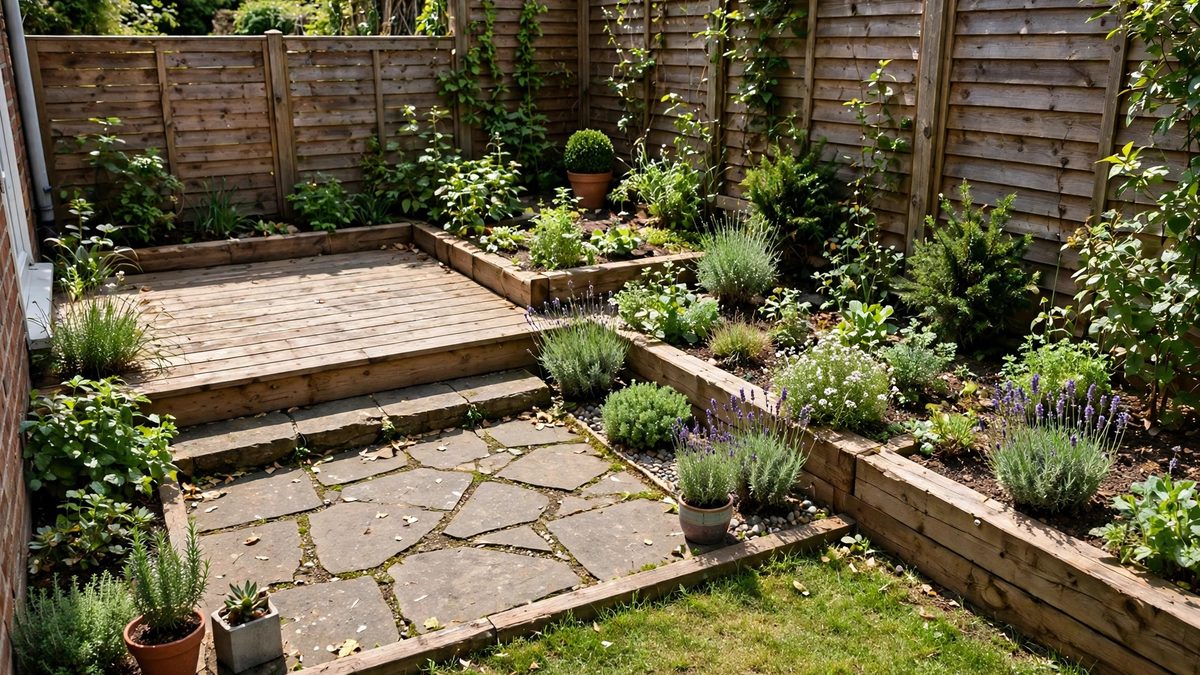
The patio is the floor of your outdoor room, and sizing it right matters. For a bistro set for two, about 6 by 6 feet can work. For dining for four, plan closer to 10 by 10 feet so chairs can pull back comfortably.
Concrete is durable and simple. Gravel is affordable and drains well, though it needs edging to stay tidy. If you want a finished look, explore paver patio designs that use light colors and simple layouts to make a small footprint feel open.
A low deck can solve a sloped or muddy yard and create a clean, level place to sit. Keep it low in a small space so it does not overwhelm the house. Deck tiles over an existing concrete slab are also a renter-friendly way to warm up a cold patio without a full build.
Leave planting pockets at the corners instead of paving wall to wall. A little green at the edges makes hard surfaces feel softer, and a step or stone border between patio and lawn helps each zone read clearly.
Grow Up With Vertical Gardening
When floor space runs out, the fence and walls are waiting. Vertical gardening adds leaves, flowers, and herbs without taking up ground you need for walking and sitting. It also draws the eye upward, which makes a fenced yard feel taller and less boxed in.
Easy ways to go vertical include:
- A trellis for climbing beans, jasmine, or clematis
- Wall-mounted planters or railing boxes for herbs and trailing flowers
- A tiered plant stand in a sunny corner
- Hanging baskets from a pergola beam or sturdy hook
- Narrow raised beds along the fence, typically 2 feet wide, for easy reaching
Choose plants with a tidy, compact habit rather than vigorous growers that will swallow a small yard in one season. Dwarf shrubs, columnar evergreens, and container-friendly varieties give you green without constant pruning. Group pots by water needs so watering stays simple.
Containers are your best friend here. You can move them to chase the sun and swap them by season. Use the largest pots you can fit, because bigger containers hold moisture longer. Just be sure pots have drainage holes.
Pick Seating That Earns Its Space
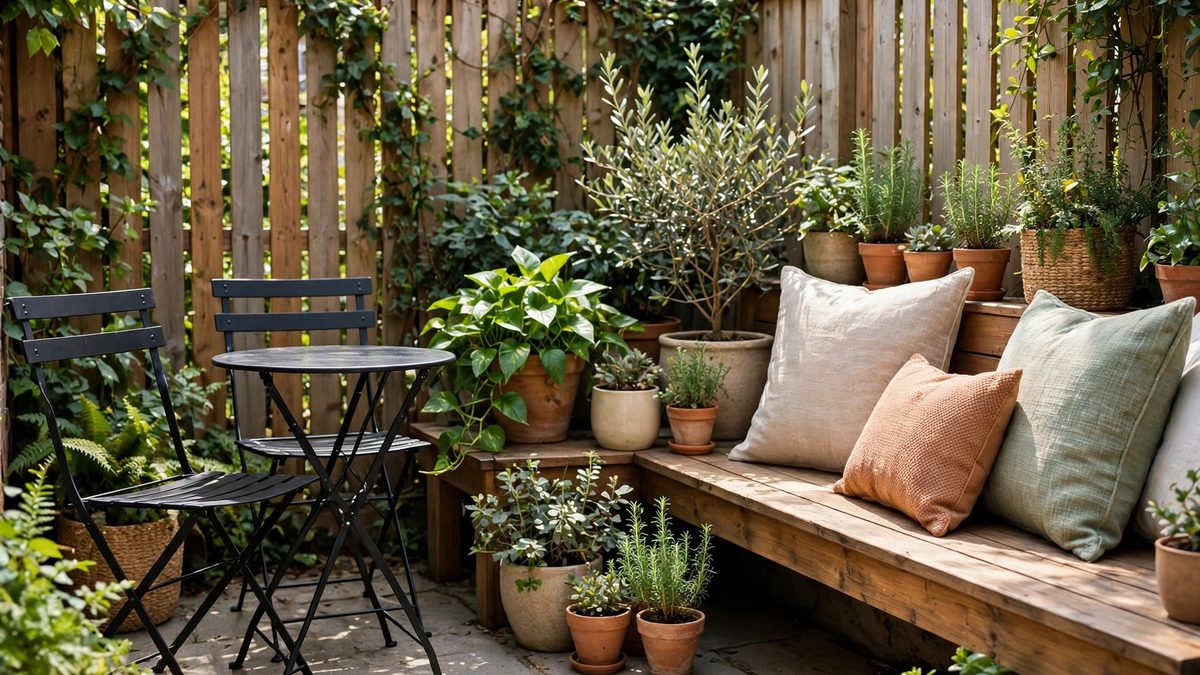
Every chair has to justify the space it takes. Bulky deep seating made for a large deck will crowd a tiny patio fast. Look for slim profiles, armless chairs that tuck under the table, and pieces that fold or stack when you need the floor clear.
Multi-use furniture is worth its weight in gold. A storage bench gives you a seat, a place to stash cushions, and a low divider between zones at once. Folding bistro sets are a classic for a reason: they seat two comfortably and fold flat against the fence.
Arrange seating in corners instead of floating it in the middle. An L-shaped built-in bench along two sides of a patio often seats more people than freestanding chairs while leaving the center open. Add cushions in weather-resistant fabric and store them during heavy rain.
Do not forget shade. A small cantilever umbrella, a shade sail, or a slim pergola makes the yard usable on bright afternoons. Place shade where you sit, and anchor umbrellas securely so wind does not tip them.
Add Lighting for Evenings Outside
Good lighting extends the hours you can enjoy your yard and makes a small space feel warm instead of closed off. You do not need a complicated wired system. Solar path lights, string lights, and a few lanterns can do most of the work.
Layer light at different heights. String lights overhead give a soft glow for conversation. Low path lights show where to walk without glare. A lantern on the table or a spotlight aimed at a favorite plant adds a focal point. Keep the color warm rather than harsh blue-white.
Use products rated for outdoor use, keep cords out of walkways, and follow manufacturer instructions. If you add a small fire pit, check local codes first. Many communities commonly require at least 10 feet from a house or other structure, but local rules vary, so confirm before you light the first fire.
Test your lighting after dark and adjust. A space that looks fine at noon can have dark corners at 9 p.m. Move portable lights around for a few evenings before mounting anything permanently.
Create Privacy Without Heavy Walls
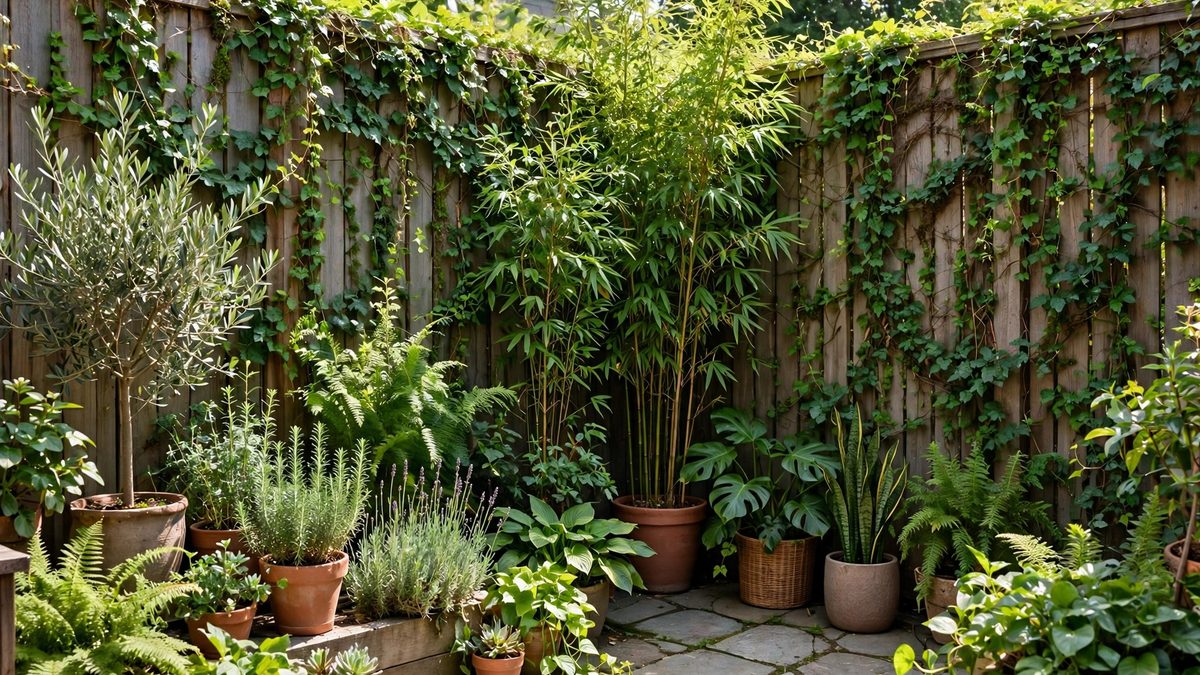
Privacy turns a yard into a retreat, but tall solid walls can make a small space feel like a box. The goal is to screen the main views into your seating area while keeping air and light moving.
Layered, lighter options usually work best:
- A trellis with climbing plants over part of the fence
- Tall grasses or narrow evergreen shrubs in planters
- An outdoor curtain on a pergola or porch edge
- A slatted screen panel that blocks sight lines but not breeze
- A row of potted small trees along the most exposed side
If you live in an apartment or townhouse, many of the same tricks used for balcony decor ideas scale up nicely, especially railing planters, outdoor rugs, and freestanding screens that need no permanent changes.
Check fence height rules and homeowners association guidelines before adding height to an existing fence. A lattice extension is often allowed where a full new fence is not, but rules differ by city, so a quick check saves a redo.
Hide Clutter With Smart Storage
Small yards show clutter fast. Garden tools, hoses, toys, and cushions have nowhere to hide, so storage has to be built into the plan from the start.
A slim deck box along the fence can hold cushions and small tools. A vertical cabinet or small shed in an unused corner keeps taller tools upright and dry. Hooks on the fence get hoses and hand tools off the ground. Under-bench storage is especially useful because it uses space you are already sitting on.
Keep storage close to where you use things. Put the cushion box next to seating, tool hooks near the beds, and a small trash spot near dining. When putting things away is easy, the yard stays tidy without a big cleanup before guests arrive.
Edit once a season. If a pot is cracked, a chair is broken, or a toy is no longer used, let it go. In a small space, removing one bulky unused item can feel like gaining a whole new corner.
Budget Tips and Mistakes to Avoid
You do not need to do everything in one spring. A phased plan usually gives a better result and a kinder bill. Expect to pay more for hard surfaces and built features, and less for plants, gravel, and secondhand furniture, though prices vary widely by region and material.
Smart ways to save include:
- Start with layout, cleaning, and one seating zone before buying decor
- Buy plants in smaller sizes and let them grow in
- Shop end-of-season sales for cushions, umbrellas, and lights
- Use gravel or stepping stones now and save pavers for later
- Repaint or repair a usable table instead of replacing it
Common mistakes matter just as much. The biggest is buying furniture before measuring, which leads to pieces that block doors and paths. Another is planting without checking mature size, so a cute shrub swallows the patio. Skipping drainage planning is a third: if water pools on your new patio after every rain, you will use it less, no matter how pretty it looks.
Avoid copying a large-yard photo exactly. A fire pit circle, a big sectional, and a lawn game area cannot all fit in 200 square feet. Pick the one feature your family will use most and do that well. That focus helps out front too, pairing nicely with simple front porch ideas so the whole home feels cared for from curb to back fence.
Frequently Asked Questions
How do I make a small backyard look bigger?
Use clear zones, light colors on hard surfaces, and vertical planting to draw the eye up. Keep the center relatively open, place taller plants at the edges, and try a diagonal path or patio layout if it fits.
What is the best ground cover for a small backyard?
It depends on use and sun. If kids and dogs need play space, a small lawn or durable artificial turf can work. For low upkeep, a patio plus gravel and planting beds is often easier. Ground-cover plants suit shady corners where grass struggles.
How much does a small backyard makeover typically cost?
Costs vary a lot. A cleanup, gravel patio, folding furniture, and container plants can typically be done for a few hundred dollars if you do the work yourself. A new paver patio, deck, or built seating will typically run into the thousands. Get local quotes before committing.
What plants work best in a small backyard?
Compact, slow-growing plants are safest. Herbs, dwarf hydrangeas, small ornamental grasses, climbing vines on a trellis, and container citrus in warm climates are popular. Always check mature size on the plant tag and match the plant to your sun and climate zone.
Can I fit dining and lounging in a tiny yard?
Often, yes, if you keep each area compact. Use a folding table for dining and a small loveseat or two chairs for lounging, or let one built-in bench serve both. Sharing a single patio, with a rug defining the lounge end, is a common solution.
Conclusion
A tiny yard is not a problem to apologize for. It is a focused space where a few good decisions go a long way. Define your zones, size the patio honestly, grow upward, choose seating that stores or folds, and add warm light and gentle privacy. Do it in stages, measure before you buy, and keep only what you truly use. Soon that small patch behind your house will be the place everyone heads after dinner.
