
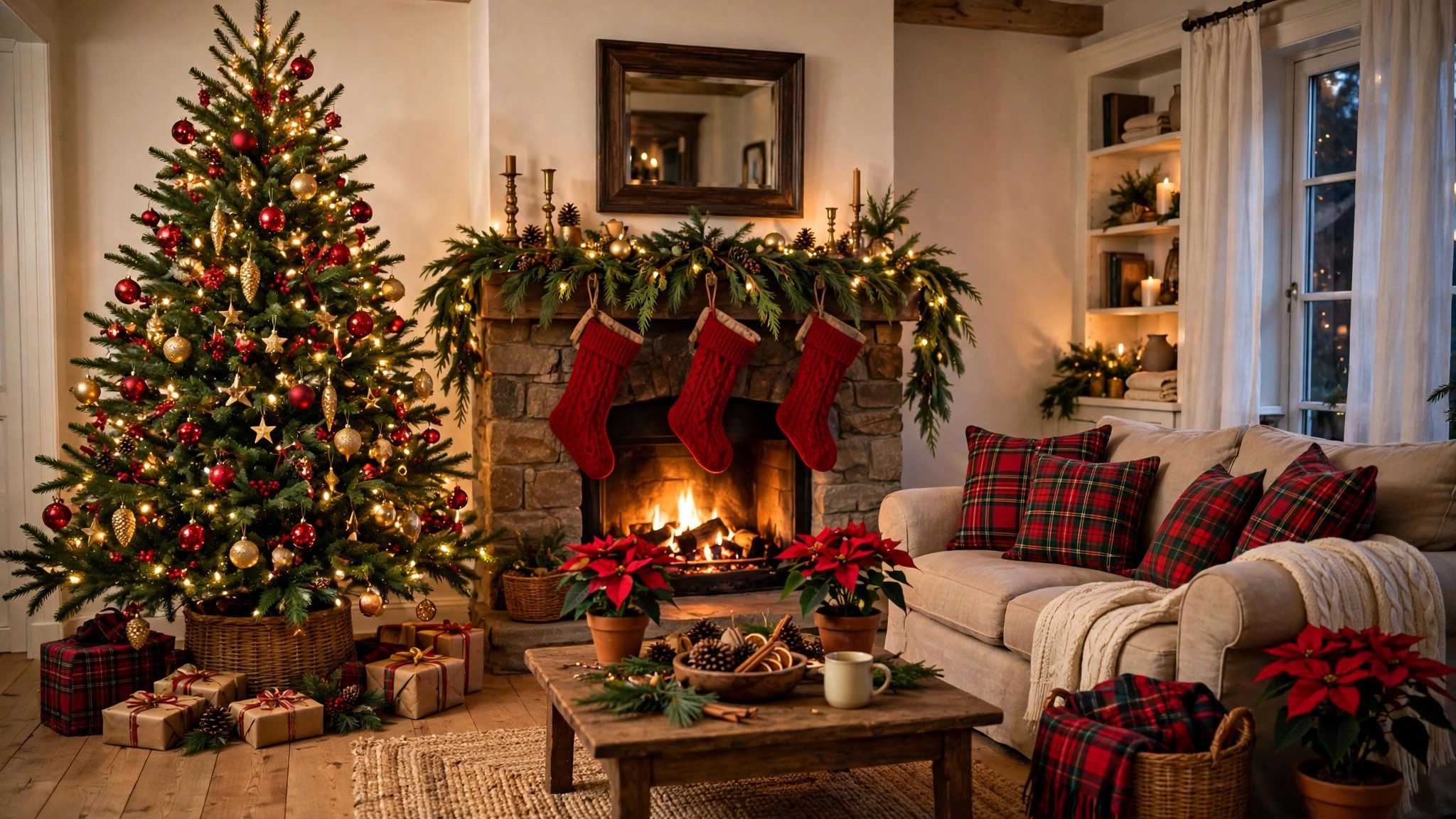

Some Christmas styles come and go — one year everything is blush pink, the next it is all black and white. Traditional Christmas decorations outlast every trend because they are built on the colors and symbols people have loved for generations: deep red, rich evergreen, and touches of gold, with holly, pinecones, plaid, and candlelight doing the heavy lifting. The look is warm, a little nostalgic, and deeply welcoming. Best of all, it is easy to build over time — a few classic pieces added each year will serve you for decades. Here is how to create that timeless feeling room by room, from the tree to the front door.
The Classic Palette: Red, Green, and Gold
Traditional decorating starts with its famous trio. The traditional colors of Christmas are red, green, and gold — green for evergreen branches that stay alive through winter, red for berries, bows, and warmth, and gold for candlelight and a hint of celebration. Keep those three as your base and the rest of the decorating nearly does itself.
Support the palette with classic patterns and materials: red-and-black or red-and-green plaid, velvet ribbon, polished brass, natural wood, and plenty of fresh or realistic faux greenery. When you shop or unpack, edit ruthlessly — anything that does not fit the palette goes back in the bin. That simple discipline is what makes traditional rooms look rich instead of cluttered.
Texture is the quiet partner of the palette. Velvet ribbon against glossy glass ornaments, rough pinecones beside smooth brass, a knit stocking next to polished wood — those contrasts are what make traditional rooms feel collected over years rather than bought in one trip. When in doubt, choose the natural material: real wood over plastic, woven over printed, metal over resin. Your future self, unpacking the same beloved pieces next year, will thank you.
The Tree: The Centerpiece of It All
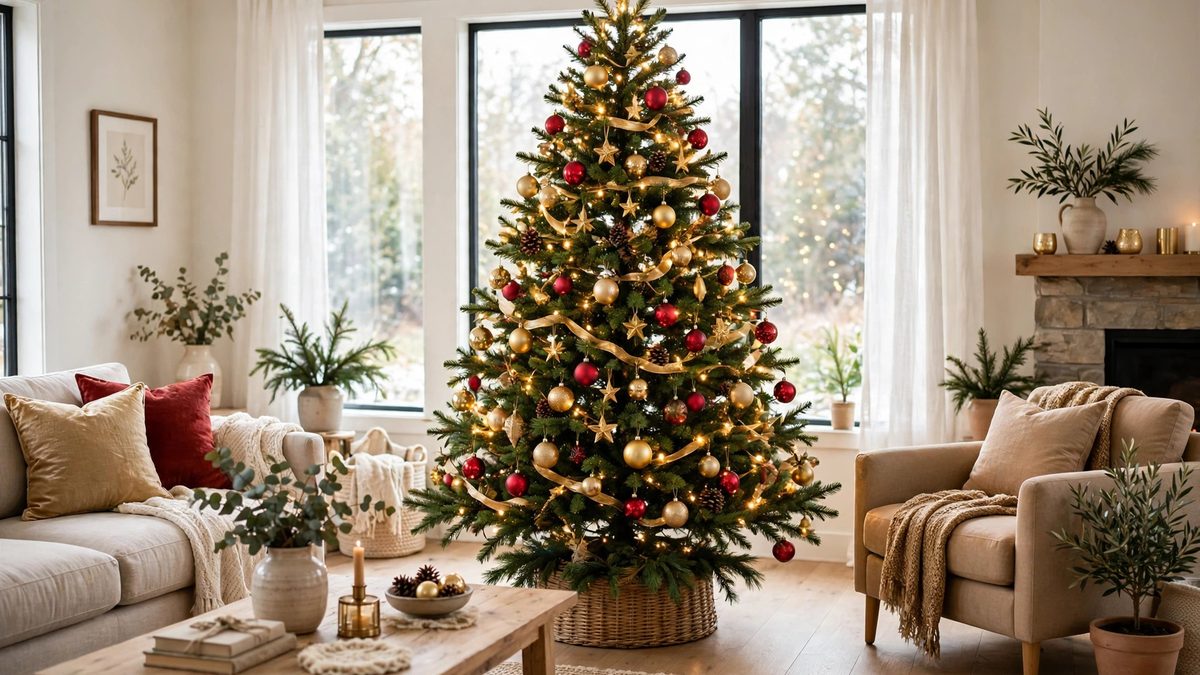
A traditional tree is full, layered, and glowing. Whether you choose real or artificial, aim for a classic green tree rather than a flocked or colored one, and decorate in this order:
- Lights first. Warm white lights read as candlelight. A common guideline is about 100 lights per foot of tree height for a well-lit look.
- Garland next. Drape beaded garland, cranberry strands, or wide velvet ribbon in gentle swags around the tree.
- Ornaments in layers. Hang large ornaments deep inside the branches for depth, medium ones mid-branch, and your favorites at the tips. Classic choices include glass balls in red and gold, plaid and velvet ornaments, and heirloom or handmade pieces.
- A traditional topper. A gold star or a classic angel finishes the silhouette.
Fill gaps with picks — sprays of red berries, pinecones, or gold leaves tucked into the branches. They make even a modest tree look lush.
Christmas Flower Arrangements That Last All Season
Fresh and faux flowers bring softness to the traditional scheme. Christmas flower arrangements built on poinsettias are the classic starting point — the plant’s star-shaped red bracts have been a Christmas symbol for generations. Set a poinsettia in a brass or ceramic cachepot, and it instantly dresses up an entry table, hearth, or bathroom counter.
For centerpieces and mantels, combine:
- Red roses or carnations with white hydrangeas or stock for a formal arrangement
- Evergreen clippings — pine, cedar, magnolia leaves — as the green base
- Red berries, pinecones, and cinnamon sticks tucked in for texture and scent
- Amaryllis, which blooms in dramatic red or white trumpets and looks stunning in a simple pot
Faux versions have become remarkably realistic and can be stored and reused. A good approach: buy one quality faux arrangement for the table, then add fresh greenery around it each year. For more ways to build a holiday table focal point, our dining table centerpiece ideas translate beautifully to Christmas with red and gold accents.
Christmas Decorations for a Wall That Feel Festive, Not Cluttered
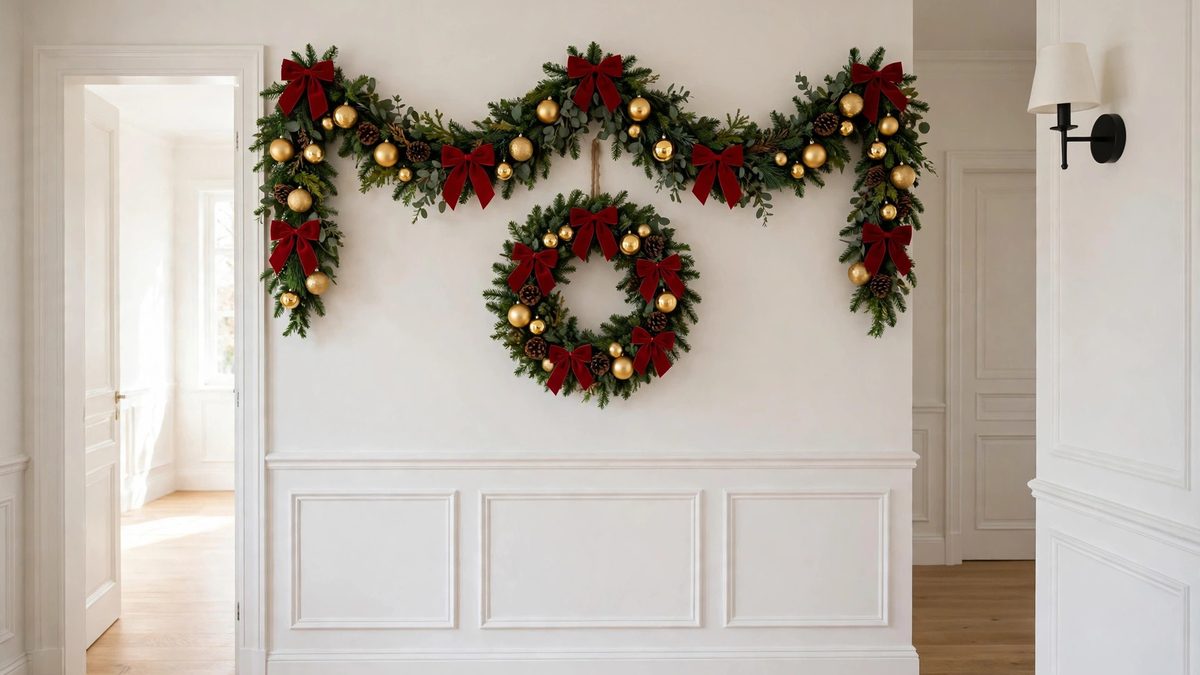
Bare walls are a missed opportunity at Christmas. Christmas decorations for a wall work best when they echo what you already hang there, just dressed for the season:
- Wreaths indoors. Hang a classic evergreen wreath over a mirror, on interior doors, or in a grouping of two or three down a hallway.
- Garland swags. Drape evergreen garland along a picture ledge, over a large mirror, or around a doorway.
- Swap the art. Replace a few framed prints with Christmas-themed artwork, vintage Santa prints, or framed wrapping paper in classic patterns.
- A card display. String ribbon or twine across a wall or down a stair rail and clip holiday cards to it as they arrive.
- Paper snowflakes and stars. Folded-paper decorations in white and gold add charm, especially in kids’ rooms and kitchens.
Keep wall decor in the same red-green-gold palette as the rest of the house, and it will feel collected rather than random.
Decorating a Christmas Mantel Ideas That Always Work
The mantel is the room’s stage, and decorating a Christmas mantel ideas follow a reliable recipe: greenery, height in the middle, glow, and something personal.
Start with a full evergreen garland laid along the mantel shelf, letting the ends drape slightly. A standard mantel is around 4 to 5 feet wide, and ready-made garlands typically come in 6- and 9-foot lengths — the 9-foot size gives you that generous drape. Layer in a string of warm lights, then add height at the center: a wreath hung above the mantel, a pair of candlesticks, or a small nativity scene.
Stockings hang along the front — classic red, plaid, or knit stockings in a row are as traditional as it gets. Finish with clusters of pinecones, red ornaments nestled into the greenery, and flameless candles or well-spaced candle holders for glow. For safety, keep any real candle flames well away from greenery, and never leave them burning unattended.
The Traditional Christmas Table
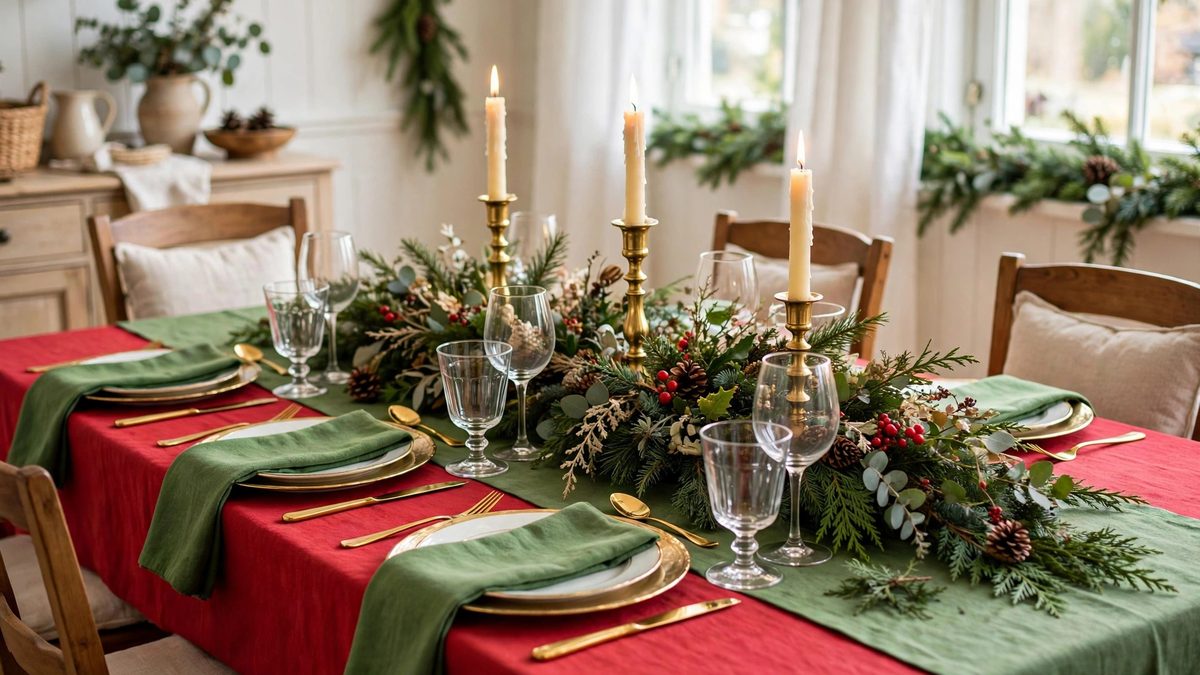
A classic Christmas table layers pattern and shine: a white or deep green tablecloth, plaid or tartan napkins, and gold chargers under white dinnerware. The centerpiece can be as simple as a low evergreen runner with red candles in brass holders and a scattering of pinecones and ornaments. If you love a project, many traditional touches are easy makes — our roundup of DIY home decor ideas includes plenty of projects that adapt to Christmas with holiday fabric and greenery.
Small traditional touches guests remember: a sprig of holly or rosemary on each napkin, crackers at each place setting, and a small candy cane or chocolate at every plate.
Don’t Forget the Entryway and Stairs
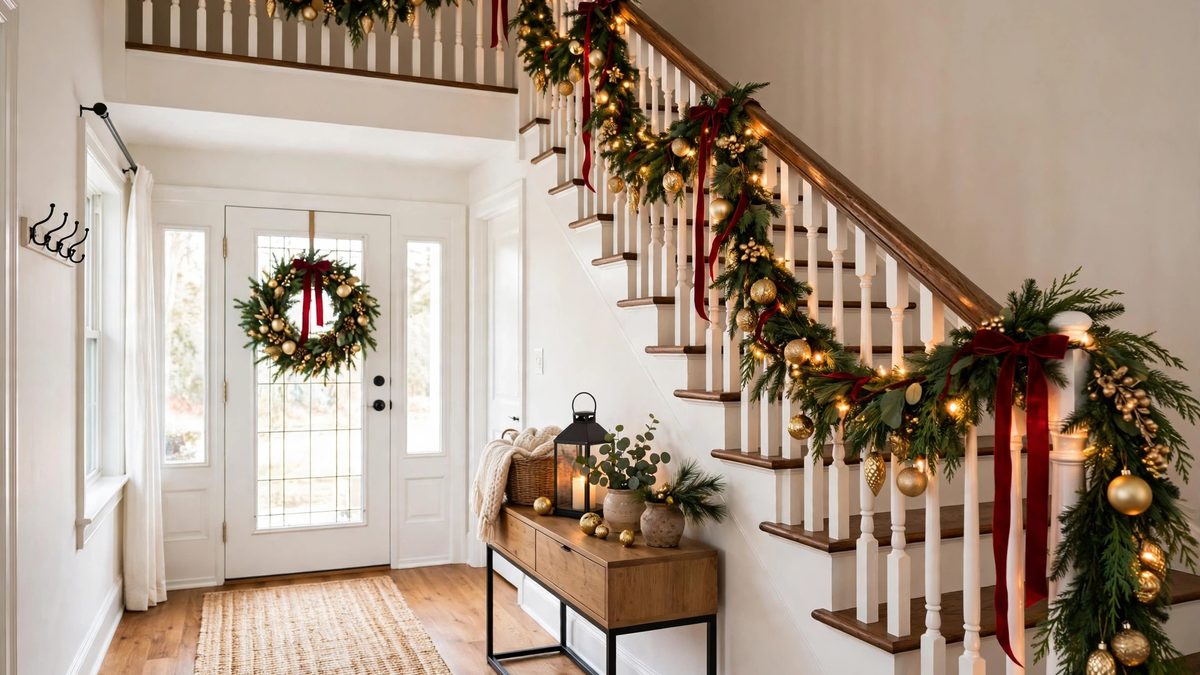
Guests feel the welcome before they reach the living room. A wreath on the front door, a lantern with a flameless candle by the steps, and a small arrangement of greenery in the entry set the tone. Inside, wind garland and ribbon along the stair banister, tying it every few balusters, and place a nativity scene, a bowl of ornaments, or a stack of wrapped “presents” (empty boxes work fine) on the entry table.
If you enjoy seasonal decorating in general, the same layering approach works beautifully for autumn — see our guide to decorating tips for fall for the cozy, natural counterpart to the Christmas look.
Frequently Asked Questions
What are the most traditional Christmas decorations?
The enduring classics are an evergreen tree with red and gold ornaments, wreaths and garlands of real or faux greenery, poinsettias, stockings on the mantel, a nativity scene, candles or warm white lights, and plaid or velvet ribbon as an accent.
How do I make my Christmas decorations look traditional instead of trendy?
Stick to the red, green, and gold palette, choose natural materials like wood, brass, and velvet, and favor classic shapes — balls, stars, angels, bells — over novelty figures. Repeating the same motifs in every room makes the whole house feel cohesive.
When should I put up and take down Christmas decorations?
There’s no single rule, but many families decorate the weekend after Thanksgiving and take decorations down around Twelfth Night (January 5) or Epiphany (January 6). Historically, leaving greenery up past Candlemas on February 2 was considered unlucky — a fun bit of tradition to know.
Can I mix fresh and artificial greenery?
Absolutely, and most traditional homes do. Use a quality artificial garland or wreath as the base, then tuck in fresh clippings, berries, and pinecones each year. The fresh elements add scent and realism; just replace them as they dry out.
How do I store traditional decorations so they last?
Wrap glass ornaments individually, coil lights and garlands loosely, and store everything in lidded bins away from heat and damp. Quality traditional pieces are meant to be used for decades — many families pass them down — so careful storage pays off.
Conclusion
Traditional Christmas decorations endure because they are built on things that never date: evergreen branches, candlelight, deep red and gold, and pieces with meaning. Start with the palette, dress the tree in layers, give the mantel and walls their share of greenery, and carry the same colors to the table and entryway. Add a few good pieces each year, store them with care, and your Christmas look will only get richer with time. For more on the history behind these customs, Wikipedia’s Christmas decoration article is a fascinating read.
