
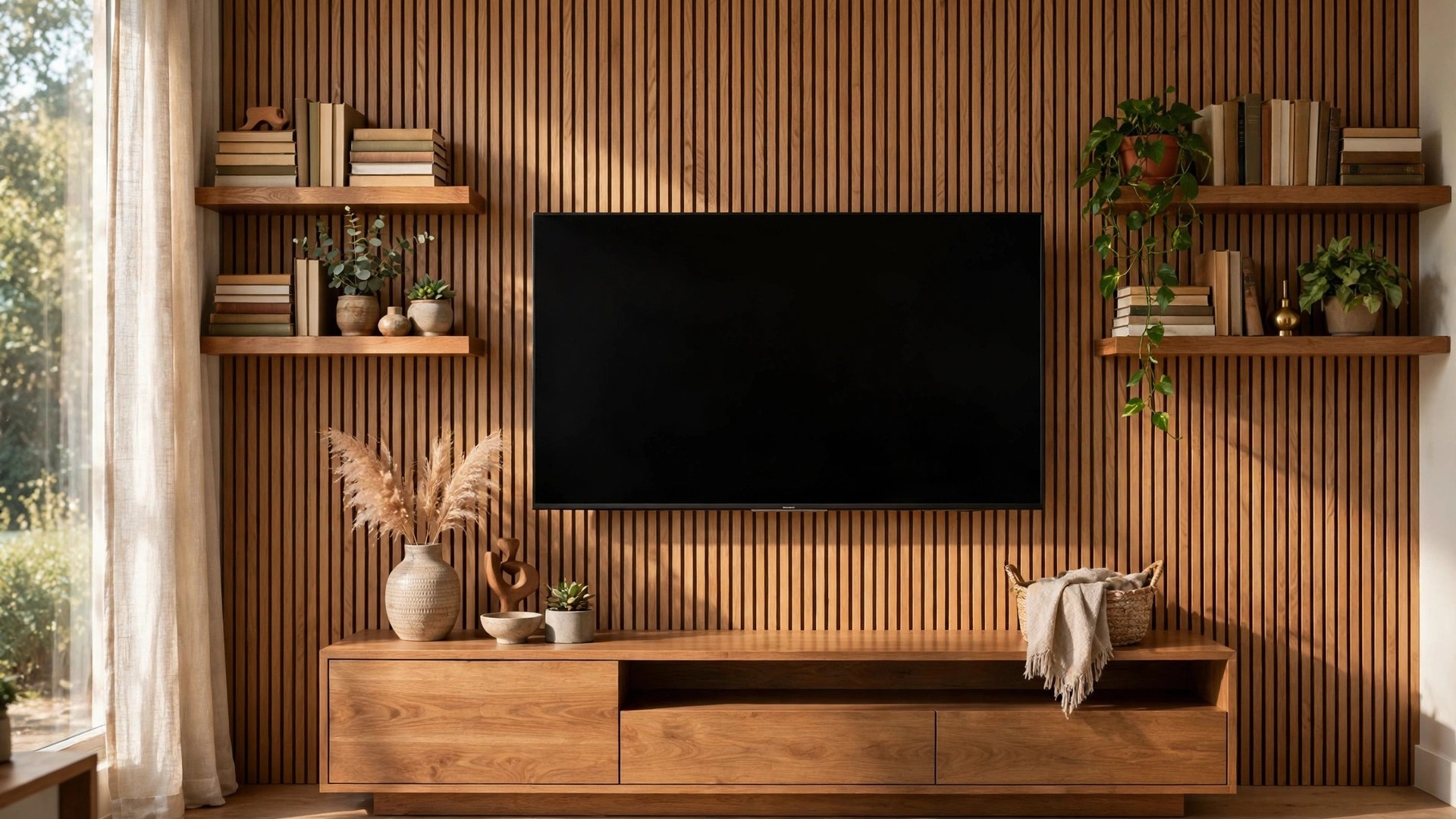

Every living room has the same design problem: a big black rectangle that everything must face. The best tv wall ideas stop treating the screen as an embarrassment and start treating the wall as a design opportunity. Paneling, shelving, art, color, and clever cord management can make the television look like it was always meant to be there — and make the wall worth looking at when the screen is off.
This guide covers the full range, from renter-friendly styling tricks to full built-in walls, starting with the two measurements that decide whether any of it looks right. Whatever your budget, you will find a version that fits your room and your tolerance for projects.
First, Get the Size and Height Right
Design cannot rescue a TV that is the wrong size or hung at the wrong height, so start here. For comfortable viewing, the center of the screen should sit near eye level when seated — roughly 42 inches from the floor for a typical sofa. Mounting at fireplace-mantel height is the most common TV wall mistake; a tilting mount helps, but a stiff neck is a design flaw, not a viewing style.
On size: a TV should relate to the wall and the seating, not fill the wall edge to edge. A 55-inch TV is about 48 to 49 inches wide; a 65-inch is about 57 inches wide. Leave visual breathing room — at least 8 to 12 inches of wall or furniture width beyond the screen on each side reads balanced. If the TV sits above a console, the console should be wider than the TV by several inches on each side, which is the proportion every styled photo you admire is using.
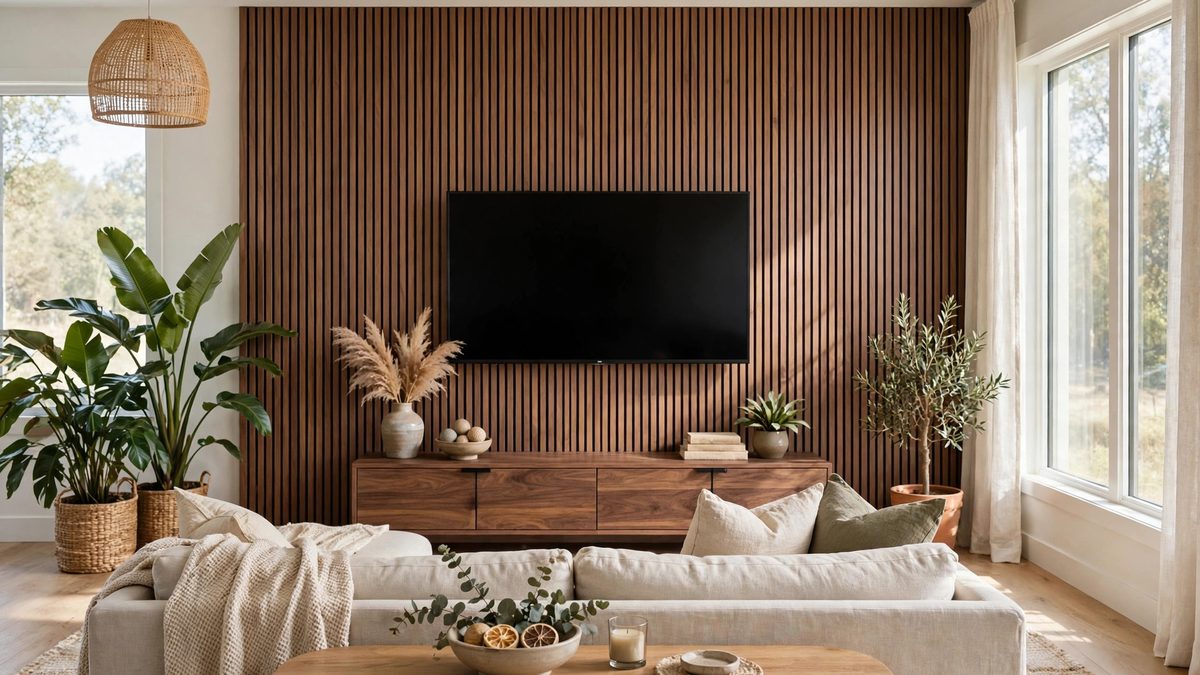
Paneled and Slatted TV Walls
Paneling gives a plain wall architecture and makes the TV look installed rather than parked. Wood slat panels — vertical battens in walnut, oak, or painted finishes — are the current favorite: they add texture, hide cords behind the panel, and make even a big screen feel like part of a warm composition. Slats can cover the whole wall or just a section slightly wider than the TV.
Flat panel systems in matte laminate, stone-look, or fabric finishes deliver a sleeker, hotel-like result and often come as renter-possible kits, though most need screws. Traditional molding and wainscot-style frames suit classic rooms: a picture-frame molding rectangle behind the TV, painted the wall color or one shade deeper, gives subtle structure for the price of trim and paint.
Whichever panel you choose, plan cord routes before installation — a channel behind the panel or down to the console keeps the finished look clean.
Floating Shelves and Media Consoles
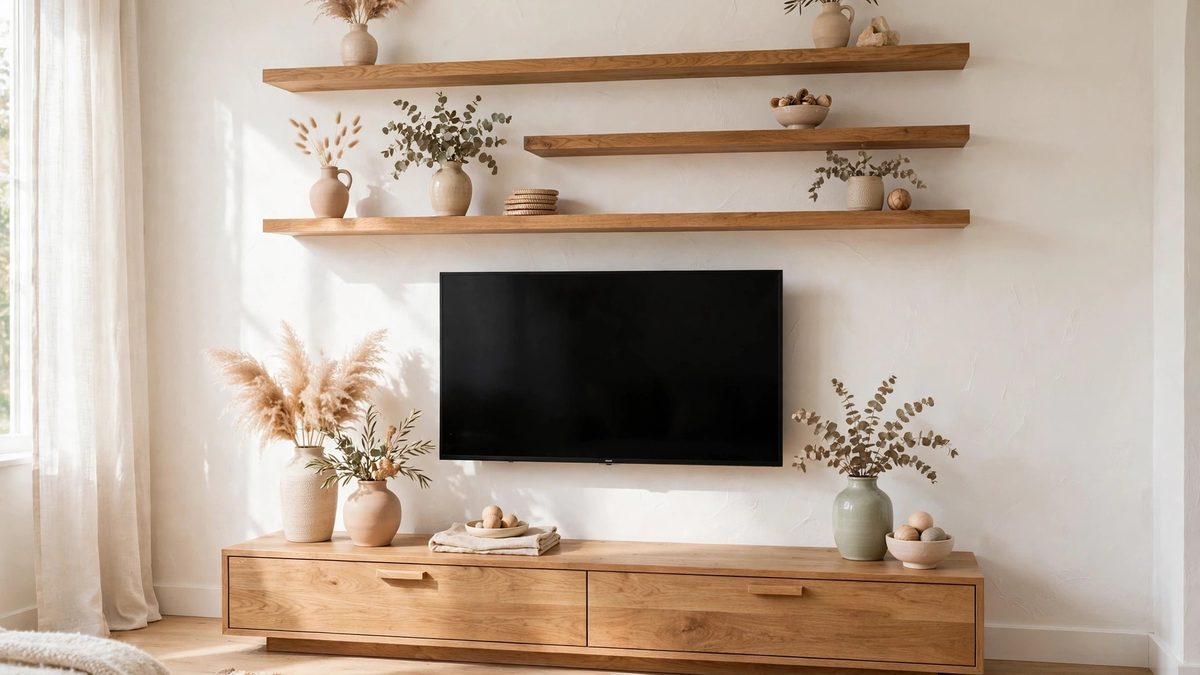
The most flexible tv wall ideas pair the screen with floating shelves or a low media console, furniture you can rearrange as needs change. A low, wide console grounds the TV, hides components and cords in cabinets, and gives you a styling surface. Floating shelves flanking the TV — or one long shelf beneath it — hold books, plants, and objects that soften the screen’s geometry.
Keep shelf styling asymmetrical and light: a stack of two books, a small plant, one sculptural object per shelf is plenty. Match the shelf or console width to the rules above — wider than the TV — and leave the surface mostly clear so the wall breathes. Our bookshelves for living room guide covers shelf styling and standard bookcase sizes that work beautifully on either side of a screen.
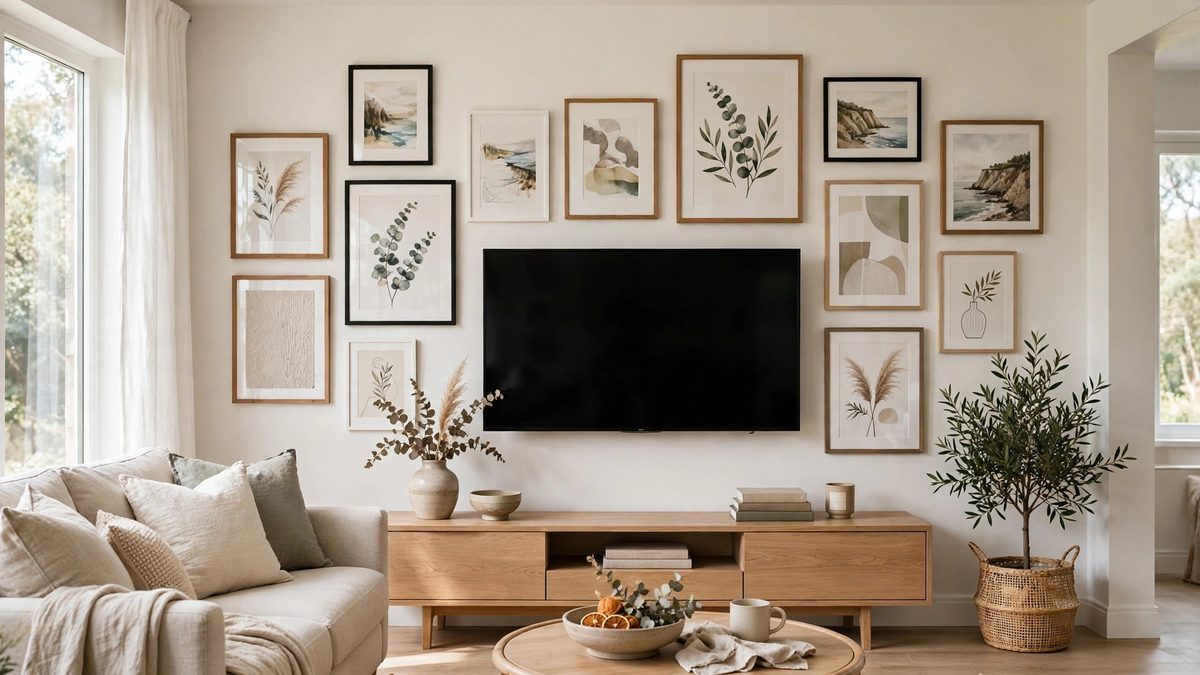
Surround the TV With Art: The Gallery Approach
If the black rectangle bothers you most when it is off, camouflage it with company. A gallery wall that includes the TV as its largest “frame” makes the screen read as one dark artwork among many. Hang framed prints, photos, and canvases around the TV with the same 2- to 3-inch spacing you would use anywhere, keeping frames in one or two finishes.
Frame-style televisions — the models designed to display art when idle, with matte screens and snap-on bezels — take this idea furthest and genuinely disappear into a gallery. But the trick works with any TV: art at similar scale, hung close enough to feel related, and one or two pieces in black frames to rhyme with the screen. For layouts and templates, our gallery wall layout guide is the planning companion to this approach.
Built-Ins and Fireplace TV Walls
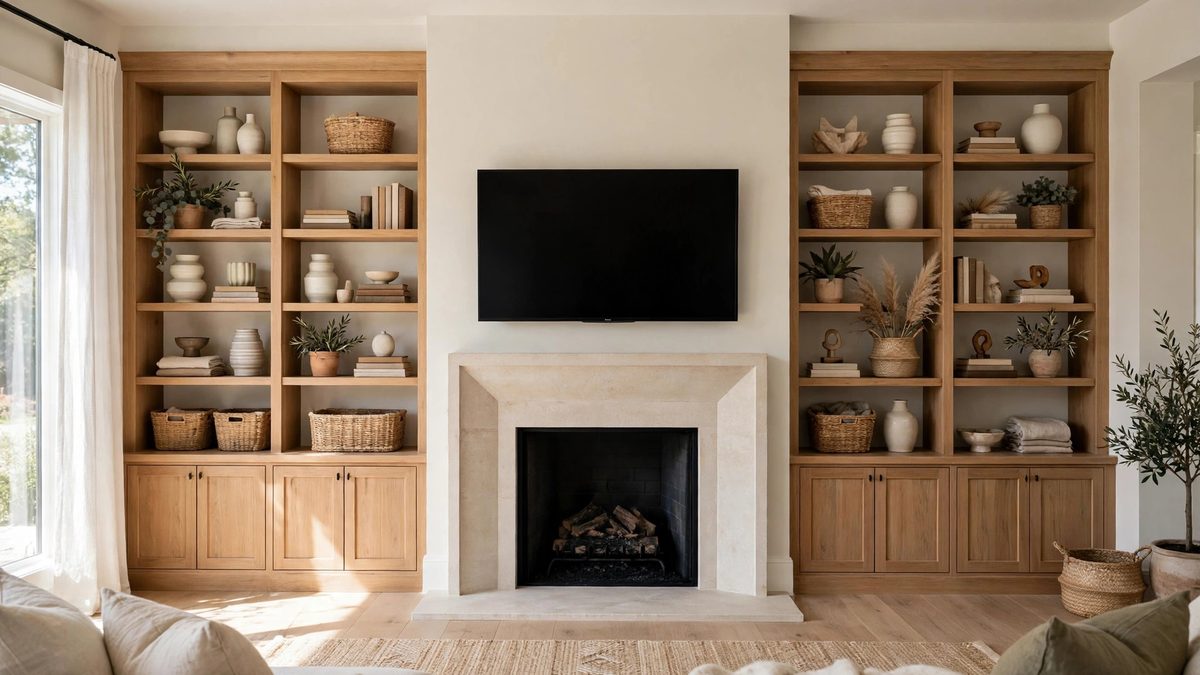
At the top of the commitment scale, built-in cabinetry turns the TV wall into the room’s architecture. Bookcases or cabinets flanking the screen, a cabinet below, and the TV recessed or mounted in the center bay create the library-wall look that adds real home value. Built-ins also solve storage completely — media gear, games, and blankets disappear behind doors.
Fireplace walls are a special case. If the fireplace is the room’s natural focal point and the mantel height puts the TV center well above 42 inches, consider placing the TV on an adjacent wall instead, angled seating toward both. If above the fireplace is truly the only spot, use a pull-down mount that brings the screen to eye level for viewing and back up for looks, and check your fireplace’s heat clearances before mounting anything.
For more whole-room context, our living room design ideas show how the TV wall decision ripples into seating layout and traffic flow. And for a film-lover’s take on screen-centered rooms, the Wikipedia overview of home cinema covers how dedicated viewing rooms handle screen placement and seating distances.
Paint and Color Tricks for TV Walls
Paint is the cheapest TV wall upgrade and one of the most effective. A darker wall behind the TV — charcoal, deep navy, forest green, or warm black-brown — reduces the contrast between the black screen and the wall, so the TV blends in when off and the picture looks richer when on. This is the same color-drenching logic designers use for media rooms, scaled to one wall.
Lighter rooms can use the reverse: a soft warm white or greige wall with the TV in a slim light-wood or white frame to soften its outline. Avoid high-gloss paint behind a screen; reflections compete with the picture. Eggshell or matte finishes are the right call. For bolder all-over color approaches, look at how wall design ideas like color drenching treat a whole room — the TV wall is often the perfect test wall for the technique.
Hide the Cords (Non-Negotiable)
No TV wall survives visible cords. The options, best to simplest:
- In-wall cord kits route power and HDMI inside the wall between two plates — the cleanest look; use a kit rated for in-wall use and check local code, or hire an electrician for an outlet behind the TV.
- Cord channels (raceways) mount on the wall surface and paint to match — renter-friendly and nearly invisible once painted.
- Furniture camouflage: run cords down behind the console leg or inside a slat panel’s channel.
- Simplify the inputs. A streaming stick and a soundbar with one HDMI-ARC connection can reduce the spaghetti to two cables.
While you are behind the TV, add a surge protector and label the HDMI cables — future you, swapping a console at midnight, says thanks.
TV Wall Mistakes to Avoid
- Mounting too high. Center of screen near 42 inches for seated viewing; do not let a mantel dictate neck pain.
- TV wider than its console. The console should extend beyond the screen on both sides.
- Symmetrical clutter. Identical decor on both sides looks staged; vary heights and objects.
- Ignoring glare. Windows opposite the screen wash out the picture; curtains or an anti-glare position fix it.
- No plan for the soundbar. Leave shelf or console space for it from the start, centered under the screen.
Frequently Asked Questions
How high should a TV be mounted on the wall?
So the center of the screen is at seated eye level — about 42 inches from the floor for most sofas. A few inches either way is fine; mantel height usually is not.
Should a TV wall be darker than the rest of the room?
Often, yes. A deeper color behind the screen reduces contrast with the black TV, so it blends in when off and makes the picture look richer when on.
How can I decorate around a TV without it looking cluttered?
Use fewer, larger items: one console wider than the TV, a plant, a stack of books, and art hung as a gallery with consistent spacing. Leave plenty of empty wall.
Can renters do a TV wall makeover?
Yes — lean or mount art around the TV, use a console for components, paint-matched cord channels on the wall surface, and removable slat-look panels or a large tapestry behind the screen.
Is it OK to put the TV above a fireplace?
It works if heat clearances are safe and you use a pull-down mount for proper viewing height. If the room allows, an adjacent wall with angled seating is usually more comfortable.
Conclusion
A great TV wall is equal parts proportion and camouflage: the screen at eye level, a console or panels wider than the TV, color or texture that makes the black rectangle belong, and cords that simply are not there. Start with the cheap wins — height, cord channels, a darker paint color — and climb toward panels, shelves, or built-ins as your budget and commitment allow. The wall you face most deserves the same design care as every other wall in the room.
