
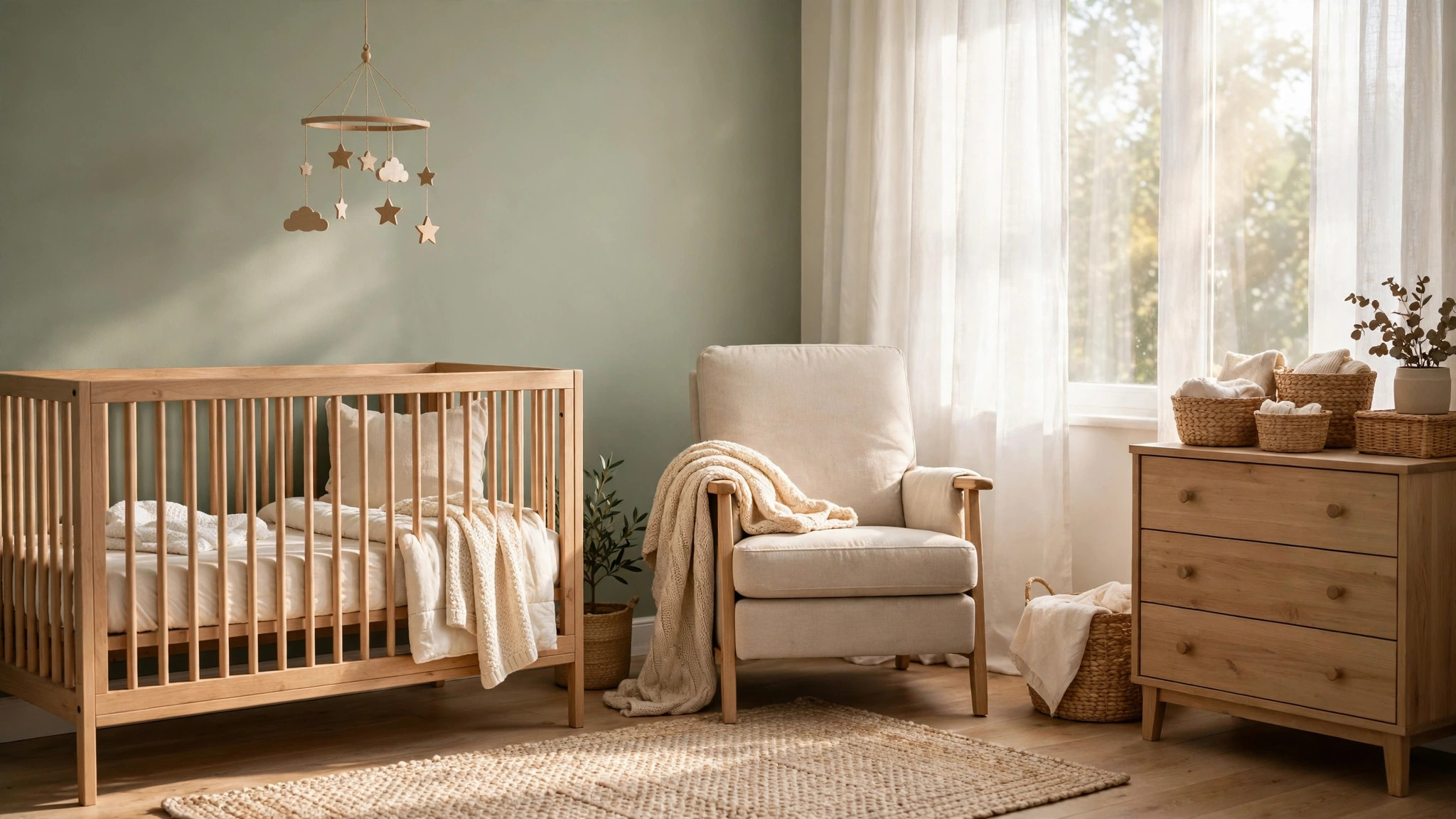

Decorating a nursery is one of the sweetest projects in any home, but it can also feel surprisingly high-stakes. You want baby room decor that looks soft and welcoming in photos, yet works hard at 3 a.m. when you are feeding, changing, and soothing a tiny person in the dark. The good news is that a beautiful nursery does not need a huge budget or a designer. It needs a calm color palette, a few well-chosen furniture pieces, safe and simple wall decor, and storage that keeps everyday supplies within arm’s reach.
A nursery, at its heart, is simply a room set aside for an infant or toddler, and it will change fast. The crib corner becomes a reading nook, the changing table becomes a dresser, and the tiny baby becomes a climbing toddler. If you decorate with that evolution in mind from the start, the room will serve your family for years instead of needing a full redo at every stage. Here is how to put together a nursery that is cozy, practical, and easy to love.
Start With a Calm, Flexible Color Palette
Color sets the mood of the whole room, and nurseries work best in soft, restful shades that will not overstimulate a baby or clash with the colorful toys that inevitably arrive. Warm white, pale cream, soft sage green, dusty blue, and blush pink are classic choices because they pair with almost any accent color later.
A flexible approach is to keep the walls and big furniture neutral, then bring in color through textiles and art that are cheap to swap. For example:
- Paint the walls a warm white or pale greige and add color with curtains, a rug, and crib sheets.
- Choose one gentle accent color, like sage or dusty blue, and repeat it three or four times around the room.
- Add warmth with natural wood tones in the crib, picture frames, or a woven basket.
If you are building a full theme from scratch, our complete guide to nursery decor walks through palettes and themes step by step. Whatever you choose, test paint colors on the wall first, because nursery lighting is often softer than store lighting and shades can read very differently at home.
The Essential Furniture Pieces
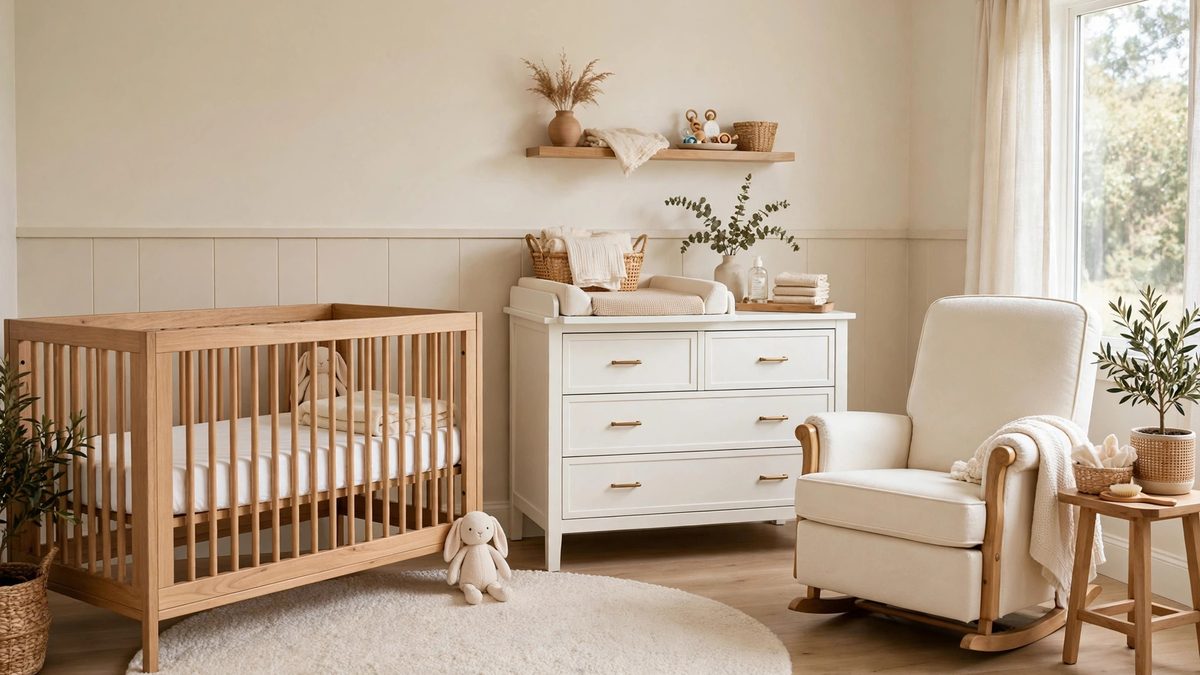
A nursery really only needs three hardworking pieces: a crib, a changing surface, and a comfortable chair. Everything else is a bonus.
A standard full-size crib takes a mattress of about 28 by 52 inches, and that fit matters. The mattress should sit snugly with no gaps around the edges, and pediatric guidance is consistent that the crib itself should stay bare, with just a fitted sheet on a firm mattress. Leave the pillows, loose blankets, and stuffed animals for the play mat until your baby is older.
For changing, a dresser with a changing tray on top is the smartest buy because it converts to regular storage later. Look for a dresser around 36 inches high so you are not bending double. A glider or rocking chair with supportive arms will earn its keep during night feeds, and a small side table beside it holds a water bottle, burp cloth, and phone. Place the chair near a soft light source rather than directly under a bright ceiling light.
Wall Decor That’s Sweet but Simple
Bare walls make a nursery feel unfinished, but wall decor here has one extra job: it must be mounted securely and kept well out of a standing baby’s reach. Lightweight framed prints, canvas art, and decals are all good options when they are fastened properly.
Hang artwork over the dresser or changing area rather than directly over the crib, and use proper picture hardware instead of adhesive strips for anything with weight. A small gallery of animal prints, alphabet art, or family photos adds personality without visual chaos. Removable wall decals are a renter-friendly favorite because they deliver a mural look with zero commitment and peel off cleanly when tastes change.
For a deeper dive into prints, ledges, and statement walls, see our ideas for nursery wall art, which covers gallery layouts and book shelves in detail. Keep the overall scheme simple: two or three coordinated pieces usually look better than a wall crowded with competing frames.
Soft Layers: Rugs, Curtains, and Textiles
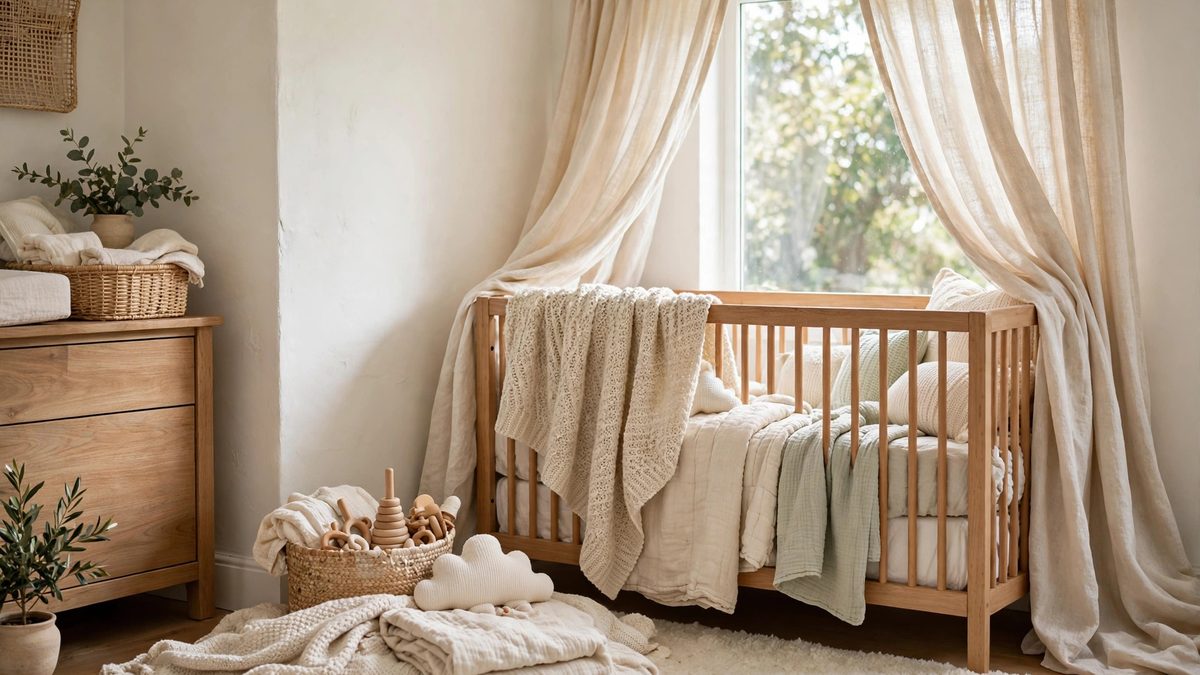
Textiles are what make a nursery feel soft instead of stark. A rug anchors the room, gives you a comfortable surface for tummy time, and softens sound. In most nurseries, a 5 by 8 foot rug fits nicely under or beside the crib; a larger room can handle an 8 by 10. Choose a low-pile or flat-weave rug that is easy to vacuum and spot-clean, because it will see spills.
Curtains matter more in a nursery than almost any other room, because blackout lining can be the difference between a 45-minute nap and a two-hour one. Standard 84-inch panels suit most windows, and mounting the rod a few inches above the frame makes the window look taller. For safety, keep cords completely out of reach or choose cordless styles, and never place the crib where a baby could grab curtain fabric.
Finish with practical textiles: a few crib sheets in your palette, a washable throw over the glider, and soft storage baskets. These small layers are also the easiest pieces to refresh when you want a new look.
Storage That Keeps the Room Calm
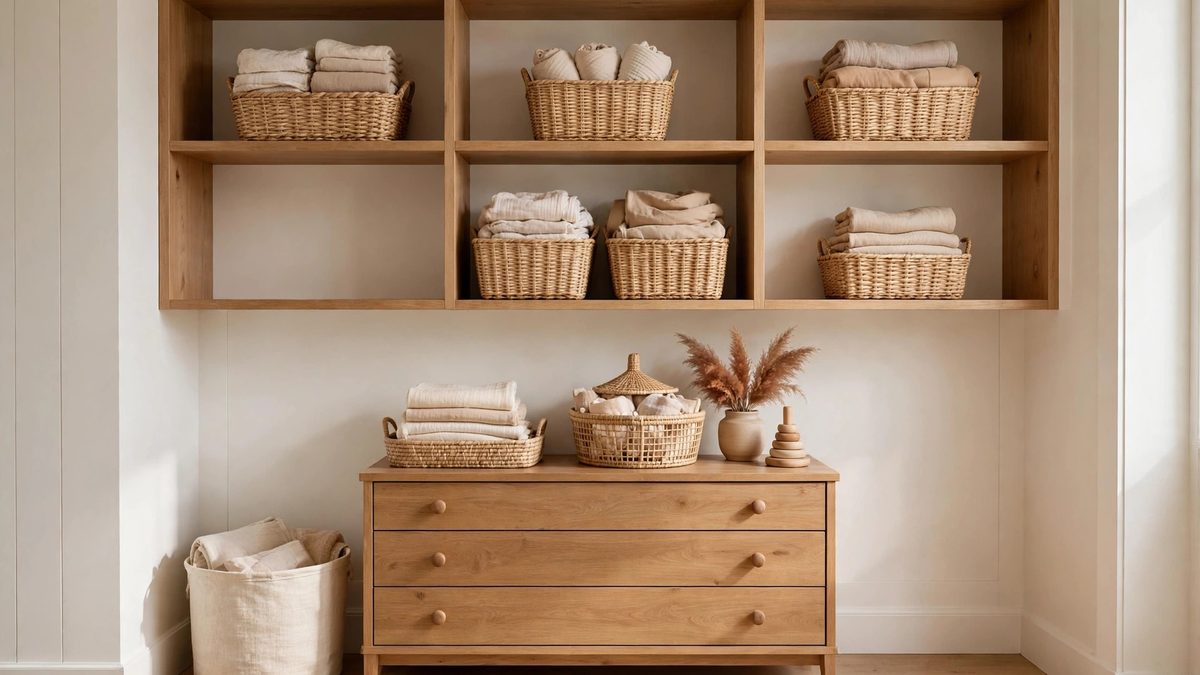
Babies are tiny, but their supplies are not. Diapers, wipes, creams, swaddles, and a rotating wardrobe of quickly outgrown clothes all need a home, ideally within reach of the changing surface so you never have to step away.
A simple system works best:
- Use the dresser drawers for clothes, sorted by size, with the current size in the top drawer.
- Keep a caddy or basket on the dresser with diapers, wipes, and cream.
- Add a small bookshelf or book ledge for bedtime stories.
- Use labeled bins in the closet for outgrown clothes and future sizes.
Short on floor space? Our small nursery ideas share compact layouts and multi-use furniture picks that keep a tiny room feeling open. The goal is a room where everything has a place, so tidying up takes five minutes instead of thirty.
Lighting for Feedings and Play
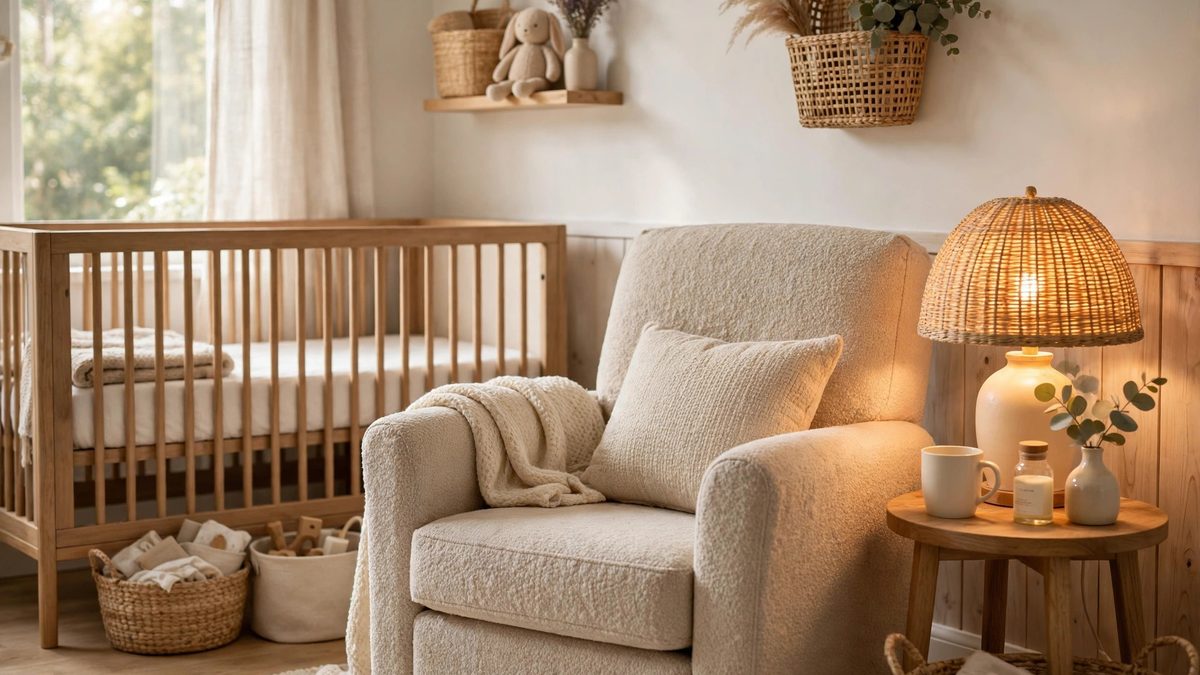
Nursery lighting needs to work at two extremes: bright enough for play and outfit changes, gentle enough for midnight feedings. Layer it. An overhead fixture on a dimmer covers the bright end, while a small lamp or plug-in night light near the glider gives you just enough glow to see without fully waking the baby.
Warm-toned bulbs feel cozier than harsh blue-white ones, and a lamp with a fabric shade softens light better than an exposed bulb. If the room gets strong afternoon sun, your blackout curtains will handle nap time; a sheer layer underneath lets in softened daylight for play. Avoid floor lamps with cords a crawling baby can pull, and anchor or wall-mount anything within reach of the crib.
Baby Room Decor Mistakes to Avoid
A few common missteps can make a pretty nursery frustrating to live in. Watch out for these:
- Buying everything in a strict theme. Themed rooms are adorable, but a flexible palette with a few themed accents grows with your child and saves money.
- Hanging heavy frames over the crib. Keep anything weighty securely mounted and positioned away from where the baby sleeps.
- Skipping blackout curtains. Pretty sheers alone rarely deliver good naps in a bright room.
- Choosing style over storage. If diapers and clothes have no home, clutter takes over within a week.
- Filling the crib with decor. Pillows and plush toys look cute in photos but do not belong in a sleeping baby’s crib.
Frequently Asked Questions
What colors are best for a baby room?
Soft, muted colors tend to work best: warm white, cream, sage green, dusty blue, pale blush, and gentle gray. They create a calm backdrop, hide minor scuffs better than stark white, and pair easily with colorful toys and textiles as your baby grows.
How much should I expect to spend on baby room decor?
It varies widely, but many families furnish a simple nursery for a few hundred to a couple of thousand dollars, with the crib, mattress, and chair taking the biggest share. Paint, decals, and textiles deliver the most visible change for the least money, so prioritize furniture first and decorate around it.
When should the nursery be finished?
Most parents aim to have the essentials ready a few weeks before the due date: crib assembled, changing surface stocked, chair in place. Decorative touches like art and shelves can safely come later, once you know how you actually use the room.
How do I make a nursery grow with my baby?
Choose a convertible crib that becomes a toddler bed, a dresser that outlasts the changing tray, and decor you can swap cheaply, like prints, bedding, and decals. Keep walls and major furniture neutral so a few new accessories can carry the room from baby to toddler to preschooler.
Can I decorate a nursery in a rental?
Yes. Removable decals, peel-and-stick wallpaper on one wall, rugs, and textiles transform a room without permanent changes. Use picture-hanging strips rated for the weight of lightweight art, and keep anything heavier on furniture surfaces like shelves and dressers instead of walls.
Conclusion
The best baby room decor is calm, safe, and ready to evolve. Start with a gentle palette, invest in the crib, changing dresser, and chair, then layer in soft textiles, simple wall art, and storage that keeps daily life easy. Decorate for the family you are becoming, not just for the newborn photos, and the room will stay a favorite long after the baby stage has passed.
