
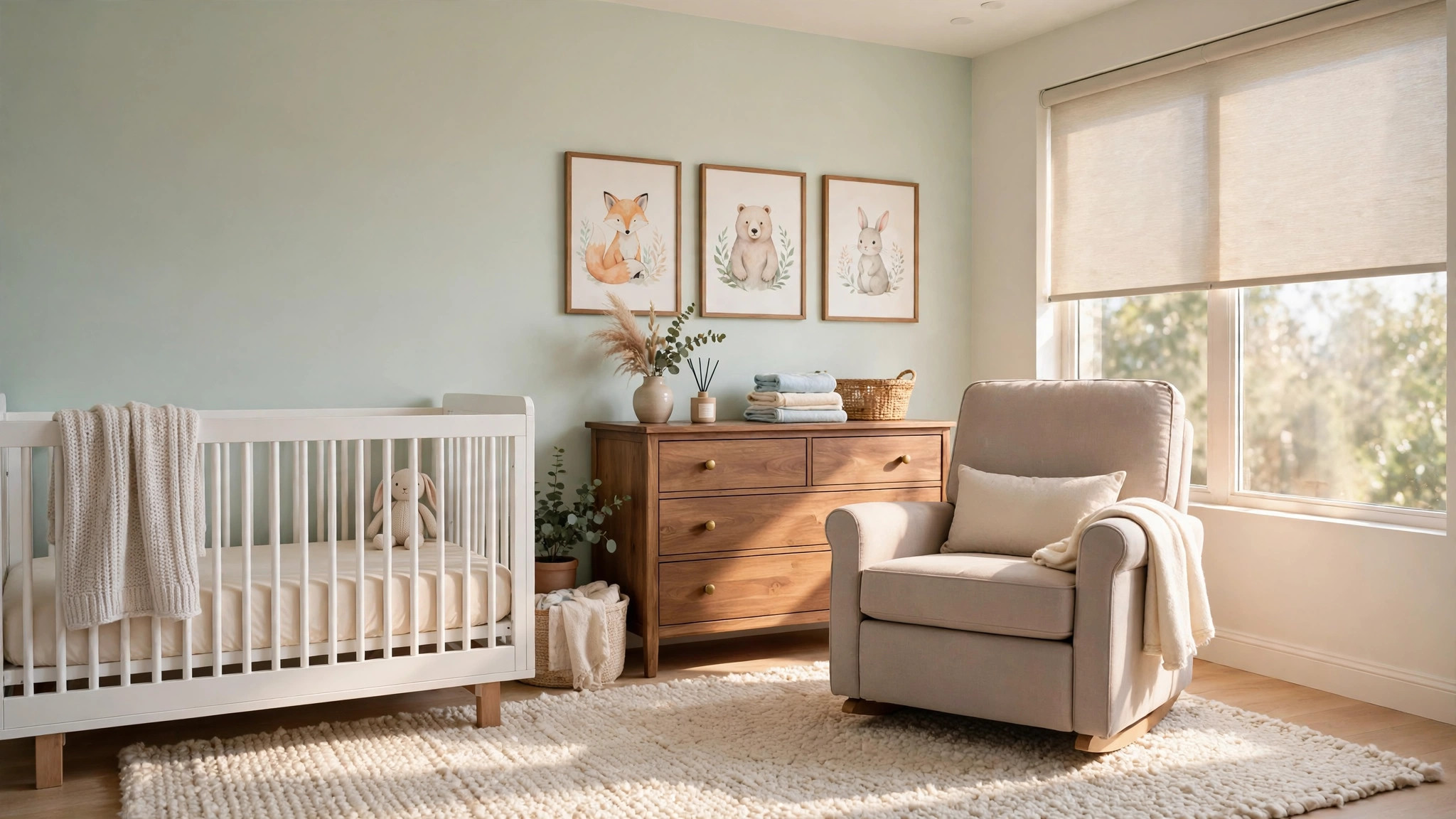

Designing a nursery is one of the sweetest projects in a home — and one of the most practical. The prettiest nursery decor in the world will not help you at 3 a.m. if the layout fights you, the chair is uncomfortable, or storage is an afterthought. The sweet spot is a room that looks soft and lovely in daylight and works smoothly in the dark, half-asleep. This guide covers the layout and furniture that make night feeds and diaper changes easy, themes that can grow with your child, and the safety basics every parent should know before the first piece of furniture is placed.
Plan the Layout First: The Three Zones
Every functional nursery has three zones: sleep, feeding, and changing. Sketch them before you buy anything.
The crib anchors the sleep zone. A standard full-size crib has an interior of 52⅜ × 28 inches (a size set by federal safety standards, which is why any standard crib mattress fits any standard crib), with an outside footprint of roughly 55 × 30 inches. Place it away from windows — more on why in the safety section — and leave enough room to walk around it.
The feeding zone needs a comfortable chair with good back support and a small side table within reach for water, a phone, and a burp cloth. The changing zone usually sits on top of a dresser about 36 inches high, which is a comfortable working height for most adults and saves buying a separate changing table. Leave a clear path between all three zones; you will walk it in the dark more times than you can count.
Think about light and sound while you plan. A dimmer or low-wattage lamp near the feeding chair means night feeds happen in near-darkness, which helps both you and the baby fall back asleep. A soft rug and curtains absorb the little noises — the dresser drawer, the glider creak — that can startle a baby who has just drifted off. If the room faces a street, a small white-noise machine near the door masks passing traffic surprisingly well.
Furniture That Earns Its Space
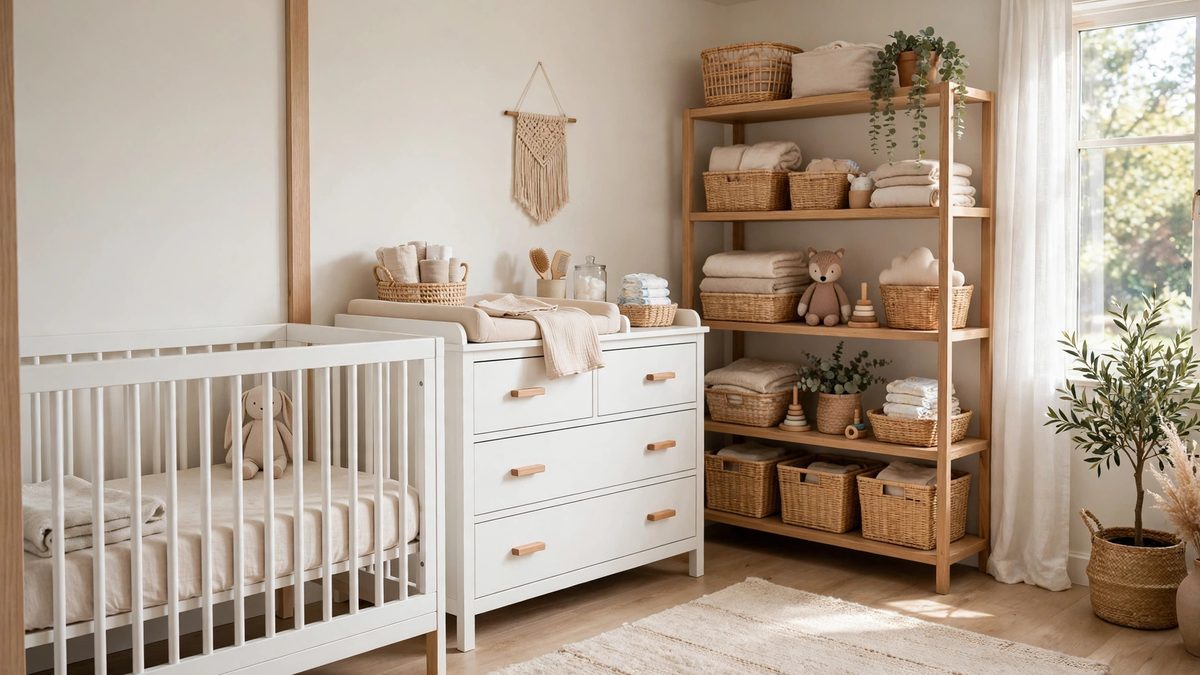
Nursery furniture works hardest when it can adapt. Prioritize these pieces:
- A convertible crib that later becomes a toddler bed stretches your budget for years.
- A dresser with a changing topper — storage now, a regular dresser later. Anchor it to the wall (see safety below).
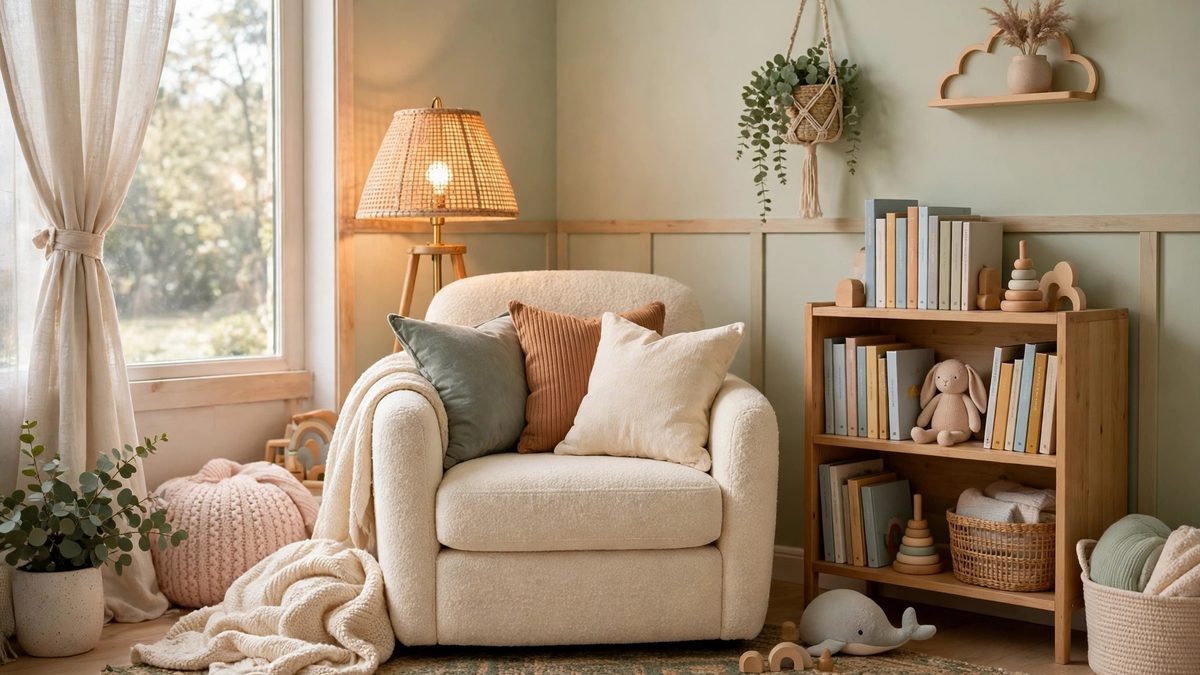
- A glider or rocker with washable fabric and arms at a height that supports yours during feeds.
- A small bookshelf or wall shelves for the bedtime-story rotation.
- Soft, dimmable lighting: a small lamp or night light for night feeds, plus blackout curtains or shades for naps. Standard curtain panel lengths (63 or 84 inches) usually suit nursery windows.
If space is tight, skip the separate changing table and any oversized chair. In small rooms, our baby room decor guide focuses on compact layouts that still feel complete.
How to Remodel Nursery Spaces on a Real Budget
If you are converting a spare room or office, knowing how to remodel nursery space without a renovation budget is mostly about order of operations:
- Paint first. Choose a soft, washable paint in a satin or eggshell finish. Do this well before the baby arrives so the room airs out fully.
- Fix the floor comfort. A washable rug, ideally 5×8 feet or larger, softens the floor for tummy time and muffles sound.
- Add storage before decor. Closet dividers, labeled bins, and a dresser that swallows clothes in multiple sizes will save your sanity weekly.
- Then decorate. Wall art, a mobile, and textiles bring the theme to life last, once the functional bones are set.
Secondhand furniture can stretch the budget, with one firm exception: check any used crib against current safety standards and recalls, and buy a new mattress. Cribs made to standards set after June 2011 are the benchmark.
Nursery Themes That Grow With Your Child
The smartest nursery themes rely on art, textiles, and accessories rather than permanent choices, so the room can evolve from baby to toddler to big kid with small swaps. Popular directions:
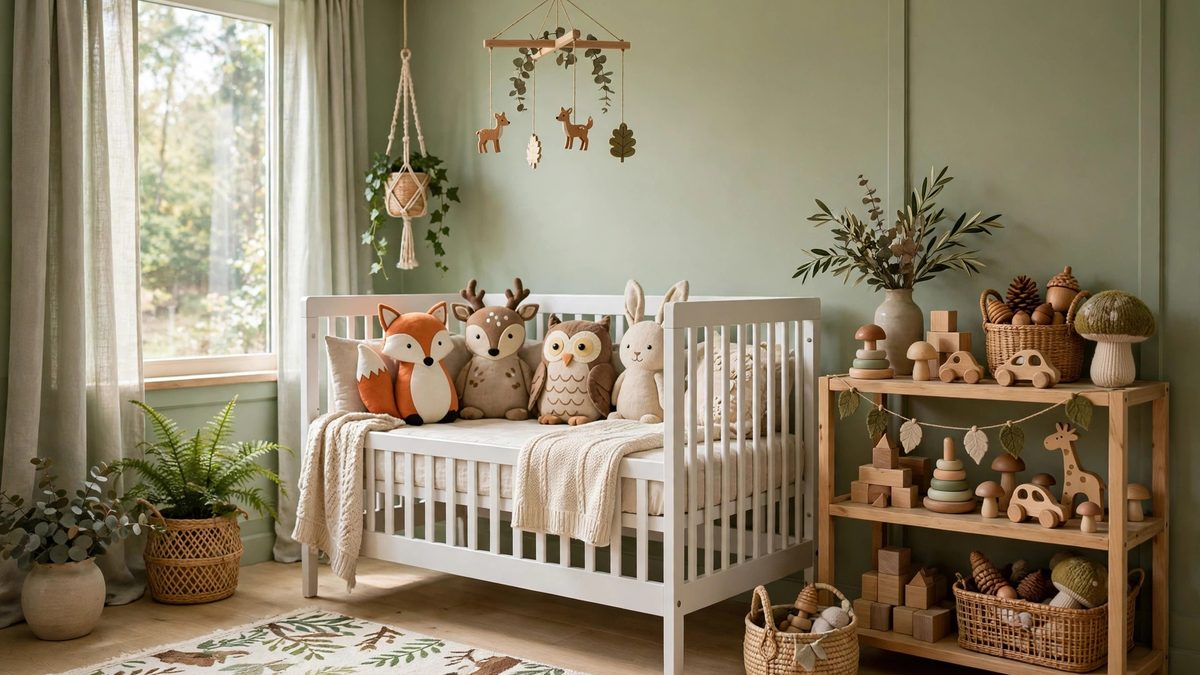
- Woodland and nature: soft greens, woodland animals, botanical prints. Pairs beautifully with natural wood furniture.
- Classic storybook: soft primary colors, vintage illustrations, a reading corner with cushions.
- Neutral and modern: warm whites, oatmeal, and natural textures with black accents in frames and hardware. The easiest theme to grow up.
- Ocean and sky: dusty blues, sandy neutrals, clouds, stars, and whales — calming and timeless.
- Safari and animals: warm earth tones with animal prints and woven baskets.
Choose two or three colors and repeat them in the rug, curtains, bedding (fitted sheets only in the crib), and art. For pieces that carry the theme onto the walls, see our ideas for nursery wall art.
Whichever direction you choose, test it against daylight and lamplight before you commit. Nursery colors shift a lot between noon sun and a warm evening bulb. Paint one large swatch on two walls, live with it for a day, and check how it sits with your crib and chair finishes. Soft shades that look perfect on a screen can turn chilly on a north-facing wall, and a five-minute swatch test now saves a repaint with a newborn at home.
Storage for the Smallest Room in the House
Babies are tiny; their stuff is not. Build storage in from the start:
- Dresser drawers with dividers for clothes sorted by size — babies outgrow sizes fast.
- A closet with a second low rod or hanging organizer for the next sizes up.
- Baskets for diapers, wipes, and blankets near the changing zone.
- A small hamper and a lidded trash can within arm’s reach of the dresser.
- Wall shelves for books and a few keepsakes, mounted out of reach of little hands once baby can stand.
Label the bins, even roughly. At 2 a.m., future-you will be grateful that diapers, wipes, and the spare fitted sheet are findable without thinking — or turning on a bright light.
As your child grows into the next stage, the organization habits you start now carry straight into the kids room ideas phase.
Safety Basics Every Nursery Needs
Pretty matters, but safe matters more. These are well-established basics:
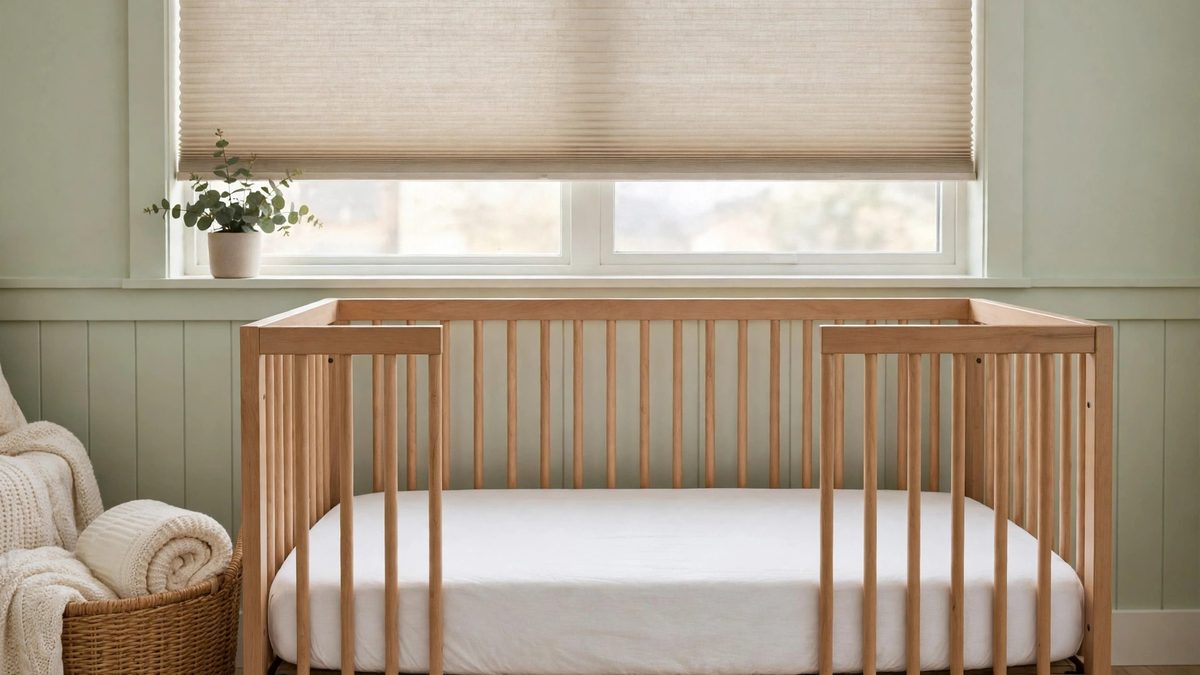
- Bare is best in the crib. Use a firm, flat mattress with a fitted sheet and nothing else — no pillows, bumpers, blankets, or stuffed animals in the sleep space. The mattress should fit snugly, with no more than a two-finger gap at the sides, and crib slats should be no more than 2⅜ inches apart. The U.S. Consumer Product Safety Commission’s Safe Sleep guidance is the reference every parent should read.
- Keep the crib away from windows and cords. Choose cordless window treatments in the nursery — the safest option around babies and toddlers.
- Anchor furniture. Screw dressers, bookshelves, and the changing dresser to wall studs with anti-tip straps. Toddlers climb.
- Mind small hazards. Cover outlets, keep creams and medicines in a latched drawer, and hang mobiles out of reach — removing hanging crib toys once baby pushes up on hands and knees.
A Nursery That Grows With Your Baby
The smartest nursery choices are the ones that do not need replacing in eighteen months. A convertible crib, a dresser that doubles as a changing station, and storage bins sized for toys as well as diapers let the room evolve from newborn days to toddlerhood with only small, inexpensive updates.
Frequently Asked Questions
When should I start decorating the nursery?
Most parents start in the second trimester, aiming to finish several weeks before the due date. Paint early, order furniture with lead time in mind — cribs and gliders can take weeks to arrive — and leave the final styling for last.
What is the best color for a nursery?
Soft, muted colors keep the room calm for sleep: warm whites, pale sage, dusty blue, blush, and soft gray all work. You can add bolder color in art and textiles that are easy to swap as your child grows.
How much does it cost to decorate a nursery?
Expect a wide range. A functional, pretty nursery can be done for a few hundred dollars with secondhand furniture (plus a new mattress and crib that meets current standards), while fully new furniture and decor typically runs into the low thousands. Spend first on the crib, mattress, and chair.
Does a nursery need blackout curtains?
They are one of the most practical upgrades you can make. Darkness helps babies nap during the day and sleep later in bright mornings. Choose cordless blackout shades or curtains for safety.
How do I make a nursery work in a small room?
Use a mini crib or a standard crib against the longest wall, combine the changing station with the dresser, mount shelves on the wall instead of adding a bookcase, and keep the palette light. Zones matter more than square footage.
Conclusion
Great nursery decor is a partnership between sweet and smart: a layout with sleep, feeding, and changing zones that works in the dark; furniture sized to real standards and built to adapt; a theme carried by art and textiles so it can grow; and safety basics handled before the first blanket is folded. Plan the bones first, then enjoy every minute of making it beautiful.
