
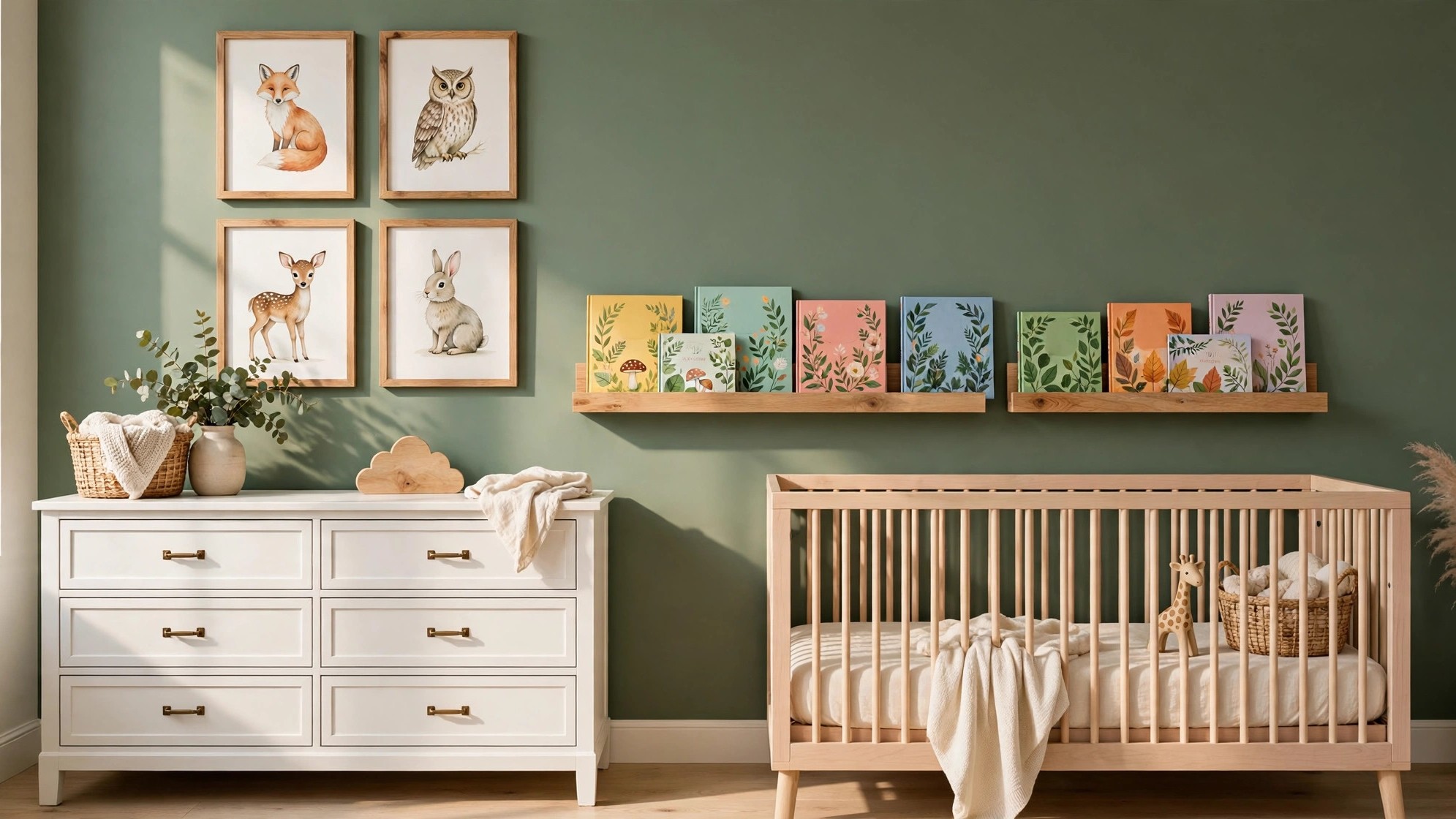

Bare walls are the main reason a nursery can feel unfinished even after the furniture is in place. The right nursery wall art fixes that in an afternoon, adding color, pattern, and personality at baby height and parent eye level alike. The trick is choosing pieces that are safe, scaled correctly, and flexible enough to swap as your baby grows into a toddler with opinions.
This guide walks through the main ways to dress nursery walls: framed prints and gallery layouts, functional shelves that double as decor, and painted or papered accent walls. Mix two or three of these approaches and the room will feel designed rather than decorated in a rush. If you are still planning the room itself, start with our broader baby room decor guide, then come back here for the walls.
Choosing Nursery Wall Art That Grows With Your Baby
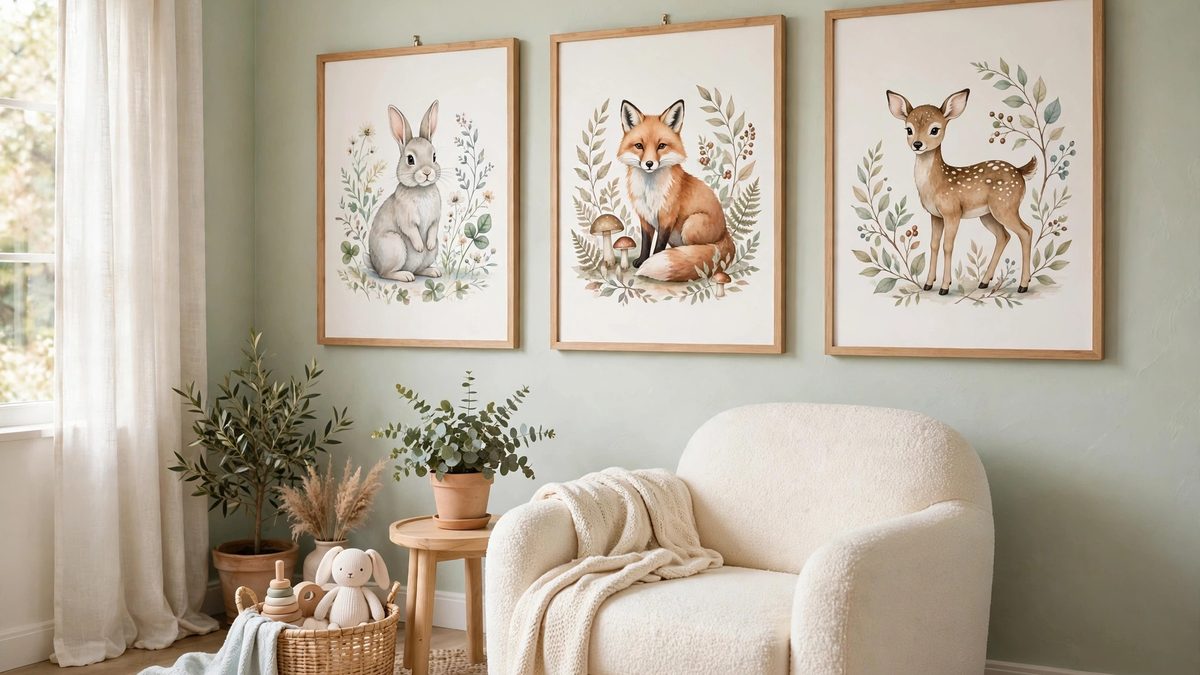
The smartest nursery art is the kind you will not feel desperate to replace in eighteen months. Sweet is good; overly specific is limiting. Art that tends to last includes:
- Animal and nature prints, which suit babies and preschoolers equally.
- Alphabet, number, and name prints that become early learning tools.
- Soft landscapes, rainbows, and simple shapes in your room’s palette.
- Family photos in matching frames, which never go out of style.
As a rule, hang art so its center sits around 57 inches from the floor, the standard gallery height, but in a nursery you can drop pieces a little lower over a dresser or reading chair where you will view them seated. Keep frames lightweight, use acrylic instead of glass where you can, and fasten everything with proper picture hardware. Nothing heavy should hang where a baby sleeps or where a standing toddler could pull it down, so save the wall directly over the crib for decals or paint rather than frames.
One more trick extends the life of everything you hang: buy the frames once and treat the prints as swappable. A set of standard-size frames in 8 by 10 and 11 by 14 inches lets you rotate art in minutes, from newborn animal sketches to your toddler’s own paintings a few years later. A wooden growth chart on one wall section earns a permanent place in the same spirit, since it turns wall decor into a family record you will genuinely keep.
Gallery Walls Above the Dresser or Changing Area
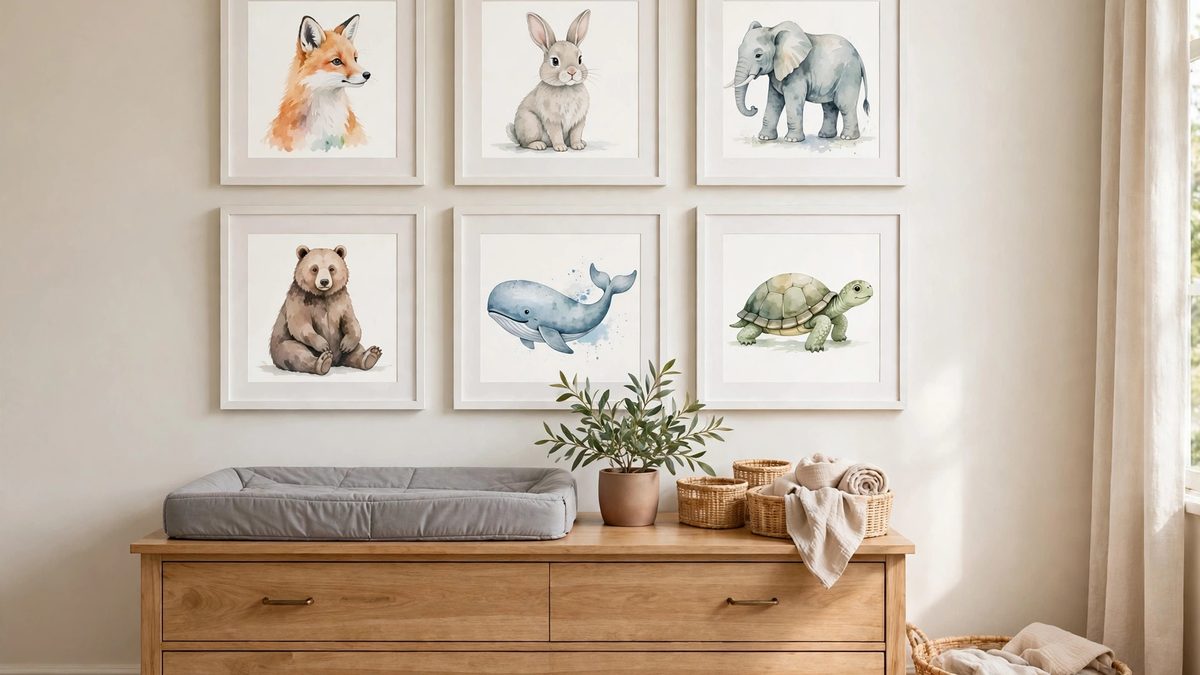
A small gallery wall is the easiest way to fill a blank stretch with intention. The wall above the dresser or changing table is the natural spot: you see it constantly, and it is safely away from the crib. Odd numbers group best, so start with three or five frames in mixed sizes, unified by frame color or a shared palette.
Lay the arrangement on the floor first and photograph it before hanging anything. Keep spacing consistent, around 2 inches between frames, and let the whole grouping span roughly two-thirds the width of the furniture below it. If planning a grid feels fussy, a single oversized print flanked by two smaller ones gives the same finished look with half the measuring. Our full gallery wall layout guide has templates for grids, ledges, and organic arrangements you can copy directly.
Nursery Shelves That Work as Decor, Too
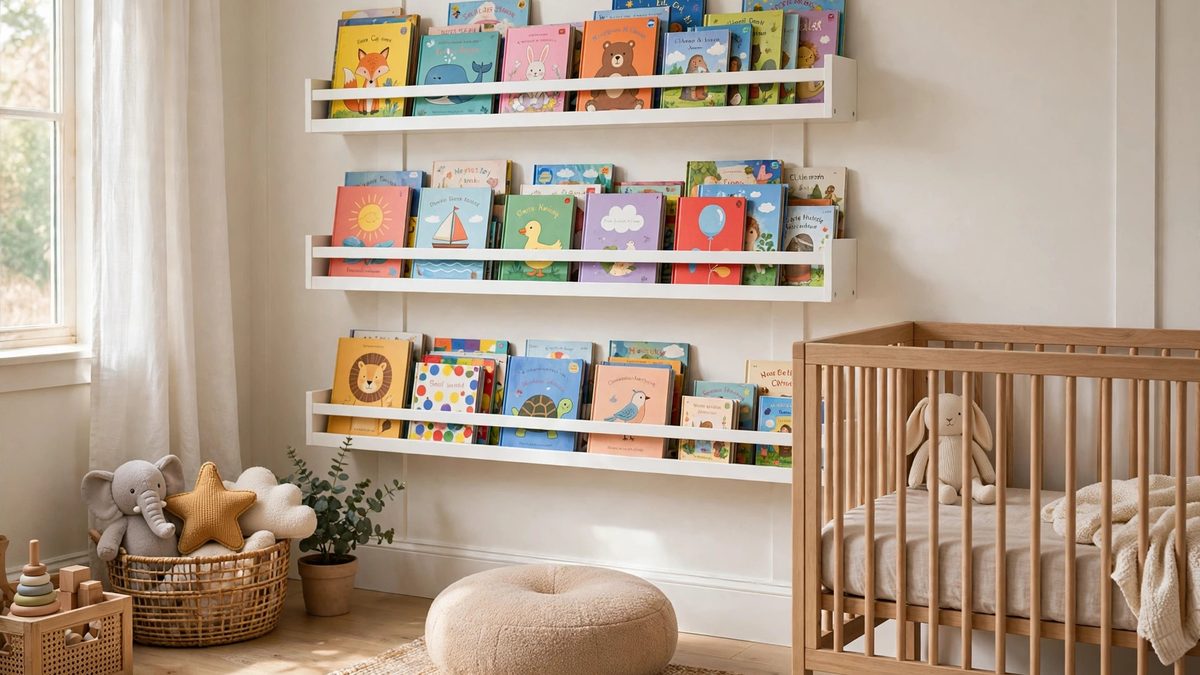
Nursery shelves earn their wall space twice: they store real things and they look good doing it. The most popular style is the front-facing book ledge, a shallow shelf, usually about 3 to 4 inches deep, that displays picture books cover-out. Babies are drawn to the covers, toddlers can choose their own bedtime story, and the rotating display keeps the wall feeling fresh without buying new art.
Standard ledges come in 24 and 36 inch lengths and can be stacked two or three high, with the lowest around toddler reach height once your child is walking. Small floating shelves work for the decorative layer: a tiny plant, a framed photo, a keepsake or two. Follow a few safety rules:
- Anchor shelves into studs or use heavy-duty wall anchors rated well above the load.
- Keep shelves out of climbing reach of the crib, and never above it.
- Leave the lowest ledge for books only, not heavy objects a toddler can pull down.
Combine one book ledge with a small shelf for display and you have storage, decor, and a reading corner in a single wall.
A Nursery Accent Wall That Anchors the Room
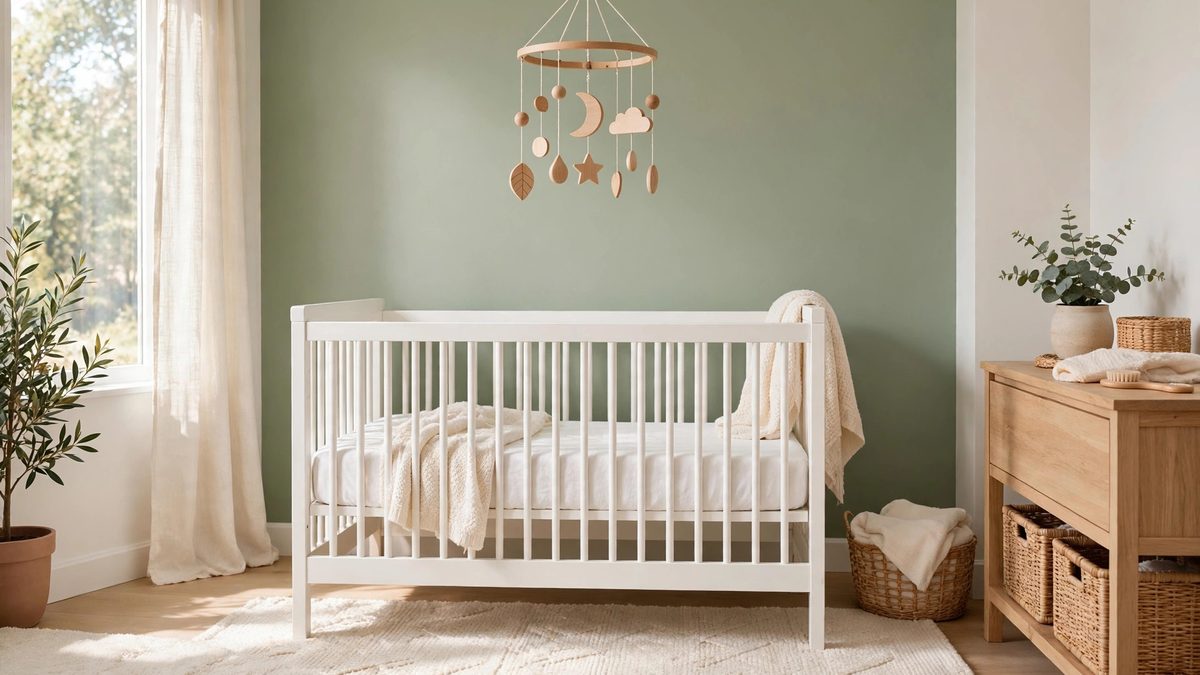
If prints feel too piecemeal, one statement wall can carry the whole design. An accent wall differs in color or finish from the other walls, and in a nursery it usually sits behind the crib, where it becomes the backdrop for every photo you take.
Paint is the simplest route: a deep sage, dusty blue, warm terracotta, or soft blush behind the crib, with the remaining walls in warm white. Board and batten or simple picture-frame molding painted the same color adds texture without pattern, and it suits traditional and modern rooms alike. Wallpaper and murals make a bigger statement. A forest, mountain, or simple polka dot pattern on one wall is plenty; keep the other walls quiet so the room stays restful. Peel-and-stick papers have improved enormously and are the practical choice for renters and frequent redecorators, since they remove without damaging paint. Whichever finish you pick, let it set the palette for your art and textiles rather than competing with them.
Decals, Murals, and Other Flexible Options
Wall decals deserve a special mention in nurseries because they solve the safety and commitment problems at once. Vinyl decals weigh nothing, cannot fall, and remove cleanly, so they are ideal over the crib where frames should not go. Scattered dots, stars, arches, and simple trees are popular because they read as pattern rather than a single themed image.
Hand-painted murals sit at the other end of the effort scale but can be simple: a row of soft hills along the crib wall, a few clouds, or a large rainbow arc in your palette. If painting freehand makes you nervous, painter’s tape shapes and sponge stamps give a mural effect with training wheels. Woven wall hangings, fabric banners, and name signs in wood or felt add soft texture that balances all the flat art, and they are light enough to hang almost anywhere. For complete room themes that tie walls to bedding and rugs, browse our nursery decor ideas next.
Nursery Wall Decor Mistakes to Avoid
- Hanging heavy or glass frames over the crib. Use decals or paint there instead, and save frames for walls a baby cannot reach.
- Hanging everything too high. Art centered near adult standing eye level floats awkwardly above low nursery furniture; anchor groupings to the piece below them.
- Skipping anchors on shelves. A book ledge holds more weight than it looks like once books pile up; studs or rated anchors are not optional.
- Over-theming the walls. A wall of matching cartoon art leaves no room to grow; mix theme pieces with timeless prints and photos.
- Forgetting the view from the glider. You will spend hours in that chair; give yourself something pleasant to look at across the room.
Frequently Asked Questions
Where should I hang art in a nursery?
The best spots are above the dresser or changing table, beside the glider, and on the wall opposite the crib where the baby can see it during awake time. Keep framed pieces securely mounted and out of reach, and use decals or paint on the wall directly behind the crib.
How high should nursery shelves be?
Display shelves for decor can sit at standard heights, but book ledges meant for a toddler should have their lowest rail around 18 to 24 inches from the floor so a walking child can reach the books. Always anchor ledges into studs or with heavy-duty anchors.
Are wall decals safe for nursery walls?
Yes, quality vinyl decals are a nursery staple. They are lightweight, stay flat against the wall, and remove without residue from most paints. Apply them out of reach of a standing baby in the crib, since curious toddlers can eventually peel edges.
How many pieces of wall art does a nursery need?
Most nurseries look finished with one focal treatment, such as an accent wall or a small gallery, plus one or two supporting pieces like a book ledge or a single print. More than that tends to feel busy in a small room.
What art themes work for a gender-neutral nursery?
Nature is the easiest neutral route: animals, forests, rainbows, moons and stars, and simple landscapes in sage, cream, rust, and soft gray. Alphabet and map prints also work beautifully and stay relevant as your baby becomes a preschooler.
Conclusion
Nursery wall art works best as a system: a focal wall or gallery for impact, shelves that store and display, and soft, safe finishes everywhere else. Choose pieces that can grow from baby to toddler, mount everything properly, and let one or two ideas lead instead of filling every wall. The result is a room that photographs beautifully and, more importantly, feels calm every time you walk in.
