
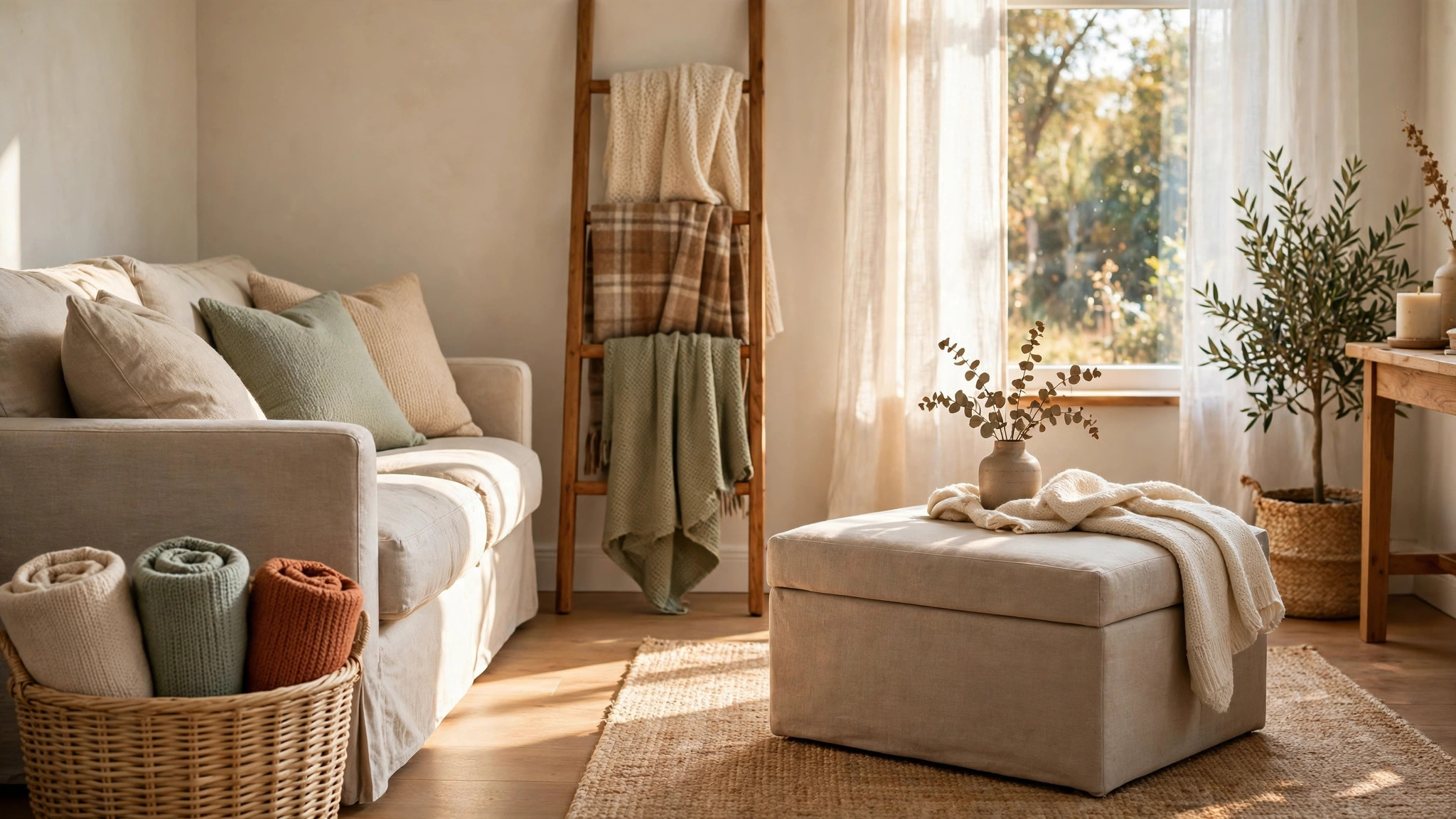

If you love curling up on the sofa, you probably own more throws and quilts than you planned. Good blanket storage solves the familiar pile-up: blankets draped over chair arms, stuffed behind cushions, or tangled in a corner. The goal is simple. Keep everyday blankets close, protect seasonal ones properly, and make tidying up take less than a minute.
Start by sorting what you own. A standard throw measures about 50 by 60 inches, a twin blanket about 66 by 90 inches, a queen blanket about 90 by 90 inches, and a king blanket about 108 by 90 inches. Throws belong in the living room. Larger bed blankets need deeper, flatter storage. Once you know your sizes, the ideas below are easy to mix and match for any home.
Baskets That Keep Blankets Within Reach
A large basket beside the sofa is the fastest fix for daily clutter. Woven seagrass, rattan, water hyacinth, and sturdy cotton rope baskets all work well, and their soft texture suits almost any living room style. Choose a basket with rigid sides so folded blankets stand upright instead of slumping into a heap.
Rolling works better than folding for baskets. Roll each throw, stand the rolls side by side, and you can see every color at a glance and pull one out without disturbing the rest. Keep the basket within arm’s reach of your main seat, but leave walkways clear.
A few practical pointers:
- Pick a basket at least 18 to 20 inches tall for standard throws, so rolls do not flop over the rim.
- Line rough woven baskets with a thin cotton cloth if you store delicate knits, to prevent snags.
- Use two smaller baskets instead of one huge one if you need to separate kids’ blankets from guest throws.
- Shake out and refold basket blankets every few weeks so dust does not settle deep into the fibers.
Baskets are open storage, so they suit blankets you use weekly. Anything stored for months needs a covered option, covered later in this guide.
Blanket Ladders for Style and Small Spaces
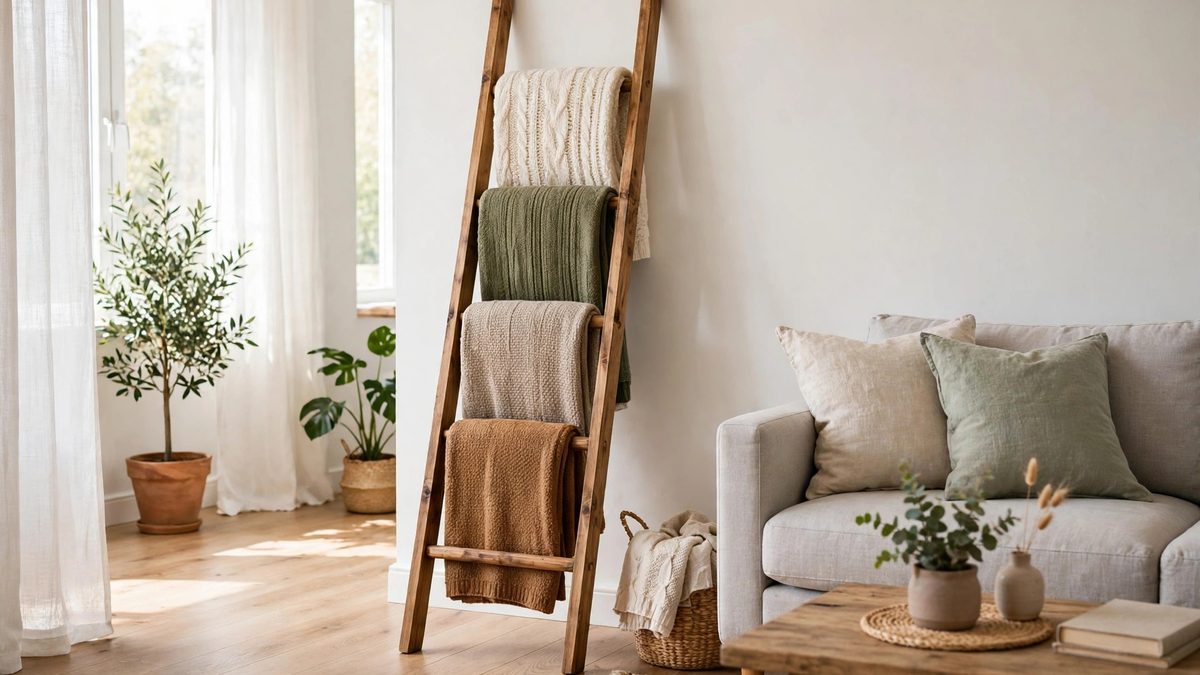
A blanket ladder leans against the wall and displays three to five throws on its rungs. It uses almost no floor space, which makes it ideal for apartments, reading nooks, and guest rooms. Wood ladders in oak, walnut, or painted finishes are the most common, while slim metal ladders suit modern rooms.
Drape each blanket over a rung with about a third hanging in front, and stagger colors and textures for a layered look. A chunky knit next to a smooth cotton throw looks intentional, not messy. Keep the heaviest blanket on the lowest rung so the ladder stays stable.
Safety matters here. Lean the ladder at a slight angle, place it on a rug or add non-slip pads to the feet, and anchor it to the wall with a small strap if children or pets might pull on it. Avoid overloading the top rungs, and never let blankets block a heater or fireplace. Used well, a ladder turns storage into decor and pairs beautifully with broader living room storage ideas that keep the whole room feeling calm.
Storage Ottomans and Benches That Hide Clutter
When you want blankets completely out of sight, choose furniture that does two jobs. A storage ottoman hides two or three folded throws, works as a footrest, and can serve as extra seating or a coffee table with a tray on top. A lift-top bench at the foot of a bed or under a window does the same for larger quilts.
Measure the interior before you buy. Folded throws stack neatly, but a queen-size quilt needs real depth. Look for sturdy hinges, a lid that stays open on its own, and upholstery you can spot-clean. Faux leather and tight-weave fabrics handle everyday use better than loose linen in busy family rooms.
Keep only current-season blankets inside. If you have to dig through summer throws to reach a winter quilt, the system will fail. Many families keep one ottoman for living room throws and move off-season bedding to a closet instead. That simple split keeps daily tidying effortless.
Under-Bed Storage for Seasonal Blankets
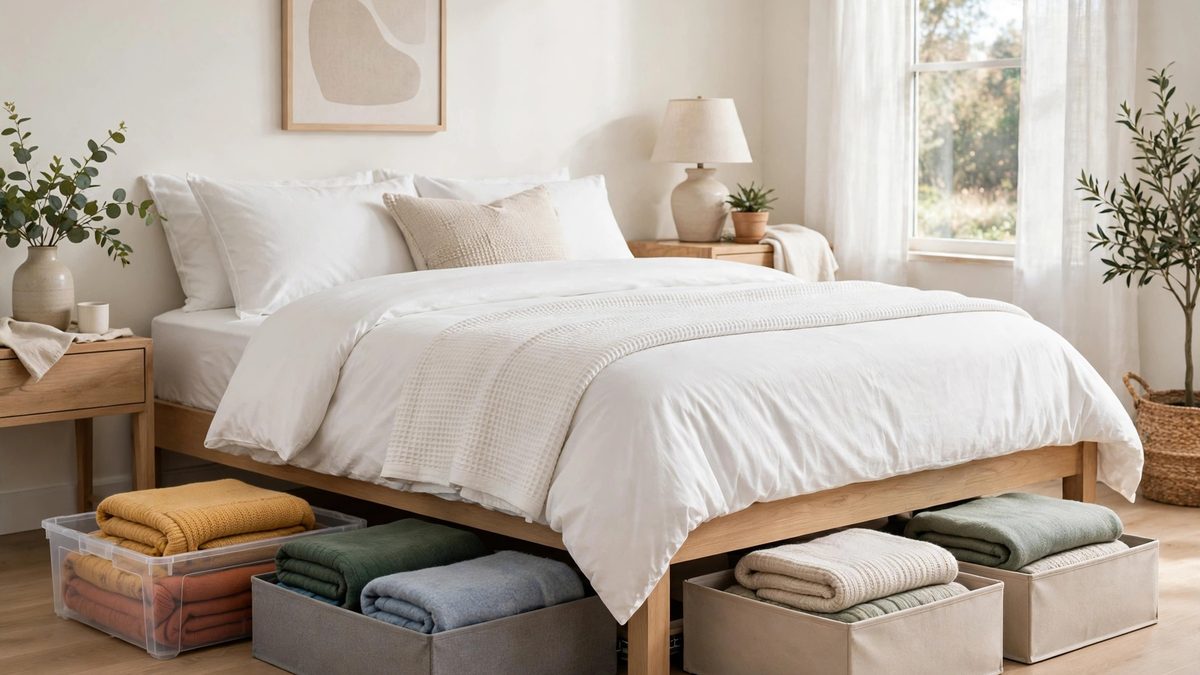
The space under a bed is perfect for blankets you do not need every day. Most bed frames leave about 6 to 7 inches of clearance, so choose low-profile bins or fabric cases that slide easily without forcing. Measure your actual clearance first, including any center support legs.
Flat fabric cases with zippers protect against dust better than open bins, and handles on both ends make pulling them out much easier. Store one or two blankets per case rather than cramming in four. Overpacking creates deep creases and traps stale air.
Label each case by room or season, such as “guest room, winter” or “living room, holiday.” When the weather changes, you can swap cases in minutes. Under-bed storage is also a smart answer in compact homes, especially alongside other small room decor ideas that make every inch count. Keep cases away from heat vents, and lift them off cold basement floors if you store beds in lower rooms.
Closets, Armoires, and Linen Shelves
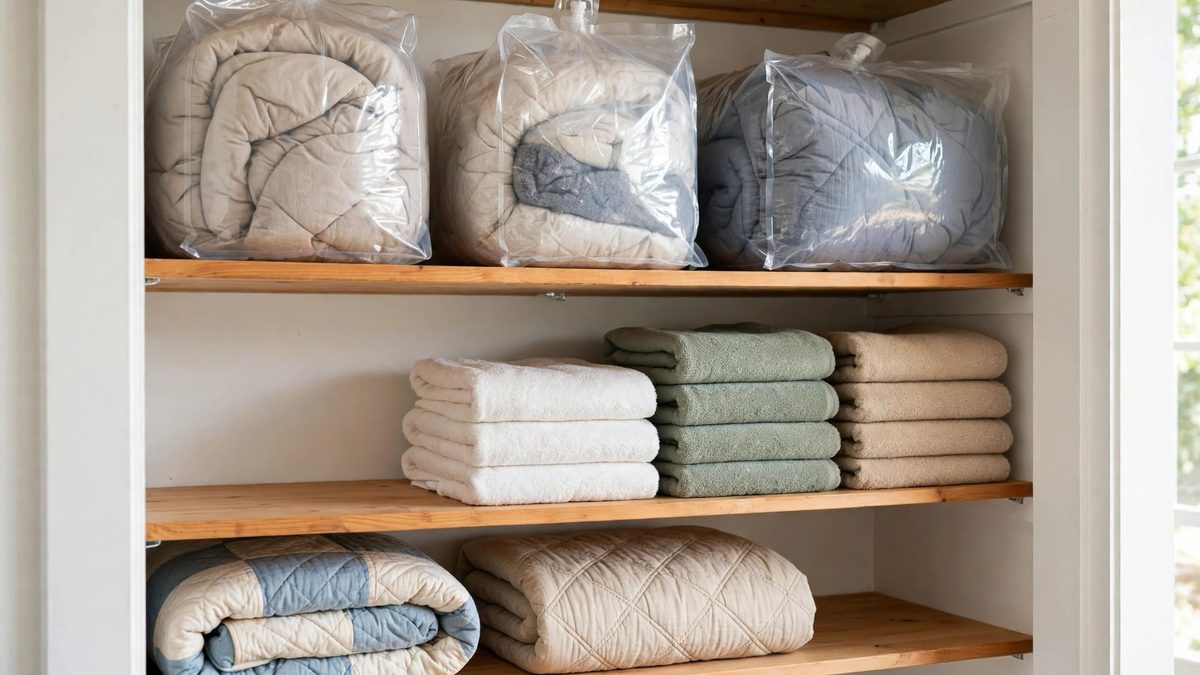
A dedicated shelf remains the most protective home for good blankets. In a linen closet, fold blankets to the width of the shelf and stack no more than three or four high. Taller stacks tip over and crush the bottom blanket. Leave a little air space around natural fibers like wool and cotton.
No linen closet? A small armoire, a spare dresser drawer, or the top shelf of a bedroom closet works just as well. Shelf dividers and clear bins help separate blankets from sheets and towels. If you are planning a larger upgrade, well-designed built-in closet ideas can add a deep, adjustable shelf bay made exactly for bulky bedding.
For heirloom or wool blankets, add a breathable cotton storage bag rather than sealed plastic. Natural fibers need airflow, and a clean cotton pillowcase makes a good low-cost cover for a single special blanket. Store closets dry and check them each season for any musty smell before it becomes a bigger problem.
Vacuum Bags for Bulky Off-Season Blankets
Vacuum storage bags shrink bulky comforters and winter blankets to a fraction of their size, which helps when closet space is tight. They suit synthetic fills and sturdy cotton blankets best, and they protect well against dust during a long off-season.
Use them with care. Down, feather, and lofty wool blankets can lose loft if they stay compressed for many months, so for those, a breathable bag in a closet is the kinder choice. If you do vacuum-seal a natural-fill blanket, remove it at the start of the season, shake it out, and let it air for a day to recover its shape.
Follow these steps for best results:
- Wash and fully dry the blanket first. Never seal in damp fabric.
- Fold the blanket to the size of the bag without forcing the zipper.
- Vacuum out the air, seal, and store the flat bag in a cool, dry place away from sharp edges.
- Check bags mid-season. If one has puffed up, the seal has leaked and needs redoing.
The history and materials behind these household staples are surprisingly rich, as the Wikipedia overview of blankets shows, from traditional wool weaves to modern fleece.
Blanket Care and Washing Tips
Good storage starts with clean blankets. Wash everyday throws according to their care labels, typically every few weeks with regular use, and always before long-term storage. Shake blankets outdoors between washes to release dust and refresh the fibers.
Handle fabrics differently. Cotton and fleece tolerate regular machine washing well. Wool usually needs a gentle cycle, a wool-specific detergent, or professional cleaning, and it should never go into a hot dryer. Delicate crocheted or hand-knitted pieces last longer washed gently and dried flat.
Dry everything completely before folding it away. Even slight dampness can cause a musty odor in a closed bin or bag. For freshness, air stored blankets on a sunny, breezy day once or twice a year. Skip strongly scented products directly on fabrics if anyone at home has sensitivities; a clean, dry blanket stored in a breathable container will smell fresh on its own.

Common Blanket Storage Mistakes to Avoid
Most blanket problems come from a handful of avoidable habits. Fixing them costs nothing and extends the life of what you own.
- Storing blankets dirty. Body oils and spills attract pests and set stains. Always wash first.
- Sealing natural fibers in airtight plastic for months. Wool and cotton need airflow. Choose breathable bags or lidded bins with a small gap.
- Overstuffing one container. Crushed fibers develop permanent creases and lose warmth. Use two containers instead.
- Forgetting a home base. If blankets have no assigned spot, they migrate. Give each one a basket, shelf, or case.
- Storing near heat or damp. Keep blankets away from radiators, steamy bathrooms, and basement floors.
- Mixing pet blankets with guest bedding. Keep a separate, clearly marked basket for pet throws and wash them more often.
Frequently Asked Questions
How many blankets should I keep in the living room?
For most households, two to four throws are plenty: one per regular seat, plus a spare for guests. Store the rest in a closet or under a bed and rotate them by season. Fewer blankets out means faster tidying and less dust.
What is the best way to store wool blankets for summer?
Wash or clean them first, let them dry fully, then fold them into a breathable cotton bag or a lidded bin with room to spare. Store them in a cool, dry closet. Avoid long vacuum compression, which can flatten natural loft.
Can I store blankets in the garage or attic?
It is not ideal. Garages and attics swing between heat, cold, and humidity, which can damage fibers and invite pests. If you have no other choice, use a sealed hard bin, keep it off the floor, and check the contents every few months.
How do I stop stored blankets from smelling musty?
Start clean and completely dry, choose breathable storage, and air blankets out once or twice a year. A dry closet helps more than any scented product. If a blanket already smells musty, wash it again and dry it in fresh air before storing.
Are blanket ladders safe in homes with toddlers?
They can be, if you anchor the ladder to the wall, keep heavy blankets low, and place it away from play routes. If your child climbs furniture, choose a lidded ottoman or closet shelf instead until they are older.
Conclusion
The best blanket storage is the system you will actually use on a tired evening. Give everyday throws a basket, ladder, or ottoman near the sofa, move seasonal blankets to under-bed cases or a closet shelf, and reserve vacuum bags for sturdy off-season pieces. Wash before you store, favor breathable containers for natural fibers, and keep stacks small. With those habits in place, your blankets stay fresh, your rooms stay tidy, and the coziest part of your home is always within reach.
