
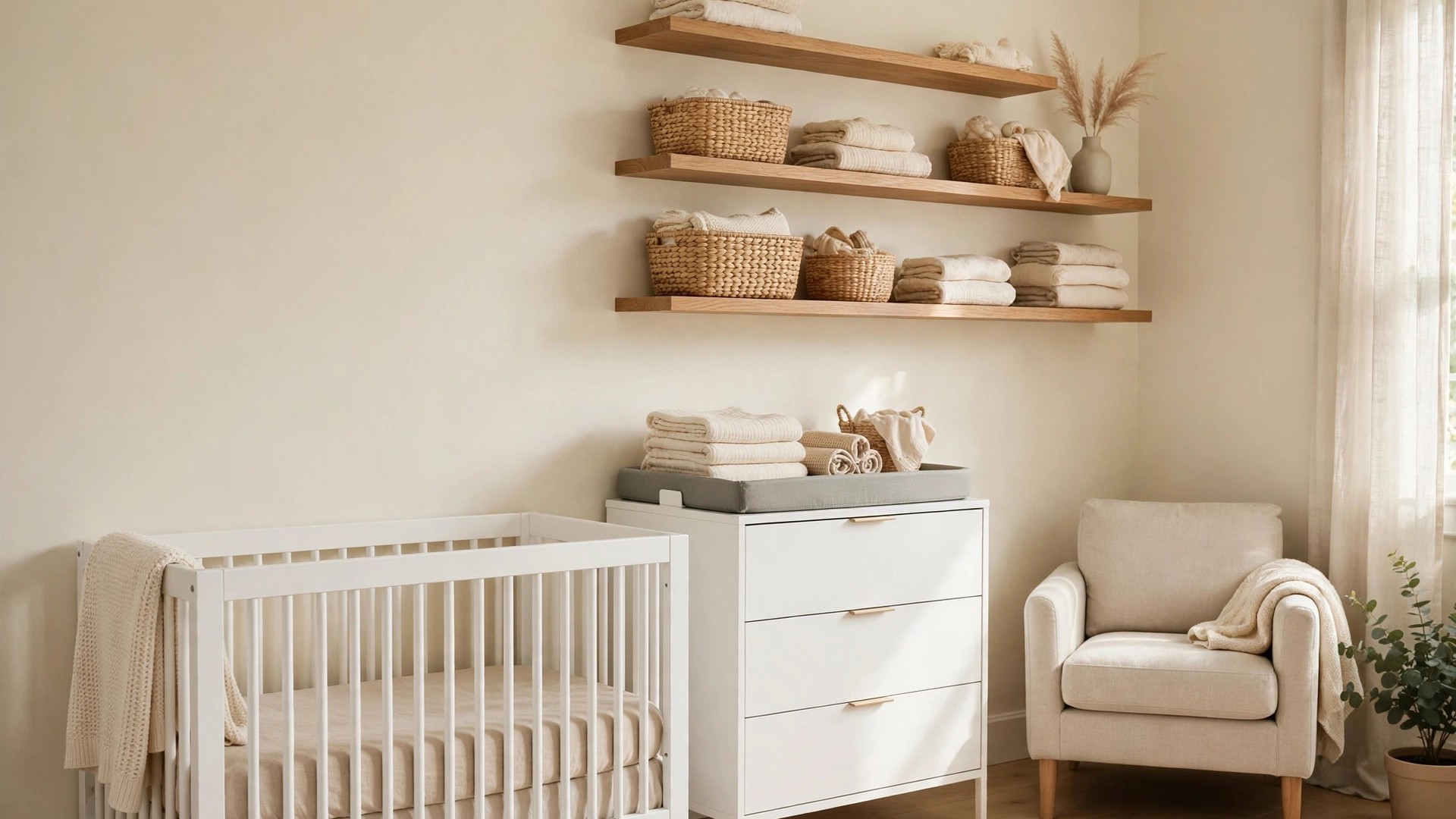

A small nursery is not a compromise. Some of the calmest, most efficient baby rooms are the little ones, because every piece has to earn its place. If you are working with a spare bedroom, a converted closet nook, or the corner of a primary suite, the right small nursery ideas will help you fit the crib, changing space, chair, and storage you need without the room feeling stuffed.
The strategy is simple: choose furniture with a small footprint, use the walls as hard as the floor, keep the palette light, and plan from day one for the toddler your baby will become. Below, you will find layouts, furniture picks, and storage moves sized for real small rooms, most under 100 square feet. For full-size room inspiration, our main nursery decor guide covers themes and palettes in more depth.
Layouts That Make a Small Nursery Feel Bigger
In a tiny room, layout matters more than any single purchase. Start by measuring the room and sketching where the crib can go: ideally on the longest wall, away from windows, cords, and direct heat. Leave a clear path from the door to the crib so midnight trips are not obstacle courses.
A few layout principles that consistently work:
- Push furniture to the perimeter. A crib, dresser, and slim chair against the walls leave the center open, which reads as more space.
- Combine functions in one footprint. A dresser that doubles as the changing table saves an entire piece of furniture.
- Use the corner. A compact glider angled in a corner often fits where a full armchair will not, and the triangular gap behind it hides a lamp or basket.
- Keep the floor visible. The more floor you can see, the bigger the room feels, so favor pieces with legs over skirted, boxy bases.
If the room must also hold a guest bed or desk for now, zone it with a rug under the nursery pieces so the baby area reads as its own space within the room.
Space-Smart Furniture: Mini Cribs and Slim Pieces
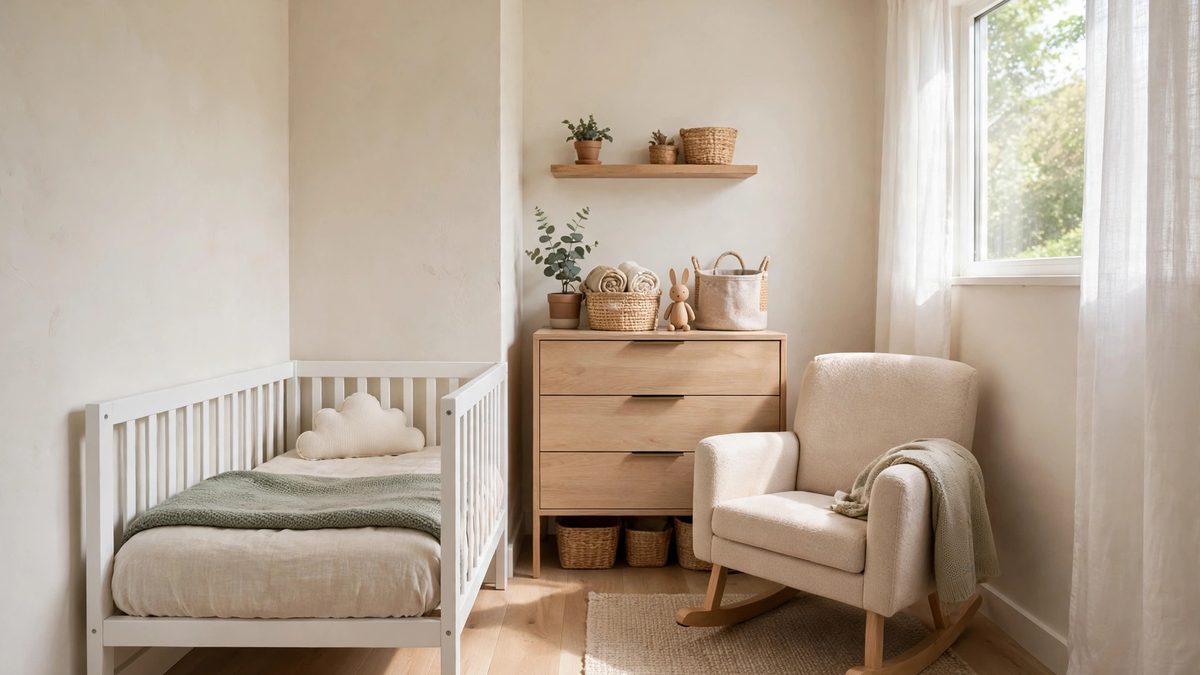
Furniture scale is where small nurseries are won or lost. A standard crib takes a mattress of about 28 by 52 inches. A mini crib, by contrast, uses a mattress of roughly 24 by 38 inches and can save well over a foot of floor length, which is often the difference between fitting a chair and not. Many mini cribs are also on wheels and fold or convert, and safety standards for infant beds cover both sizes, so a certified mini crib is a legitimate long-term choice for a small room, not a temporary compromise.
Beyond the crib, shop these dimensions:
- A dresser 36 to 42 inches wide instead of the standard 48 to 54, deep enough for a changing tray.
- A compact glider or nursing chair around 26 to 30 inches wide rather than an oversized armchair.
- A slim side table, or skip it and use a wall-mounted shelf beside the chair.
- A low, open bookcase or cube unit that can serve as both storage and a room divider in a shared space.
Convertible pieces stretch the budget too: a crib that becomes a toddler bed and a dresser that outlives the changing tray mean the small room will not need a full refurnish in two years. Our baby room decor guide explains how to choose these anchor pieces step by step.
Vertical Storage and Wall Space
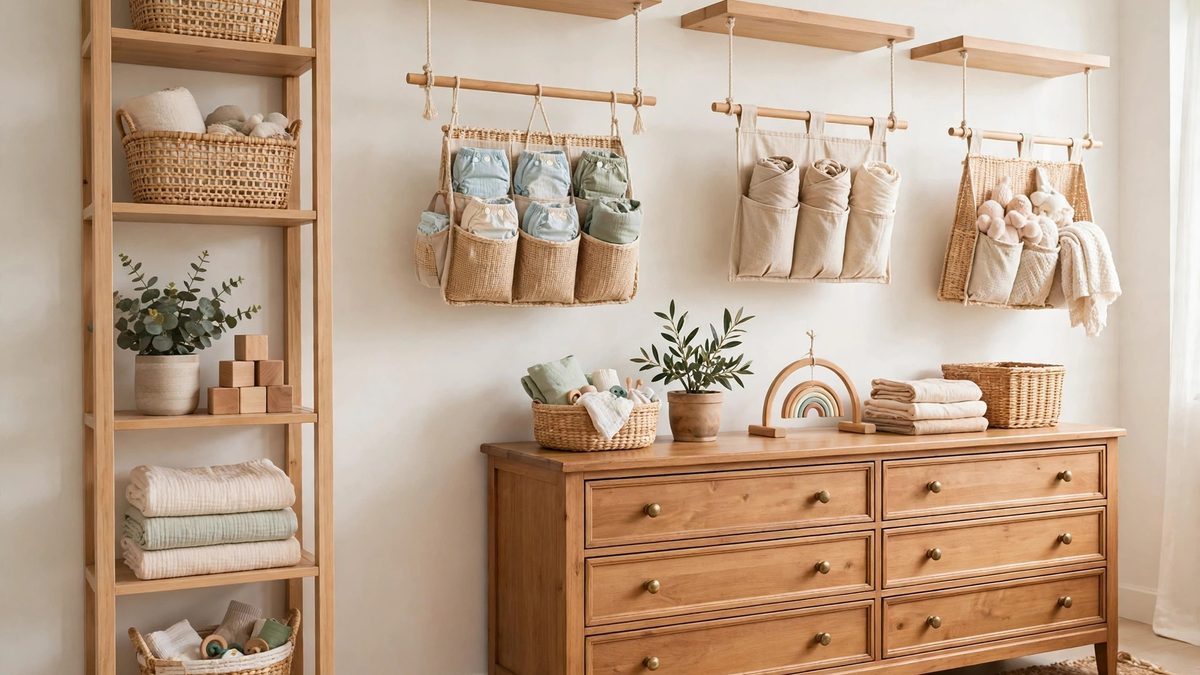
When the floor is full, the walls take over. Vertical storage keeps daily supplies accessible without adding furniture:
- Floating shelves above the dresser hold creams, a small plant, and framed prints.
- Front-facing book ledges display picture books in just 3 to 4 inches of depth.
- Over-door organizers with clear pockets swallow hats, socks, and small supplies.
- Peg rails with baskets corral diapers and wipes beside the changing surface.
- Closet upgrades: a second hanging rod and shelf dividers double a small closet’s capacity for tiny clothes.
Anchor anything wall-mounted into studs or with rated heavy-duty anchors, and keep shelves positioned away from the crib so a standing baby cannot reach or climb them. Baskets on the floor, tucked under the crib or chair, add soft storage that a toddler cannot get hurt on later.
Colors and Light That Open Up the Room
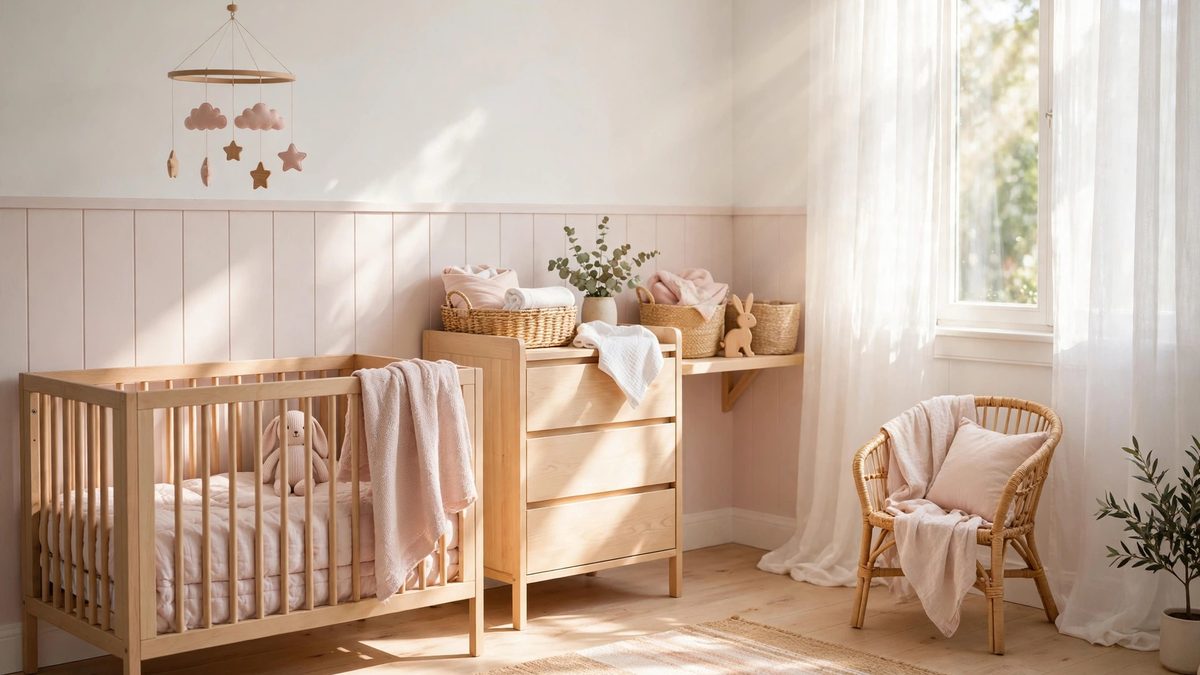
Light colors are the oldest small-room trick because they work. Warm white, pale cream, soft sage, or the lightest dusty blue on the walls will bounce what daylight the room gets and keep it feeling airy. That does not mean the room has to be bland. Use the strategies from our small room decor ideas playbook: one slightly deeper accent, in a rug, curtain, or the chair, gives the eye a focal point and stops the room feeling washed out.
Layer lighting instead of relying on one ceiling fixture. A dimmable overhead light, a small lamp near the chair, and blackout curtains in a standard 84-inch length for naps give you control at every hour. A mirror or a framed print with glass opposite the window multiplies light cheaply. Keep window treatments cordless or with cords fully out of reach, and hang curtains a few inches above the frame to draw the eye up and make ceilings feel taller.
Toddler Room Ideas for When the Nursery Has to Grow
A small nursery has a short shelf life, so plan the toddler transition now. Most babies move out of the crib somewhere around age two or three, and in a small room the swap has to be choreographed.
Ideas that ease the change:
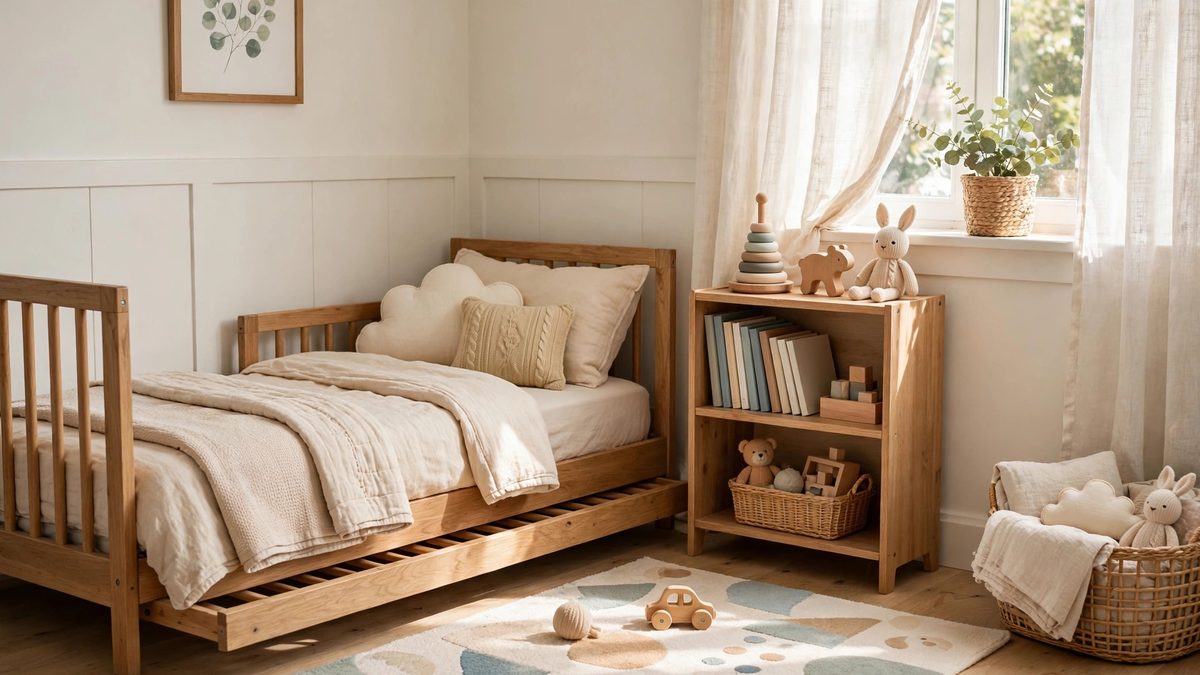
- Replace the crib with a low toddler bed or a floor bed in the same footprint, freeing the wall above for a book ledge at toddler height.
- Trade the changing dresser top for a small dress-up or toy shelf, keeping the dresser itself.
- Add a tiny table and chair set, around 20 inches high, for drawing and snacks where the glider used to sit.
- Switch wall art to pieces your toddler chooses, and lower one art ledge so they can rotate their own favorites.
- Introduce open toy bins at floor level, two or three only, so cleanup stays manageable in the small space.
Because the room is small, each swap is quick and inexpensive, which is the hidden advantage of starting compact.
Small Nursery Mistakes to Avoid
- Buying full-size furniture first. A standard crib, wide dresser, and armchair can consume a small room entirely; measure and compare footprints before ordering.
- Blocking the only window. Tall furniture in front of the window kills the light that makes the room feel bigger.
- Too many small decor items. In a tiny room, a few larger pieces look calmer than many small ones competing for attention.
- Ignoring the closet. An unorganized closet forces storage into the room; a simple double-rod setup often solves half your space problem.
- Dark walls on every surface. One deep accent can work, but four dark walls in a small, low-light room usually feel cave-like.
Frequently Asked Questions
What size is a mini crib compared to a standard crib?
A standard crib mattress measures about 28 by 52 inches, while a mini crib mattress is roughly 24 by 38 inches. That difference saves significant floor space, and many mini cribs convert to a twin bed or fold for storage, making them a practical pick for small nurseries and shared rooms.
How do I fit a changing table in a small nursery?
Skip the standalone changing table and put a changing tray or pad on top of the dresser. You get the same function at standing height, and when diaper changes end, you simply remove the tray and keep the dresser. Keep supplies in the top drawer or a caddy beside the pad.
What colors make a small nursery look bigger?
Warm whites, pale creams, and soft pastels like sage or dusty blue reflect light and visually expand the walls. Pair them with one deeper accent for contrast, keep the ceiling white, and use blackout curtains in a light fabric so the window still feels bright during the day.
Can a nursery share a room with an office or guest bed?
Yes, zoning is the key. Anchor the nursery area with a rug, keep the crib on the wall farthest from the door, and use a low bookcase or curtain as a soft divider. A mini crib and dresser-as-changer keep the baby’s footprint to roughly a 5 by 7 foot zone in many cases.
How much storage does a small nursery really need?
Less than you think. Plan for one dresser, a modest closet setup, and a few baskets. Babies outgrow clothes quickly, so store only the current size and the next size in the room, with the rest in labeled bins elsewhere in the house.
Conclusion
A small nursery succeeds on smart choices rather than square footage: a right-sized crib, furniture that does two jobs, walls that store as well as decorate, and a light, calm palette. Plan the toddler transition from the start and the little room will keep working long after the baby stage. Small, it turns out, can be exactly the right size.
