
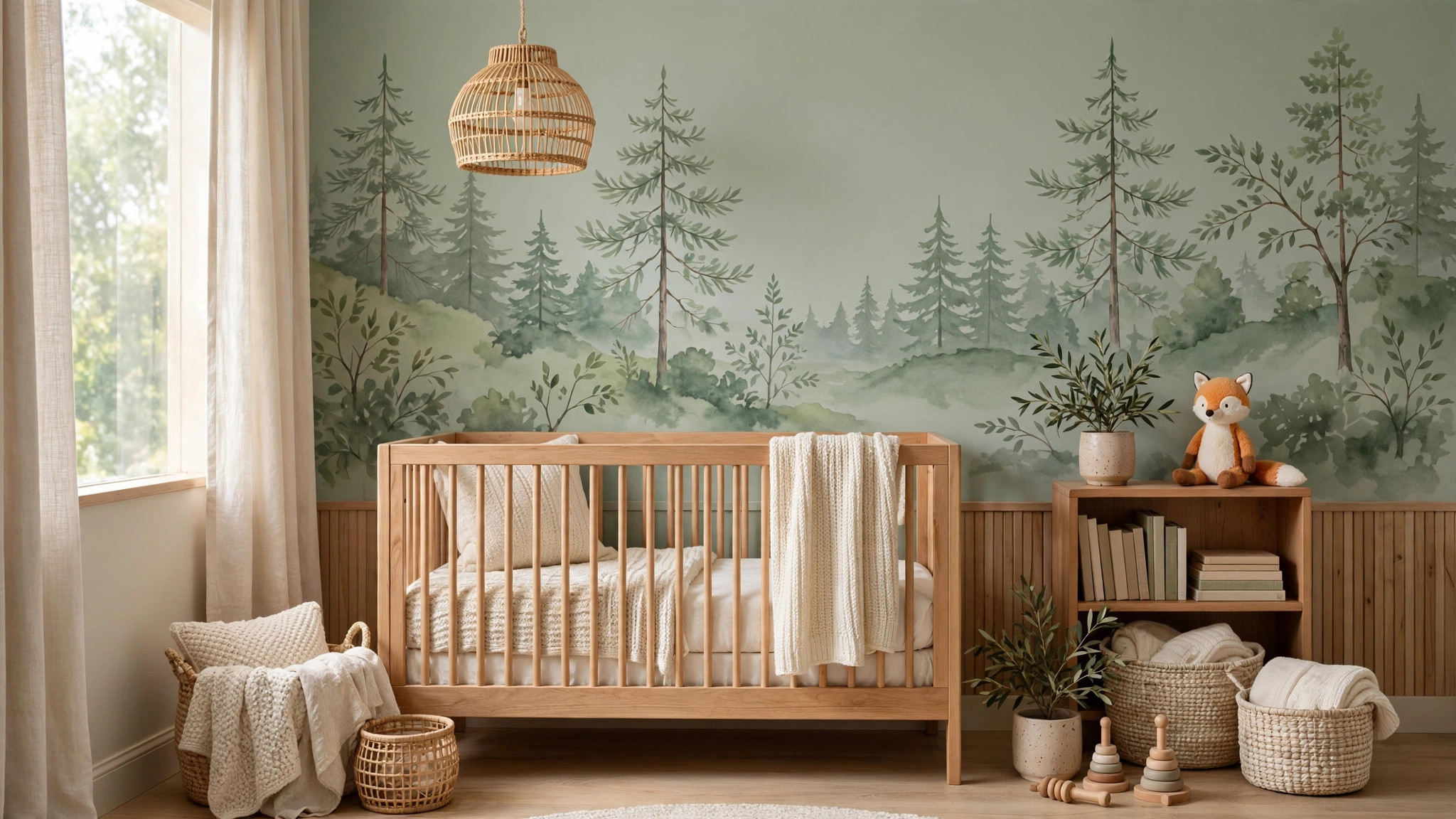

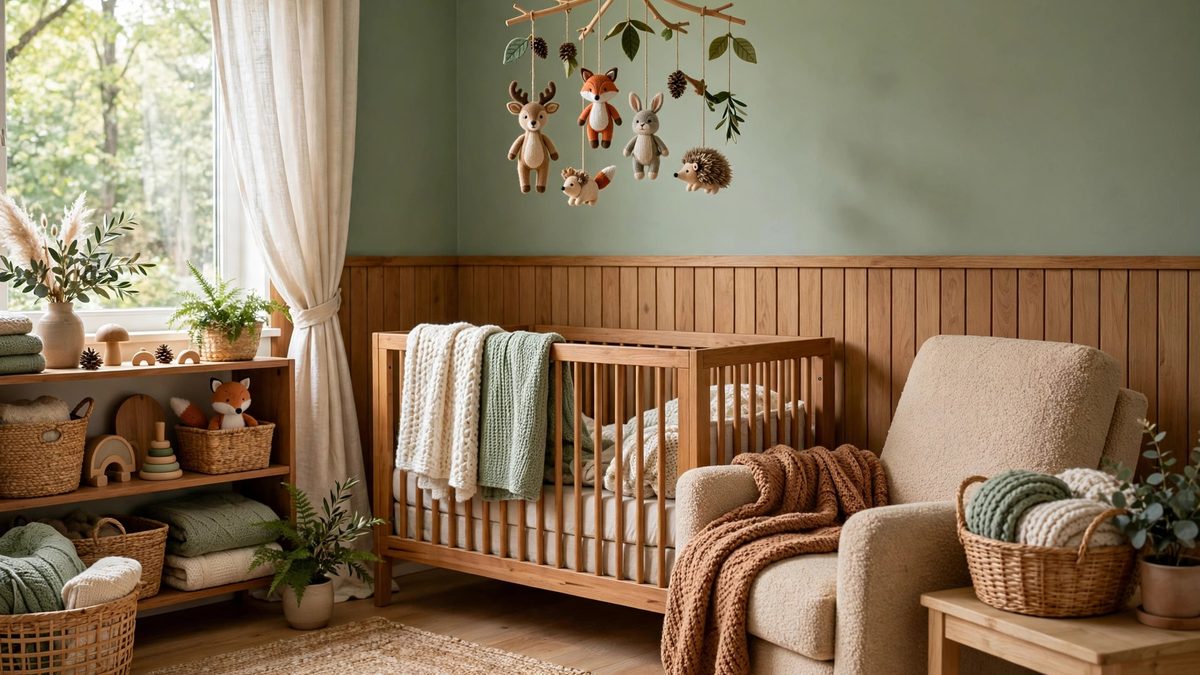
Woodland is the nursery theme that never seems to leave the top of the list, and for good reason. It is soft without being sugary, works for any baby, and trades cartoon characters for trees, animals, and natural textures that still look right when your child is four. The best woodland nursery ideas build the look in layers: a calm forest palette first, then animal accents, then the rustic and handmade touches that make the room feel like a storybook clearing.
This guide covers the classic woodland look, a deeper forest variation, a safari detour for animal lovers, and the boho touches that mix in beautifully. Pick one direction or blend two; the palette ties them together. If you are planning the whole room from scratch, our nursery decor guide covers furniture and layout basics to pair with this theme.
The Woodland Palette: Colors and Textures
Woodland rooms live in a gentle, earthy palette. Think sage green and soft moss, warm cream, oatmeal, and the browns of bark and wood, with rust or mustard as a small accent. Keep the biggest surfaces, walls and rug, in the lightest shades so the room stays bright, and let the deeper greens and browns appear in textiles and art.
Texture does as much work as color in this theme:
- Natural wood in the crib, frames, and shelves, especially warm mid-tone finishes.
- Woven and knitted textures in baskets, blankets, and a chunky knit pouf.
- Linen and cotton bedding in cream and sage rather than shiny synthetics.
- Faux greenery, like a small potted fern or eucalyptus stems, kept safely out of baby’s reach on a shelf.
A good formula is 60 percent soft neutrals, 30 percent greens, and 10 percent warm accent. That balance keeps the room woodland without turning it into a dark forest, and it leaves room for the colorful toys that arrive later.
Forest Nursery Ideas for a Deeper Woodland Look
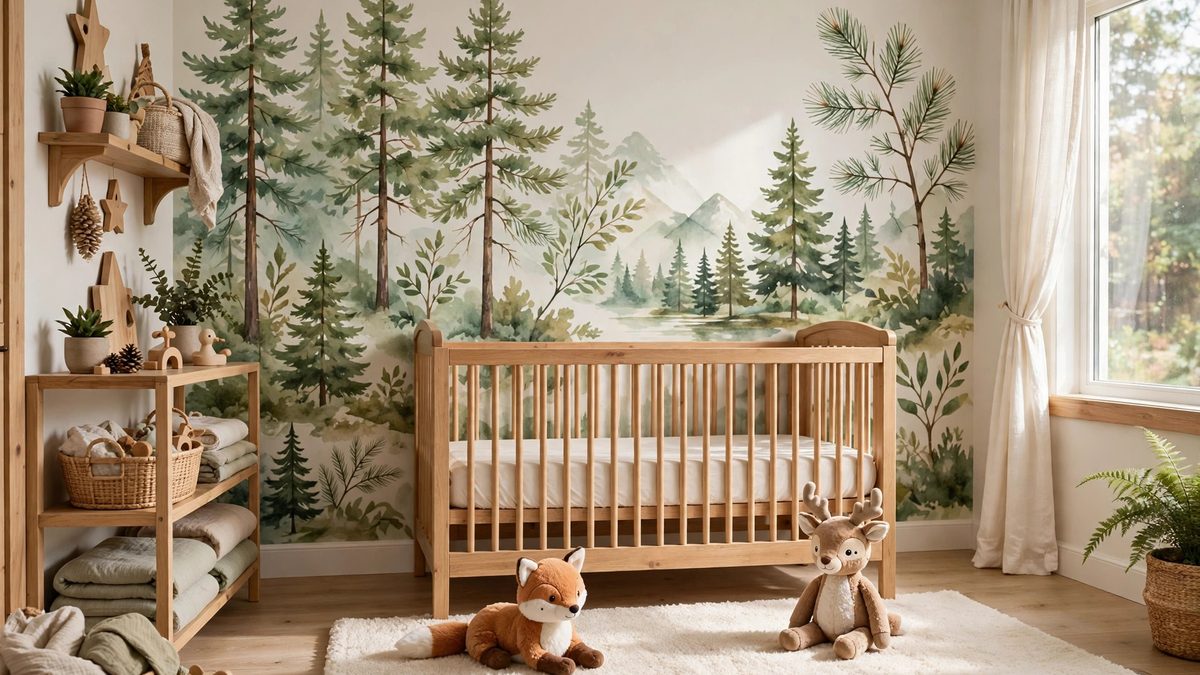
If classic woodland feels a little sweet for your taste, push it toward a true forest nursery. The forest version uses deeper color and bigger shapes: a wall of oversized pine trees, a rich evergreen accent, and art that feels more like a national park poster than a cartoon.
Ideas to try:
- A tree wall. A peel-and-stick mural of misty pines behind the crib creates an instant focal point. Painted versions work too: simple triangle pines in two or three greens, made with painter’s tape, are a forgiving weekend project.
- Deeper paint. An accent wall in deep forest green, with warm white on the other walls, feels cozy rather than dark when the textiles stay light.
- Woodland creatures with character. Foxes, bears, deer, owls, and hedgehogs in a slightly illustrated, vintage style suit the forest mood better than bright cartoon versions.
- Camping touches. A small canvas teepee for the reading corner, a faux campfire play set later on, and star decals on the ceiling extend the theme into toddlerhood.
Keep the crib itself simple and bare for sleep, as in any nursery, and let the walls and textiles carry the forest. Because the shapes are simple and the colors stay natural, this look converts gracefully into a big-kid room with just new bedding.
A Safari Themed Nursery Variation
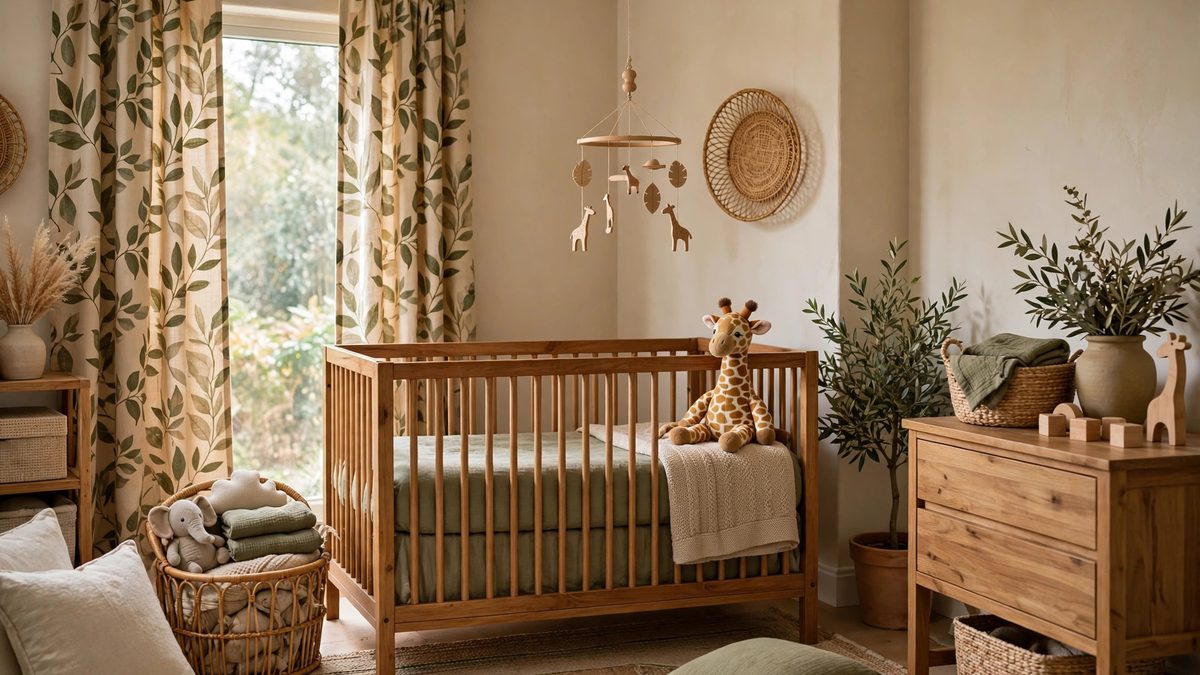
Animal lovers can borrow the woodland structure and swap the cast. A safari themed nursery uses the same warm neutrals but trades pines for savanna grass tones and woodland creatures for elephants, giraffes, lions, and zebras. The palette shifts slightly warmer: sand, clay, terracotta, and soft gold with touches of sage to keep it calm.
To keep safari feeling designed rather than costume-like:
- Choose one large-scale piece, such as a giraffe print or a woven wall hanging, instead of many small animal items.
- Use natural materials heavily: rattan, jute, seagrass baskets, and light wood.
- Pattern goes a long way. A single patterned element, like a mudcloth-style blanket or a spotted rug, is enough.
- Mix in a few woodland textures, like a knit throw and linen curtains, so the room still feels soft and sleep-friendly.
Both themes share furniture and layout, so you can even start woodland and lean safari with accessories if your toddler develops strong opinions about elephants.
Boho Nursery Decor Touches to Mix In
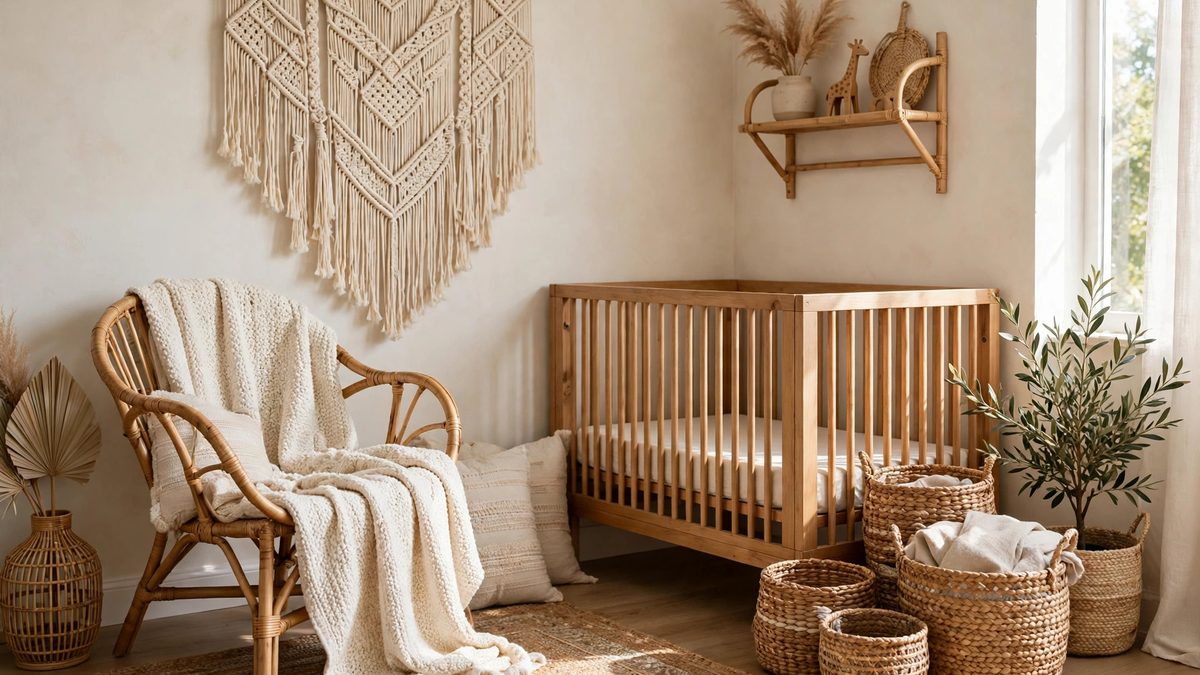
Boho and woodland are natural partners because both celebrate natural materials and handmade texture. The boho-chic style, with its relaxed, layered, collected feel, softens the woodland theme and keeps it from looking like a matched set.
Boho touches that blend seamlessly:
- A rattan or cane accent, like a small side table, basket set, or the frame of a mirror.
- A macramé or woven wall hanging over the dresser instead of a third framed print.
- A vintage-style rug with a faded pattern under the crib area, sized 5 by 8 feet in most rooms.
- Fringe, tassels, and pom-pom trim on curtains and throws, in cream and rust tones.
- A paper star lantern or woven pendant shade for soft, warm light.
Our nursery wall art guide shows how to combine hangings, ledges, and prints on one wall without it feeling cluttered. The rule of thumb: let boho supply the texture and woodland supply the imagery, and the two will not fight.
Furniture and Textiles That Fit the Theme
Woodland furniture should look like it belongs outdoors-adjacent: warm wood tones, simple shapes, and nothing too glossy. A crib in natural wood or white keeps options open, and most standard cribs take a 28 by 52 inch mattress, so bedding is easy to find. A dresser in a matching wood tone with a changing tray covers storage and diaper duty in one piece.
For textiles, layer in this order:
- A low-pile rug in cream or a soft pattern to anchor the room and cushion tummy time.
- Blackout curtains in linen-look fabric, standard 84-inch panels for most windows, in cream or sage.
- Crib sheets in small woodland prints or solids that match your palette.
- A knit or quilted throw over the glider for the grown-ups.
Finish with two or three plush animals as decor on a shelf, not in the crib, and a woven basket for books. If your space is tight, the compact swaps in our baby room decor guide will help you scale the theme down without losing it.
Woodland Nursery Mistakes to Avoid
- Going too dark. Deep green on every wall plus dark furniture can feel like a cave; keep at least the ceiling and textiles light.
- Buying a full matching set. Crib bedding, curtains, rug, and art all in the same print reads as a showroom package, not a room. Mix solids and textures with a few themed pieces.
- Too many plush animals. A shelf of two or three is charming; twenty is visual noise and a dust magnet.
- Forgetting it has to grow. Choose murals and art you can live with at age four, or pick removable versions so the transition is painless.
- Sacrificing function for theme. The changing supplies, blackout curtains, and comfortable chair matter more than any decorative tree.
Frequently Asked Questions
What colors define a woodland nursery?
Sage and moss green, warm cream, oatmeal, and wood browns form the core, with rust, mustard, or terracotta as accents. Keep walls and the rug light, and use the deeper greens and browns in textiles, art, and furniture so the room stays bright and calm.
Is a woodland nursery good for a small room?
Yes, because the palette is light and nature-based. Use a tree decal or a single mural wall instead of dark paint, choose a standard or mini crib to fit the space, and lean on cream and sage textiles. The theme reads clearly even in a small footprint.
How do I keep a woodland nursery from looking babyish later?
Start with removable elements: peel-and-stick trees, art prints, and bedding carry the theme, while furniture and wall color stay neutral. When your child is older, swap the prints and textiles for a camping or nature look and keep everything else.
What is the difference between woodland and forest nursery themes?
They are close cousins. Woodland is softer and sweeter, with lighter greens and storybook animals. A forest theme goes deeper: darker evergreen tones, bigger tree shapes, and a slightly more grown-up, national park feel. Many rooms blend the two.
Can I mix safari or boho pieces into a woodland nursery?
Absolutely. All three styles share natural materials and warm neutrals. Use woodland as the base, then add a safari animal print or two, or boho texture through rattan, macramé, and a vintage-style rug. Limit each guest style to a few pieces so the room stays cohesive.
Conclusion
A woodland nursery works because it is built on calm colors and natural textures rather than a rigid theme. Set the sage-and-cream palette, choose one focal treatment like a tree wall, layer in animal art and woven texture, and keep the furniture simple and safe. Whether you lean forest, borrow from safari, or soften it with boho, the result is a room that feels like a deep breath, for you and for your baby.
