
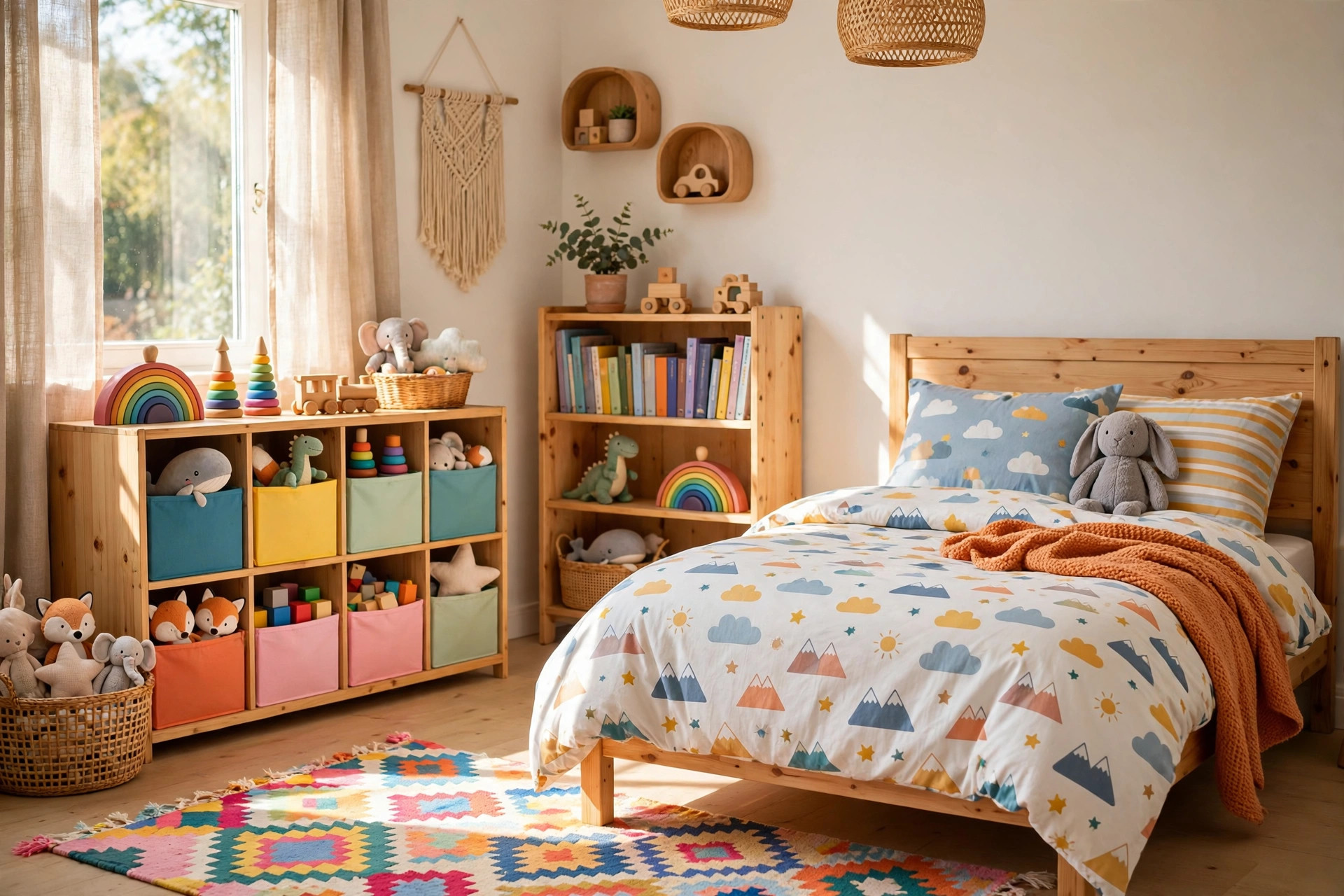

The best kids room ideas balance three jobs in one small space: sleeping well, playing freely, and keeping belongings under control. A child’s bedroom does not need a complete makeover every two years. With a flexible layout, furniture sized right for now, and color added in easy-to-change layers, the same room can suit a preschooler, a grade-schooler, and a preteen with only small updates.
A bedroom is first a place to sleep, and that purpose should guide every choice. Start with a comfortable bed and a calm sleep area, then add play, study, and storage around it. When the sleep zone stays quiet and uncluttered, the rest of the room can be as lively as your child wants.
Start With a Layout That Leaves Room to Play
Measure the room and place the largest pieces first: the bed, then a dresser, then a desk or play table if there is room. Push big furniture against the walls to keep a clear patch of floor in the middle. That open space is precious. It is where puzzles get built, books get spread out, and friends sit during playdates.
Keep the bed away from windows with cords, and leave an easy path from the bed to the door for nighttime trips. If two children share, give each child at least one personal spot, even if it is only a shelf, a drawer, and a hook with their name on it. Shared rooms work much better when each child owns a small territory.
Think in zones, just as you would in a playroom. A sleep zone with the bed and nightstand, a dressing zone with the dresser and closet, and a play or study zone with a rug and storage. If your child also plays here daily, borrow the zone approach from your favorite playroom ideas and keep toys in one defined corner rather than spread across the whole room.
Leave room to grow. A layout that depends on a tiny toddler table will need a full redo in two years, while a simple layout with open floor can accept a desk later without moving everything else.
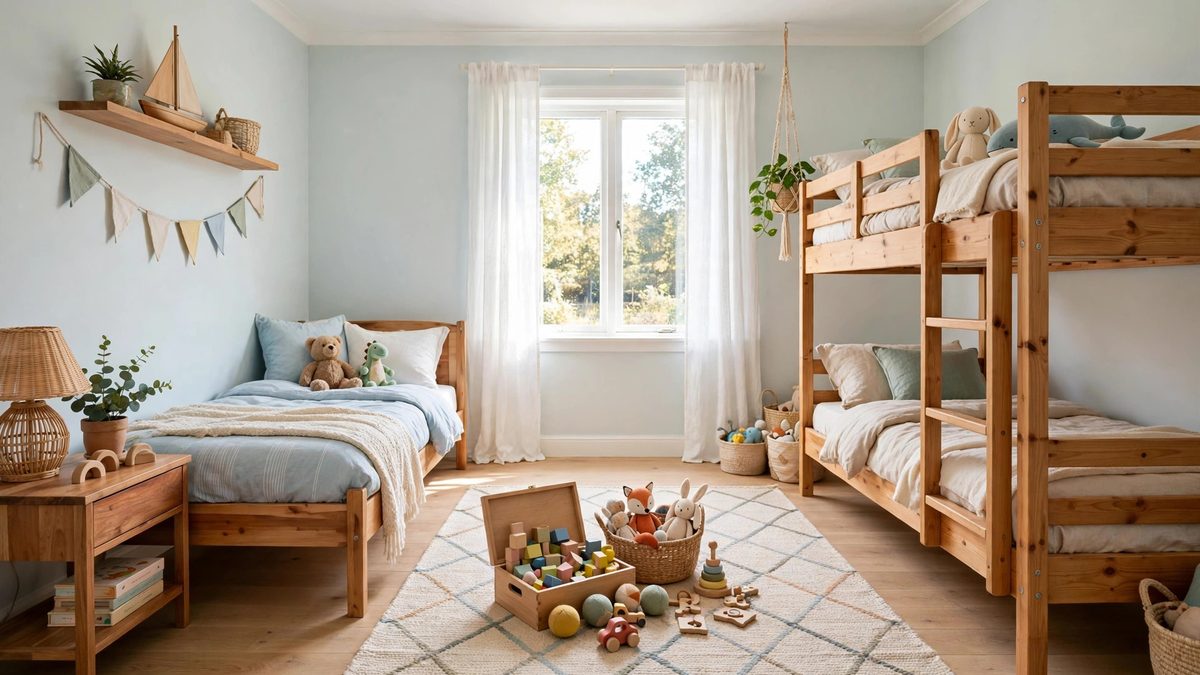
Choose the Right Bed: Twin, Bunk, and Loft Basics
For most children, a twin bed is the workhorse. A standard twin mattress measures 38 by 75 inches, which fits most kids comfortably through the teen years and leaves more floor space than a full bed in a small room. A twin XL, at 38 by 80 inches, is a good option for a tall older child.
A simple frame with a headboard gives kids a place to lean while reading. Under-bed drawers or rolling bins turn wasted space into storage for out-of-season clothes, extra bedding, or board games. A trundle under a twin is a smart sleepover solution that disappears during the day.
Bunk beds save floor space for siblings or sleepovers, but they come with firm safety rules. Follow well-established CPSC guidance: use guardrails on both sides of the top bunk, use the ladder for getting up and down, allow only one person on the top bunk, and do not let a child under 6 sleep on the top bunk. Check that the mattress is the size and thickness the manufacturer specifies so the guardrail stays high enough above it.
Loft beds, with a desk or play space underneath, suit older children better than young ones. Whichever bed you choose, anchor tall dressers and bookcases to the wall. Tip-over accidents are a known risk with tall furniture that children climb or pull open drawer by drawer, and anchoring is established safety guidance every kids room should follow.
Boyish Room Decor That Feels Fun, Not Themed to Death
When families search for boyish room decor, they often picture a room covered in one character or one sport from floor to ceiling. Those rooms look exciting for a season, then feel outgrown fast. A longer-lasting approach is to build a strong base and add the fun in layers your child can change.
Start with a base of navy, warm gray, wood tones, or a soft white wall. Then add personality with bedding, a rug, wall art, and accessories in the colors and subjects your child loves right now: dinosaurs, space, trucks, soccer, or superheroes. Swapping a duvet cover and two posters is cheap. Repainting four walls is not.
Practical ideas that hold up well include:
- A washable rug with a simple pattern that hides everyday crumbs and marks
- Removable wall decals for a favorite theme, with no repainting later
- A display shelf for trophies, models, or a prized collection
- A reading light and a small book basket by the bed
- Durable bedding in a mid-tone color that does not show every smudge
Let your child make real choices within limits you set. Offer two or three bedding sets or art prints you can live with, and let them pick. A child who helped choose the decor is far more likely to feel proud of the room and keep it tidy.
Avoid heavy, breakable decor low down, and keep cords for lamps and chargers tidy and out of the main play path. Fun should never come at the cost of a room that is hard to clean or hard to sleep in because it is visually loud on every wall.
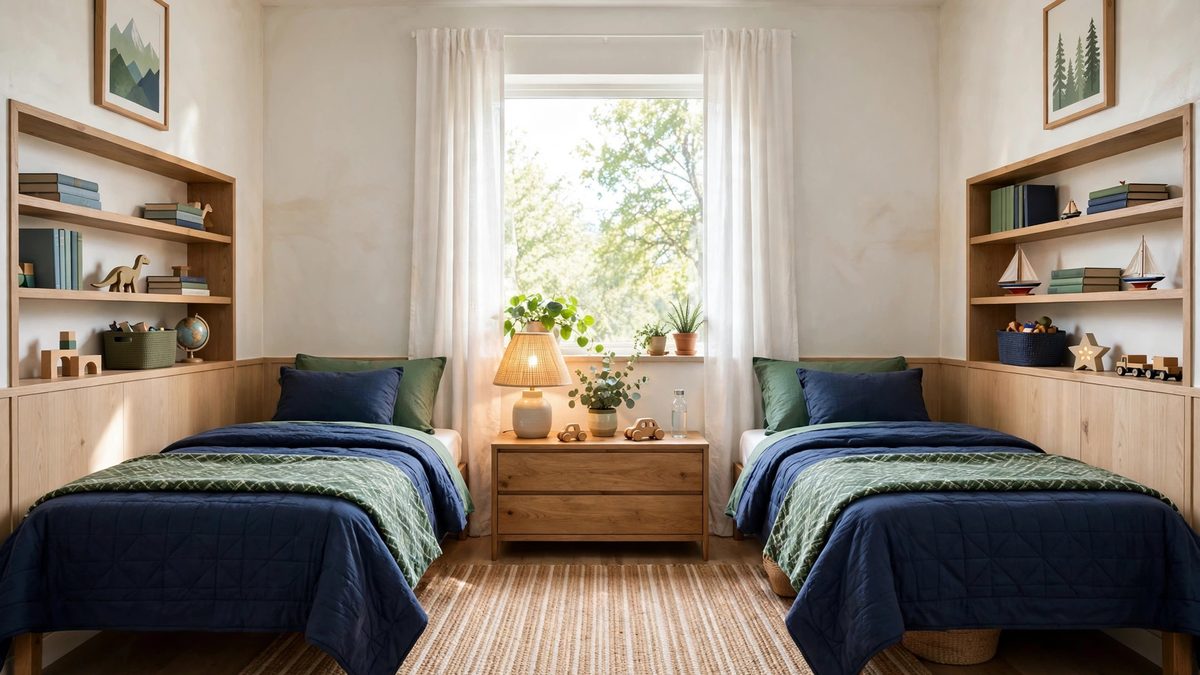
Boys Bedroom Ideas for Shared and Growing Rooms
A boys bedroom that is shared, or that needs to last from age five to twelve, benefits most from symmetry and storage. Two twin beds with matching bedding, a shared nightstand between them, and equal shelves or bins for each child keep a shared room feeling fair and calm, even if the decor on each side is a little different.
For a single child growing up in the room, plan the changes in stages. The toddler bed becomes a twin. The toy bins become a homework desk with a lamp and a small shelf. The picture books become chapter books and a place for a backpack and sports gear. You do not need to buy the teen version of everything now. You only need furniture that is not so babyish that it must all leave at once.
Color can grow, too. A light wall with navy, green, or rust accents in textiles works at six and at twelve. Add a corkboard or magnetic board for photos, tickets, and artwork as interests change. When a child is ready for a more grown-up space, the same thinking behind teenage guy room ideas can guide the next update without starting from zero.
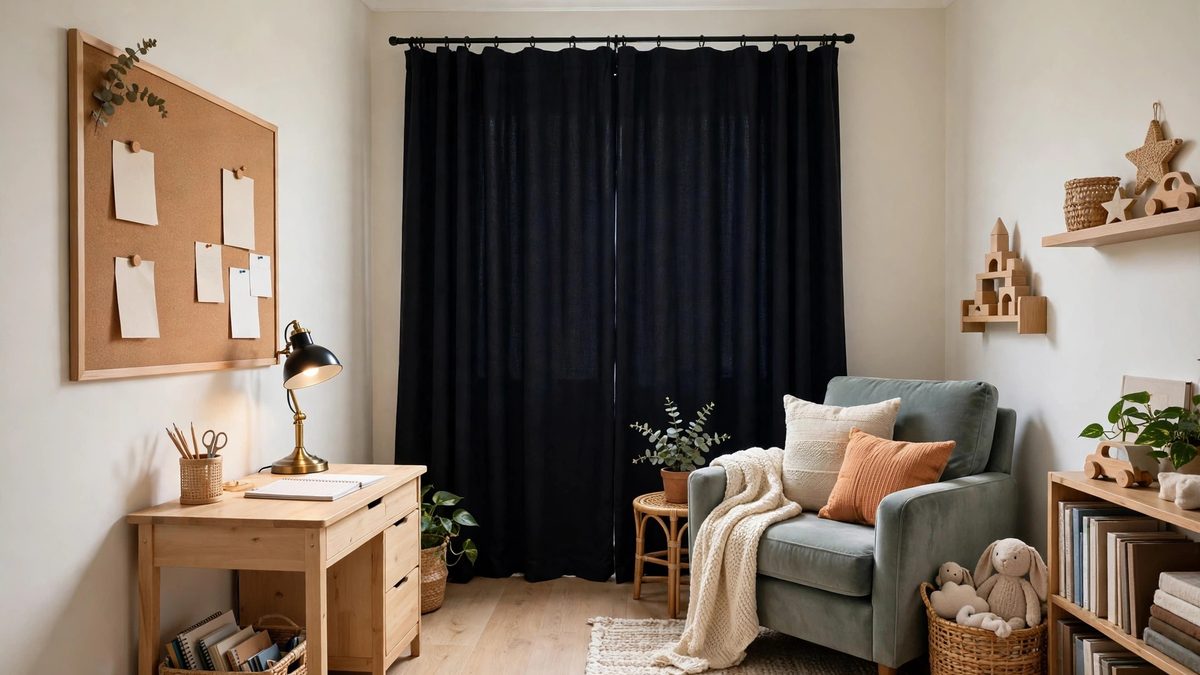
Keep a calm sleep routine supported by the room itself. Blackout or room-darkening curtains, a consistent place for pajamas and tomorrow’s clothes, and a small basket for the books and items that tend to migrate into bed all help bedtime go more smoothly.
Storage That Keeps Clothes, Books, and Toys Under Control
Kids rooms fail most often on storage, not style. Clothes, school papers, toys, and collections all compete for the same few drawers. Give each category a clear, reachable home and cleanup becomes a five-minute job instead of a weekend project.
In the closet, a lower hanging rod or a hanging organizer puts everyday clothes at child height. Put out-of-season and hand-me-down items up high where only adults reach. In the dresser, use drawer dividers or small bins so socks, underwear, and pajamas do not become one mixed pile.
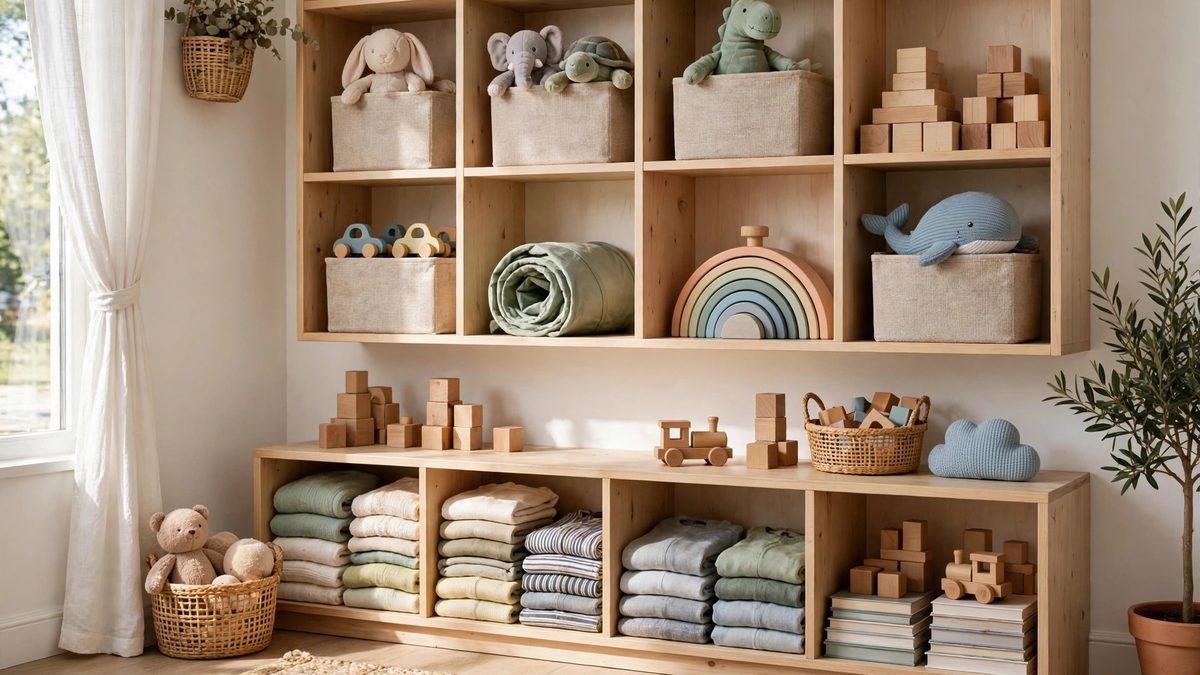
For toys and books, borrow the playroom system: low cube storage with 11-inch or 13-inch bins, one category per bin, and picture labels for younger children. A small bookshelf or forward-facing book bin by the bed encourages reading and keeps library books separate from owned books, which saves frantic searches on library day.
Add three small helpers that make a big difference:
- A laundry basket in the room, not down the hall
- Hooks by the door for a backpack, jacket, and hat
- A small trash can and a donate box in the closet for outgrown items
Review storage twice a year. Kids grow out of clothes and toys quickly, and a room stuffed with things they no longer use is impossible to keep tidy no matter how good the system is. Many families transitioning a space from nursery decor ideas to a big-kid room find that removing baby items first, before adding anything new, is the step that makes the new room feel truly different.
Mistakes to Avoid in a Kids Room
The most common mistake is decorating only for the age your child is today. A room full of toddler-scale furniture and a single cartoon theme can feel wrong within eighteen months. Choose full-size basics early, especially the bed and dresser, and let the small accessories carry the young themes.
Another mistake is too much furniture. A bed, dresser, nightstand, and one storage piece are enough for most rooms. Extra pieces steal play floor and collect clutter on top. Measure before you buy, and check that drawers and closet doors can open fully with the furniture in place.
Skipping anchoring and cord safety is a more serious error. Anchor the dresser and bookcase, secure blind cords out of reach, and keep small items that belong to older siblings out of a younger child’s room. A quick safety check each time you rearrange takes minutes.
Finally, do not make the room so precious that your child cannot live in it. White bedding that cannot be washed, fragile displays, and rugs that stain if you look at them create stress for everyone. A kids room should survive juice, markers, and a fort built from every cushion in the house.
Frequently Asked Questions
What size bed is best for a kids room?
A twin bed, at 38 by 75 inches for the mattress, is the most versatile choice for most children. It fits small rooms, leaves play space, and works from preschool through the teen years. Consider a twin XL for a taller older child, and a trundle if sleepovers are frequent.
How do I make a small kids room feel bigger?
Use light wall colors, keep the center of the floor open, and choose furniture with legs so you can see floor underneath. Store vertically with wall shelves up high for adult-managed items, keep everyday storage low, and use mirrors only where they are safely mounted and cannot be climbed to.
How can siblings share a room without constant fights over space?
Give each child equal, clearly personal storage and a defined side or shelf, even in a small room. Matching base furniture with individual bedding and art helps the room feel fair. A small curtain, bookcase, or rug boundary can give each child a sense of privacy.
What colors work best for a kids room that will grow with them?
Warm white, light gray, soft sage, and pale blue walls are easy backdrops that suit many ages. Add stronger color in bedding, rugs, and art, which are inexpensive to change. This approach lets a room shift from playful to calmer without repainting.
When is a child ready for a bunk or loft bed?
Follow the manufacturer’s age guidance and well-established safety guidance: no child under 6 on the top bunk, guardrails on both sides, and only one person up top. Beyond age, consider whether your child sleeps calmly, can use the ladder confidently in the dark, and will follow the no-playing rule up top.
Conclusion
A great kids room is not finished in a day or frozen in one theme. It is a simple, safe base that flexes as your child grows: a twin bed that lasts, zones that keep sleep calm and play contained, reachable storage, and color in easy-to-change layers. Start with layout, bed, and anchoring, then add the fun together. The result is a room your child loves now, without a complete redo next year.
