
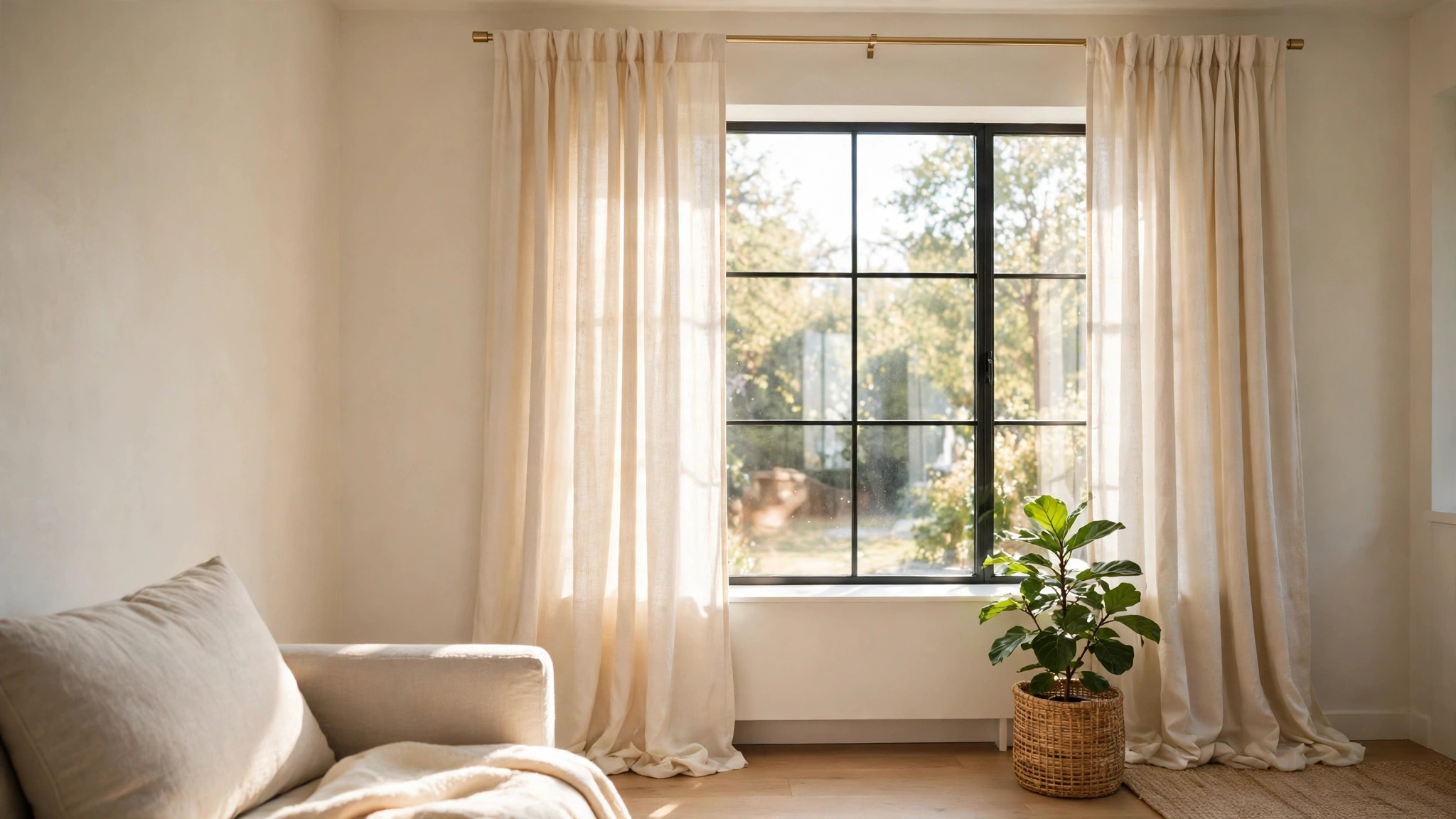

Curtains can make a room look taller, wider, and far more finished — but only when they are the right size. Panels that are too narrow look skimpy, and panels that end at an awkward height make even beautiful fabric look like a mistake. The good news is that learning how to measure for curtains takes about ten minutes per window once you know the order of operations. Decide where the rod goes first, then measure the width, then the length. This guide walks you through each step with the standard sizes and simple formulas designers use, so you can order once and hang with confidence.
What You Need Before You Start
You do not need much, but the right tools make the numbers trustworthy:
- A metal tape measure (cloth tapes stretch and give false readings)
- A pencil and notepad, or your phone for notes
- A step stool for tall windows
- A level, if you plan to mark bracket positions at the same time
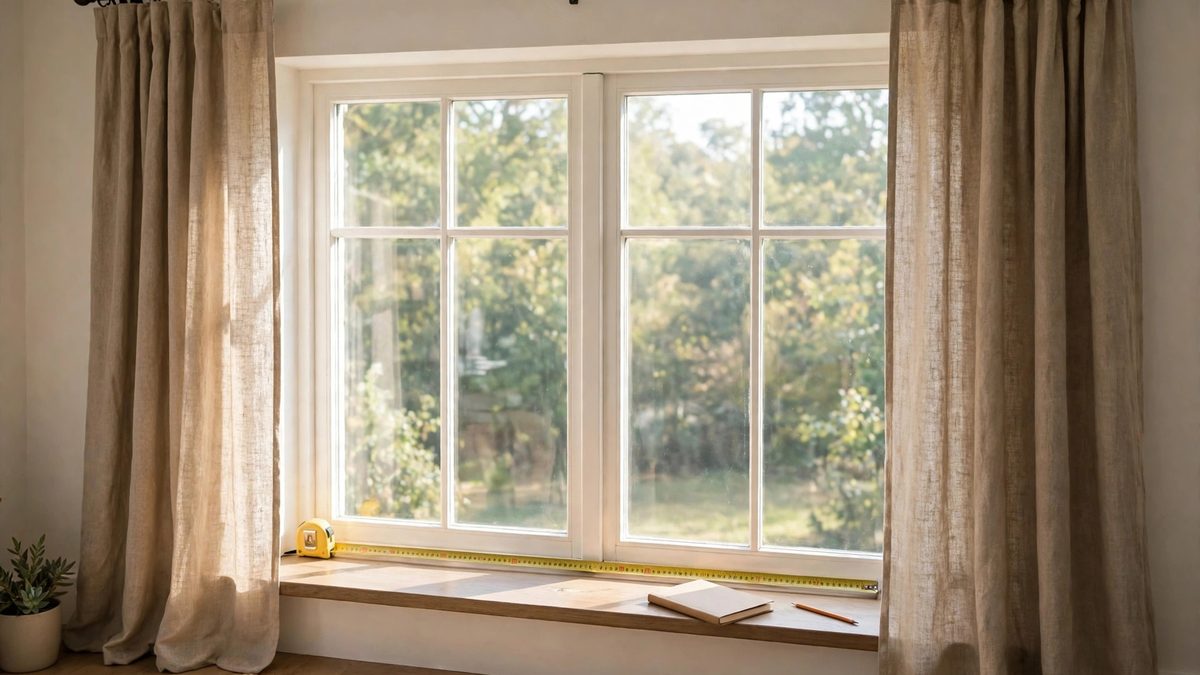
Measure every window separately, even if two windows look identical. Older homes especially can have frames that differ by half an inch or more, and that small difference shows up in how the hems hang.
Step 1: Decide Where the Rod Will Go
Rod placement drives every other number, so settle it before you measure anything else. Two decisions matter: height and width.
For height, mount the rod 4 to 6 inches above the window frame. If your ceilings are low, go higher — placing the rod halfway between the top of the frame and the ceiling, or even a few inches below the ceiling, makes the whole wall feel taller.
For width, extend the rod 3 to 6 inches past the frame on each side for a standard look. If you want the open curtains to clear the glass completely and let in maximum light, extend it 8 to 12 inches per side. That extra wall space where open panels rest is called the stack-back, and planning for it is the difference between a bright room and curtains that permanently cover a third of your window.
If you are still choosing hardware and fabrics, it helps to understand the bigger picture first. Our explainer on what a window treatment is covers how rods, panels, and liners work together.
Step 2: Measure the Width and Do the Fullness Math
With the rod position decided, measure the full rod length from bracket to bracket, not just the window. This is the number everything else is based on.
Curtains need more fabric than the rod is wide, or they hang flat and lifeless. That extra fabric is called fullness, and it is expressed as a multiplier:
- 1.5× fullness — light, relaxed gathering; works for linen-look and casual panels
- 2× fullness — the standard choice; soft, balanced folds for most fabrics
- 2.5× fullness — a fuller, more formal look, great for pinch pleats and velvet
Multiply your rod length by your fullness factor to get the total fabric width you need, then divide by the number of panels. For example, a 72-inch rod at 2× fullness needs 144 inches of fabric. Ready-made panels are most commonly sold about 48 to 54 inches wide each, so three panels (or two extra-wide panels) would cover that rod nicely. Always round up — a little extra fullness looks generous, while too little looks like a measuring error.

Curtain Lengths: Choosing the Right Drop
Standard curtain lengths exist so you can buy off the rack, and most ready-made panels come in 63, 84, 95 or 96, and 108 inches. Longer custom sizes run to 120 inches. Here is what each drop looks like in practice:
- Sill length (usually 63 inches): ends right at the windowsill. Best for kitchen windows, windows above radiators, and windows you open often.
- Apron length: ends about 4 to 6 inches below the sill. A forgiving, casual look for bedrooms and baths.
- Float: ends about half an inch above the floor. The easiest floor-length option — it looks tailored and never trips anyone or collects dust.
- Kiss: just grazes the floor. Beautiful and crisp, but it demands an exact measurement.
- Puddle: 2 to 6 extra inches pool on the floor. Romantic and formal, but only in low-traffic spots.
To measure length, start at the top of the rod (or where the fabric will sit) and measure down to your chosen endpoint. Then adjust for your header style: grommets and rod pockets sit the fabric roughly an inch above the rod, while rings and clips drop it about 1 to 2 inches below. If you have picked a fabric but not a style yet, browsing the common types of curtains will help you decide which header — and therefore which adjustment — applies to you.
How to Hang Curtains for a Polished Finish
Measuring is only half the job; hanging them well is what people actually see. Start by installing the rod at the height and width you planned, using a level so both brackets sit at exactly the same height. For rods wider than about 60 inches, add a center support bracket so the rod does not bow in the middle.
Hang the panels, then take a minute to “train” them: smooth the folds evenly from top to bottom with your hands so the pleats fall in consistent columns. Lightly steaming panels in place removes packaging creases and helps the folds set. Let them hang for a day or two before you judge the length, because some fabrics — especially linen and cotton — relax and drop slightly.
For a real-room example of all of this coming together, see our roundup of living room drapes and curtains ideas, where panel length and fullness change the whole mood of the space.
How to Hang Curtains Without Drilling
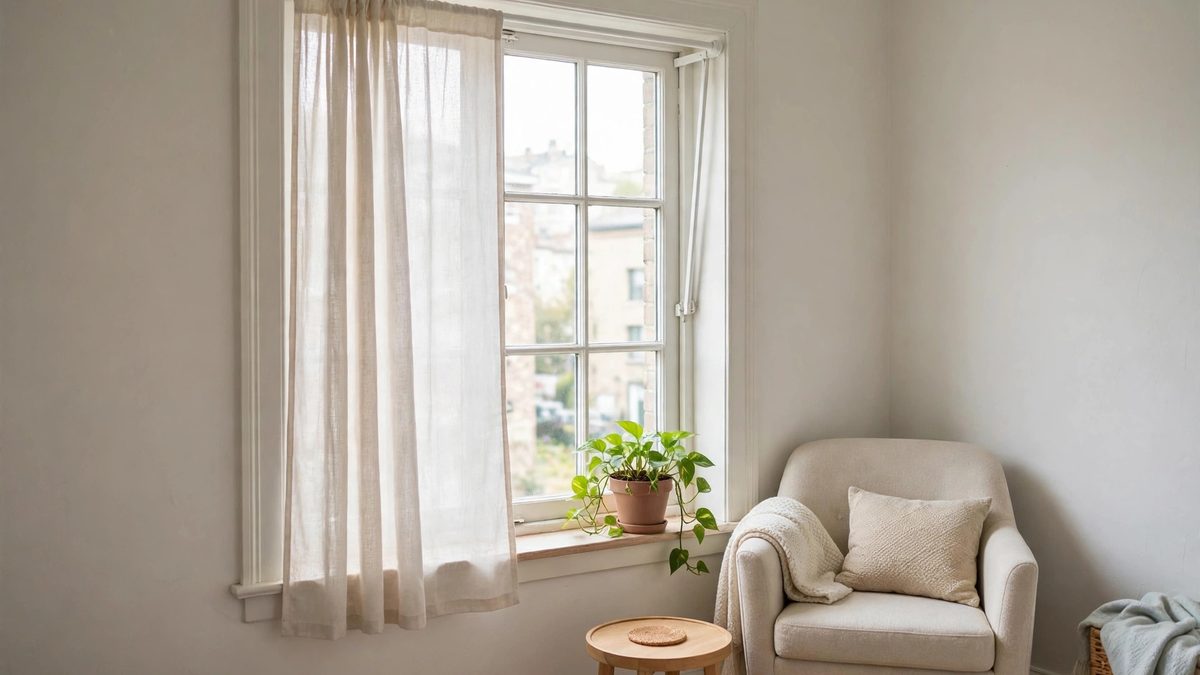
Renters and anyone with plaster or tile walls can skip the drill entirely. These no-drill options genuinely work:
- Tension rods fit inside the window frame and hold lightweight or sheer panels. Best for small windows and café curtains.
- Command-style adhesive hooks can hold a lightweight rod; check the weight rating and stay under it.
- Magnetic rods attach to steel doors — a classic solution for sidelights and metal entry doors.
- Kwik-Hang style no-drill brackets hook onto the window trim itself and hold a full rod with no holes at all.
- Ceiling-mounted track alternatives with adhesive exist for light sheers, though they suit only very light fabrics.
One honest caution: no-drill methods have weight limits. Save them for sheers and light cotton panels, and use real brackets for heavy blackout or lined drapes.
Common Mistakes to Avoid
- Measuring the window instead of the rod. All width and fullness math starts at the rod.
- Hanging the rod right at the frame. Too low and too narrow makes windows look smaller than they are.
- Skipping fullness. Panels the exact width of the window hang flat and cheap-looking.
- Measuring only one window. Frames vary; measure each one.
- Guessing at the floor. Floors slope, especially in older homes. Measure the length in two or three spots and use the longest for puddle styles, the shortest for a clean float.
- Forgetting the header. Grommets, rings, and rod pockets each change the finished length by an inch or two.
If you want a deeper look at curtain construction and fabric types while you plan, the overview at Wikipedia’s curtain article is a useful background read.

Frequently Asked Questions
How much wider than the window should curtains be?
Work from the rod, not the window. Extend the rod 3 to 6 inches past the frame on each side, then buy total fabric width equal to 1.5 to 2.5 times the rod length, depending on how full you want the folds.
Should curtains touch the floor?
Floor-length panels usually look best either floating about half an inch above the floor or just kissing it. Hovering several inches above the floor looks accidental, unless the panel is intentionally sill or apron length.
What is the most common curtain length?
For living rooms and bedrooms, 84 inches is the most common ready-made length, suiting standard 8-foot ceilings with the rod mounted above the frame. Taller rooms often need 95/96-inch or 108-inch panels.
How high should I hang the curtain rod?
Four to six inches above the window frame is the standard starting point. In rooms with low ceilings, mount it closer to the ceiling — the extra height makes both the window and the room feel taller.
Can I hang curtains without a rod?
Yes. Clip rings on a wire cable system, adhesive tracks for sheers, and even rows of decorative hooks can all hold lightweight panels. Just respect the weight limits of no-drill hardware.
Conclusion
Measuring for curtains comes down to three decisions in the right order: where the rod goes, how much fullness you want, and where the hem should land. Rod 4 to 6 inches above the frame and wider than the window, fabric at about twice the rod width, and a hem that floats, kisses, or puddles on purpose. Write the numbers down for each window, double-check the header style, and your curtains will look like they were made for the room — because, measurement-wise, they were.
