
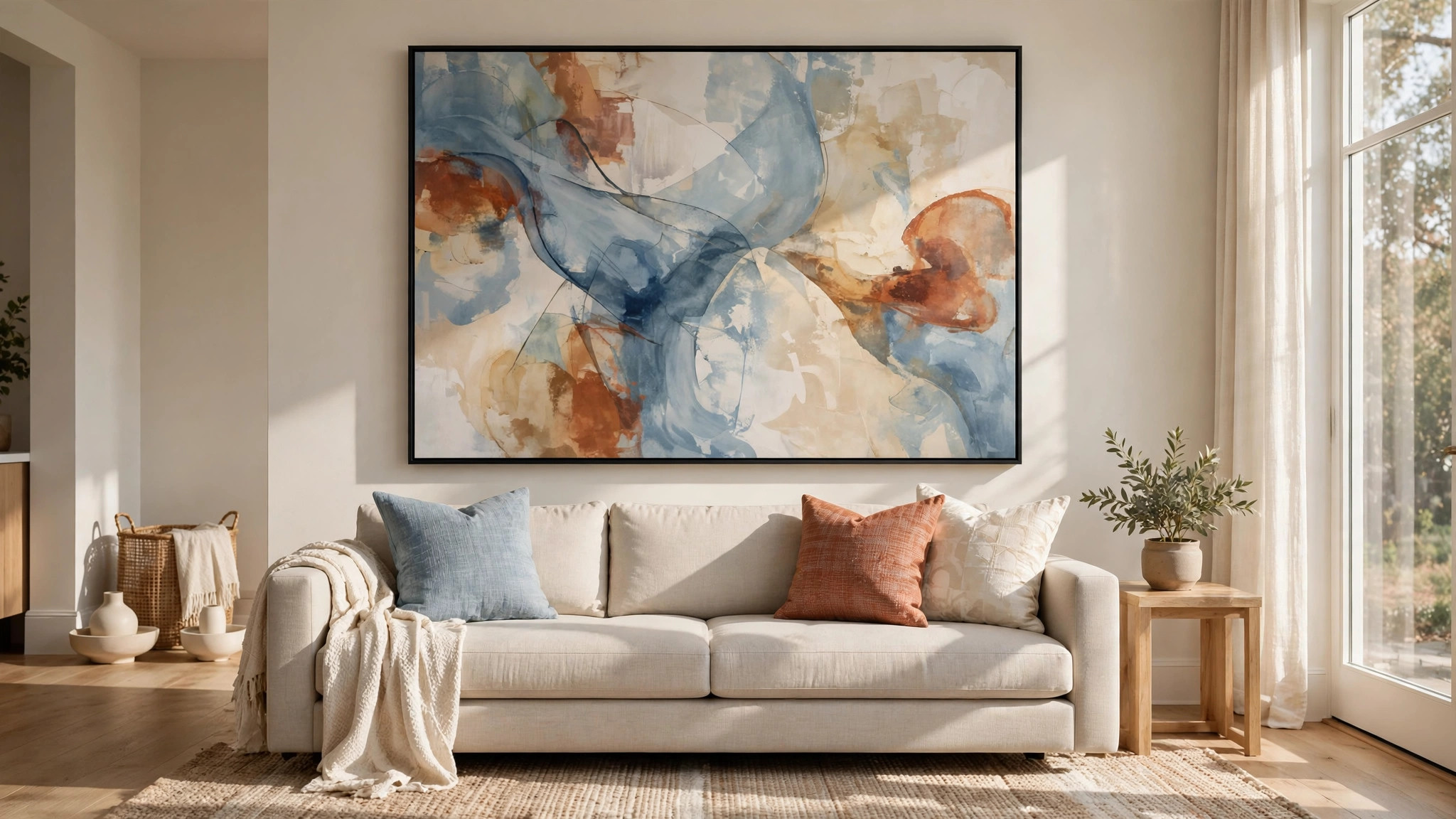

Bare walls are the reason so many otherwise finished living rooms feel temporary. Furniture can be perfect, the rug can be right, and the room still reads as a place someone just moved into. Living room art is the layer that ends that feeling. It brings in color, expresses personality, and gives the eye a place to land.
The challenge is that art choices feel personal and therefore risky, so many people stall. In practice, choosing art follows the same friendly logic as the rest of decorating: size it to the furniture, pull colors from what is already in the room, place it at eye level, and pick subjects you genuinely enjoy looking at. This guide breaks each of those steps down so you can buy and hang with confidence.
Lounge Room Wall Art That Sets the Room’s Mood
Whatever you call the room, lounge room wall art does more emotional work than any other decor. A large serene landscape slows a room down. Bold abstract shapes energize it. Photography brings memory and place into the space in a way no purchased print can quite match.
Start with the mood you want, then choose the subject family that delivers it:
- Landscapes and seascapes for calm, especially in soft greens, blues, and warm neutrals.
- Abstract art for flexibility, since it supplies color and movement without a literal scene to match.
- Black-and-white photography for a timeless, gallery feel that never fights with furniture colors.
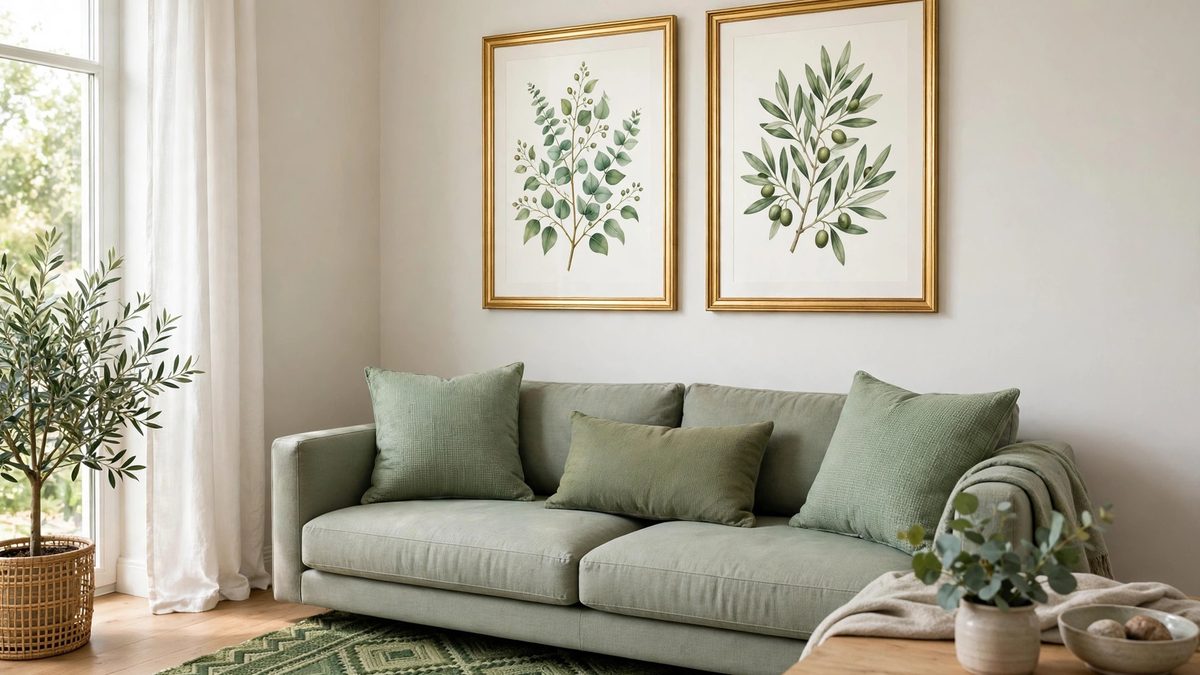
- Botanical and nature prints for freshness, lovely in pairs and grids.
- Textile art, tapestries, and framed fabric for softness and sound absorption in echoey rooms.
- Personal photography and travel pieces for the warmth only real memories create.
Mixing one personal piece into a set of purchased art is the stylist’s shortcut to a room that feels collected rather than decorated from a single shopping trip. If you fall for a grouping idea, our gallery wall layout guide covers how to arrange multi-piece displays step by step.
Living Room Modern Wall Art: Clean Lines and Big Statements
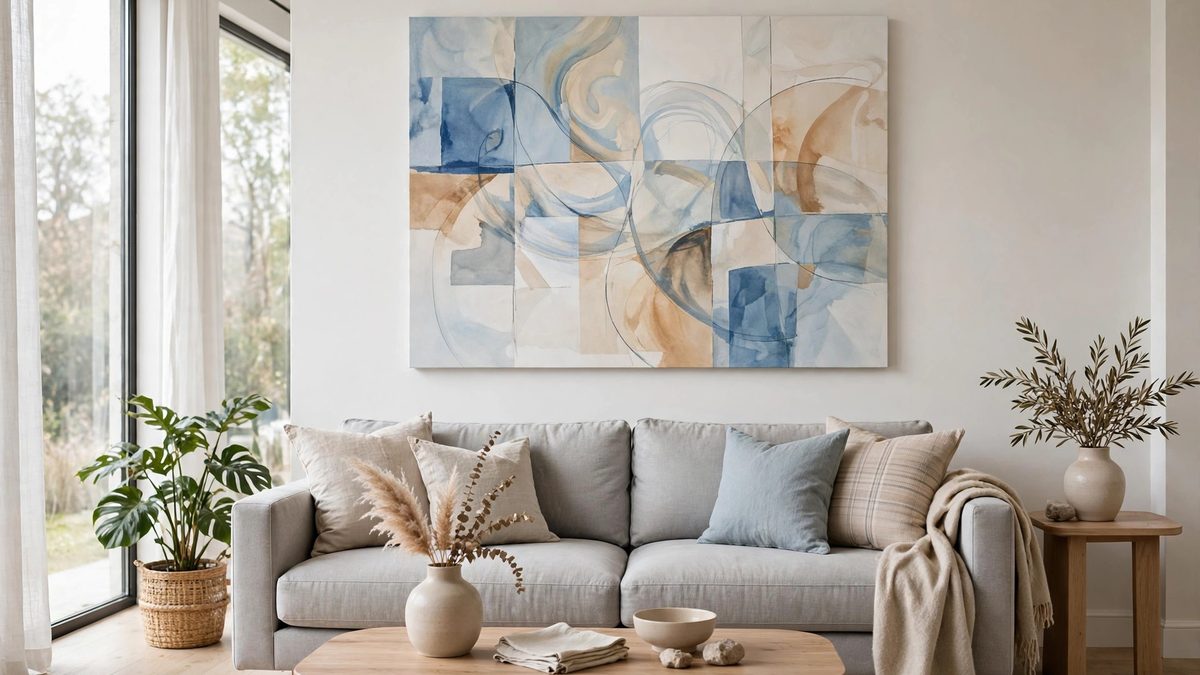
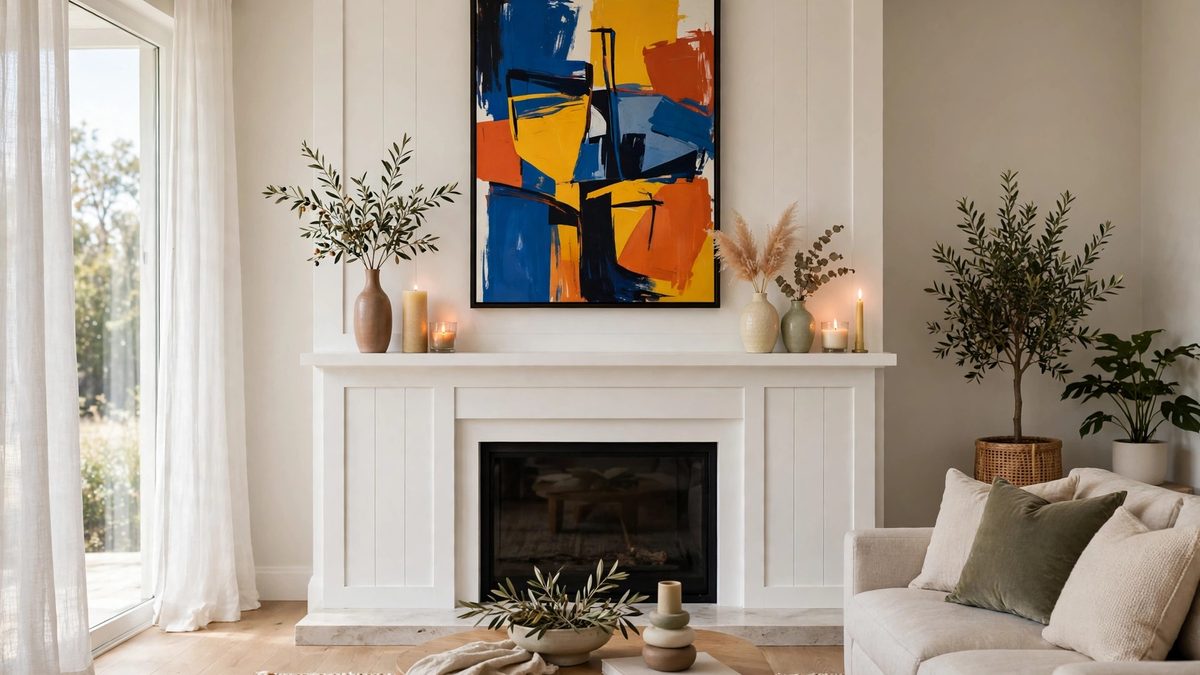
Modern rooms ask art to work harder, because there is less ornament elsewhere to share the load. Living room modern wall art typically means large scale, limited color palettes, and simple framing: thin black, natural oak, or frameless canvas and acrylic. One oversized piece over the sofa is the signature modern move, and it is more achievable than it looks.
Common large canvas sizes include 36 x 48, 40 x 60, and up to 48 x 72 inches for very large walls. A diptych (two panels) or triptych (three) can cover the same span at a lower cost and is easier to transport and hang in sections. Metal prints and framed line art suit the modern look too, as do sculptural wall pieces that add shadow and dimension.
Color discipline is the other modern signature. Choose art that uses two or three colors already present in the room, plus one contrasting note. A mostly neutral abstract with a single band of deep blue or rust will tie a whole palette together without shouting. If you are exploring bolder, whole-wall treatments as well, our wall design ideas show how art and wall finishes can work together.
The Size and Height Rules for Art Over a Sofa
Most art disappointment is really a sizing problem. These are the numbers designers rely on:
- Width: art, or the total width of a grouping, should be about two-thirds the width of the sofa below it. Over a standard 84-inch sofa, that means a piece or arrangement roughly 50 to 60 inches wide. Never go wider than the sofa itself, and try not to drop below half its width.
- Height above furniture: the bottom of the frame should hang about 6 to 8 inches above the sofa back. Closer crowds it; higher makes the art float away from the furniture it belongs to.
- Eye level on open walls: where art hangs on a wall without furniture, center it at about 57 to 60 inches from the floor, standard eye level.
- Groups: treat a grouping as one piece. Its overall outline should obey the same two-thirds width rule, with 2 to 3 inches between frames inside the group.
A detailed breakdown of the hanging math, including how to find the hook position from the frame’s wire, is available in this guide to hanging wall art. When you are planning the room around the art, our ideas for designing a living room can help you sequence the decisions.
One more sizing tip: when torn between two sizes, choose the bigger one. Undersized art is the most common and most visible mistake, while slightly generous art almost always looks intentional.
Choosing Colors and Frames That Belong in Your Room
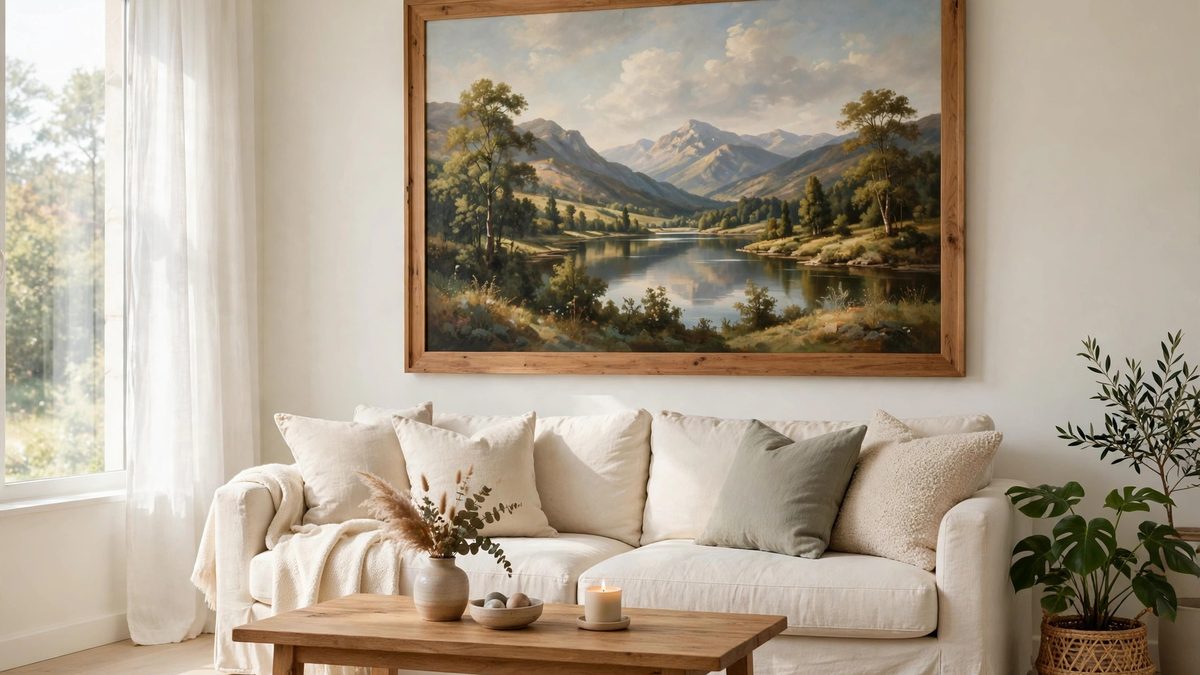
Pull your art palette from the room, not from the art store’s display wall. The easiest method is the 60-30-10 logic most rooms already follow: find art that echoes your dominant color (walls, sofa), repeats some of your secondary color (rug, chairs), and adds a little of your accent color (pillows, throws). The piece then feels destined for the room.
Frames finish the conversation. Match the frame to the room’s existing finishes rather than to the art alone: black frames sharpen modern and transitional rooms, natural wood warms everything, and metallic frames suit glam and traditional spaces. Consistent mats, usually clean white or off-white, unify mixed pieces more effectively than matching frames do.
Light matters too. A piece hung opposite a bright window may need non-glare acrylic instead of glass. And if a favorite piece deserves a spotlight, a battery picture light above the frame is an inexpensive way to give one artwork star treatment.
Low-Commitment Ways to Live With Art First
If a big purchase feels risky, live with art cheaply before you commit. Printable downloads, printed at a local shop and dropped into standard frames, let you test scale and subject for very little money. Some services rent original art by the month, which is a surprisingly practical way to learn what you love at full size.
Rotation is the other low-risk strategy. Keep two sets of prints for your main frames and swap them with the seasons, or move pieces between rooms when one wall starts to feel stale. Art you already own often looks brand new in a different spot with different light, and the shuffle costs nothing at all.
Art Mistakes to Avoid
- Hanging art too high. Eye level is 57 to 60 inches to the center, not up by the ceiling. This is the single most common art error.
- Buying too small. A lone 16 x 20 over an 84-inch sofa will always look lost. Scale up or build a grouping.
- Matching everything too literally. Art that copies the sofa fabric or repeats the rug pattern exactly flattens a room. Echo colors; do not clone them.
- Leaving art until last with no budget. A room without art feels unfinished no matter how good the furniture is. Plan art early, even if you hang it last.
- One nail and hope. Wide or heavy pieces need two hooks or proper anchors, both for safety and to keep frames from drifting crooked.
Frequently Asked Questions
What size art should hang over a sofa?
Aim for art about two-thirds the width of the sofa, roughly 50 to 60 inches wide over a standard 84-inch sofa, counting a grouping as one piece. Hang it so the bottom of the frame sits 6 to 8 inches above the sofa back.
How high should living room art be hung?
On an open wall, center the piece at about 57 to 60 inches from the floor. Over furniture, relate it to the furniture instead: bottom edge 6 to 8 inches above the piece below it.
How do I choose art colors for my living room?
Borrow them from the room. Pick art that reflects your wall and sofa colors, repeats a secondary color from your rug or chairs, and adds one accent note. This guarantees harmony without making the art matchy-matchy.
Is one large piece or a gallery wall better?
Both work. One large piece is calmer and more modern; a gallery wall is more personal and flexible. Choose based on the mood you want and what you own: a single strong piece suits minimal rooms, while collections of smaller pieces suit eclectic ones.
What kind of art is best for a living room with lots of windows?
If glare is an issue, canvas without glass, or prints behind non-glare acrylic, will read better than standard glass, which reflects. Also consider that bright sun fades art over time, so keep delicate originals and textiles out of direct sunlight.
Conclusion
Living room art is not the risky final flourish it is often made out to be. It is a set of learnable decisions: pick subjects that create the mood you want, echo the room’s colors without cloning them, size the piece to two-thirds of the furniture below, and hang it at eye level or just above the sofa back. Start with the wall behind your sofa, get that one composition right, and the whole room will suddenly look like the finished, personal space you pictured.
