
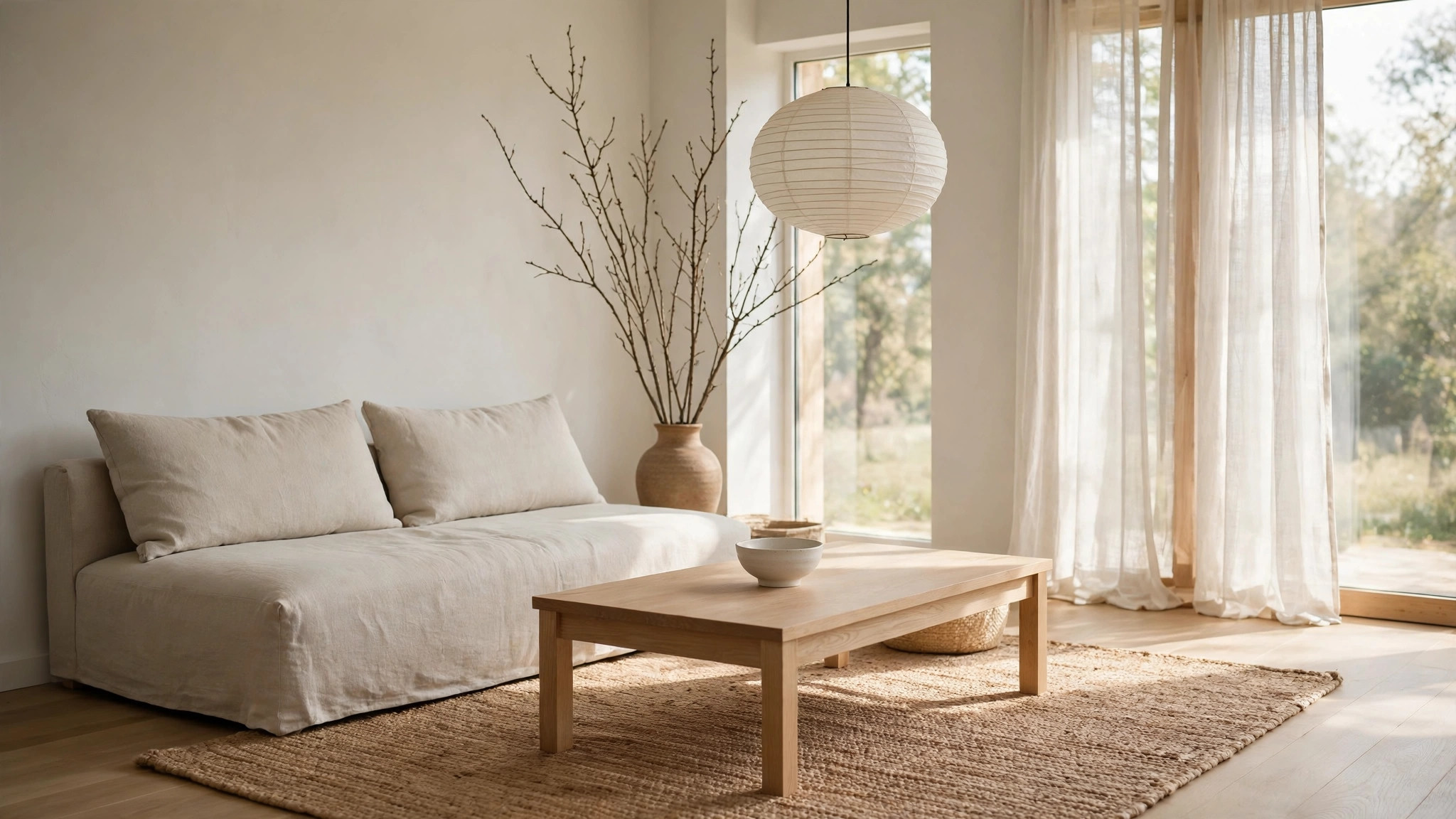

If your home feels busy, noisy, and hard to relax in, Japandi may be the style your nervous system has been asking for. Japandi blends Japanese minimalism with Scandinavian warmth: the clean lines and function of Scandi design, softened by the natural materials, low profiles, and quiet philosophy of Japanese interiors. The word itself is a portmanteau of “Japan” and “Scandi,” and the style emerged in the design world around 2016 — though Danish and Japanese craftspeople had been influencing each other for far longer. This guide breaks down what Japandi actually is, how its two philosophies work together, and how to bring the look into your home room by room, without buying all new furniture.
What Is Japandi? Two Philosophies, One Calm Home
Japandi rests on two ideas. From Japan comes wabi-sabi: the appreciation of natural materials, honest craftsmanship, and the beauty of imperfection — a hand-thrown bowl, a wood grain left visible, a linen that wrinkles softly. From Scandinavia comes hygge: comfort, warmth, and contentment, expressed in cozy textiles, candlelight, and rooms designed for lingering.
Where plain minimalism can feel cold, Japandi feels warm. Where traditional styles can feel cluttered, Japandi feels spacious. The shared ground is restraint: every object in a Japandi room earns its place by being useful, beautiful, or both — ideally both. If you enjoy comparing design movements, our interior design styles explained guide shows where Japandi sits alongside minimalism, Scandinavian, and modern styles.
Japandi Interior Design: The Core Elements
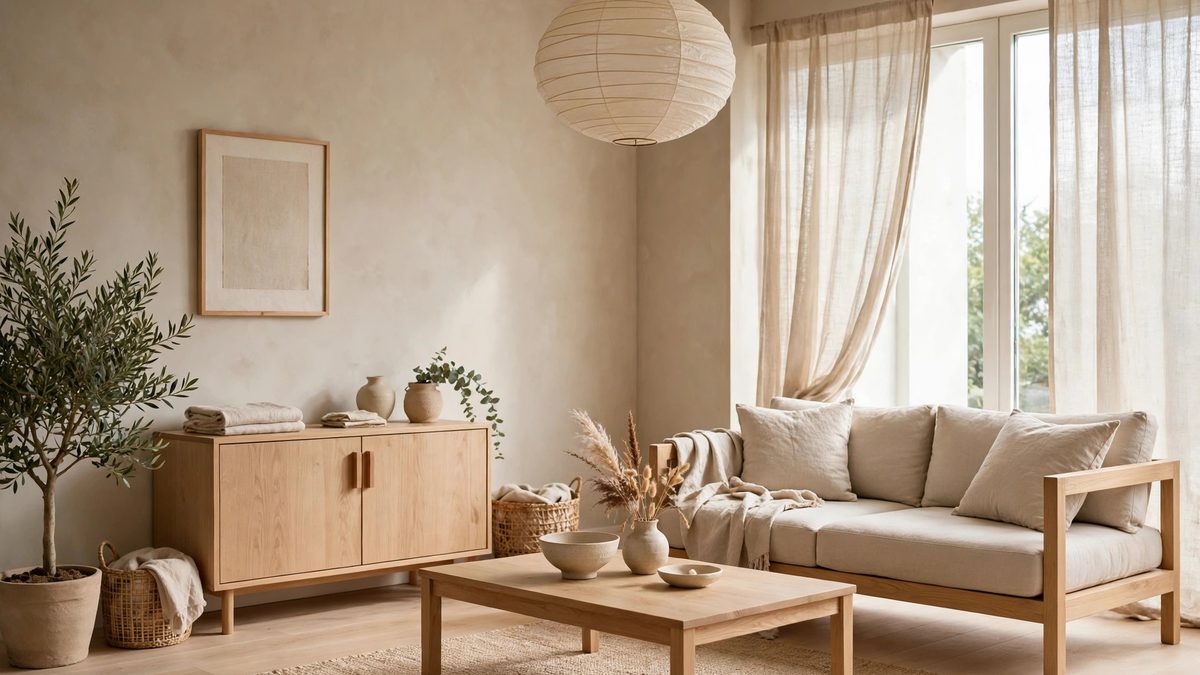
Japandi interior design is built from a short list of elements, repeated with discipline:
- A pared-back palette. Walls in off-white, warm beige, or soft gray. Deeper accents — charcoal, clay, muted sage, warm black — come from furniture and objects, not wall color.
- Natural materials. Light and medium woods (oak, ash, walnut), bamboo, rattan, stone, clay, paper, linen, and wool. Plastic and high-gloss finishes stay out.
- Low, grounded furniture. Platform beds, low sofas, and simple wooden chairs with clean lines. Much Japandi furniture sits lower than standard Western pieces, which makes ceilings feel higher and rooms calmer.
- Negative space. Empty floor and wall space is a design element, not a problem to solve. Fewer, better objects.
- Soft, indirect light. Paper lanterns, fabric shades, and warm-toned bulbs; light that glows rather than glares.
- Craft and imperfection. Handmade ceramics, woven baskets, a visible wood knot — these are features, not flaws.
Notice what is missing from that list: bright color, high shine, and ornament for its own sake. Japandi asks you to slow down when you add anything — to choose the handmade bowl over the mass-produced set, the solid wood stool over the plastic one. Over months, that discipline changes how a home feels more than any single purchase, because every object you pass carries a small sense of intention.
Japanese Decor Influences: Shoji, Tatami, and Negative Space
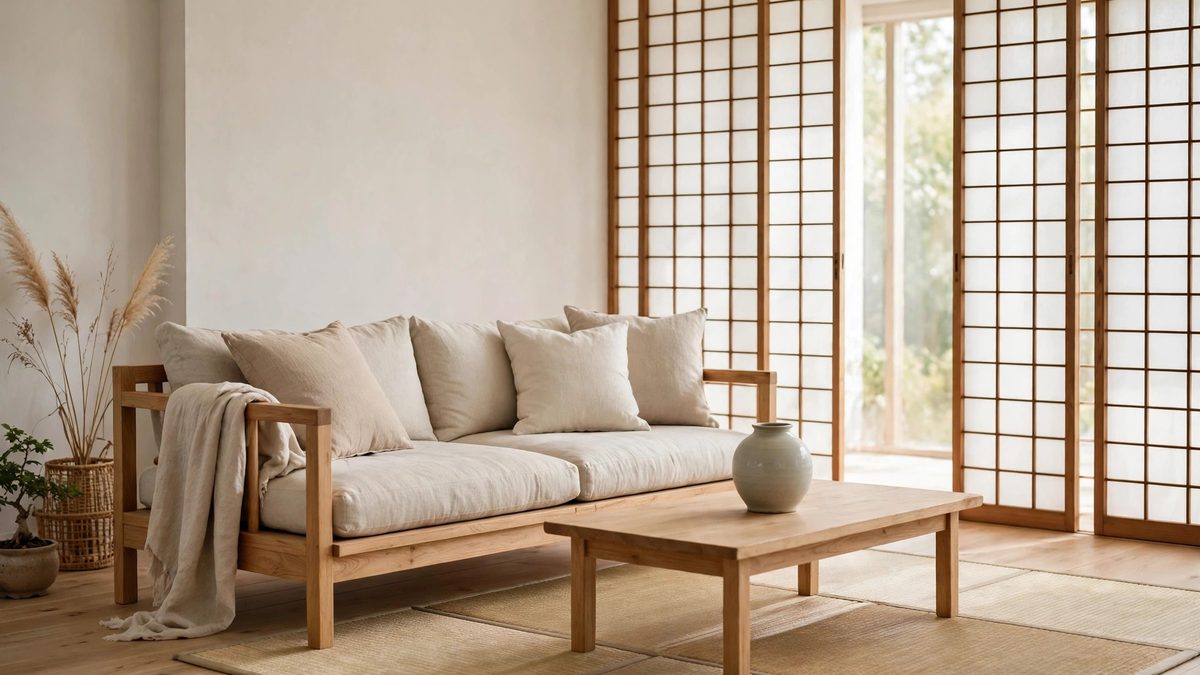
The Japanese decor influence is where Japandi gets its serenity. Shoji screens — wooden lattice panels with translucent paper — inspire room dividers, cabinet fronts, and closet doors that filter light softly instead of blocking it. Tatami mats inspire the natural floor textures: woven jute or seagrass rugs, and low floor cushions for casual seating.
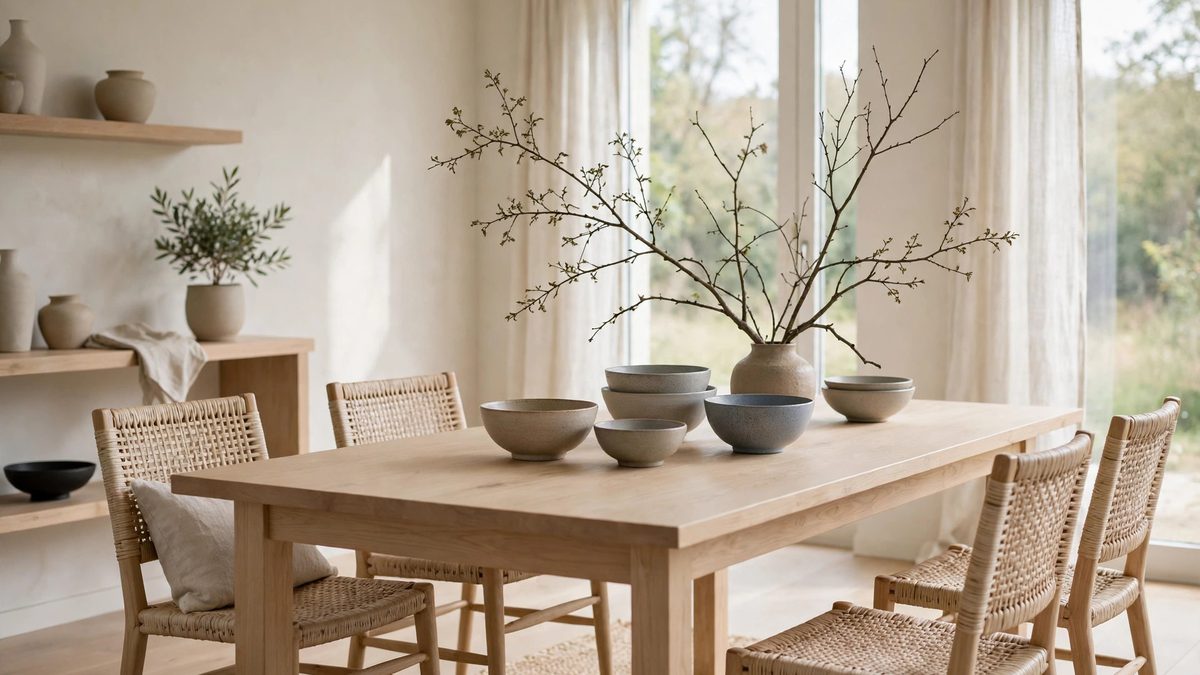
Japanese design also contributes the idea of the uncluttered threshold: a small, tidy entry zone where shoes come off and the day stays at the door. And it contributes restraint with ornament. Instead of many small decorations, a Japandi room might have a single branch in a tall vase, one piece of simple art, or a lone ceramic vessel on a shelf — each given room to breathe.
A related classic device is the tokonoma-inspired display: in traditional Japanese homes, a small alcove holds a single scroll and one seasonal flower arrangement. The modern Japandi version is a shallow shelf or picture ledge with one art piece and one natural object, changed with the seasons. It gives a room a focal point without a gallery wall’s worth of things.
You can borrow these ideas at any budget: a rattan pendant light, a woven floor mat, a shoji-style lamp, or simply clearing a surface down to one beautiful object all move a room in the Japandi direction.
Japandi Living Room: A Room-by-Room Starting Point
The Japandi living room is the easiest place to begin, because the formula is forgiving:
- Start with the sofa. Low-profile, simple lines, in a natural fabric — oatmeal linen, warm gray wool blend, or soft cream bouclé. Add one or two cushions, not eight.
- Choose a low wooden coffee table with a natural finish, and style it with just a tray, a book, and a small ceramic piece — or leave it bare.
- Ground the seating with a flat-woven rug in jute, wool, or a sisal blend, sized generously (8×10 feet suits most rooms) in a warm neutral tone.
- Add one statement of nature: a tall branch in a floor vase, a sculptural plant like an olive tree or fiddle-leaf in a clay pot, or a bonsai on a side table. Our guide to interior decor plants can help you pick plants that thrive indoors.
- Light it softly. A paper or linen pendant, a simple floor lamp with a fabric shade, and candles for the evening hygge note.
Media and clutter hide in closed storage — a low credenza with sliding or lattice-front doors keeps the room serene when the TV is off.
Kitchens and bathrooms follow the same recipe: flat-front wood cabinets, matte stone or ceramic surfaces, clear counters, and one living thing — a small potted herb, a single stem in a vase. Japandi bathrooms favor deep soaking tubs and wooden bath accessories; Japandi kitchens hide small appliances behind cabinet doors so worktops stay calm. You do not need a renovation to borrow the feeling: clearing a counter down to a cutting board, a ceramic jar, and a plant changes the room immediately.
Japandi in the Bedroom and Dining Room
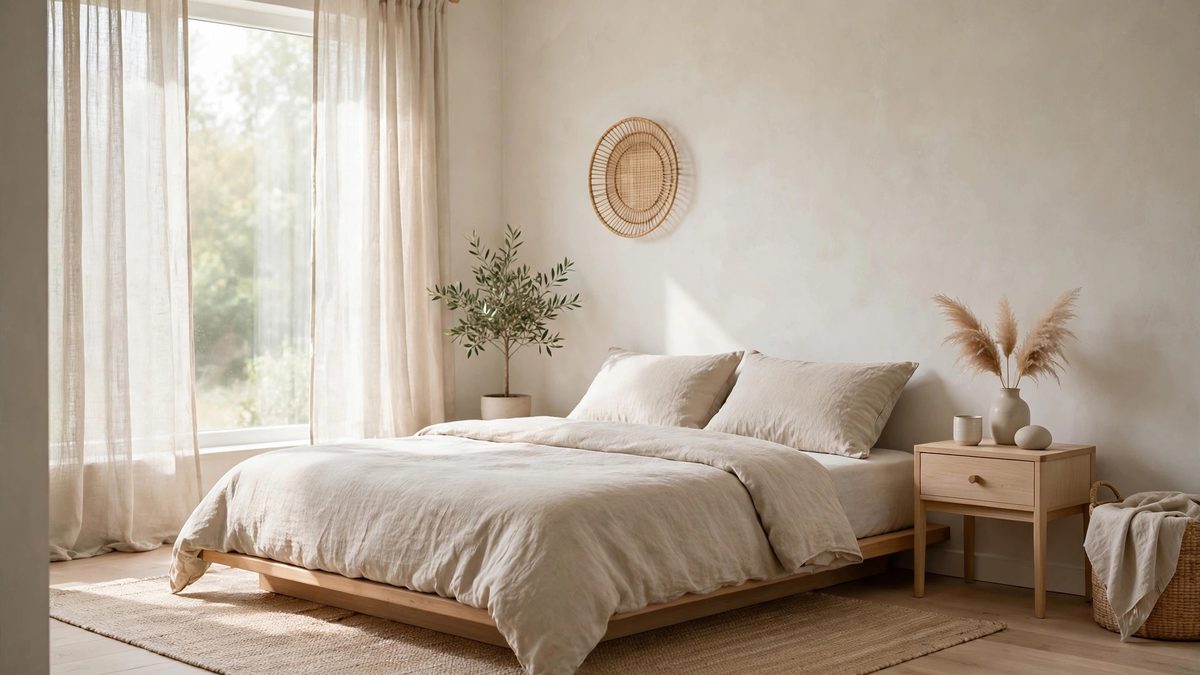
The bedroom is where Japandi’s calm pays off most. A low platform bed in natural wood, dressed in washed linen in white, oatmeal, or soft gray, anchors the room. Keep nightstands nearly empty — a small lamp, a book, a carafe — and choose blackout linen curtains or woven shades for sleep. If you love the restraint but want it purely in sleeping spaces, our minimalist bedroom ideas pair naturally with this approach.
In the dining room, choose a simple wooden table with honest joinery, chairs with woven paper-cord or cane seats, and a single pendant above. Table settings stay plain: stoneware, linen napkins, one small arrangement. The effect is less “styled set” and more “quiet ritual,” which is exactly the point.
Common Japandi Mistakes to Avoid
- Making it cold. Japandi without warmth is just minimalism. Add wool, linen, wood tones, and candlelight.
- Buying “Japandi-style” clutter. A cart full of beige accessories is still clutter. Buy slowly, and choose real materials over imitations.
- Going too pale. Rooms need contrast — a walnut sideboard, charcoal cushions, or a black floor lamp keeps the palette from washing out.
- Ignoring function. Every piece should be comfortable and useful. A beautiful chair no one can sit in breaks the philosophy.
- Perfect-matching everything. Wabi-sabi celebrates the handmade and slightly irregular; a room where everything matches looks staged, not serene.
For a deeper dive into the style’s origins and philosophy, Wikipedia’s Japandi article traces how the two design cultures merged.
Frequently Asked Questions
What is the difference between Japandi and Scandinavian design?
Scandinavian design is light, functional, and cozy but can include more color, pattern, and objects. Japandi adds Japanese restraint — lower furniture, more negative space, a more muted palette, and a stronger emphasis on natural materials and craftsmanship.
What colors are used in Japandi interiors?
Warm neutrals dominate: off-white, cream, beige, and soft gray on walls and large pieces. Accents come from nature — warm wood browns, clay, stone gray, muted green, and touches of black for contrast. Bright primary colors are rare.
Is Japandi expensive to achieve?
It can actually save money, because the style asks for fewer things. Invest in a few quality natural-material pieces and edit what you own. Many people start Japandi with a declutter, a warm white paint, and one or two wooden pieces.
Can Japandi work in a small apartment?
Beautifully. Low furniture, a light palette, multifunctional pieces, and disciplined storage make small rooms feel larger and calmer. The style was practically made for compact living.
What wood tones suit Japandi?
Light oak and ash give the Scandinavian brightness; walnut and darker stained wood add the Japanese depth. Mixing two wood tones is fine — keep finishes matte and natural rather than glossy.
Conclusion
Japandi is less a shopping list than a way of seeing your home: fewer things, better materials, soft light, and space to breathe. Begin by editing one room, warming the palette, and swapping one or two pieces for natural wood and linen. Whether you go full Japandi or simply borrow its calm, the result is a home that feels like an exhale.
