
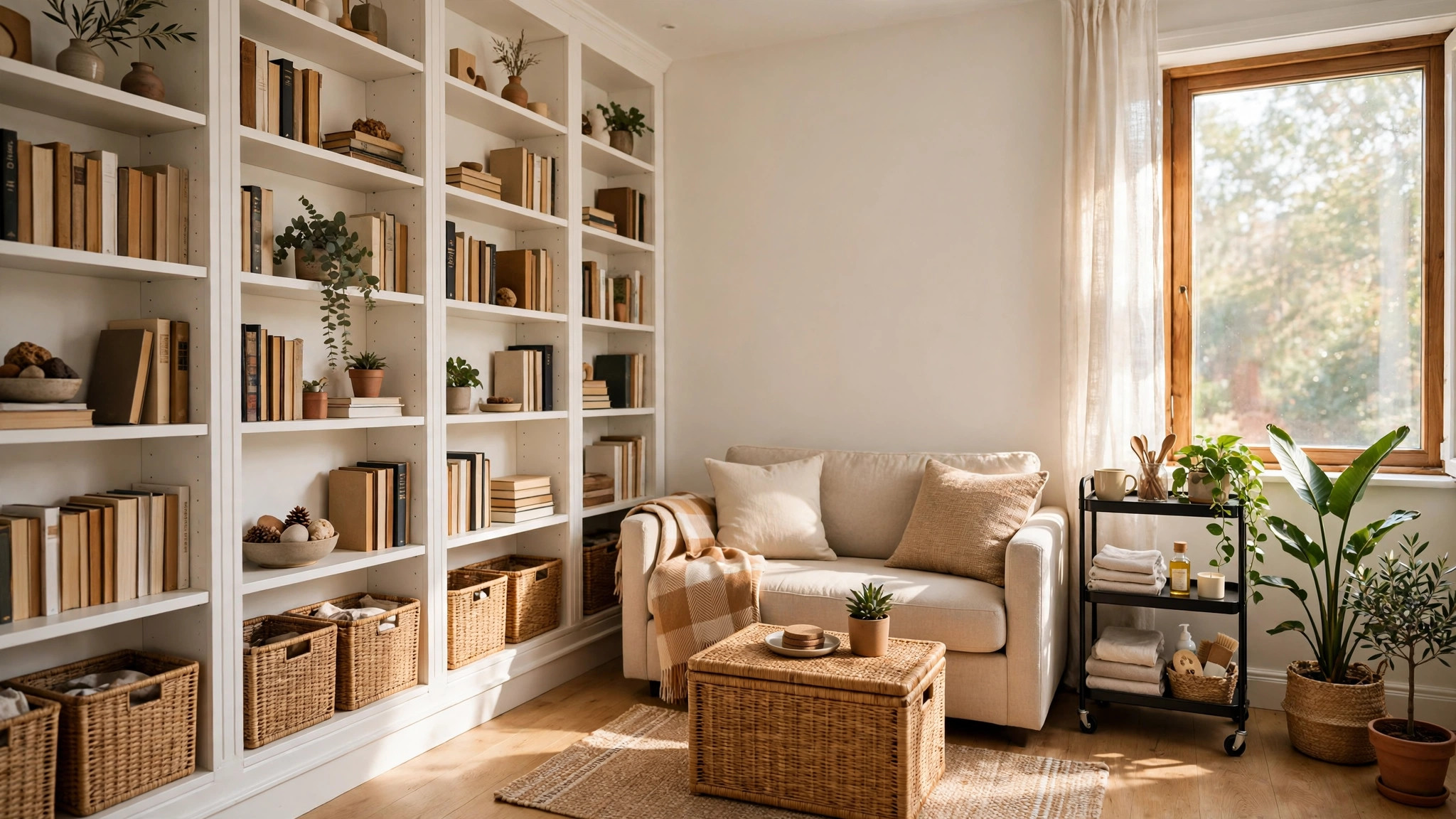

Small spaces do not fail because they are small. They fail because everything in them is competing for the same few surfaces, and nothing has an assigned place. Learning how to organize small spaces is really about systems, not square footage: give every category a home, use the walls and the air above your furniture, and choose pieces that do two jobs. Do that, and a compact room stays tidy with minutes of effort instead of weekend-long rescue missions. This guide lays out the principles first, then walks room by room, with extra attention to apartments and rentals where you cannot knock down a wall or build in a closet.
The Five Principles of Small-Space Organization
- One category, one home. Keys, mail, chargers, and cleaning supplies each get exactly one designated spot. Hunting is what makes small spaces feel chaotic.
- Store by frequency. Daily items live between knee and shoulder height, within easy reach. Weekly items go higher or lower. Yearly items — holiday gear, the air mattress — take the top shelves and under-bed bins.
- Closed beats open. Doors, drawers, and lidded boxes hide visual noise, which matters twice as much when the whole room is always in view.
- Every surface needs a limit. A tray on the entry table, a basket on the shelf — containers create a physical “full” line that stops creep.
- One in, one out. In a small home, every new object must displace an old one. Keep a donation box by the door so the rule is easy to follow.
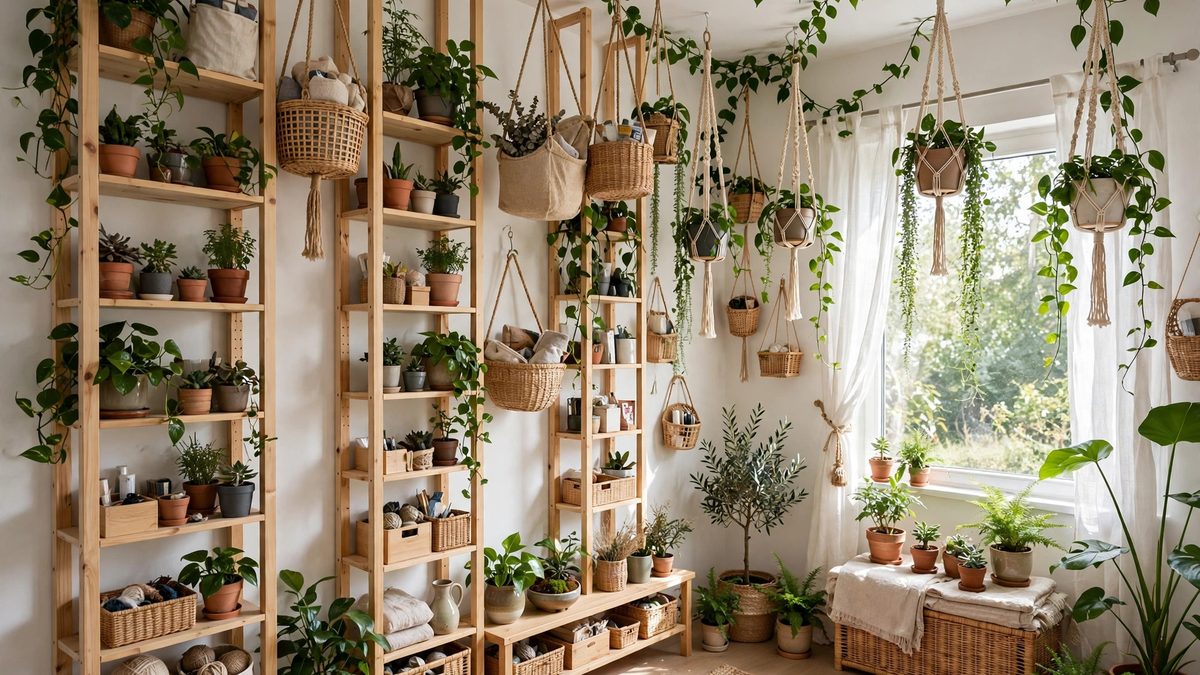
Think Vertically: Your Walls Are Storage
Floor space is precious; wall space is free. The top 12 inches of your walls, the backs of doors, and the space above door frames are storage most people never use.
- Tall shelving that reaches toward the ceiling stores far more than short bookcases in the same footprint. Keep everyday items on the middle shelves and seasonal items up top.
- Floating shelves work for books, plants, and pretty baskets — two or three, well spaced. A wall of crammed shelves reads as clutter, so leave breathing room.
- Over-door organizers add a whole closet’s worth of pockets for shoes, accessories, or cleaning supplies, with zero installation.
- Pegboards and rails in kitchens and entries hold tools, bags, and hats in plain sight but in perfect order.
- Above-door shelves — a single shelf over the bathroom or bedroom door — hold towels, books, or bins where nobody looks but everybody benefits.
Anchor tall furniture to the wall for safety, and if you rent, favor freestanding tall units and tension-based systems over screws. The same vertical logic transforms a cramped room visually, too — our small room decor ideas show how height tricks make small rooms feel bigger.
Furniture That Works Twice as Hard
In a small space, single-purpose furniture is a luxury. The double-duty hall of fame:
- Storage ottomans and benches: seating, footrest, and blanket or shoe storage in one.
- Lift-top coffee tables: a desk, a dining surface, and a hidden compartment.
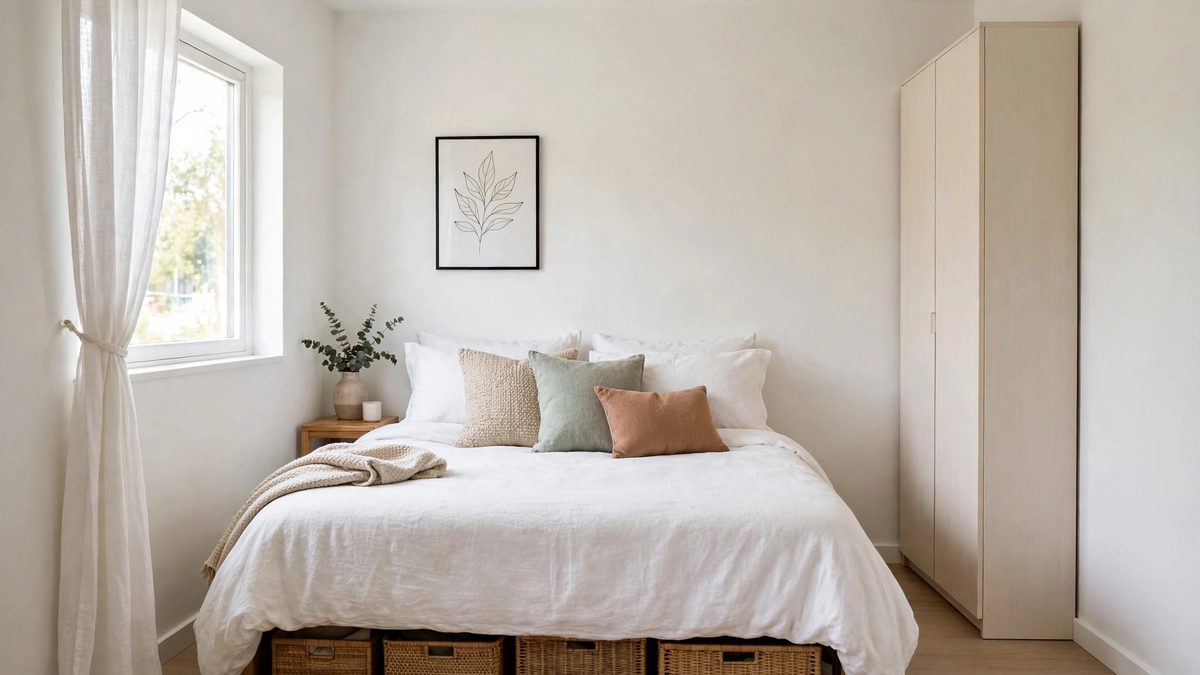
- Beds with drawers or space beneath: standard bed frames leave roughly 7 inches of clearance underneath — enough for flat bins of off-season clothes; risers add a few more inches if you need them.
- Drop-leaf and nesting tables: full size when needed, a fraction of it when not.
- Slim rolling carts: a 6- to 10-inch-wide cart turns the gap beside a fridge, washer, or vanity into shelves.
For closets themselves — often the most wasted cubic feet in a small home — a proper system of double hanging rods, shelves, and drawers can nearly double capacity; our built in closet guide covers the options from budget kits to custom carpentry.
One more habit before you buy anything: measure, then tape. In small rooms, an extra two inches of depth on a bookcase or bench can be the difference between a comfortable walkway and a daily hip-check. Keep main walkways around 30 inches wide where you can, mark the footprint of a new piece on the floor with painter’s tape, and live with the outline for a day before ordering. Small-space regret usually arrives on a delivery truck.
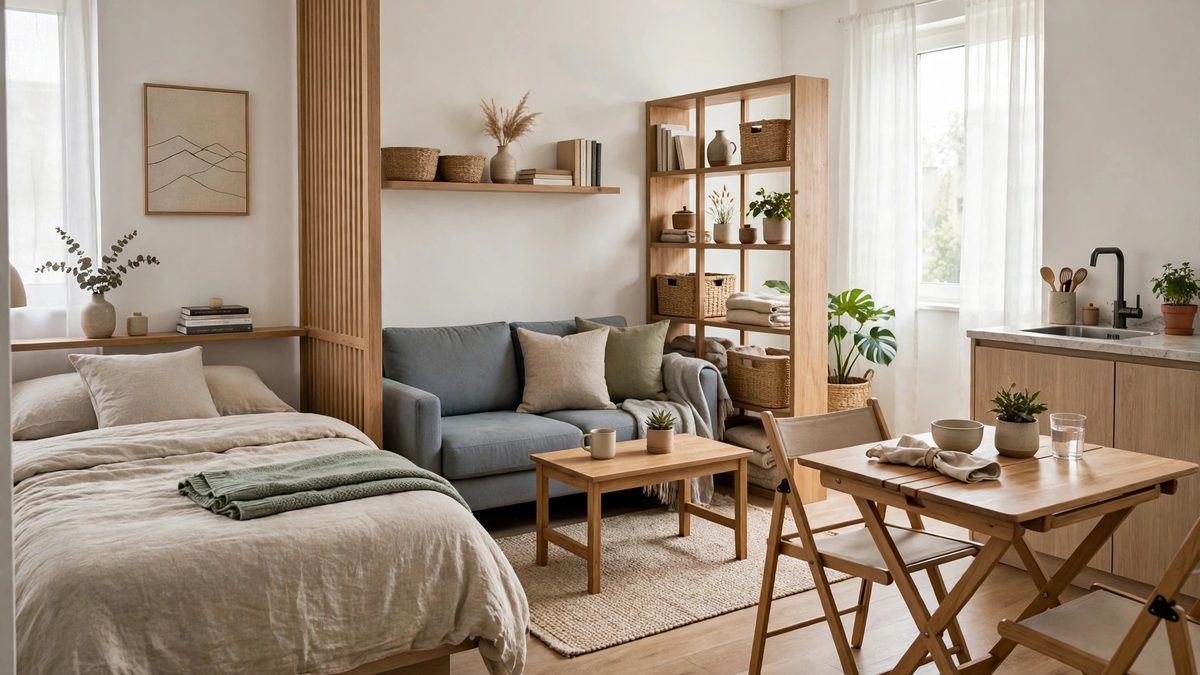
How to Organize a Small Apartment, Zone by Zone
Knowing how to organize a small apartment means treating one open area as several small rooms, each with its own system. In a studio apartment, where living, sleeping, and cooking share a single room, zones are not a nicety — they are the whole strategy.
Entry zone. Even without a foyer, create a landing strip: a small tray for keys, two or three hooks for bags and coats, and a slim shoe cabinet or basket. Everything that enters stops here first. That single habit does more for a small apartment than any organizer you can buy, because clutter that never spreads never needs a storage solution.
Living zone. Anchor it with a rug. Keep one closed storage piece (a console or ottoman) for remotes, games, and blankets, and a donation box nearby to catch outgoing clutter.
Sleep zone. Under-bed bins hold off-season clothes. A tall, narrow dresser uses vertical space better than a wide, low one. Keep nightstand surfaces nearly bare — visual calm helps small bedrooms sleep bigger.
Kitchen zone. Decant dry goods into matching containers, use the insides of cabinet doors for lids and measuring tools, and add a tiered shelf inside deep cabinets so nothing hides at the back.
Bath zone. Over-toilet shelving, a shower caddy, and one bin per person under the sink keep the smallest room from exploding.
Our companion guide to small living room ideas for apartments zooms in on furniture scale and layouts for the living zone specifically.
Habits That Keep Small Spaces Organized
Systems fail without tiny, repeatable habits:
- The two-minute reset. Before bed, return items to their zones. Two minutes daily beats two hours monthly.
- Process paper at the door. Mail gets recycled, filed, or acted on the day it arrives — never piled.
- Contain before you buy. When a category overflows its container, edit the category instead of buying a bigger container.
- Quarterly rotation. Swap seasonal clothes and decor through your high and low storage four times a year; each rotation is a natural decluttering moment.
- Photograph your tidy room. On a messy day, the photo reminds you exactly where everything goes — resetting becomes copying, not deciding.
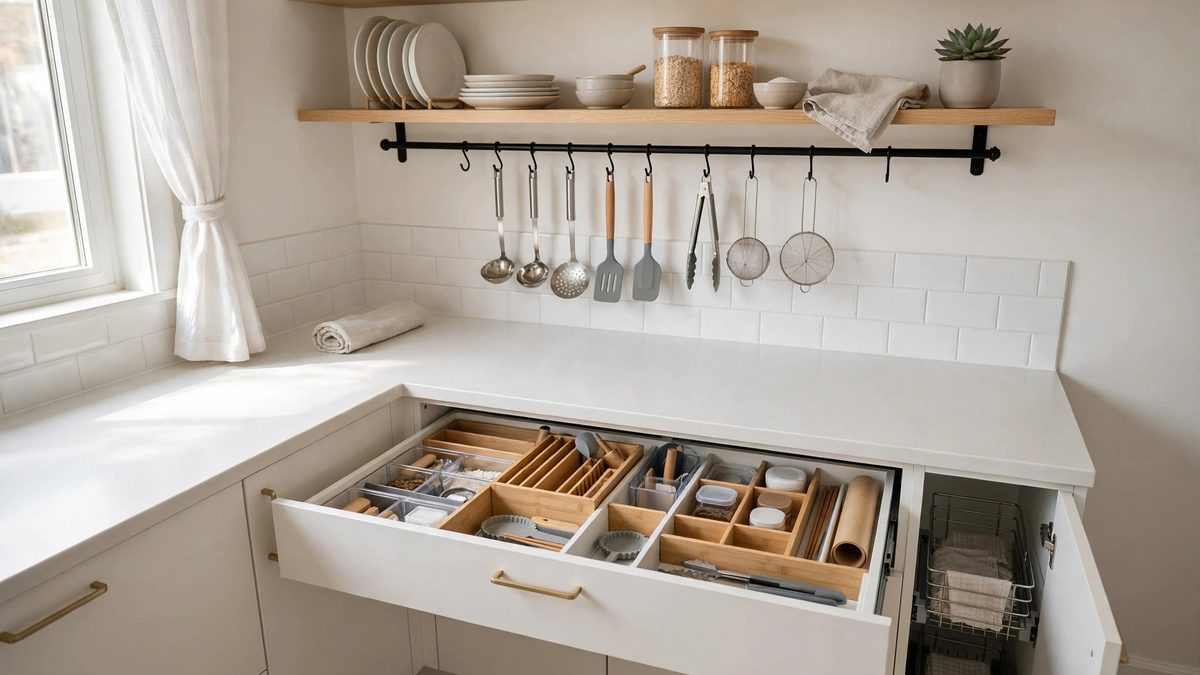
Common Small-Space Organizing Mistakes to Avoid
- Buying organizers before decluttering. Organizing clutter just gives it nicer housing. Edit first, measure second, buy third.
- Too many tiny containers. A dozen small boxes create visual noise and decision fatigue. Fewer, bigger, lidded containers win.
- Ignoring the backs of doors and insides of cabinets. That is free storage in every room.
- Letting “homeless” items slide. Anything without an assigned home becomes clutter within a week. Assign it or release it.
- Storing things where they are never used. Store items where you use them, even if it breaks a “category” rule — the sunscreen by the door beats the sunscreen in a labeled bin upstairs.
The One-Habit Rule for Small Spaces
If one habit protects a small home, it is the one-in, one-out rule. Every new item that crosses the threshold sends a similar one out the door. It sounds strict, but it is liberating: your storage never overflows, every drawer keeps closing, and the space keeps feeling bigger than it is.
Frequently Asked Questions
What is the first step to organizing a small space?
Declutter one zone at a time, starting with the entry. Remove everything that does not belong, then assign each remaining category one specific home. Systems built before editing just organize the mess.
How do I create storage when I have no closets?
Go vertical and go double-duty: tall freestanding shelves, over-door organizers, storage ottomans and benches, under-bed bins, and slim rolling carts in gaps. A wardrobe or armoire can replace a closet entirely in a bedroom.
How can renters organize without damaging walls?
Use freestanding tall furniture, tension rods and shelves, over-door hooks and organizers, and adhesive hooks within their weight ratings. Everything installs and removes without a single hole.
How do I keep a small space organized with kids or pets?
Lower the bar for “tidy” and raise the storage: closed bins kids can open themselves, one basket per category, and a nightly two-minute family reset. Store by frequency, and keep daily kid gear in the entry and living zones where it is actually used.
What should I do with items I use only once a year?
They claim the least accessible storage: top shelves, the backs of closets, and labeled under-bed or high bins. If a yearly item has not been used in two years, it is a donation candidate.
Conclusion
Organizing a small space is a design problem with a happy solution: edit honestly, assign every category a home, store by frequency, and let walls and double-duty furniture do the heavy lifting. Set up one zone at a time, build the two-minute reset into your evenings, and your small home will not just get organized — it will stay that way. That is the real prize: not a perfect room, but a home that resets itself almost on its own.
