
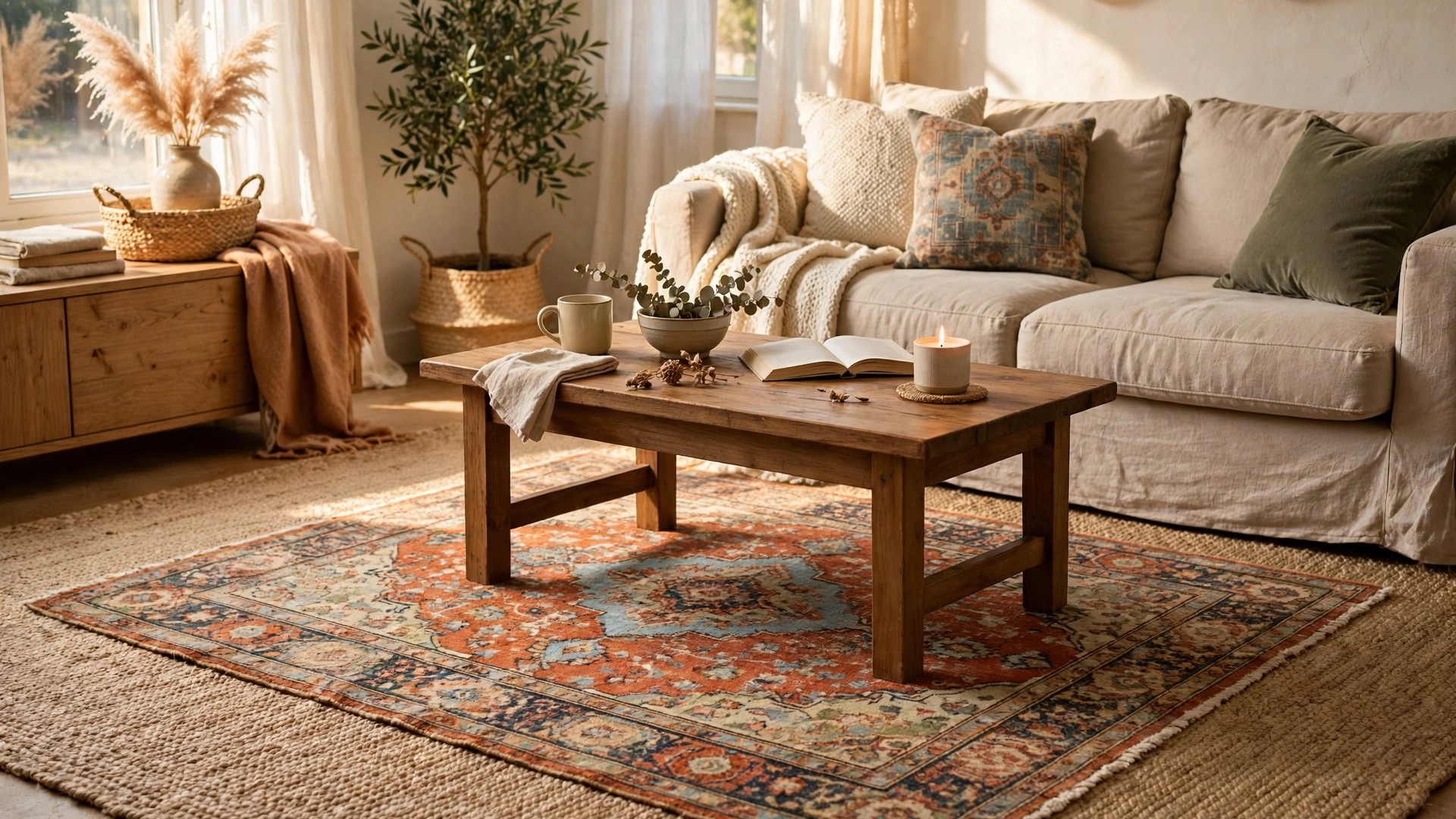

One rug is furniture. Two rugs, thoughtfully stacked, are design. Layered rugs have become a favorite designer move because they solve several problems at once: they add texture and pattern, they make an inexpensive large rug look custom, they define zones in open-plan rooms, and they rescue the too-small rug you love but cannot use alone. A big neutral base plus a smaller, characterful top layer gives you the proportions of a pricey oversized rug for far less money.
This guide explains the base-and-top method step by step, the size pairings that look intentional, and the placement rules for living rooms, bedrooms, and dining areas. It also covers the special case everyone asks about — putting a rug over wall-to-wall carpet — plus how to keep layers flat, safe, and clean.
The Base-and-Top Method, Explained
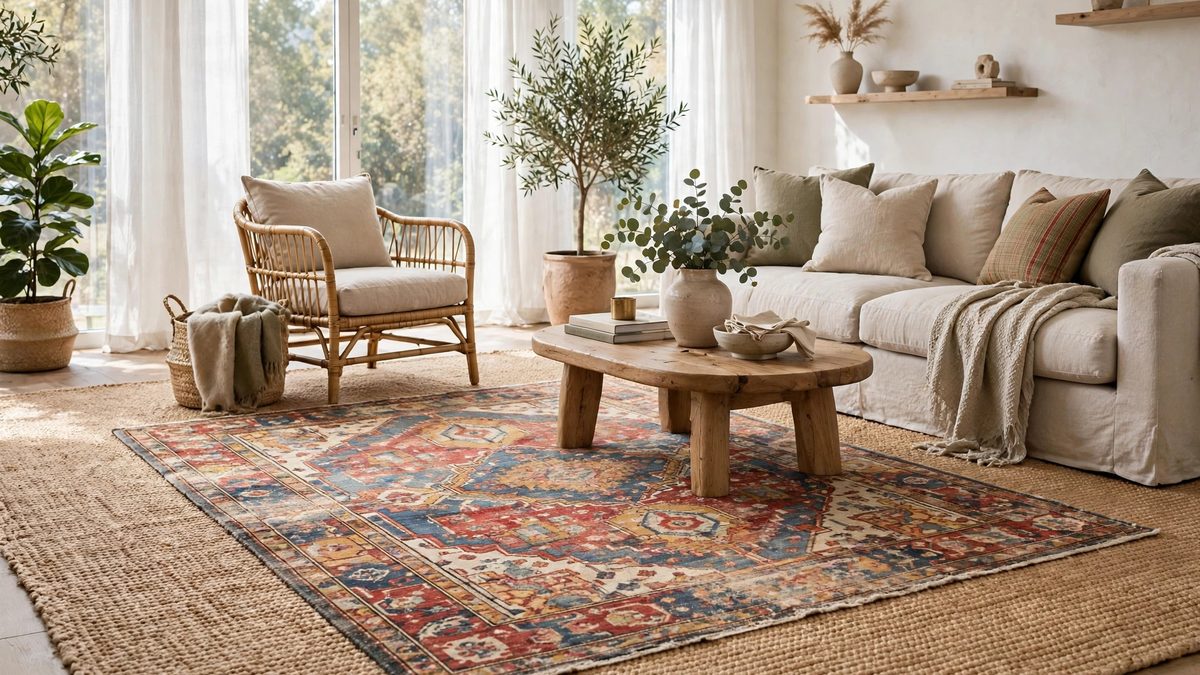
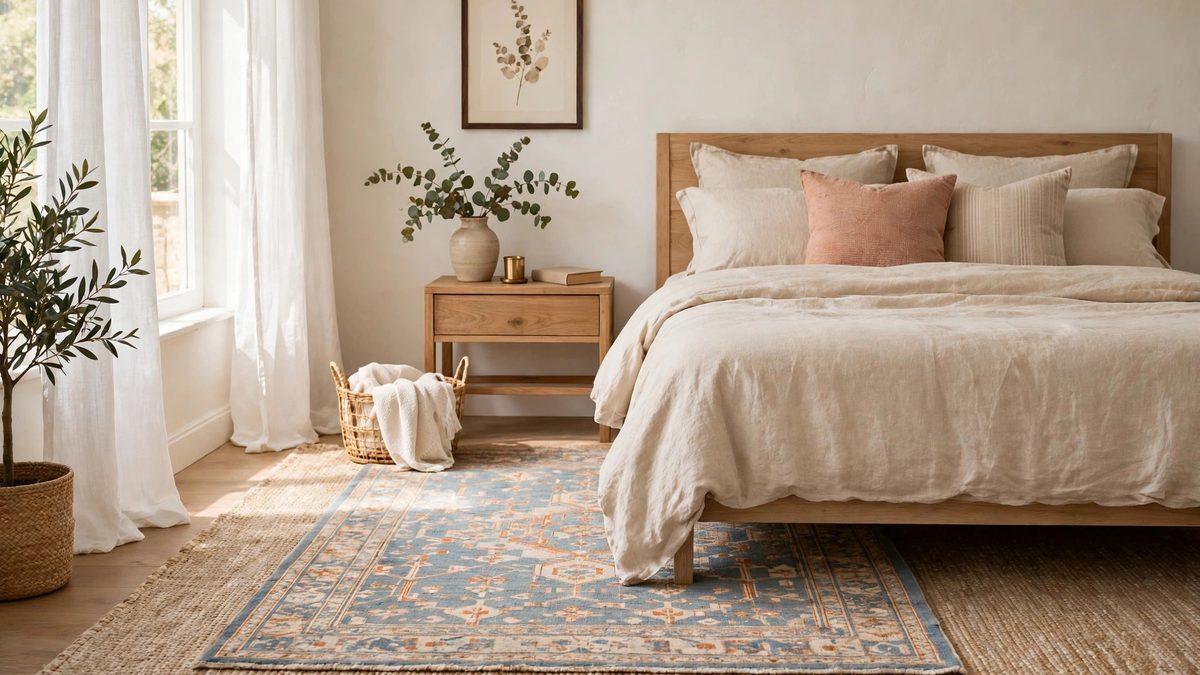
Every successful layered look follows the same formula. The base rug is large, low-pile, and neutral: think flatweave jute, sisal, seagrass, or a simple low-pile wool in ivory, oatmeal, or gray. It covers the full seating area the way a single correct-size rug would — 8×10 or 9×12 feet in most living rooms. The top rug is smaller, softer, and carries the personality: a vintage-look Persian style, a plush Moroccan-style rug, a patterned kilim, or a cowhide. It covers the middle 50 to 70 percent of the base.
Leave about 12 to 18 inches of the base rug visible on all sides of the top rug. That border is what makes the layering look deliberate rather than like two rugs that collided. Keep total pile height in check — a low base plus a medium top stays comfortable underfoot and lets doors swing; two thick shags stacked together become a tripping, door-blocking cloud.
If you are still choosing your main rug, our guide to standard rug sizes explains how to measure a room and pick the base size everything else depends on.
Best Size Pairings for Layered Rugs
Proportions matter more than pattern. Pairings that reliably work:
- 9×12 base with a 6×9 or 5×8 top — the classic living room stack, with a generous border all around.
- 8×10 base with a 5×8 top — suits apartments and smaller seating areas.
- 5×8 base with a 3×5 or 4×6 top — for entryways, reading corners, and beside a bed.
- A runner over a runner — a long flatweave runner under a shorter patterned one warms up hallways and galley kitchens.
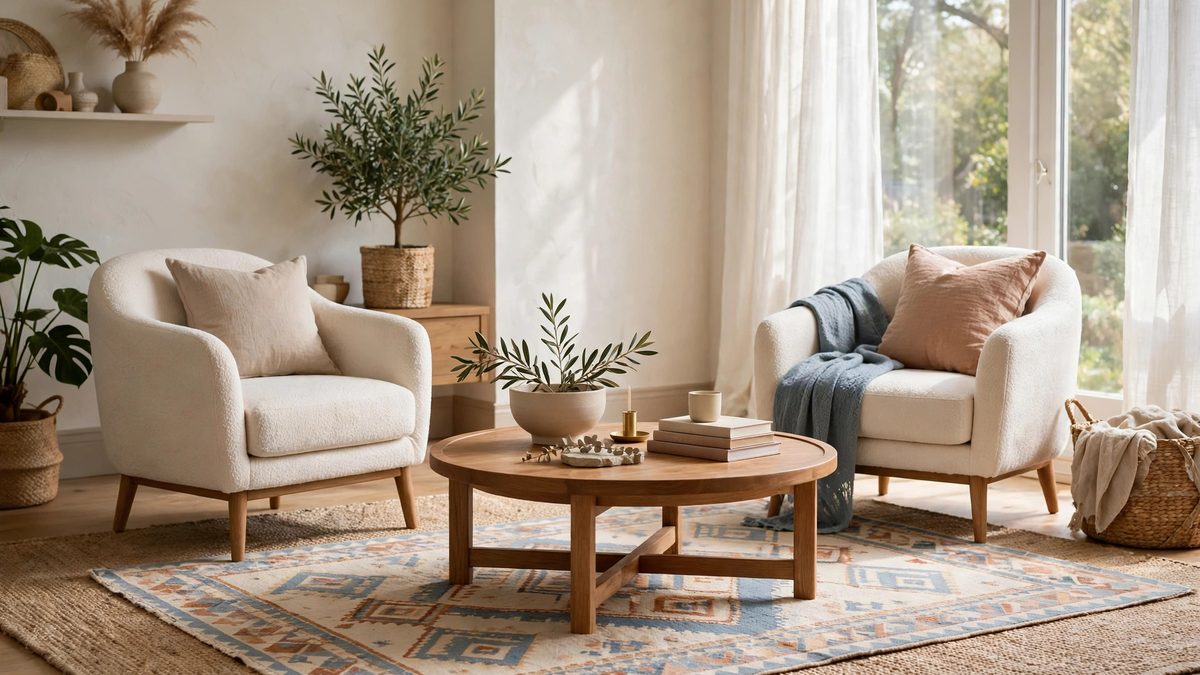
When the top rug is patterned, keep the base solid or very subtly textured. When the top rug is a solid plush, the base can carry a quiet stripe or border. Two bold patterns can work if they share colors and one pattern is clearly larger in scale than the other — but that is the advanced class; start with one pattern maximum.
How to Style a Rug on Carpet
Yes, you can put a rug on carpet, and in rentals it is often the only way to change a room’s color story. The trick is managing movement and texture contrast. Choose a low-pile or flatweave top rug — a thin kilim or a low-pile vintage-style rug — because thick rugs on plush carpet ripple and wander. If your wall-to-wall carpet is itself low-pile or Berber, you have more freedom and can go slightly plusher on top.
A rug pad made for carpet-to-rug use, or carpet tape at the corners, keeps the top layer from creeping — the slow migration every rug on carpet performs. Furniture weight helps too: anchor the front legs of the sofa on the rug’s edge. Avoid layering anything over high-pile or shag carpet; the stack will feel unstable no matter what you do. The Wikipedia article on carpet is a useful reference for pile types and constructions if you are unsure what your wall-to-wall carpet actually is.
Rug Placement Lounge Tips for a Balanced Look
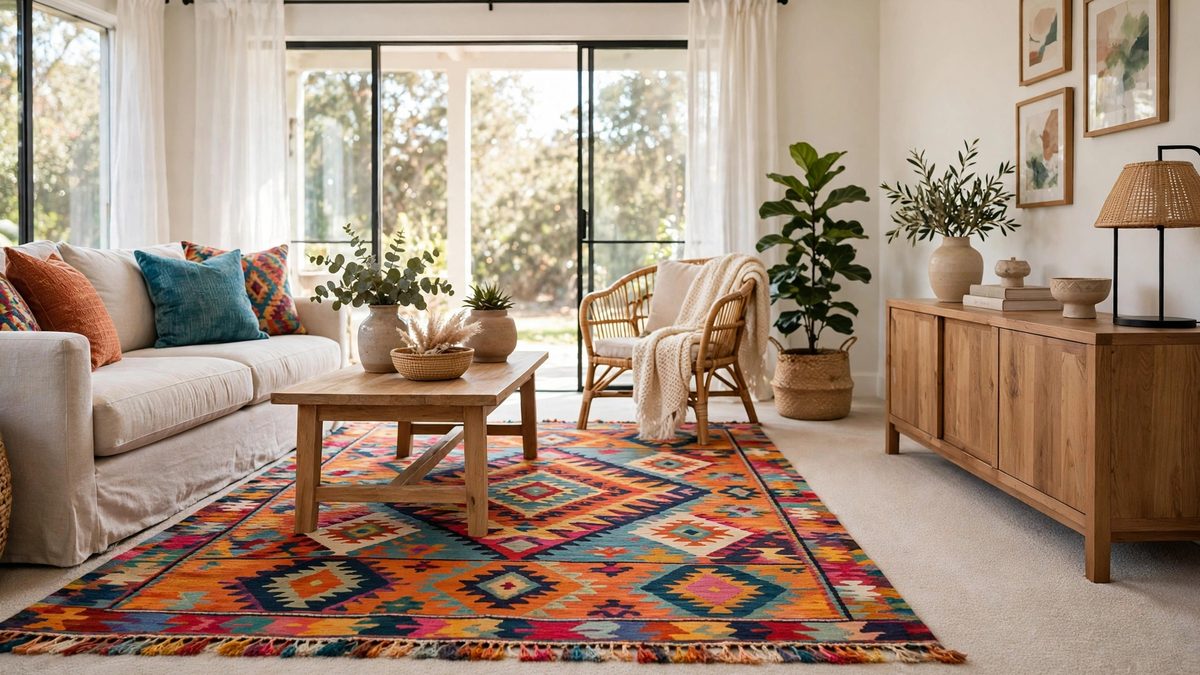
Placement is where layered rugs earn their keep in the lounge. Center the top rug under the coffee table, with the base rug extending evenly beyond it — the coffee table zone becomes the room’s visual anchor, and the border of base rug frames it like a mat in a picture frame. The sofa’s front legs should sit on the base rug (or the top rug, if your stack is arranged that way), which ties seating and rugs into one island.
In an open-plan lounge, layer from the seating zone outward: the stack defines “living room” even when the same floor continues into dining space. Angling the top rug slightly — a few degrees, or a cowhide thrown at a natural diagonal — relaxes formal rooms and breaks up boxy layouts. Just keep the walkways in mind: layered edges should not sit in the main traffic path, where toes catch them a dozen times a day. For the broader layout decisions that surround the rug stack, see our ideas for designing a living room.
Layering Rugs in Bedrooms, Dining Rooms, and Entries
The same method adapts room by room. In bedrooms, a large flatweave under the bed with a plush smaller rug across the foot or on the waking side adds hotel-like softness where your feet land first. In dining rooms, keep the whole stack flat and low — chairs must slide — and make sure the base rug is big enough that chairs stay on it when pulled out, which usually means at least 24 inches of rug beyond the table on all sides. In entryways, a durable base runner protects floors while a smaller washable top rug takes the muddy beating and goes in the wash.
Style-wise, layering is the natural home for patterned statement rugs — a bold top layer over jute reads boho, a faded vintage rug over sisal reads collected and classic, and a graphic modern rug over a plain wool base reads contemporary. Our guide to mid century modern rugs shows how one era’s patterns behave as the star layer in exactly this kind of stack.
How to Flatten a Rug That Won’t Lie Flat
New rugs arrive rolled tight, and layered rugs show every curl because the top rug’s edges have nothing holding them down. To flatten a rug:
-
Reverse-roll it. Roll the rug up in the opposite direction of the curl, leave it for a few hours or overnight, then unroll.
-
Use weight. Set heavy furniture or a stack of books on stubborn corners for a day or two.
-
Add a rug pad. A pad under the top rug grips the base rug, adds cushion, and stops most creeping and edge lift at once.
-
Try gentle heat. A few minutes of low steam or a warm (not hot) iron through a towel relaxes backing fibers; keep heat low and moving, especially on synthetic rugs.
-
Ice cubes for dents. For furniture dents in pile, set an ice cube in each dent, let it melt, then fluff the fibers with a spoon edge as it dries.
Give a new rug a week of normal life before judging it — most curl relaxes with warmth, weight, and foot traffic.
Layering Mistakes to Avoid
- Two rugs the same size. The border disappears and the stack looks accidental. The top must be visibly smaller.
- Thick on thick. High pile over high pile feels unstable and traps doors.
- Forgetting the pad. Layers without a pad wander, bunch, and wear unevenly.
- Pattern overload. Two loud patterns at the same scale fight; let one layer be quiet.
- Layering in the traffic lane. Edges in walkways curl and trip — shift the stack so paths cross the base only.
Frequently Asked Questions
Can you layer a rug over wall-to-wall carpet?
Yes. Use a low-pile or flatweave rug on top, add a carpet-to-rug pad or corner tape to stop creeping, and avoid stacking on high-pile carpet, which never feels stable.
How much of the bottom rug should show when layering?
About 12 to 18 inches on all sides is the classic border. Less looks accidental; much more can make the top rug look lost.
What is the best base rug for layering?
A large, low-pile, neutral flatweave — jute, sisal, seagrass, or plain low-pile wool. It behaves like flooring: quiet, sturdy, and happy under anything.
Do layered rugs work in small rooms?
Yes, if the base rug is correctly sized for the room. Layering actually helps small rooms feel intentional, because the border effect makes the floor plan look planned.
How do I keep layered rugs from sliding?
A rug pad between the layers, furniture weight on the edges, and corner tape for the top rug on carpet. Pads also protect the base rug from abrasion.
Conclusion
Layered rugs are the rare trend that is also a practical tool: they stretch a small favorite rug, warm up a big neutral one, and draw a border around the part of the room you actually live in. Start with a large, quiet, low-pile base, add a smaller top rug with the color and pattern, keep a 12- to 18-inch border, and pad the stack so it stays put. Your floors will look collected and custom — and nobody will guess the big rug was the budget buy.
