
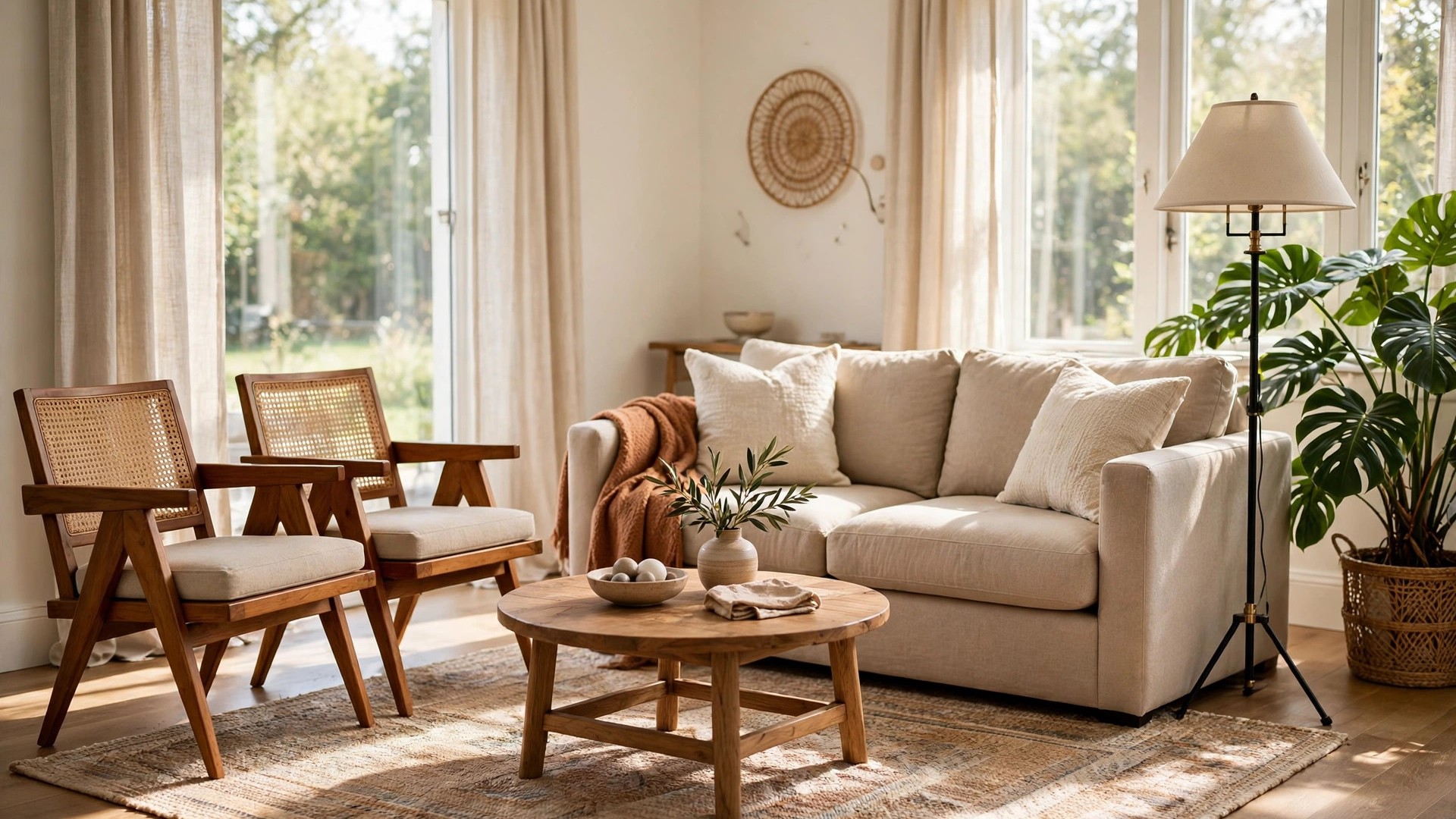

Set up a living room from scratch — after a move, a renovation, or a first apartment — and a simple question appears: what actually belongs in here? The things that are in a living room fall into two groups. First come the essentials that make the room function: seating, a surface for drinks and remotes, light to see by, and something soft underfoot. Then come the finishing pieces that make the room feel like yours rather than a furniture showroom.
This checklist walks through every category in the order you should buy them, with the standard sizes and quantities that suit most American living rooms. Whether you are furnishing a 10×12 apartment room or a sprawling open-plan space, you can scale the same list up or down and end up with a room that works.
Seating: The Foundation of Every Living Room
Every list of things that are in a living room starts with somewhere to sit. A sofa is the anchor — typically 72 to 96 inches long for a standard three-seater — and it should be the first and largest purchase, because everything else arranges around it. Add seating until the room holds your household plus a guest or two: a loveseat, a pair of armchairs, or one accent chair and an ottoman that moonlights as a seat.
Keep traffic lanes in mind as you place pieces. Leave about 30 to 36 inches for walkways and 14 to 18 inches between the sofa and the coffee table so knees and trays pass comfortably. Seat height is the hidden comfort number: most comfortable sofas and chairs sit 17 to 19 inches high, and mixing pieces within an inch or two of each other keeps conversation — and getting up — easy. For layout-first thinking, our ideas for designing a living room guide shows how seating arrangements change the whole room’s flow.
Tables: Coffee Table, Side Tables, and a Console
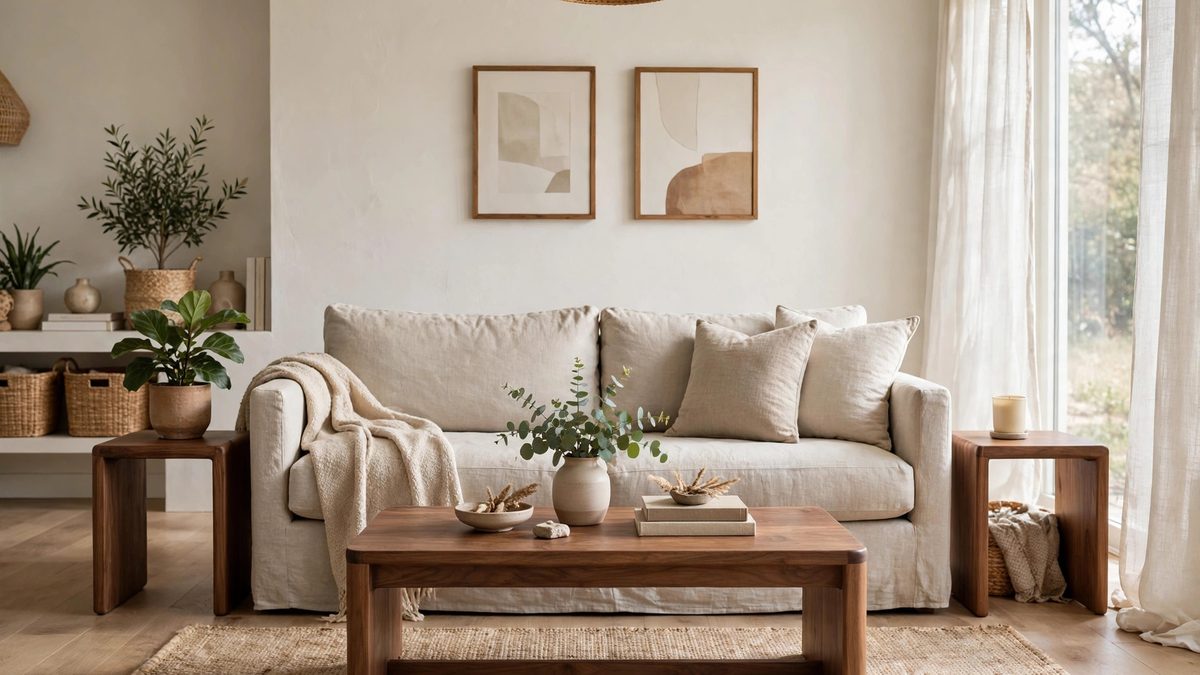
Tables are the room’s landing strips. A coffee table should be roughly two-thirds the length of the sofa and sit at about the same height as the seat cushions — typically 16 to 18 inches — so drinks are easy to reach. Rectangle is the default, but a round table wins in small rooms and homes with toddlers, and a lift-top or storage coffee table earns its footprint in apartments.
Side tables beside the sofa and chairs hold lamps, books, and cups; plan on one within reach of every main seat. A console table behind a floating sofa or along a wall adds display space and a home for baskets underneath. If you are choosing a centerpiece surface, our coffee table decor ideas show how to style it without blocking the remote’s line of sight or the snack bowl.
Wooden Accent Chairs for Living Room Comfort and Style
Among all the extras on this list, wooden accent chairs for living room seating deliver the most style per dollar. A wood frame chair — think mid-century lounge silhouettes, spindle-back armchairs, or sculptural wishbone-style seats — adds warmth and structure that an all-upholstered room lacks. Wood also lightens the visual weight: open frames and slim legs keep small rooms feeling airy, and the chairs move easily when you need extra seats at the dining table or a desk.
How to use them well:
- Place one angled in a corner with a small side table and lamp to create a reading spot.
- Use a mismatched pair flanking a fireplace or console for a collected, layered feel.
- Choose a finish that echoes one wood tone already in the room — floor, table, or frames — rather than matching everything.
- Add a cushion or throw if the seat is hard; comfort is what turns an accent chair into a favorite chair.
Budget-wise, wooden accent chairs typically cost less than fully upholstered armchairs and hold up better to kids, pets, and sunlight, which is why they appear in room after room in design magazines. The Wikipedia overview of the living room traces how this mix of fixed and flexible seating evolved — the accent chair has been the room’s hardest-working extra for a century.
Rugs, Lighting, and Window Treatments
Three elements decide whether a furnished room feels finished.
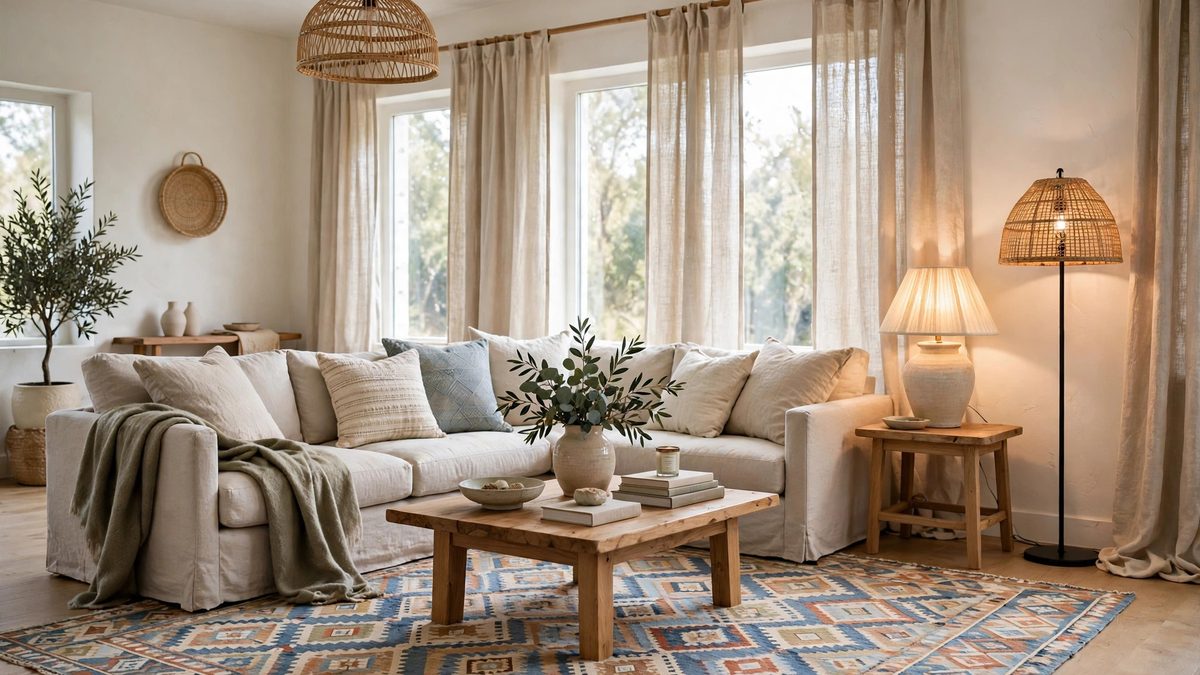
A rug anchors the seating area. Standard sizes are 5×8 feet for small rooms, 8×10 for most living rooms, and 9×12 for large spaces; at minimum, the front legs of the sofa and chairs should sit on it. Lighting needs three sources minimum: overhead or ambient light, a task lamp for reading, and one accent source like a table lamp. Our living room lamps guide compares floor, table, and arc styles by placement. Put lamps on dimmers or use warm bulbs around 2700K so evenings feel restful.
Window treatments — curtains, shades, or blinds — control glare on screens, add privacy, and soften all the hard edges. Curtain panels that reach the floor and mount a few inches above the frame make standard 8-foot ceilings feel taller. Together, rug, light, and curtains are the layer that separates “moved in” from “done.”
Storage, Media, and the Practical Pieces
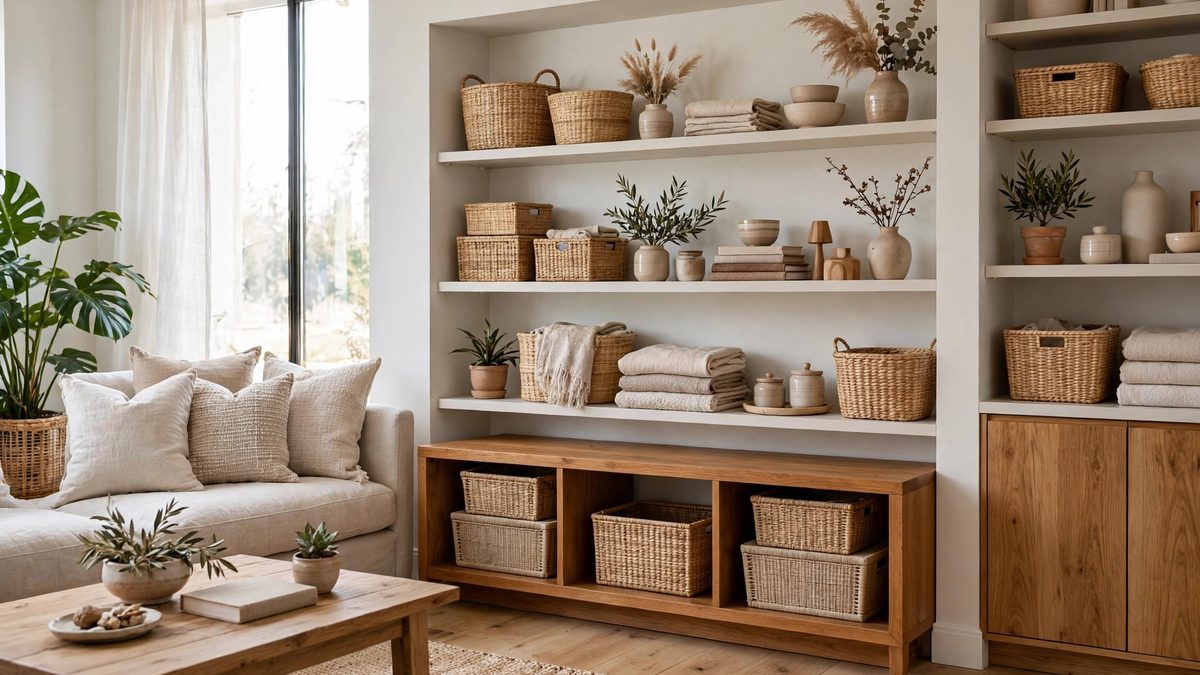
A living room also needs places for the stuff of daily life. A media console or low cabinet hides routers, game consoles, and cable clutter; leave ventilation and a couple of inches behind it for cords. Bookshelves or a bookcase hold books and display objects. Baskets corral throws, toys, and magazines — one large basket near the sofa solves the nightly clutter problem surprisingly well.
Do not forget the small practical items: coasters that protect wood, a tray that gathers remotes, a clock or wall art clock, and a plant or two for life and color. A throw blanket over the sofa arm and two or three cushions in mixed sizes (18- and 20-inch squares are the standards) finish the textiles. None of these items is expensive; together they are the difference between a room that photographs well and a room people actually settle into.
Decor and Personal Touches That Make It Yours
Finally, the decor layer: wall art or a mirror over the sofa (a piece roughly two-thirds the width of the sofa is the reliable proportion), framed photos, a plant in the corner, and objects with meaning — travel finds, inherited pieces, the bowl you actually use for keys. Keep surfaces edited: coffee tables and consoles look best with a few grouped items and some empty space, not a lineup of everything you own.
If you are prioritizing purchases, the honest order is: sofa, rug, lighting, coffee and side tables, window treatments, accent seating, storage, then decor. Rooms furnished in that order feel coherent at every stage, even the unfinished ones.
Common Living Room Setup Mistakes
- Pushing all furniture against the walls. Pulling the sofa even a few inches forward and grounding it on a rug makes the room feel designed, not lined up.
- Buying the rug too small. A floating “postage stamp” rug shrinks the room; size up so front legs land on it.
- One ceiling light and nothing else. Lamps at sitting height are what make evenings comfortable.
- Skipping a surface within reach of seats. Every seat needs a spot for a cup — that is what side tables and trays are for.
- Decorating before the big pieces land. Art hung for a sofa that has not arrived ends up at the wrong height; place furniture first.
Things That Are in a Living Room: The Complete Checklist
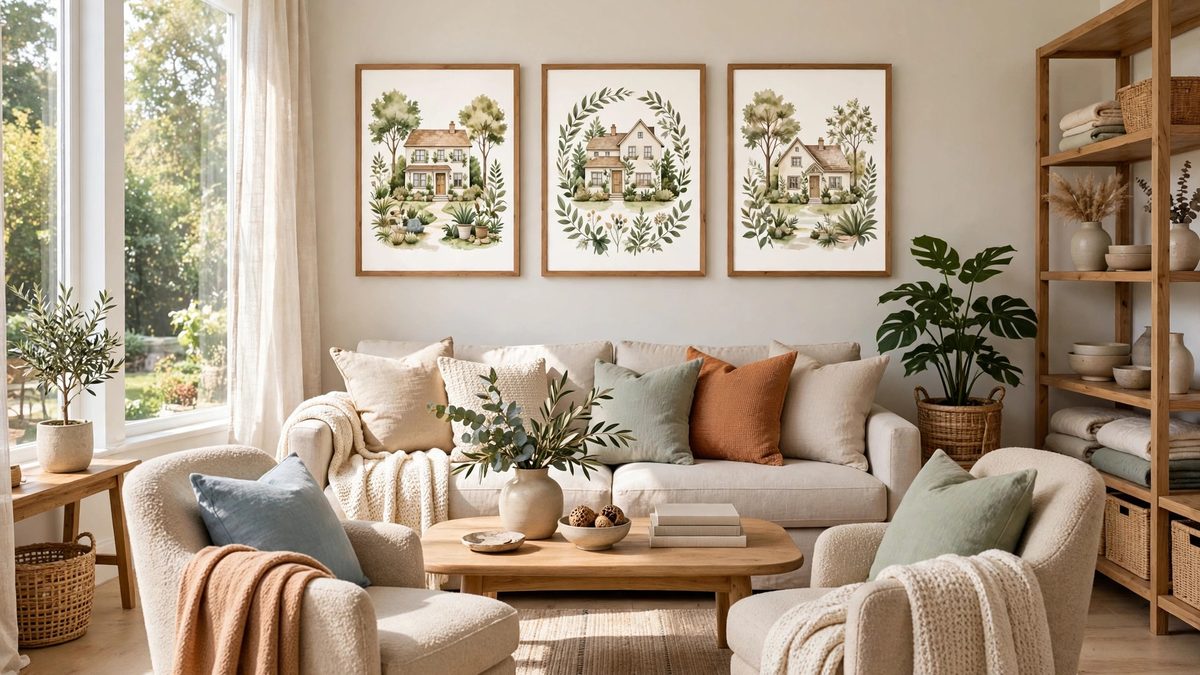
Pulling it all together, a complete living room usually includes seating for at least four, a coffee table or ottoman within reach of every seat, side tables, layered lighting at three heights, window treatments, a rug that grounds the grouping, storage for remotes and blankets, and a few personal pieces that make the room feel like yours.
Frequently Asked Questions
What are the absolute essentials in a living room?
A sofa or main seating, a coffee table, at least two light sources including a lamp, a rug, and window coverings. With those five, the room functions; everything else is comfort and character.
How many seats should a living room have?
Enough for everyone who lives there plus two guests. For most homes that means a three-seat sofa plus two chairs, or a sectional with one accent chair.
What size rug belongs in a living room?
An 8×10-foot rug suits most rooms, with a 5×8 for small spaces and 9×12 for large ones. The front legs of all seating should rest on the rug.
Does every living room need a TV?
No. Plenty of living rooms center on a fireplace, a view, or conversation seating. If you do have one, a console below it keeps equipment tidy and cords hidden.
What is the best order to buy living room furniture?
Start with the sofa, then the rug, lighting, and tables, followed by accent chairs and storage, and finish with art and decor once the big pieces are placed.
Conclusion
The things that are in a living room are not a mystery — they are a checklist: comfortable seating with a wooden accent chair or two for flexible style, tables within reach, an anchoring rug, layered light, window treatments, and honest storage, finished with art and objects that mean something to you. Buy in that order, respect the standard sizes, and any room — apartment-sized or sprawling — becomes a place people naturally gather.
