
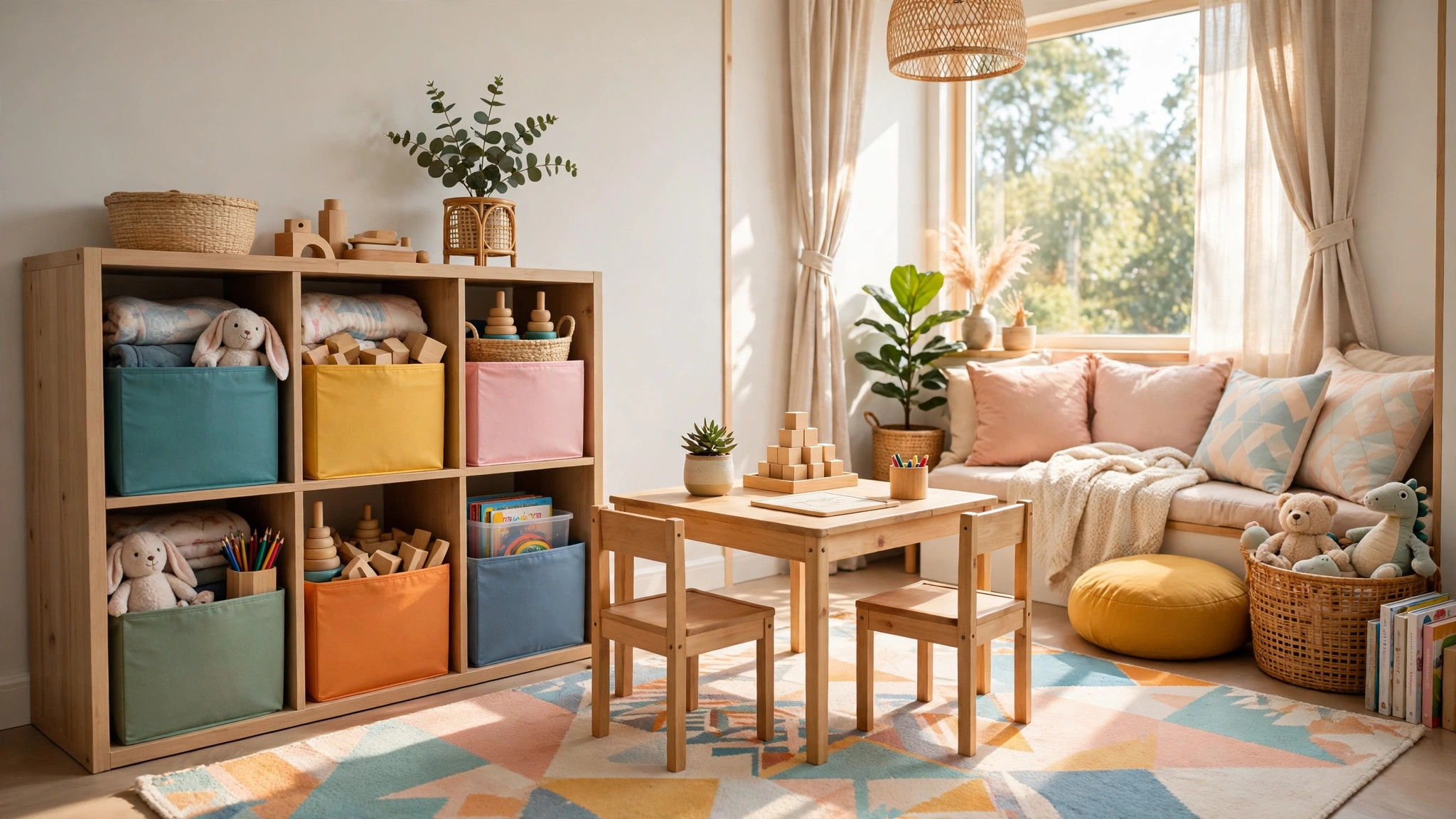

The best playroom ideas do two things at once: they make play more fun, and they make cleanup so simple that kids can actually do it. You do not need a huge room or a big budget to get there. A spare bedroom, a basement corner, or half of a family room can work beautifully when it has clear zones, storage at kid height, and a few ground rules everyone understands.
A playroom, sometimes called a recreation room, is a space set aside for games and everyday fun. For young children, that means floor space to build, a table to create, and a cozy spot to look at books. Plan for how your kids really play, not how a catalog photo looks, and the room will stay useful much longer.
Plan the Room Around Play Zones
Zones keep a playroom from turning into one giant toy pile. When each activity has a home, kids know where to find things and, just as important, where those things go back.
A simple four-zone plan works in most rooms:
- Active zone: Open floor, a soft rug or play mat, and room to move. Keep this in the center or away from shelves that could tip.
- Make zone: A child-size table and chairs for art, puzzles, and building. Put it near good light and a wipeable surface.
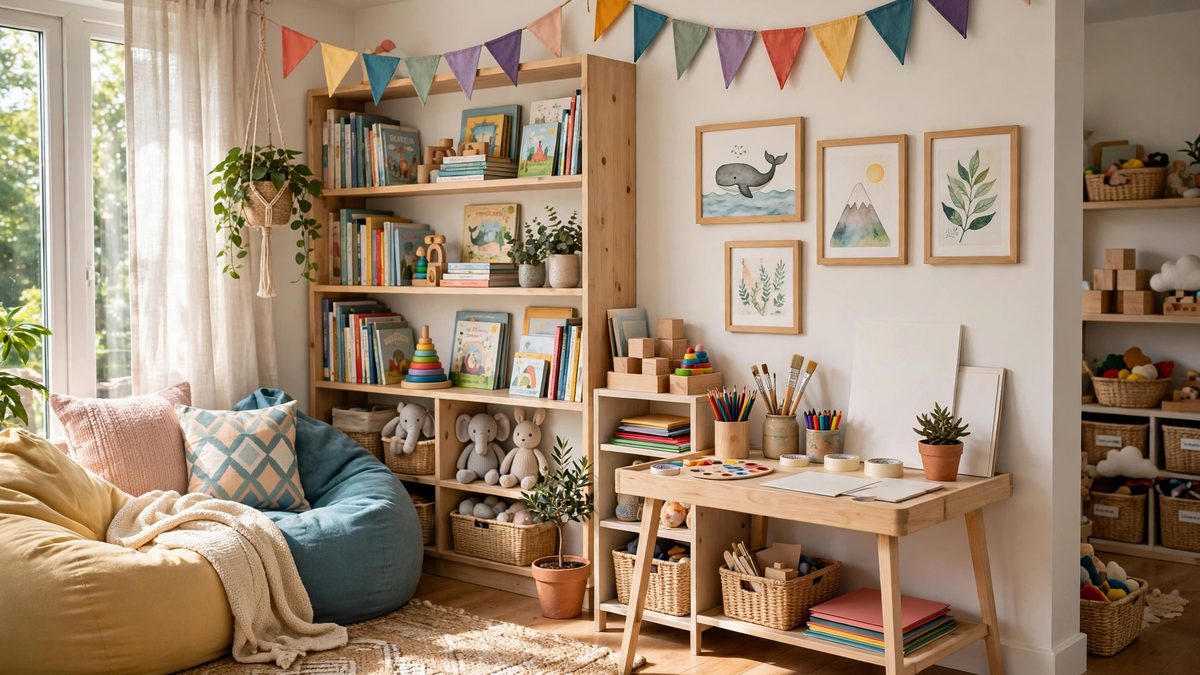
- Quiet zone: A reading corner with a small bookshelf, cushions, or a bean bag. This is the calm-down spot.
- Pretend zone: Dress-up clothes, a play kitchen, or dolls in one corner so imaginative play can spread out without taking over.
Keep storage along the walls and play space in the middle. That one choice prevents the most common playroom problem: toys migrating into walkways where they get stepped on. Leave clear paths to the door and closet so adults can get through without a rescue mission.
If the playroom is shared with a bedroom or family room, use a rug, a low shelf, or a curtain to mark where the play area starts and ends. Kids respect a visible boundary much more than an imaginary one.
Kids Playroom Ideas That Work in Any Size Room
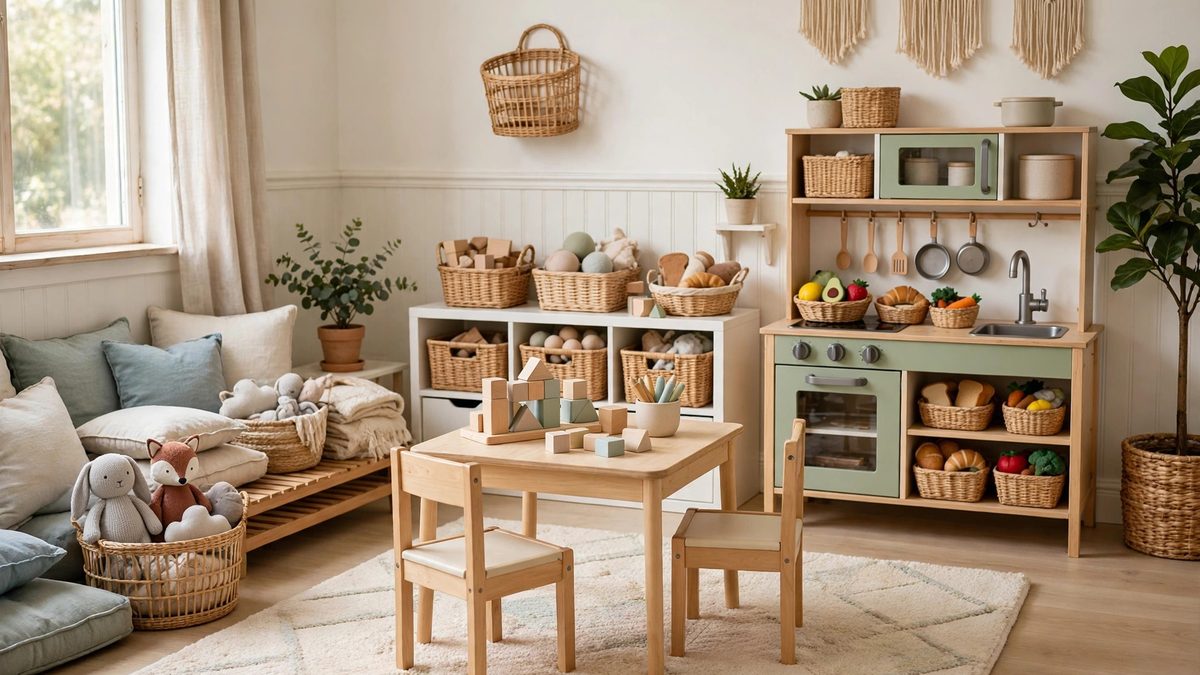
Great kids playroom ideas are less about a theme and more about flexibility. Interests change fast between ages two and ten, so choose a neutral base for walls and big furniture, then bring personality in with bins, art, cushions, and toys that are easy to swap.
Start with color in doses. A warm white or soft light gray wall makes a calm backdrop for colorful toys, which already bring plenty of energy. Add one cheerful accent, such as a painted bookshelf, a patterned rug, or removable wall decals, and stop there. Too many competing colors and characters can feel busy and overstimulating.
Display matters to kids. A low picture ledge for favorite books, with covers facing out, invites reading far better than spines on a high shelf. A simple line with clothespins or a corkboard at kid height turns artwork into decor they are proud of, and it costs very little to update.
Think about grown-ups, too. One comfortable adult chair, good overhead light, and a small side table for coffee make it far more likely you will happily stay, read aloud, and supervise art projects. Many families find that ideas from their kids room ideas list, such as a cozy reading nook and personal cubbies for each child, translate perfectly into a shared play space.
For sound, soft surfaces help a lot. A rug, curtains, upholstered seating, and fabric bins absorb noise better than bare floors and plastic tubs. In a basement or over a bedroom, that softness makes the whole house calmer.
Choose Storage Kids Can Reach and Use
Storage is the backbone of any playroom. If a bin is too heavy, too high, or too complicated, toys will live on the floor instead. The rule is simple: if a child cannot open it, carry it, and put it back alone, it is adult storage, not playroom storage.
Cube shelving is popular because it fits that rule so well. Standard fabric bins for cube units are typically made for 11-inch or 13-inch cubes, so measure your unit before buying bins. One category per cube keeps cleanup fast:
- One cube for building blocks or magnetic tiles
- One for cars and trucks
- One for dolls or action figures
- One for art supplies in a caddy
- One for puzzles and games, stored upright like books
Use picture labels for younger children who cannot read yet. A simple photo or drawing of the contents taped to the bin teaches sorting and word recognition at the same time. Clear bins work well for small pieces, while opaque bins look calmer for a mixed collection.
Leave a few cubes open for books and larger toys that do not fit in bins. Add one large basket for oversized or awkward items, such as stuffed animals and balls. Finally, anchor tall cube units and bookcases to the wall with the included hardware or anti-tip straps. A loaded shelf is heavy, and anchoring is well-established safety guidance for furniture that children may climb or pull on.
Rotate toys every few weeks. Store the extras in a closet or in labeled totes out of sight, then swap. Rotation cuts clutter, makes old toys feel new again, and means fewer pieces to clean up each night.
How to Help Kids Stay Organized Day After Day
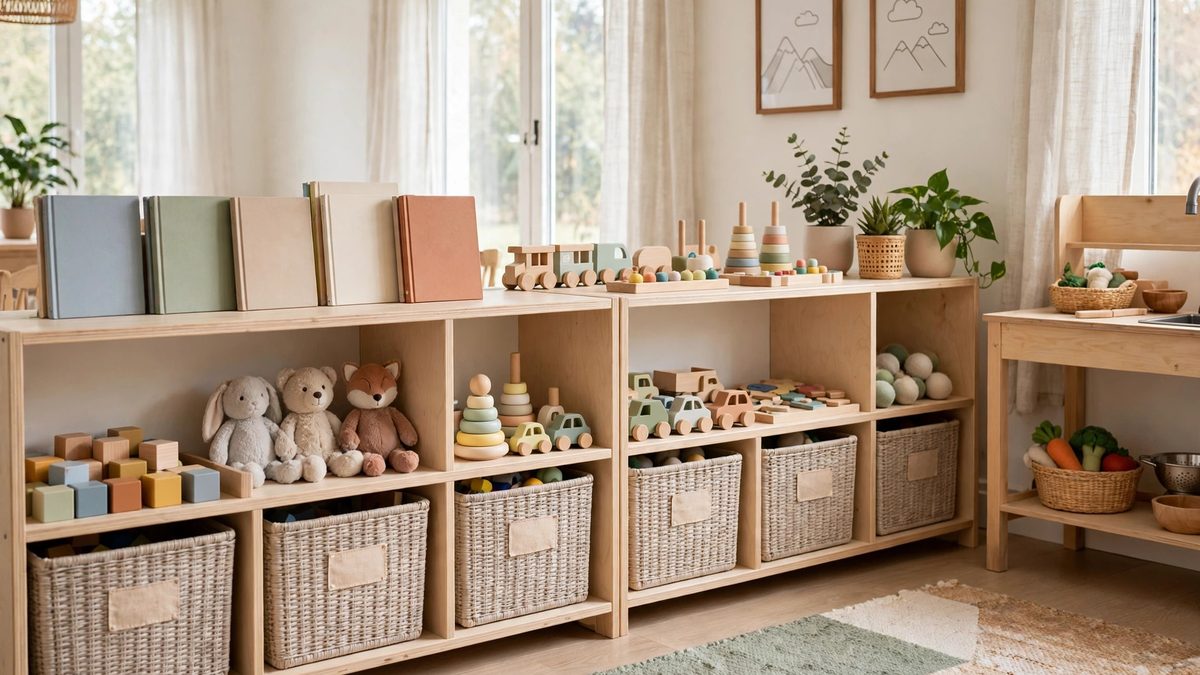
Storage alone will not keep a room tidy. Habits will. The most useful answer to how to help kids stay organized is to make the routine small, visual, and predictable, so tidying feels like part of play rather than a punishment after it.
Try these habits that work for many families:
- Clean up before transitions. Toys go away before lunch, before screen time, and before bed, in short bursts instead of one huge evening battle.
- Use a timer and music. Five minutes with a favorite song turns pickup into a game. Beat-the-song cleanup is a classic for a reason.
- Give everything a picture home. Labels, color matching, and one-category bins remove the guesswork that makes kids give up.
- End with a quick check. Walk the room together, celebrate what looks great, and fix the last few strays without blame.
- Praise the system, not just the result. Saying “you put all the cars back in their bin” teaches more than “good job.”
Keep expectations age-appropriate. Toddlers can drop soft toys into one basket. Preschoolers can sort two or three categories. Older kids can manage labels, game pieces, and a weekly shelf tidy. If cleanup regularly takes more than ten minutes, there are probably too many toys out at once, so rotate more out.
A one-in, one-out habit for birthdays and holidays also helps. Before new toys arrive, choose a few outgrown ones together to donate or store. Framing it as making room for new favorites keeps it positive.
Make It Safe, Durable, and Easy to Clean
Playrooms take a beating, so choose finishes that forgive. Washable paint in a satin or eggshell finish wipes clean more easily than flat paint. A low-pile rug cleans up better than a thick shag rug and is easier for toy cars to roll on. If you are setting up the space for a baby who will soon be crawling, the same durability thinking behind good nursery decor ideas applies here: soft edges, washable fabrics, and nothing small within reach.
Cover outlets, secure cords out of reach, and check that any toy storage with a lid has ventilation and no heavy lid that can fall on small fingers. Keep art supplies such as scissors, glue, and small craft pieces in a caddy an adult brings out, rather than leaving them open to toddlers.
Round the sharpest risks where you can. Corner guards on a low table, a rug under a climbing or active area, and stable, child-size chairs all reduce everyday bumps. Check anchored furniture and toy condition every few months, and remove broken pieces promptly so sharp edges do not linger.
Washability is a daily kindness to yourself. Slipcovers, wipeable table surfaces, washable markers, and a small trash can in the art zone mean messes get handled in the moment instead of becoming permanent stains and clutter.
Playroom Mistakes to Avoid
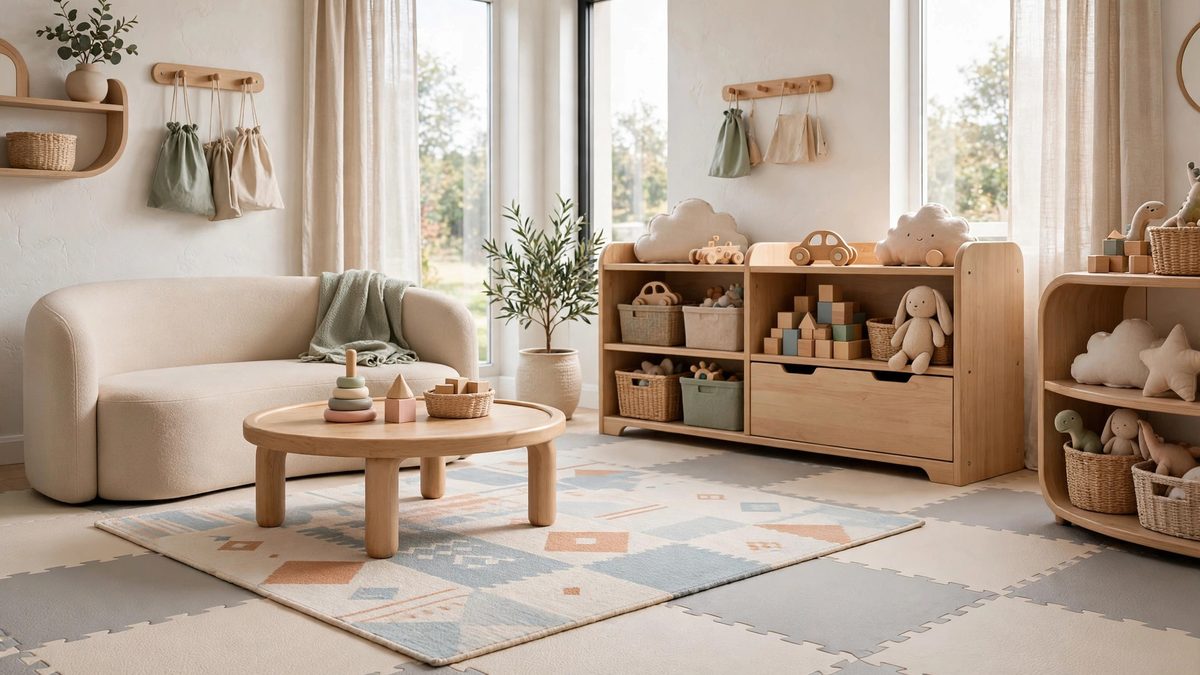
A few common mistakes make even a pretty playroom hard to live with. Buying adult-height storage is the first: it looks neat on day one and stays empty while toys pile up below it. The second is filling every wall and corner. Kids need empty floor to build a train track or a fort, so leave breathing room.
Avoid sorting toys into too many tiny, complicated categories. A system only an adult understands will collapse by Tuesday. Five or six big, obvious categories beat twenty perfect ones.
Also skip fragile decor, heavy frames hung low, and expensive rugs in the main play path. Save special pieces for shelves adults control. And do not forget light: a single dim ceiling fixture makes puzzles and reading frustrating, so add a lamp or brighter bulbs where kids work and read.
Finally, plan for growth from the start. A table that suits a toddler will be outgrown quickly, so adjustable or secondhand furniture often makes more sense. Families who later refresh a baby room decor space into a toddler play area learn the same lesson: flexible basics outlast cute, fixed themes every time.
Frequently Asked Questions
What is the best storage for a small playroom?
Low cube shelving with 11-inch or 13-inch bins is usually the most flexible choice, because kids can reach it and categories stay separate. Add one large basket for stuffed animals and use wall space for books and art display to save floor room.
How do I set up a playroom in a shared space?
Define the area with a rug and a low shelf as a divider. Keep all toys and storage inside that footprint, choose bins with lids or a calm color so the area blends with the room, and make the five-minute cleanup a daily habit so the shared space resets easily.
What should I put in a reading corner?
A small forward-facing book display or low shelf, a soft seat such as a bean bag or floor cushions, and warm light are enough. Keep only a handful of books out at once and rotate them weekly to keep the corner feeling fresh.
How often should I rotate toys?
Every two to four weeks works for many families. Watch for toys that have not been touched in days; swap those first. Keep true favorites out as long as they are loved, and store the rest in labeled totes in a closet or garage.
How can I make a playroom work for different ages?
Zone by risk and reach. Keep toddler toys low and open, and put games with small pieces, craft tools, and older kids’ projects on higher shelves or in a caddy an adult controls. A table with chairs suits older children, while a clear floor mat suits babies and toddlers.
Conclusion
A playroom that works is not the one with the most toys or the cutest theme. It is the one where kids can find what they love, play deeply, and put everything back without a struggle. Zone the room, choose storage at kid height, label it clearly, and build a tiny daily cleanup habit. Start with one wall of storage and one cozy corner, then adjust as you watch how your kids actually play. The room will grow with them, and cleanup will stop feeling like a second job.
