
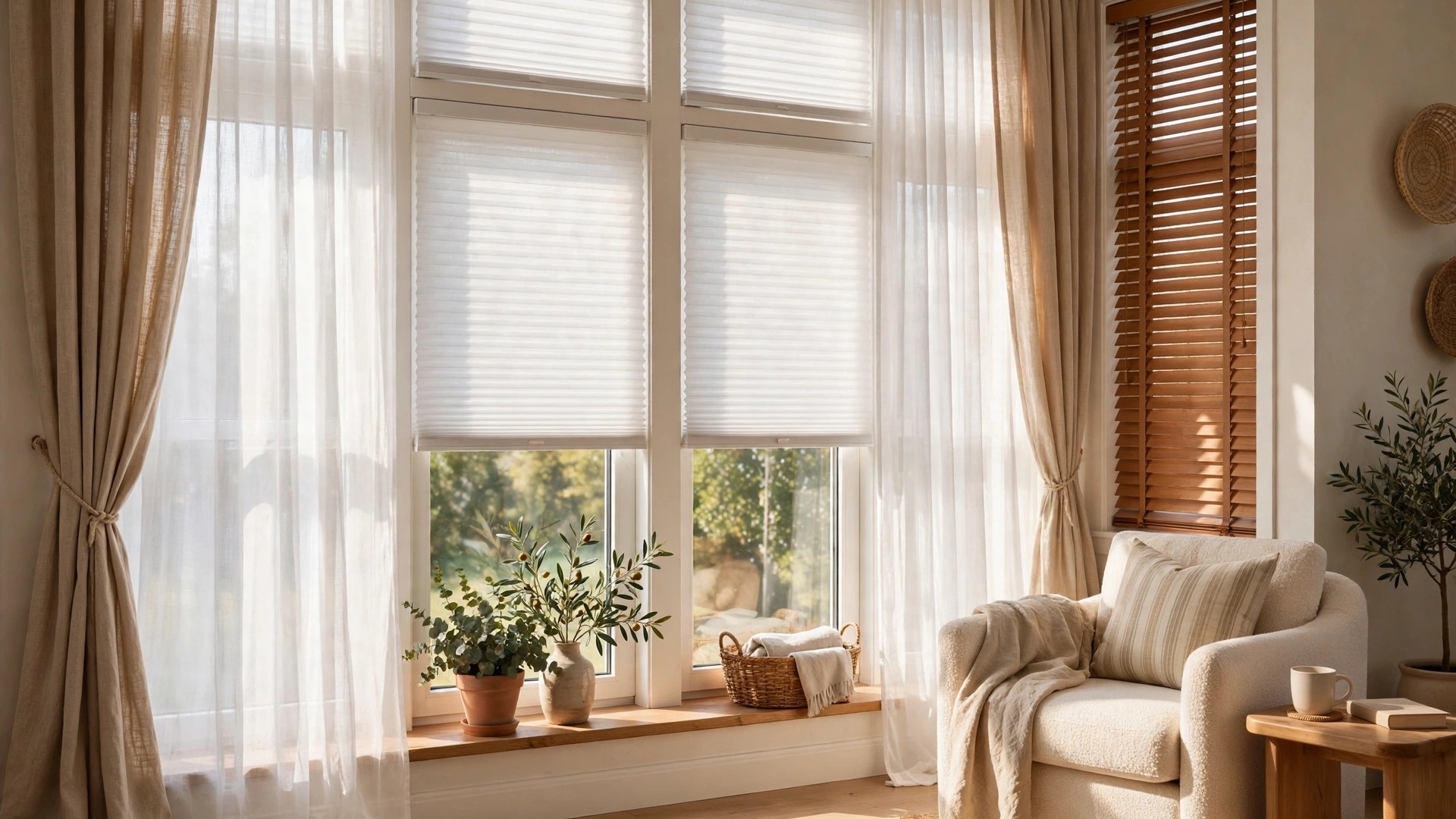

If you have ever stood in a store aisle wondering what is a window treatment and why there seem to be two hundred kinds, you are not alone. The term is simply the umbrella name for anything you put on, over, or around a window to control light, gain privacy, insulate the room, or finish the decor. Blinds, shades, shutters, curtains, and valances are all window treatments.
Understanding the basic categories makes every later decision easier, from measuring to budgeting to choosing what works over a sliding door. This guide explains the main types in plain language, what each does best, and how to choose for every room in the house.
Window Dressing Basics: Hard vs. Soft Treatments
Decorators group treatments into two families. The word window dressing itself is the friendly everyday term for the whole subject, the finished look of a dressed window, including any fabric, hardware, and trims that complete it.
Hard window treatments are made from rigid or structured materials: wood, faux wood, vinyl, aluminum, or composite. Blinds and shutters are the classic examples. They are built for precise light control, because their slats or louvers tilt to aim daylight where you want it. Hard treatments tend to look tailored and architectural, and they wipe clean easily, which makes them practical in kitchens and bathrooms.
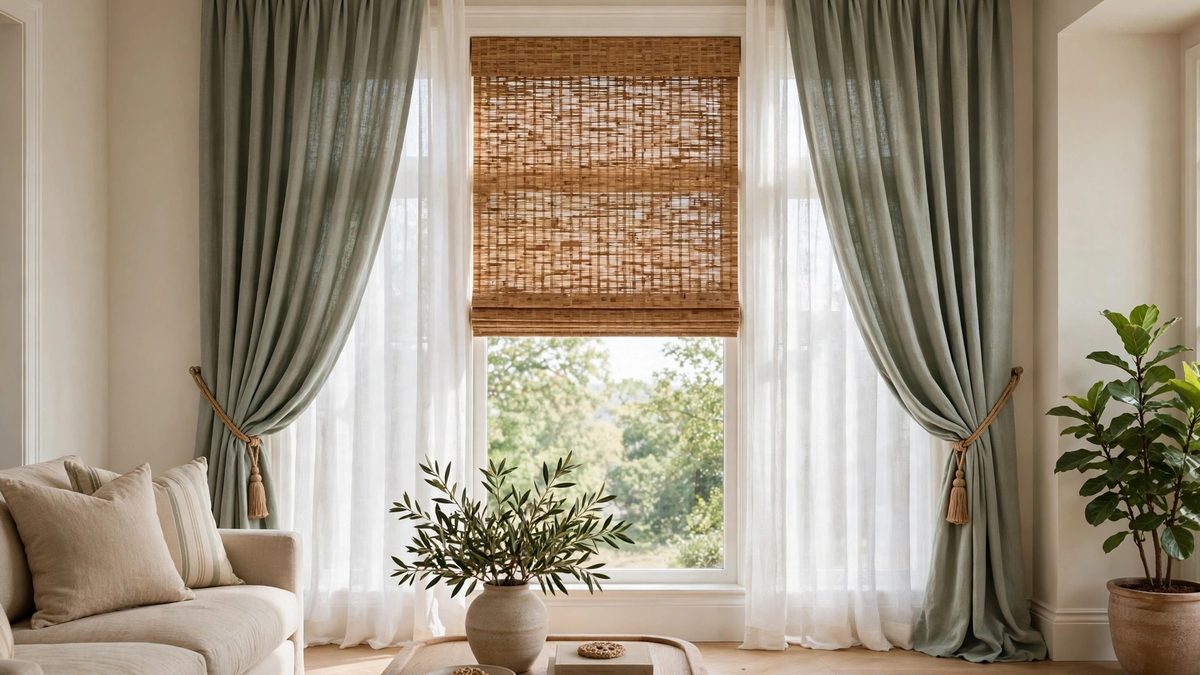
Soft window treatments are made from fabric. Curtains, drapes, Roman shades, and valances fall here. They bring color, pattern, texture, and sound softness to a room, and they can hang from the ceiling line down to the floor for a dramatic effect. Many of the happiest windows combine both families: a hard treatment that does the daily work of privacy and light control, layered under a soft treatment that supplies the style.
There is also a small third group worth knowing: top treatments such as valances and cornices, which cover just the top of the window, and shutters, which sit in a category of their own as permanent, built-in-looking fixtures. If measuring for the fabric layer is on your list, our step-by-step guide to how to measure for curtains will walk you through it.
Types of Window Shades
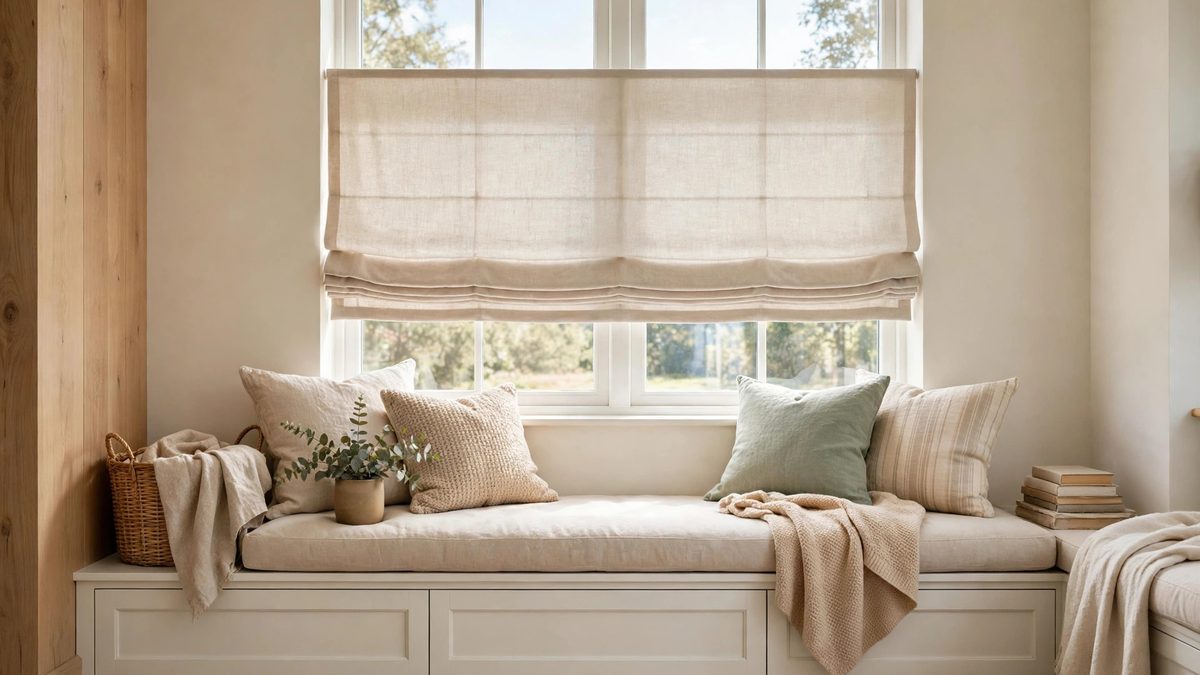
A shade is a single continuous piece of material that raises and lowers in one panel. Unlike blinds, it has no slats to tilt, so light control comes from the fabric’s opacity: sheer, light-filtering, room-darkening, or blackout. The main types of window shades you will meet are:
- Roller shades. The simplest design: fabric that rolls up onto a tube at the top of the window. Modern roller shades come in beautiful textured fabrics and are a favorite in contemporary rooms because they nearly disappear when open.
- Cellular (honeycomb) shades. Rows of fabric cells trap air in honeycomb-shaped pockets, creating real insulation. The U.S. Department of Energy notes that tightly installed cellular shades can cut heat loss through windows by 40% or more, and they are often considered the most insulating window covering you can buy.
- Roman shades. Fabric that folds into neat horizontal pleats as it rises. Romans deliver the softness of curtains with the tidy footprint of a shade, and they suit traditional and transitional rooms especially well.
- Solar shades. A technical mesh fabric, rated by openness (commonly 1% to 10%), that blocks glare and UV while preserving your view outside. They are the go-to for sun-drenched rooms and home offices with screens.
- Woven wood shades. Made from bamboo, grasses, reeds, and jute, they filter light through a natural texture. Add a liner if you need privacy at night, since the weave alone can be see-through after dark.
- Pleated shades. Crisp accordion folds in a single layer of fabric, similar to cellular shades but without the insulating air pockets. They are light, affordable, and discreet.
- Sheer and layered (zebra) shades. Alternating sheer and solid bands slide past each other so you can fine-tune light and privacy without raising the shade.
For the energy side of the story, the U.S. Department of Energy’s overview of window treatments and energy efficiency explains how much heat and light the right covering can manage across the seasons.
Types of Window Blinds
Blinds are built from slats or vanes that tilt open and closed, which gives you the most adjustable light control of any treatment. The main types of window blinds are:
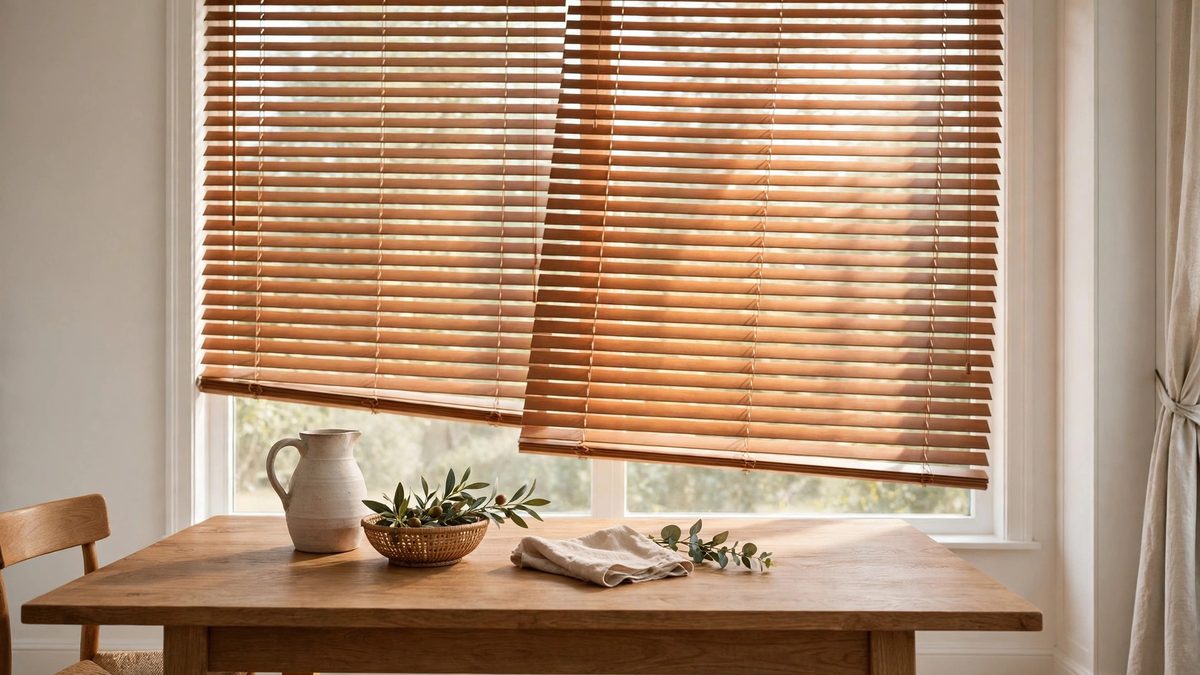
- Venetian blinds. The classic horizontal blind, with slats typically 2 inches wide in wood or faux wood, or 1 inch in aluminum. Tilt the slats to redirect light up, down, or block it almost completely.
- Mini blinds. The same idea with narrower slats, usually 1/2 inch to 1 inch, most often in aluminum or vinyl. They are light, inexpensive, and common in rentals and offices.
- Vertical blinds. Long vanes, usually about 3.5 inches wide, that hang from a headrail and slide sideways. They are designed for wide windows and sliding doors, where horizontal blinds would be awkward; our guide to blinds for sliding doors compares the best options there.
- Wood and faux wood blinds. Wood brings warmth and suits traditional rooms. Faux wood, made from PVC or composite, looks similar but tolerates humidity, making it the smarter pick for bathrooms and kitchens.
- Panel track blinds. Wide fabric panels that glide along a track, a modern alternative to vertical blinds for very wide expanses of glass.
Blinds can mount inside the window frame for a clean, built-in look, which needs enough frame depth, or outside the frame, which makes windows look larger and blocks more light around the edges. Measuring carefully and deciding the mount before you order prevents most blind regrets.
Shutters, Curtains, and Layered Combinations
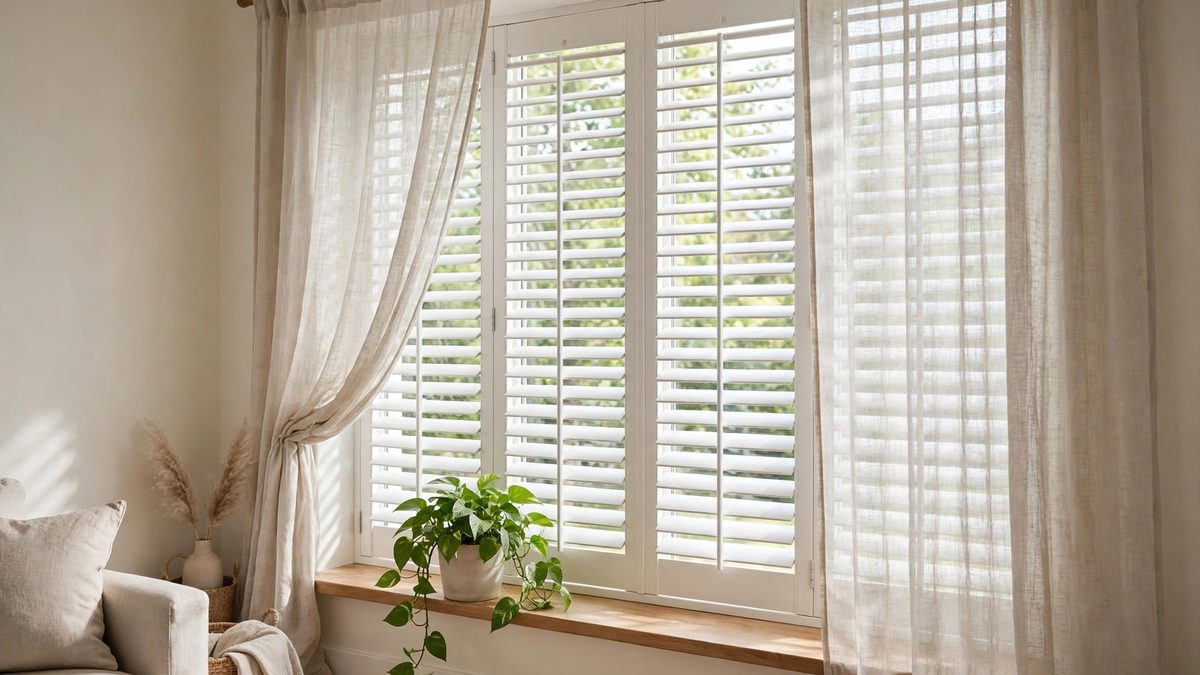
Two more categories round out the picture. Shutters are solid frames fitted into the window opening with adjustable louvers, commonly 2.5, 3.5, or 4.5 inches wide on plantation styles. They are the most permanent treatment, add architectural value, and control light beautifully, but they cost the most and are usually custom made.
Curtains and drapes are the most decorative option. The words are often used interchangeably, though drapes traditionally means heavier, lined, more formal panels. Hung high and wide, they make ceilings feel taller and windows grander. To explore the styles in depth, from grommet to pinch pleat, see our roundup of the types of curtains.
Layering is where rooms start to look professionally finished. A common formula is a functional layer (a shade or blind) mounted inside or just outside the frame, plus stationary or working drapery panels at the sides. You get precise light control by day, blackout privacy by night, and the softness that only fabric brings.
Mistakes to Avoid When Choosing Treatments
- Choosing looks before function. Decide what the window must do first: block light, protect privacy, insulate, or just decorate. The right type follows from the job.
- Ignoring sun direction. West-facing glass needs serious glare and heat control, such as solar or cellular shades. A sheer curtain alone will disappoint.
- Forgetting about doors and clearance. Treatments over doors must travel with the door’s direction of use, and deep treatments need clearance from handles and trim.
- Skipping the mount decision. Inside mounts look sleek but expose every measuring slip. When in doubt, an outside mount is more forgiving.
- Buying before checking child and pet safety. Cordless or motorized operation is the safest standard in homes with small children and curious pets.
Frequently Asked Questions
What is the difference between blinds and shades?
Blinds are made of slats or vanes that tilt to adjust light, while shades are a single continuous piece of fabric or material that raises and lowers. Blinds give finer light control; shades give a softer look and, in cellular form, better insulation.
What is the most energy-efficient window treatment?
Insulated cellular shades are generally considered the most energy-efficient option, especially when they fit tightly inside the frame. The Department of Energy reports they can reduce heat loss through windows by 40% or more in the heating season.
Are curtains considered window treatments?
Yes. Curtains and drapes are soft window treatments. Together with blinds, shades, and shutters, they make up the main categories of window coverings used for light control, privacy, insulation, and decoration.
Should window treatments match in every room?
They do not need to match, and they usually should not, because each room has different light and privacy needs. It does help if treatments visible from the street present a reasonably consistent look from outside.
What is the difference between an inside mount and an outside mount?
An inside mount fits the treatment within the window frame for a tailored look and requires enough depth in the frame. An outside mount attaches on the wall or trim above and around the window, making the window appear larger and blocking more light at the edges.
Conclusion
A window treatment is simply the covering and dressing that lets a window do its job beautifully: admitting the light you want, blocking the light you do not, protecting your privacy, and finishing the room’s style. Learn the families, blinds for tilting control, shades for soft function, shutters for architecture, and fabric for warmth, and the store aisle stops being confusing. Start with the job each window must do, measure carefully, and layer when you want that polished, complete look.
