
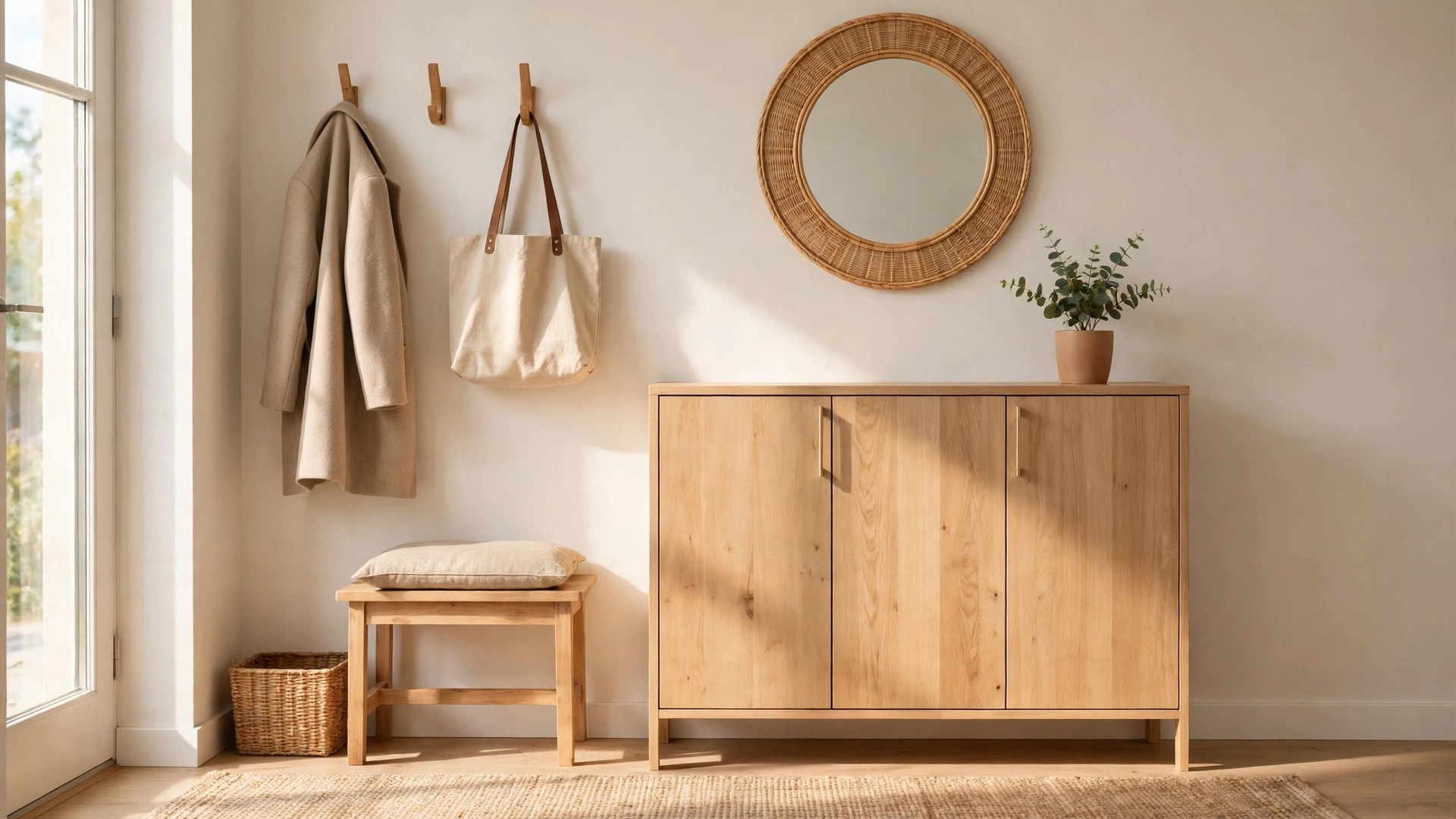

The entryway is the hardest-working five feet in your home. Every day it catches shoes, mail, keys, bags, dog leashes, and whatever else comes through the door — and it is also the first thing guests see. An entryway cabinet is the piece of furniture that solves both problems at once: closed storage that swallows the clutter and a finished surface that makes the space look intentional. This guide compares the main cabinet styles, the sizes that actually fit real entryways and hallways, and how to build a complete drop zone around your cabinet, whether you have a grand foyer or a sliver of wall by the door.
Why Closed Storage Wins in the Entryway
Open hooks and benches look charming in photos, but daily life is messier than a photo. Closed cabinets hide the visual noise — the jumble of shoe shapes, glove piles, and charging cables — and a calmer-looking entry genuinely makes the whole home feel tidier. Cabinets also keep dust off stored items and protect them from pets and toddlers who treat the entry as a playground.
That does not mean everything must hide. The best entries mix one closed cabinet with a few hooks and a small tray. The cabinet handles the bulk; the open elements handle the grab-and-go items you use every single day.
There is also a daily-life dividend. The entry is your home’s transition zone — the moment your brain shifts from the outside world to home. When that moment is calm instead of chaotic, the whole house tends to stay calmer too. A cabinet that swallows the visual noise at the threshold quietly lowers the volume on the entire day, for everyone who walks through the door.
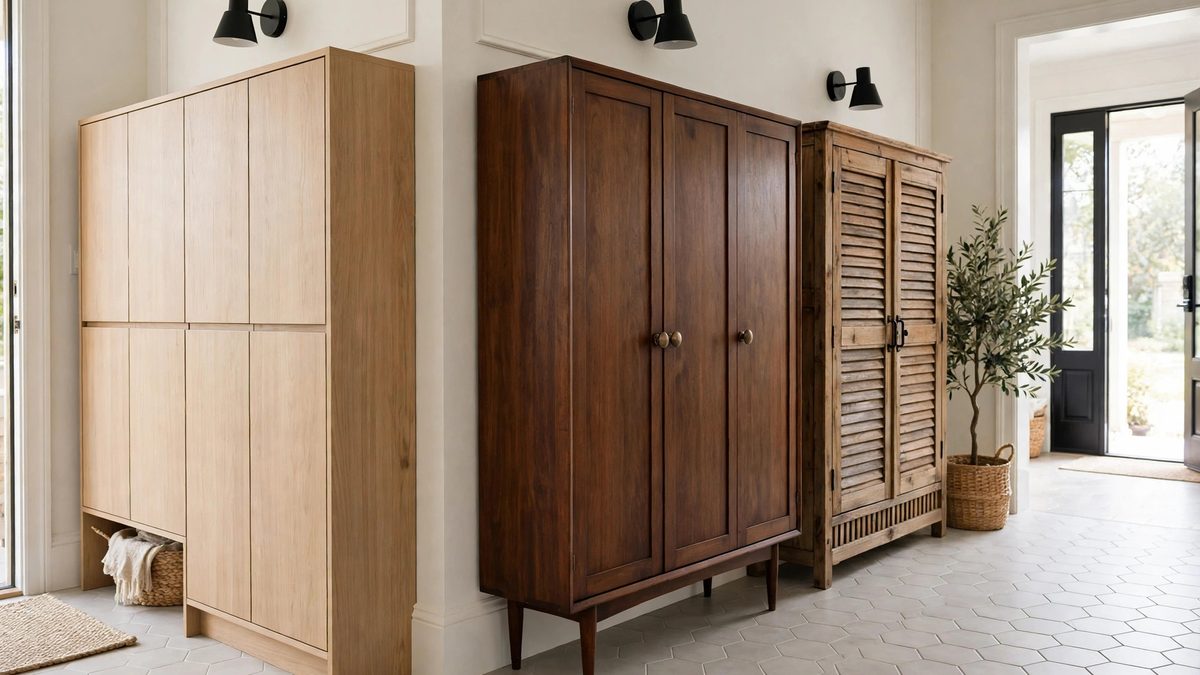
Types of Entryway Cabinets
Match the cabinet type to what you need to store:
- Shoe cabinets (tilt-out style). The entryway hero for small spaces. Tilt-out shoe cabinets are typically only about 9 to 13 inches deep, because shoes store at an angle inside. Many hold 12 to 24 pairs across two or three compartments. Measure your largest shoes before buying — tall boots rarely fit.
- Console cabinets and sideboards. A standard console height of about 30 to 34 inches gives you a surface for keys and decor with cabinets or drawers below. Depths usually run 12 to 18 inches.
- Tall storage cabinets and armoires. Best for larger entries and mudrooms: coats, cleaning supplies, and seasonal gear all in one piece.
- Bench cabinets. A bench with storage inside or below — seating for putting on shoes plus hidden space for hats and gloves. Seat height around 17 to 19 inches is comfortable for most adults.
- Wall-mounted cabinets and ledges. Floating options keep floor clear in narrow entries and make cleaning easy.
Whatever the type, keep a comfortable walkway. Hallways in most US homes are at least 36 inches wide, and you want roughly 32 inches or more of clear passage in front of the cabinet so traffic never feels squeezed. For more ways to style the whole zone around the cabinet, see our entryway decor ideas.
Mudroom and Entryway Furniture That Works as a Team
In homes with a true mudroom, and in entries pretending to be one, mudroom and entryway furniture works best as a system. Build around the cabinet:
- Hooks at two heights — adult height (about 5 feet) and kid height (around 3.5 to 4 feet) — so coats and backpacks land where they belong.
- A bench or boot tray zone for wet shoes and boots, on a washable mat or tray that contains the mess.
- Baskets inside the cabinet, one per family member or one per category: hats and gloves, dog gear, sunscreen and bug spray.
- A landing surface: a shallow tray or small bowl on the cabinet top for keys and sunglasses, a slot for mail, and a mirror above for the last check on the way out.
- A mirror and good light. Entries often lack windows; a mirror bounces what light there is and makes a small entry feel twice as big.
Style the top of the cabinet the way you would a console table — our entry table decor ideas show simple groupings of a lamp, a plant, and a tray that keep the surface pretty without blocking its job.
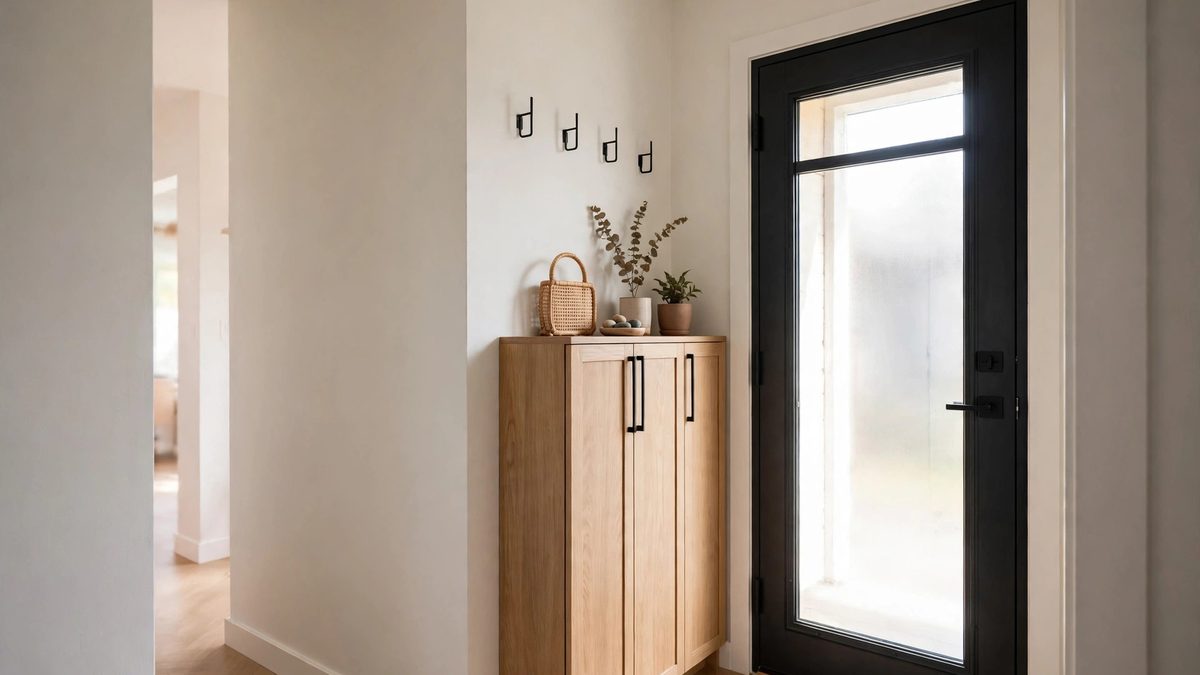
Sizing It Right: Measurements That Matter
Before ordering, run through this checklist:
- Width: leave at least 2 to 3 inches of breathing room on each side so the piece does not look wedged in.
- Depth: in a hallway-width entry, 12 to 14 inches deep is the sweet spot. Deeper cabinets eat walkway fast.
- Door swing: if the cabinet has hinged doors, confirm they open fully without hitting the front door, a railing, or each other. Sliding or tilt-out fronts solve tight clearances.
- Shoe math: measure your longest pair of shoes. Men’s shoes commonly need about 11 to 12 inches of length room inside the compartment.
- Cords: if you want a charging station inside, pick a spot near an outlet or choose a cabinet with a cord cutout.
If your entry includes the space under a staircase, that dead zone can pair beautifully with a cabinet wall — our under stairs storage ideas show how to put it to work.
Styling Your Cabinet Without Creating New Clutter
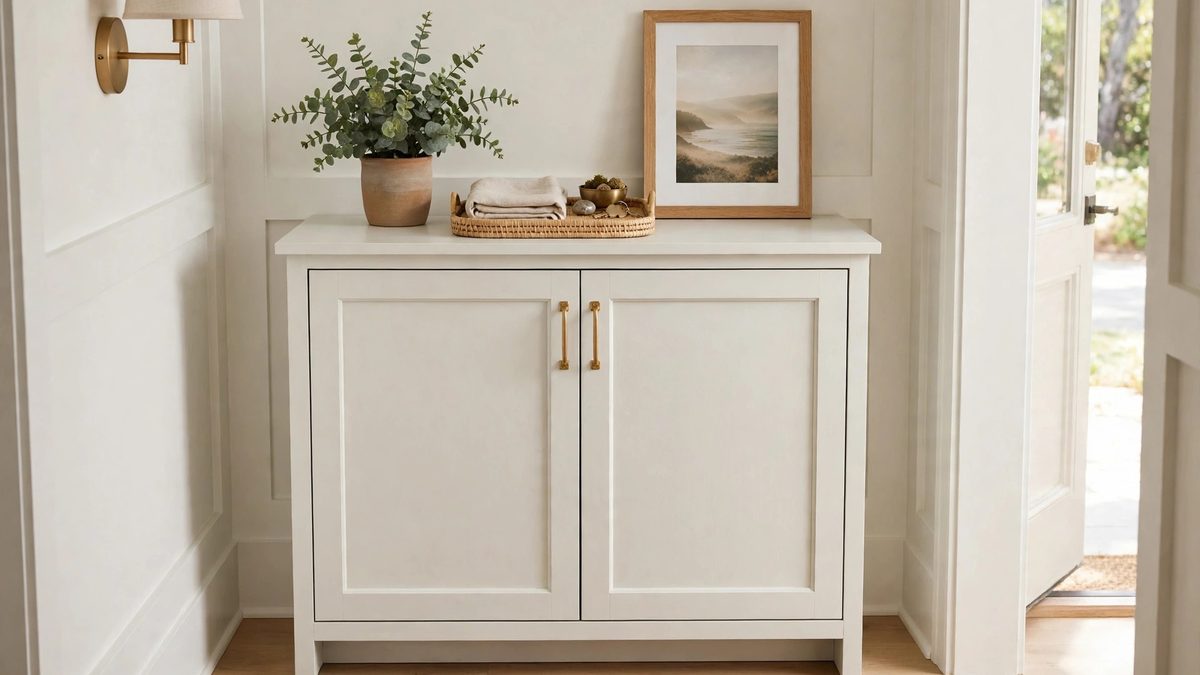
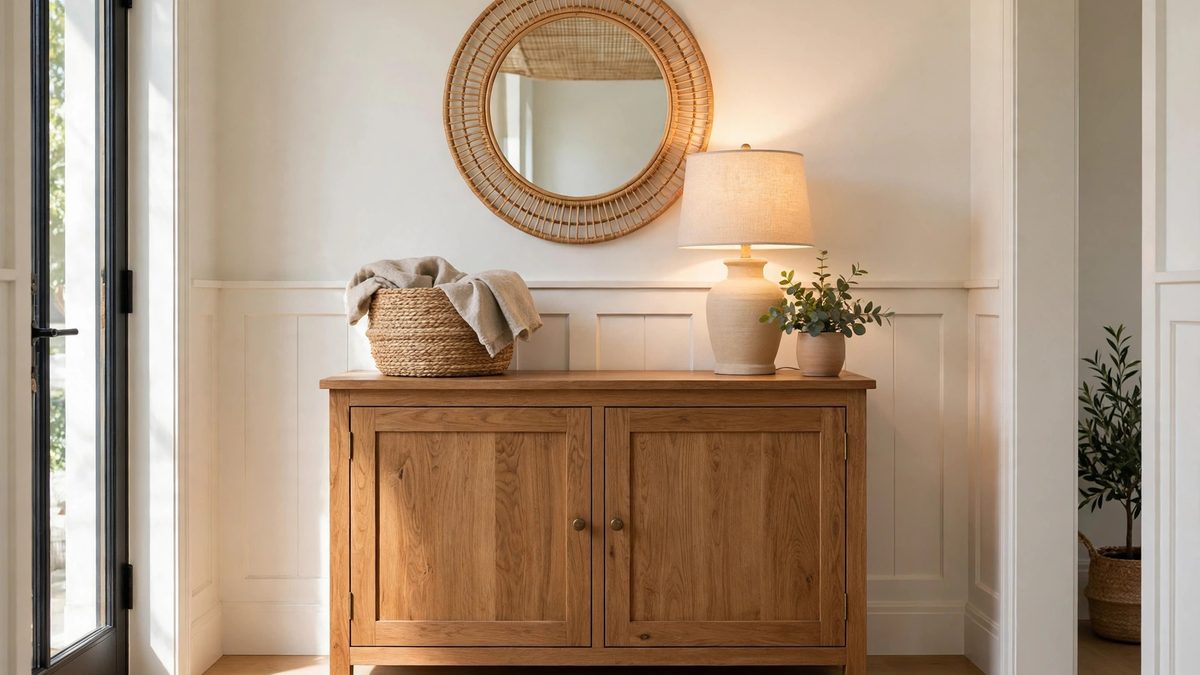
The top of an entryway cabinet tempts everyone to pile. Style it with a strict formula instead: one tray (keys and wallet), one vertical element (a mirror or art above, a lamp or tall vase on top), and one soft element (a small plant or a stack of two books). Everything else goes inside the cabinet — that is what it is for.
Color-wise, entries benefit from a cabinet that either matches the trim for a built-in look or introduces the home’s accent color as a welcome. Add a washable runner in front — standard runners are about 2 by 6 or 2 by 8 feet — to catch dirt and define the zone. And if several people share the entry, give the cabinet’s interior the same discipline: a shelf or basket per person, labeled if necessary, so finding one pair of gloves never becomes a household-wide excavation. For photo inspiration across every entry size, browsing real mudrooms and foyers on Houzz is a great way to see which cabinet styles suit your space.
Common Entryway Cabinet Mistakes to Avoid
- Buying before measuring the door swing. The front door, the cabinet doors, and you all need to move at once.
- Choosing open shelving for shoes. Dust, visual clutter, and odors all say choose doors.
- Forgetting the daily five. If keys, mail, sunglasses, leashes, and bags have no assigned spot on day one, they will colonize the cabinet top.
- Skipping the mirror. It is the hardest-working decor item in an entry: light, depth, and a final check in one.
- Ignoring the floor. A cabinet without a boot tray or washable runner nearby loses the battle against mud and grit every wet day.
Styling the Top of Your Entryway Cabinet
Treat the top of the cabinet as a small landing strip rather than storage spillover. One shallow tray for keys and mail, a small plant or framed photo for height, and a little empty space around them keeps the entry looking intentional while still catching everything a busy household drops at the door.
Frequently Asked Questions
How deep should an entryway cabinet be?
For shoe storage, tilt-out cabinets are usually 9 to 13 inches deep. For general console cabinets, 12 to 18 inches is typical. In narrow entries, stay at or below about 14 inches so the walkway stays comfortable.
How many shoes does a standard shoe cabinet hold?
A typical two- or three-compartment tilt-out cabinet holds roughly 12 to 24 pairs of average shoes, fewer if you store many boots or large sizes. Measure your biggest pair first — height and length vary a lot by household.
What is the difference between an entryway cabinet and a console table?
A console table is mostly surface — an open or lightly framed table meant for display. An entryway cabinet adds closed storage below or behind doors, which is what makes it better at hiding everyday clutter.
Can I use an entryway cabinet in a small apartment entry?
Yes — a slim tilt-out shoe cabinet is one of the best small-space pieces there is, because it stores a dozen pairs in less than a foot of depth. Pair it with two or three wall hooks and a tiny tray, and a landing strip appears where there was none.
Where should I place an entryway cabinet?
On the wall nearest the door you actually use daily, ideally where it does not block the door’s swing or the main walkway. If the entry is open-plan, placing the cabinet perpendicular to the door can subtly define the entry zone.
Conclusion
An entryway cabinet earns its keep every single day: shoes disappear, keys have a home, and guests walk into calm instead of clutter. Choose the type that matches what you store, respect your walkway measurements, and build the hooks, bench, and landing tray around it. Five tidy feet at the door can change how the whole house feels.
