
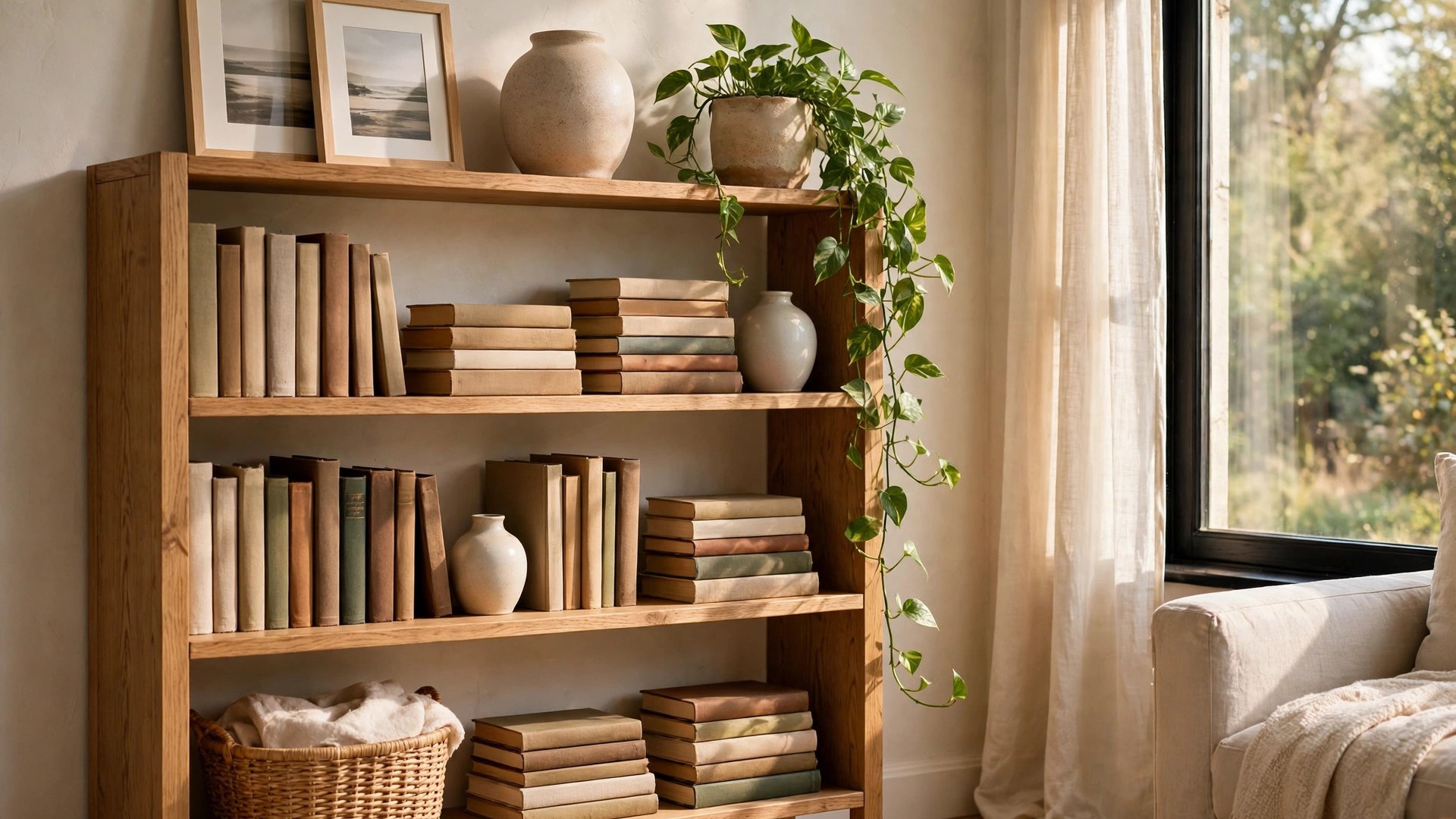

Shelves are some of the hardest-working spots in a home, yet they are often the last thing we style. A few thoughtful shelf decor ideas can turn a plain bookshelf, a kitchen ledge, or a bathroom floating shelf into a display that looks intentional instead of accidental. The good news is that shelf styling is not about buying a cart full of new accessories. It follows a few simple, repeatable principles: start empty, group items so the eye has somewhere to land, mix heights and textures, and leave some breathing room. Once you know the formula, you can restyle any shelf in your home in under an hour, mostly with things you already own.
Start by Taking Everything Off
The biggest mistake people make is styling around the clutter that is already there. Take every book, vase, and candle off the shelf, dust the surface, and look at the empty shelf for a minute. This gives you a true sense of the space you have, including shelf depth and the distance between shelves, which determines how tall your pieces can be.
Next, gather a “shop your home” pile: books, framed photos, small plants, bowls, baskets, vases, and any objects with a story. Designers often restyle shelves entirely from pieces borrowed from other rooms, because a fresh arrangement makes familiar objects feel new again. As House Digest describes in its guide to refreshing shelves without spending a dime, stylists suggest raiding side tables, mantels, and even kitchen cabinets for overlooked pieces before buying anything new. You almost certainly own more good shelf decor than you think; it is just currently living in the wrong room. If your shelves hold everyday storage as well as decor, let our guide to living room storage help you hide the practical things in baskets and boxes so the pretty pieces can shine.
A Simple Formula for Balanced Shelves
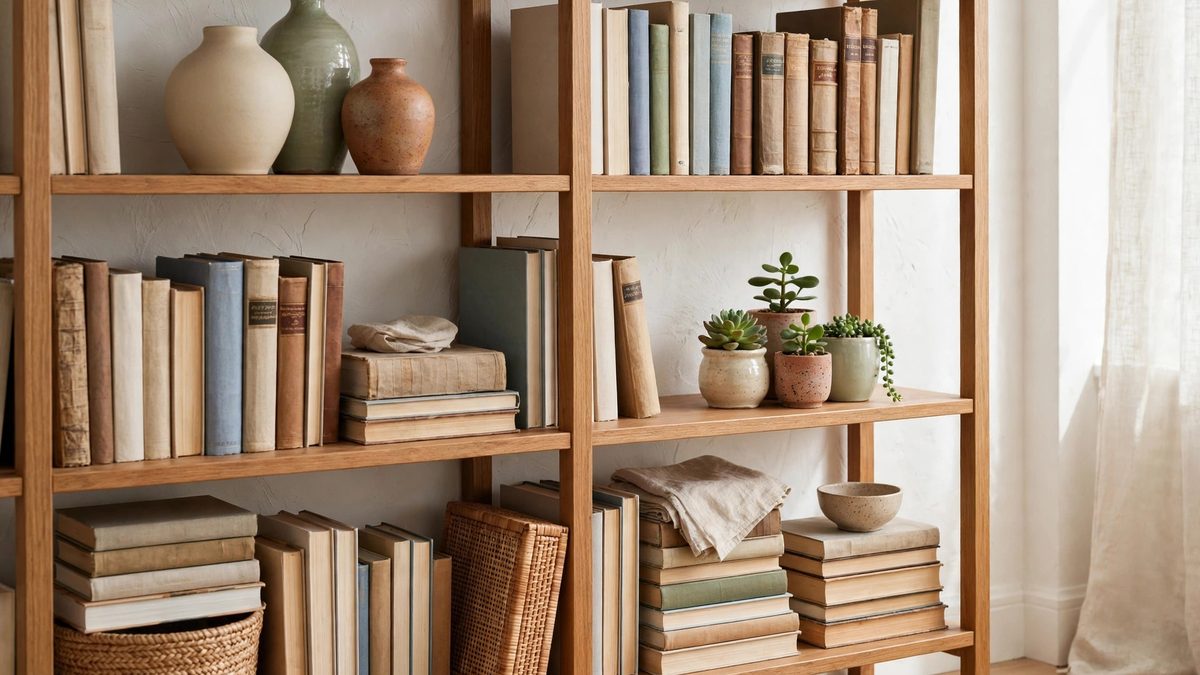
If styling feels like guesswork, lean on the formula professionals repeat: odd numbers, varied heights, and visual triangles. Group objects in threes or fives rather than pairs, because odd groupings look natural and relaxed while pairs can feel stiff and formal. Within each group, mix one tall item, one medium item, and one small item so your eye travels up and down instead of getting stuck.
The “visual triangle” trick works across a whole bookcase. Place a similar color or material in three spots that form a loose triangle, such as a black frame on the top left, a black vase in the middle right, and a stack of books with black spines on the bottom shelf. The repetition quietly ties everything together. Finally, leave roughly a quarter to a third of each shelf empty. Open space is not wasted space; it is what keeps a display from tipping into clutter, and it makes the pieces you do show feel more important.
Styling Bookshelves That Still Hold Books
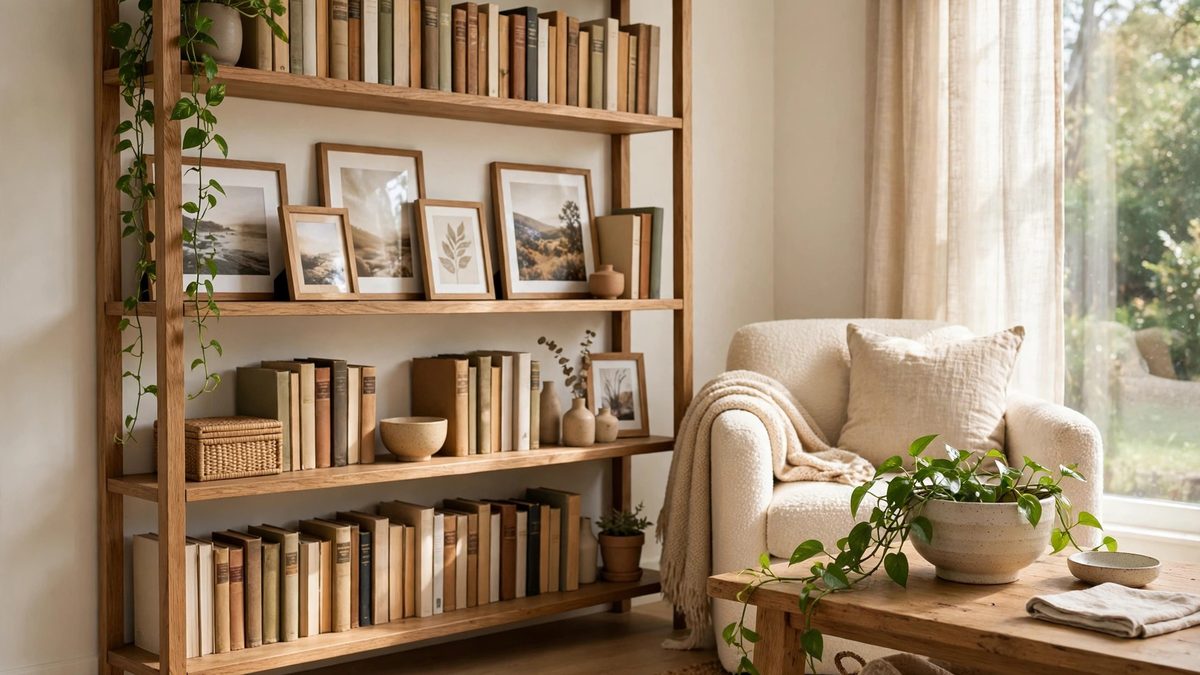
A bookshelf should still work as a bookshelf. Aim for a mix of roughly 60 percent books and 40 percent objects if your shelves are mostly decorative, or flip the ratio if you are a serious reader. Alternate how books stand from shelf to shelf: a run of upright books on one shelf, a horizontal stack on the next. Horizontal stacks are useful styling tools because they act as little pedestals for a small plant, a candle, or a framed photo.
Break up long rows of upright books with a bookend, a small sculpture, or a gap of empty space so the shelf does not read as one solid block. Pull books forward so their spines sit near the front edge; it looks tidier and makes titles easier to read. For more layout inspiration built specifically around book collections, our article on bookshelves for living room spaces covers shelving styles and placement in depth.
Floating Shelves in the Living Room, Kitchen, and Bath
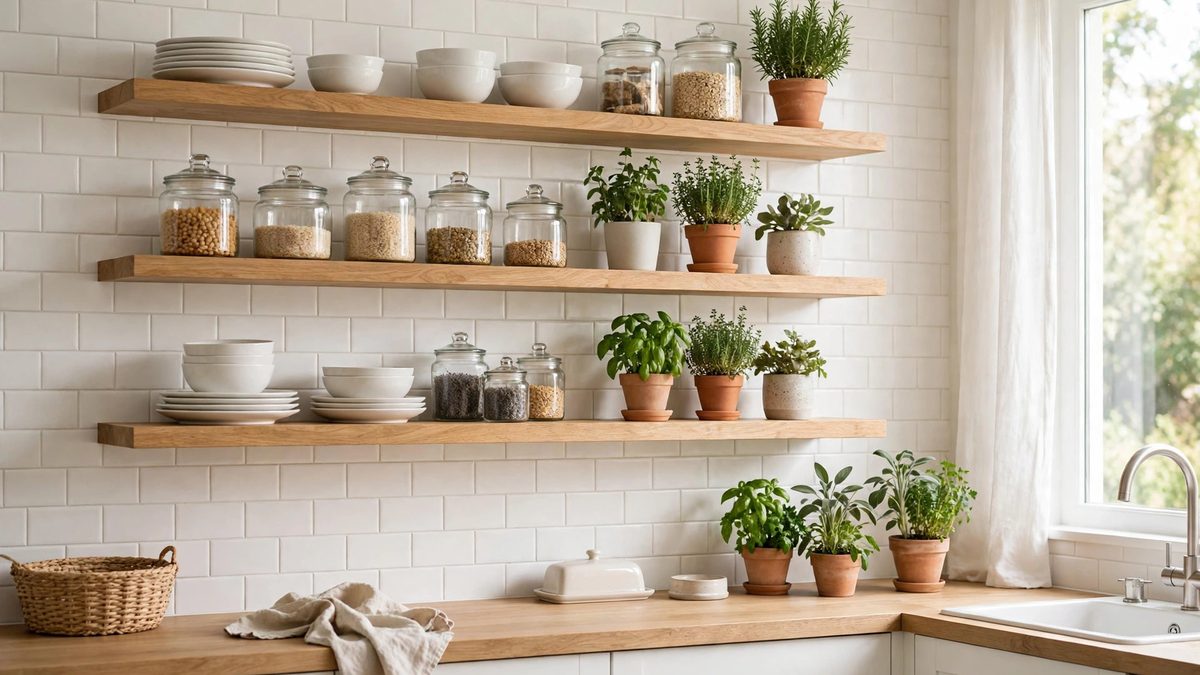
Floating shelves follow the same styling rules, but their size adds a few practical notes. Most decorative floating shelves are 10 to 12 inches deep, which suits books, dinnerware, and most decor, and they are usually mounted into wall studs, which in most US homes are spaced 16 inches apart. Space shelves about 12 to 18 inches apart vertically for display items, and closer to 18 to 24 inches apart above a counter or sink where you need clearance.
In a living room, treat two or three floating shelves like a small gallery: one anchor piece, a short stack of books, one plant, and plenty of air between them. This is also a natural place to borrow ideas from gallery wall layout planning, since shelves and frames should feel like one composition. In the kitchen, style open shelves with the things you use daily, like everyday dishes and glasses, grouped by type; daily use keeps dust down and the arrangement honest. In a bathroom, rolled towels, a small tray for bottles, and one green plant keep the look spa-like without crowding a shallow shelf.
Mixing Heights, Textures, and Colors
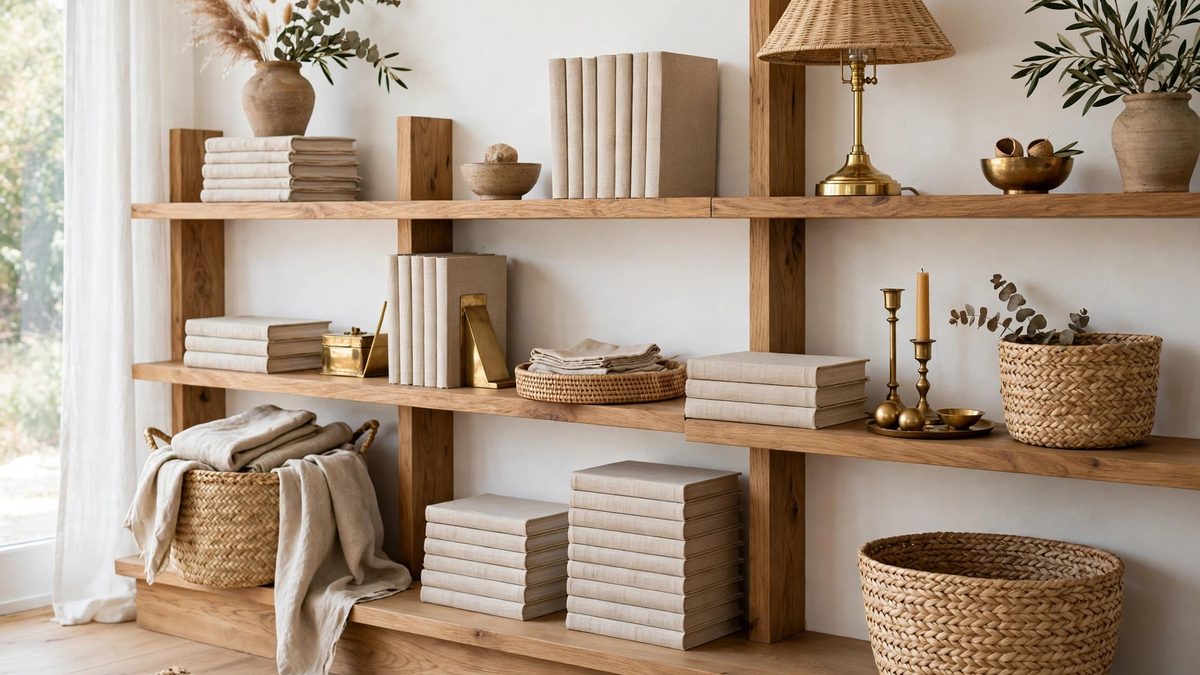
Shelves fall flat when everything is the same height, the same material, or the same color. The fix is contrast in small doses. Pair something smooth with something rough: a glossy ceramic vase beside a woven basket, a stack of linen-covered books under a small brass object. Add at least one organic element per shelf or bookcase, such as a trailing plant, a wooden bowl, or a piece of coral or stone, because natural shapes soften all the straight lines of books and boxes.
Color works best when it is spread around rather than clumped. If you love a color, repeat it two or three times across the whole shelving unit in different forms, a book spine, a vase, a framed print. Sticking to a loose palette of two or three accent colors plus neutrals keeps even a big bookcase feeling calm instead of chaotic. And remember to layer from back to front: lean a larger frame or plate at the back, then place smaller objects in front of it for depth.
One last habit keeps styled shelves from going stale: rotate a few pieces with the seasons. Swap a summery shell or coral piece for a small pumpkin or a pinecone cluster in fall, trade a heavy stack of art books for a vase of branches in spring, or simply move the plant to a different shelf and the framed photo to where the plant was. These five-minute changes cost nothing, yet they make the whole unit feel newly styled, and they give you a reason to dust, which quietly keeps the display looking its best.
Shelf Decor Mistakes to Avoid
A few common habits undo otherwise good styling. The first is lining up many small items in a single row like a gift shop shelf; small things look better grouped tightly with space around the group. The second is pushing everything against the back wall, which wastes the front half of the shelf and kills any sense of depth.
Scale is another trap. Tiny objects on a deep, tall shelf get lost, while one oversized piece on a small floating shelf looks precarious. Match the size of your decor to the shelf, and when in doubt, go one size bigger and use fewer pieces. Finally, avoid making every shelf identical. Your eye enjoys a little variety, so if one shelf is full of books, let the next one breathe with a plant and a single beautiful object.
Frequently Asked Questions
How much empty space should a styled shelf have?
Plan for roughly 20 to 30 percent open space on each shelf. If you fill every inch, nothing stands out and the shelf reads as storage rather than display. Step back a few feet; if your eye does not know where to rest, remove one or two pieces.
How deep should a floating shelf be?
For decor and books, 10 to 12 inches is the most useful depth, since most books are under 10 inches tall and standard dinnerware fits comfortably. Kitchen shelves for large platters can go to 14 inches, while a slim 6 to 8 inch ledge works for picture frames and small plants.
How do I style shelves around a TV or on a budget?
Keep the styling quiet near a screen: low stacks of books, simple boxes for remotes, and one plant, so decor supports the room instead of competing with the TV. On a budget, edit first, shop your home second, and only then buy. A thrifted brass bowl or a stack of vintage books typically costs very little and adds the patina new accessories lack.
Should shelf decor match the rest of the room?
It should relate, not match. Repeat a couple of the room’s colors and one or two materials, then let the shelves hold the personal things, photos, travel finds, and handmade pieces, that make the room yours.
How often should I restyle my shelves?
There is no rule, but a light edit each season keeps shelves fresh. Swapping one or two items, moving a plant, or rotating a few books is usually enough; a full restyle once or twice a year is plenty for most homes.
Conclusion
Good shelf styling is a skill, not a shopping trip. Start empty, work in odd-numbered groups, vary height and texture, spread your colors around, and protect your breathing room. Whether you are tackling a floor-to-ceiling bookcase or a single floating shelf above the sink, these shelf decor ideas scale to fit. Style one shelf today, live with it for a few days, and adjust, because the best displays are the ones that evolve along with your home.
