
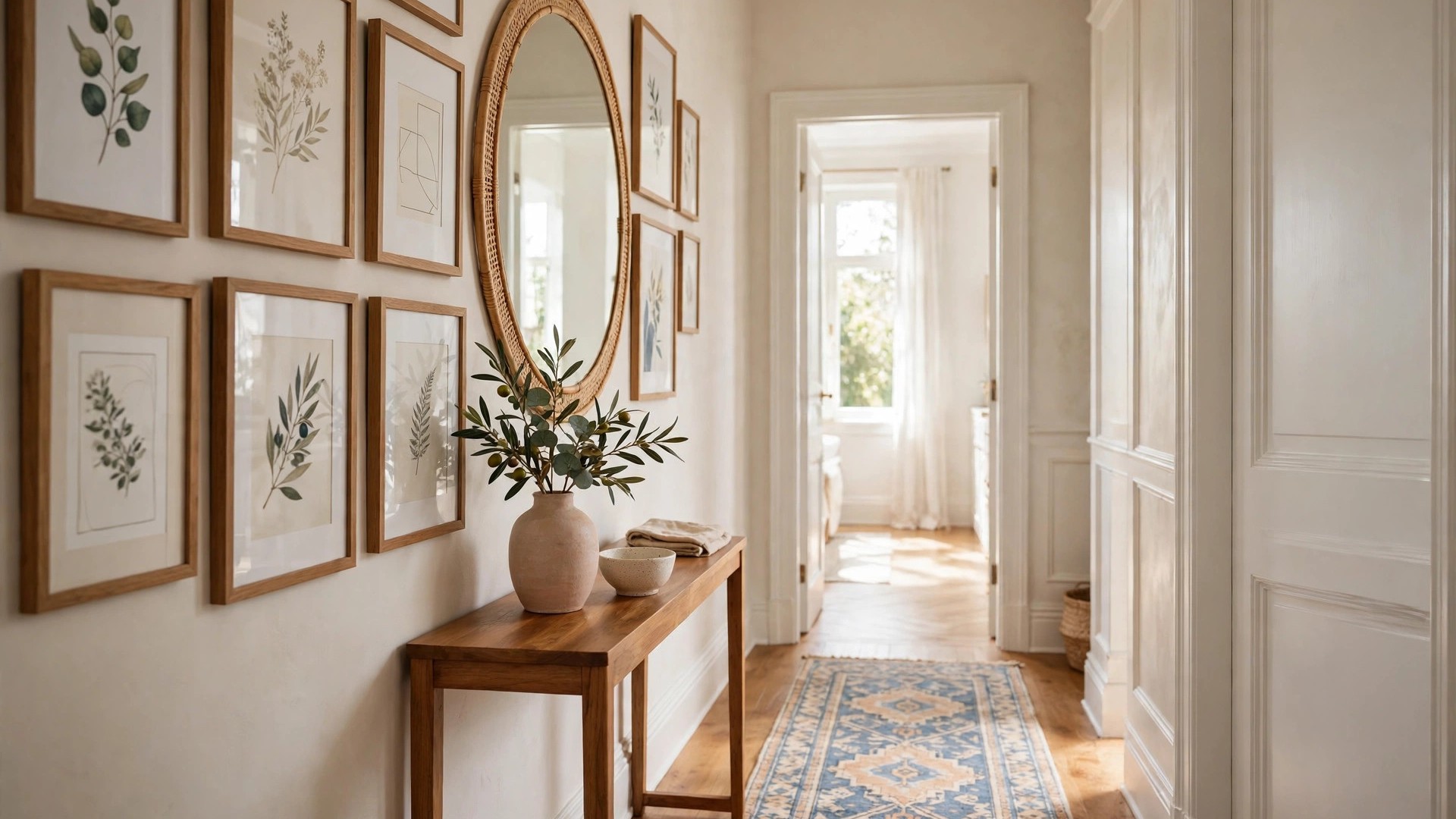

Hallways are the hardest-working walls in the house, yet they are usually the last ones we decorate. The right hallway wall decor changes that completely. A hallway is a space you pass through dozens of times a day, and when its walls hold art, light, and texture, the whole home feels more finished. The good news is that hallways respond beautifully to simple upgrades: a row of frames, one generous mirror, or a painted accent wall can make a narrow corridor feel wider, brighter, and far more intentional.
This guide walks through the most reliable hallway wall decor ideas for real American homes, from small rental hallways to long, windowless corridors. You will find layout measurements that actually work, budget-friendly options, and the mistakes that make hallways feel cluttered instead of curated.
Start With a Layout Plan for Your Hallway Walls
Before you hang a single frame, look at your hallway the way a designer would. Measure the longest uninterrupted wall and note the obstacles: doors, thermostats, light switches, and vents all compete for wall space. Sketch the wall on paper and decide where your main moment will go. Most successful hallway designs pick one hero wall and keep the opposite wall calm, especially in corridors under 4 feet wide.
A few standard measurements make planning easier:
- Hang the center of artwork at about 57 inches from the floor, the gallery height museums use, so pieces feel level as you walk past.
- Leave 2 to 3 inches between frames in a grouping for breathing room.
- Keep wall decor at least 3 inches clear of door trim so nothing looks squeezed.
- In an entry hallway, reserve wall space near the door for hooks or a small bench so decor and function do not fight.
If you are planning the whole passage rather than just one wall, our guide to corridor decoration ideas covers furniture placement, runners, and lighting that tie the full space together.
Build a Gallery Wall That Suits a Corridor
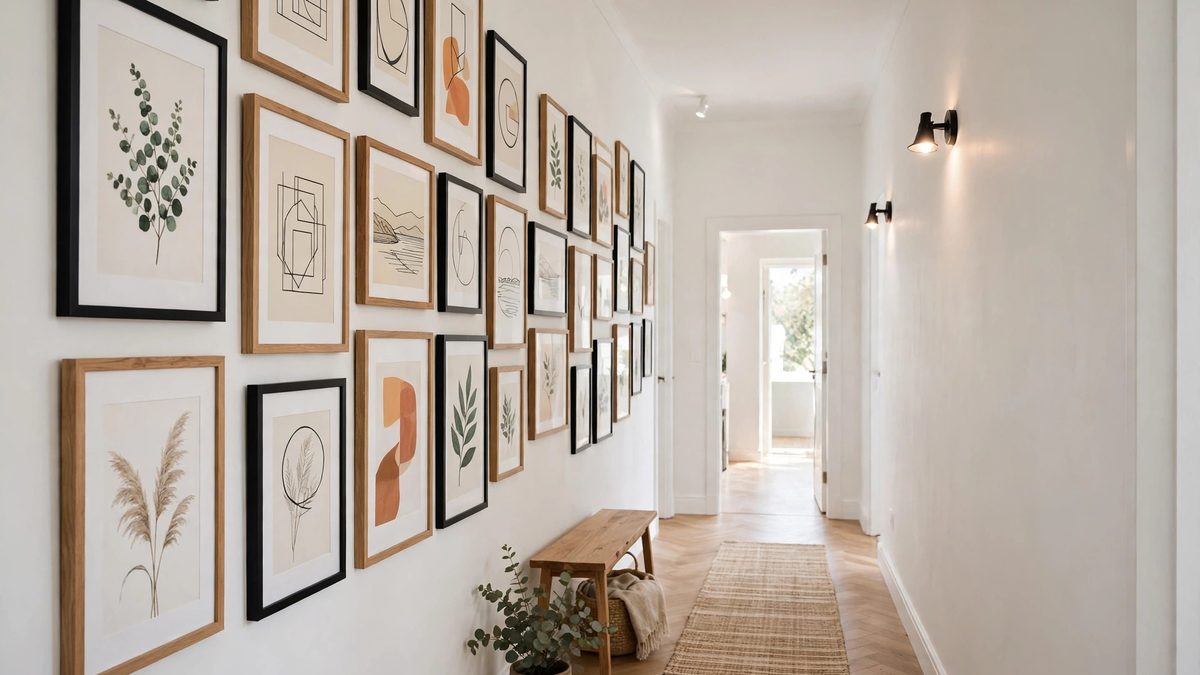
A gallery wall is the most popular hallway wall decor for good reason: it turns a blank stretch into a story. Hallways suit long, low arrangements better than tall salon-style clusters, because you view the pieces while moving. A single horizontal line of evenly spaced frames reads calm and modern, while a grid of matching frames in two rows feels tailored and tidy.
Family photos work beautifully here, but mix in a few art prints, a small mirror, or a piece of framed fabric so the wall does not read like a photo album. Stick to one frame color family — black, natural oak, or brass — and repeat it. If you are nervous about nail holes, lay the arrangement on the floor first, trace each frame onto painter’s tape or paper templates, and tape the templates up before committing.
For step-by-step layouts, templates, and spacing formulas, see our dedicated guide to gallery wall layout ideas you can copy wall by wall.
Use Mirrors to Borrow Light and Width
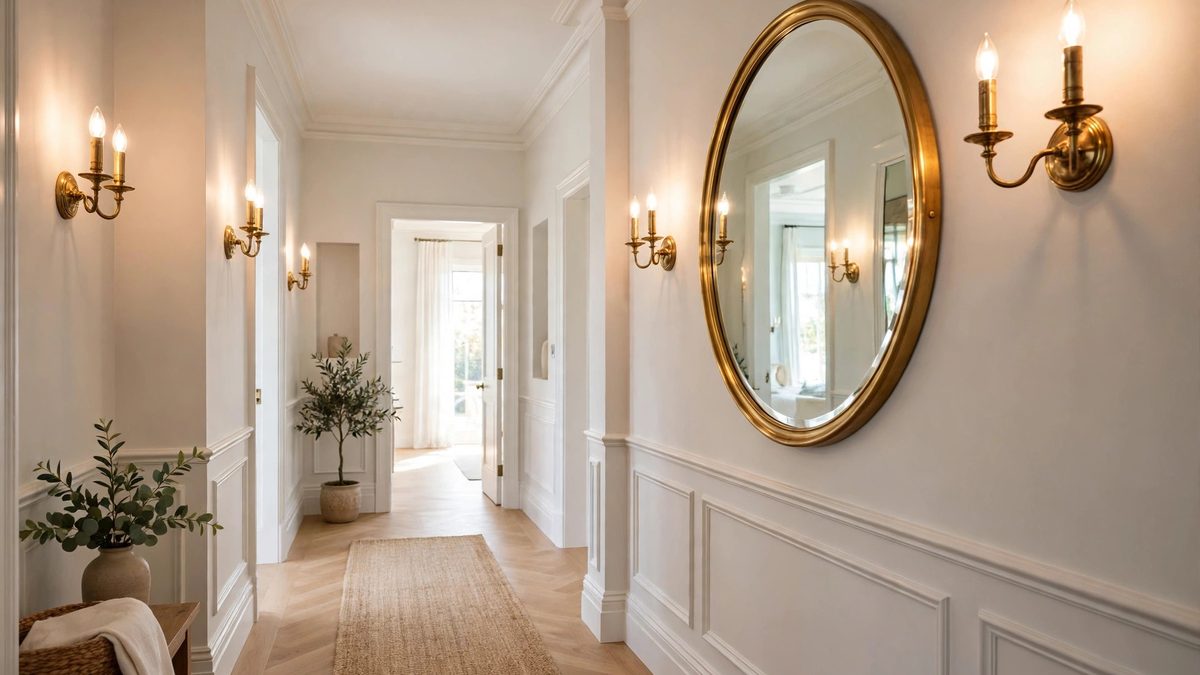
Many hallways have no windows at all, which makes mirrors the hardest-working decor you can hang. A large round mirror or a pair of tall arched mirrors reflects light from adjoining rooms and visually doubles the width of a narrow hall. Place mirrors opposite a doorway or near a light fixture so they have something worth reflecting; a mirror facing a blank wall gives you nothing back.
Practical mirror tips for hallways:
- Choose one oversized mirror instead of several small ones if the hall is under 36 inches wide — small pieces can feel busy at close range.
- Hang mirrors so their center sits around 57 to 60 inches high, comfortable for a final check on your way out.
- A mirror above a slim console table creates a natural landing spot for keys, mail, and a small lamp.
- In a dark corridor, pair the mirror with a warm-white bulb in a nearby sconce or table lamp; cool light makes reflected skin tones and paint colors look harsh.
Try Wainscoting, Trim, and Picture Molding
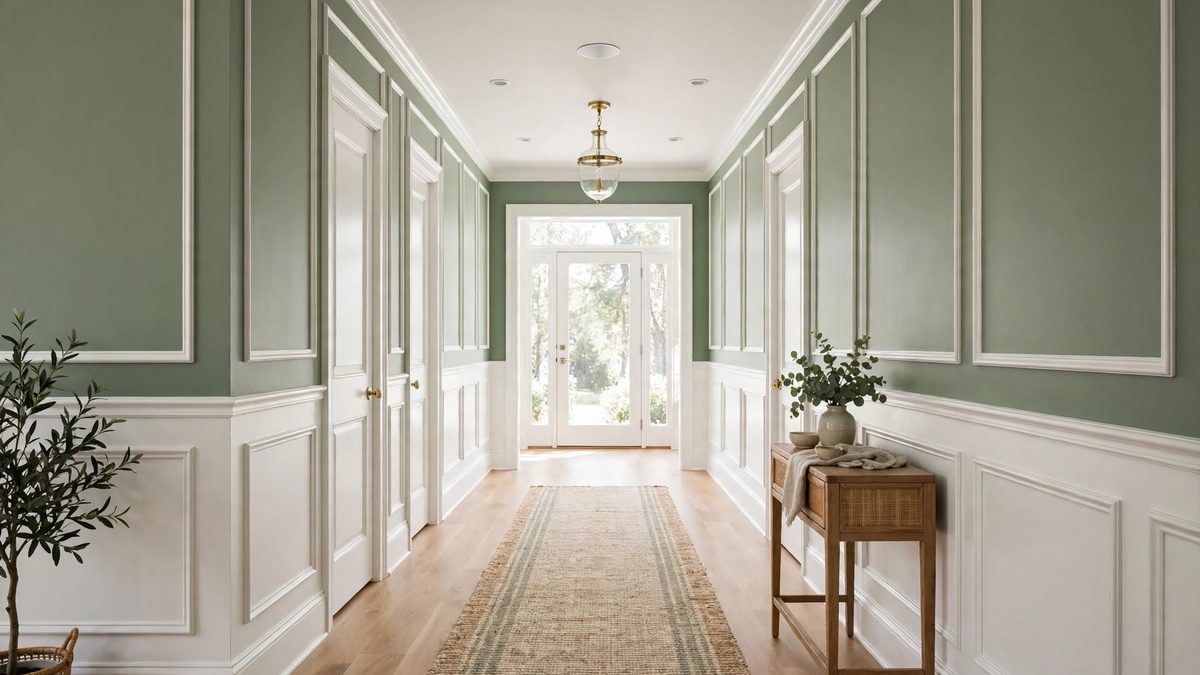
If your hallway walls feel flat but you do not want more objects hanging on them, architectural trim is the answer. Picture-frame molding, wainscoting, and board-and-batten add shadow lines and structure that read as expensive, even in inexpensive MDF or pine. A chair rail with molding boxes below it is a classic look that also protects the lower wall from scuffs, bags, and vacuum bumps.
Keep the proportions simple: wainscoting usually tops out at 32 to 36 inches, roughly one-third of an 8-foot wall. Paint the trim the same color as the wall for a subtle, modern effect, or go one shade deeper for gentle contrast. Because trim projects only about half an inch, it is perfect for tight hallways where shelves and furniture would crowd the walkway.
Create a Hallway Accent Wall With Paint or Wallpaper
A hallway accent wall is the fastest way to give a plain corridor a point of view. The end wall of a hallway is the natural candidate: it is the first thing you see, it is usually small, and a bold color there pulls you through the space instead of making it feel like a tunnel. Deep green, navy, warm terracotta, and charcoal all work well on an end wall because the surrounding lighter walls keep the mood balanced.
Paint is the budget option, typically one quart for an end wall, and it can be changed in an afternoon. Wallpaper or a peel-and-stick mural gives pattern instead. Vertical stripes or a subtle vertical texture make low ceilings feel taller, while a dark, moody end wall can actually make a short hallway feel longer because the end seems to recede. Before you commit, it is worth reading about the shades designers steer clear of in this space — The Spruce’s rundown of hallway paint colors to avoid explains why some bold choices fall flat in low light.
Add Shelves, Ledges, and Small-Scale Storage
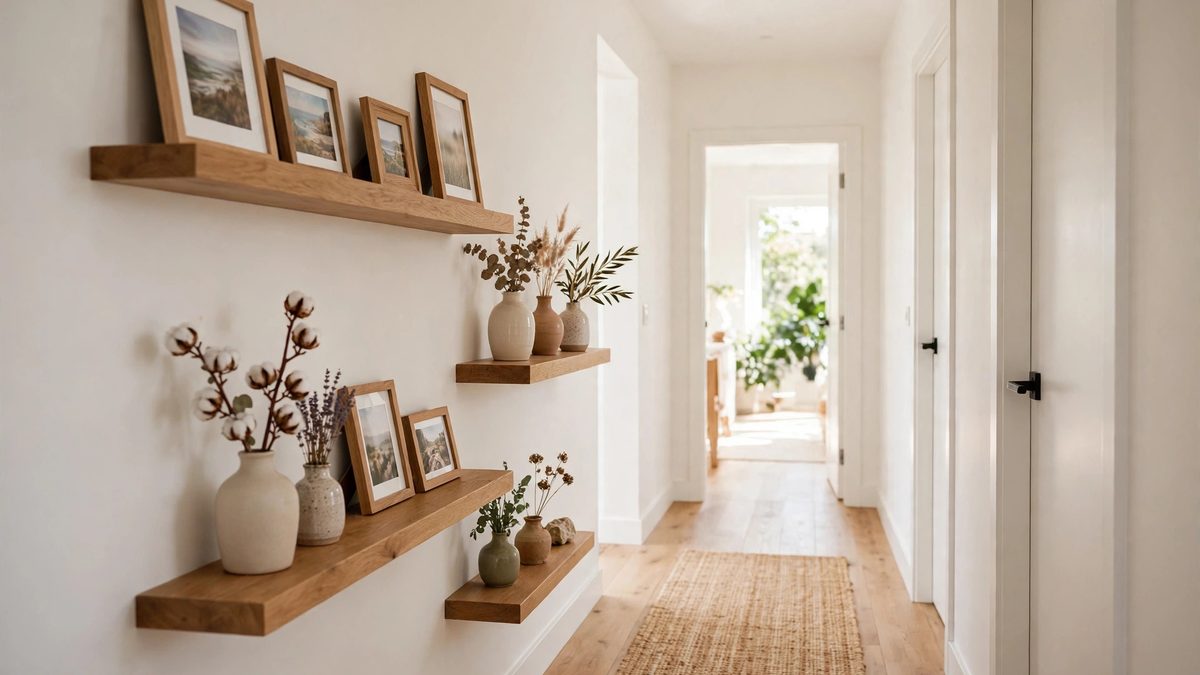
Wall decor can earn its keep. A picture ledge — a shallow shelf typically 3.5 to 4.5 inches deep — lets you lean art, swap prints seasonally, and avoid a constellation of nail holes. Floating shelves in a wider hallway can hold a small plant, a stack of books, or a woven basket for gloves and leashes.
Peg rails and hook strips are the hallway’s other multitaskers. Mounted at shoulder height, they hold coats, hats, and tote bags while looking tidy enough to count as decor. Paint a peg rail the same color as the wall for a built-in feel, or stain it to match your floors. Whatever you install, keep the walkway clear: in a standard 36-inch hallway, anything projecting more than about 4 inches will start catching shoulders and laundry baskets.
Light the Walls, Not Just the Ceiling
Decor never gets a chance to shine in a dim hallway. If your corridor relies on one tired ceiling fixture, your art is sitting in shadow. Wall sconces mounted about 60 to 66 inches high wash the walls with light and make frames and trim look intentional. Plug-in sconces with fabric shades are a renter-friendly way to get the look without an electrician.
Picture lights over a gallery wall, a pair of flush mounts instead of one central light, or even a slim table lamp on a console all raise the hallway’s polish. Choose bulbs around 2700K to 3000K for a warm, welcoming glow, and put busy hallways on a dimmer if you can — bright at homework hour, soft in the evening.
For help choosing the paint that sits behind all this decor, our guide to hallway paint ideas walks through colors that hold up in low, artificial light.
Hallway Wall Decor Mistakes to Avoid
A few common missteps can undo good intentions:
- Hanging art too high. Hallway pieces are viewed standing and close up; art floating near the ceiling feels disconnected. Aim for that 57-inch center line.
- Ignoring scale. One tiny 8×10 frame on a 12-foot wall looks lost. Match the arrangement to the wall — long wall, long arrangement.
- Blocking the flow. Deep shelves, chunky frames at shoulder height, and leaning floor art narrow an already tight passage.
- Too many small, unrelated pieces. A hallway reads as one glance, not a room you sit in. Fewer, larger, related pieces look calmer.
- Skipping the runner. Walls get all the attention, but a hallway still feels unfinished without something soft underfoot tying the scheme together.
Frequently Asked Questions
How do I decorate a very narrow hallway wall?
Keep everything flat and streamlined: flush-mounted frames, picture ledges instead of deep shelves, and trim or paint instead of protruding decor. Light colors and a mirror will do more for a narrow hall than any single object.
What is the best color for hallway wall decor in a dark hallway?
Start with warm white or pale greige walls, then add decor with contrast — black or walnut frames, brass accents, and colorful art. Saturated color works best saved for one accent wall or the end wall.
Can I mix frame styles in a hallway gallery wall?
Yes, if you repeat something. Mixed woods and metals look intentional when the frames share a similar thickness or the art shares a color palette. Limit yourself to two or three frame finishes.
How far apart should hallway pictures be spaced?
Two to three inches between frames is the reliable standard. In a single-row hallway arrangement, even spacing matters more than the exact number — measure so gaps are identical.
Should hallway decor match the rooms it connects?
It should relate, not match. Pull one or two colors or materials from the adjoining rooms so the hallway feels like a bridge, then give it one element of its own, like a bold runner or a painted end wall.
Conclusion
Great hallway wall decor is less about filling space and more about making a pass-through feel considered. Start with one hero wall, hang art at the right height, borrow light with a mirror, and consider trim or a painted accent wall for structure. Add a ledge or peg rail if the hallway needs to work harder, and light the walls so everything shows. Do those things, and the most overlooked walls in your home may become the ones guests compliment first.
