
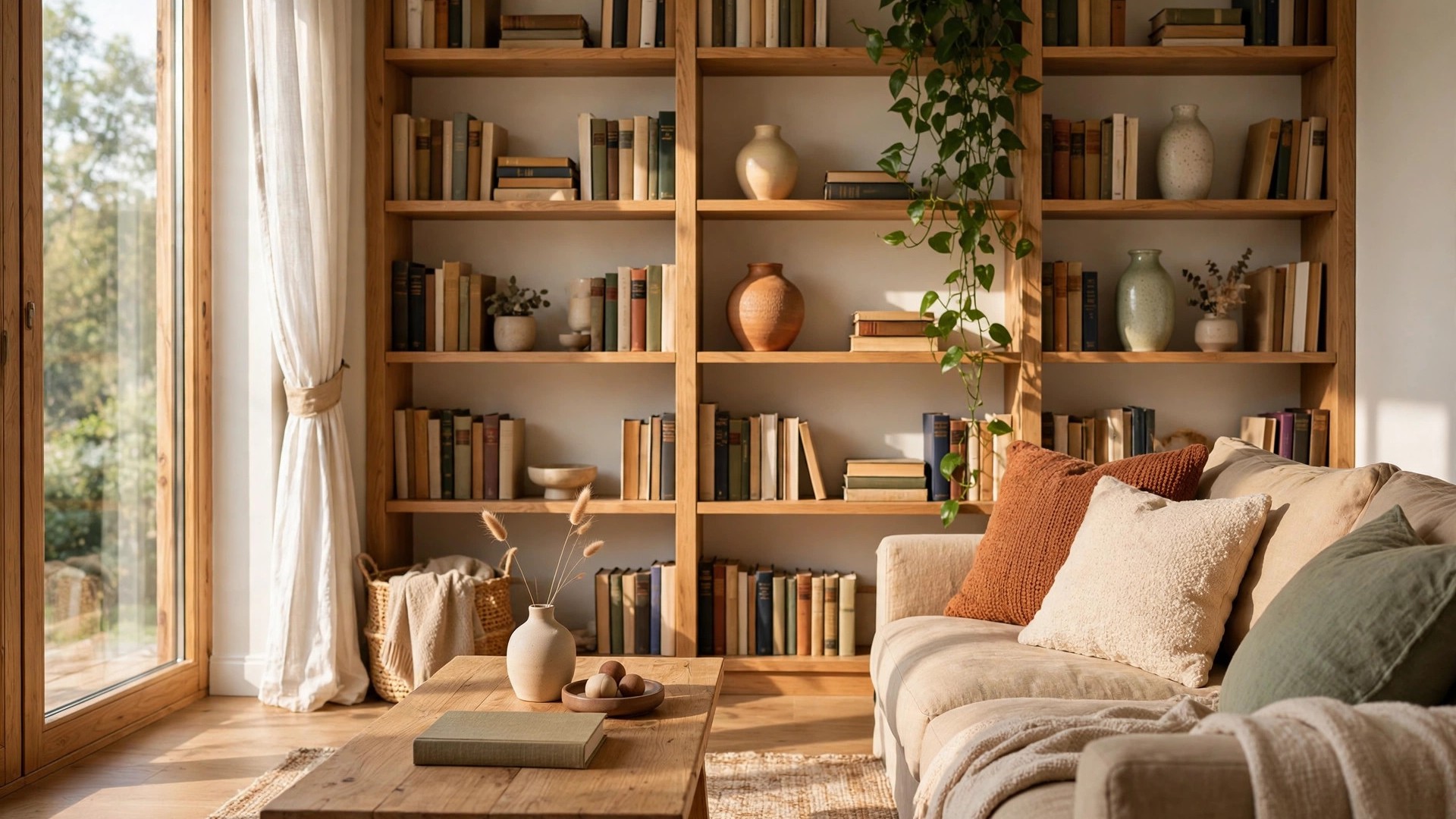

A living room without books can feel unfinished, and a living room with books piled on the floor feels worse. The right bookshelves for living room spaces solve both problems at once: they store your library, display the objects that make the room yours, and give the whole space a focal point that is not a television. Whether you are dreaming of a full wall of built-ins or choosing one freestanding bookcase, the decisions are the same — style, size, placement, and how you fill the shelves.
This guide compares the main bookshelf styles, lists the standard sizes to shop for, and then gets to the part everyone actually struggles with: styling. You will find the simple rules designers use to make shelves look collected instead of cluttered, plus the measurements that keep everything in proportion.
Bookshelf Styles: Built-In, Freestanding, and Everything Between
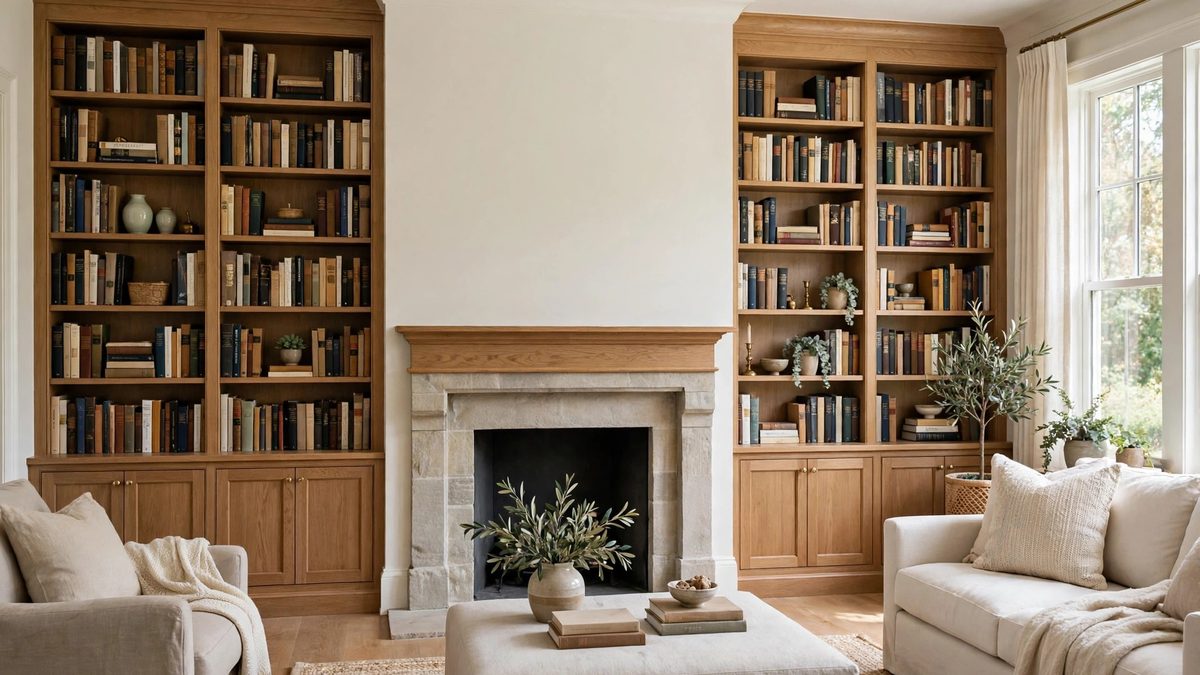
Built-in bookshelves are the dream for many living rooms. They run wall to wall or flank a fireplace, look architectural, and use every inch. They are also the most expensive route — custom built-ins typically run into the thousands — and they are permanent, which matters in a rental or a home you may sell soon.
Freestanding bookcases deliver most of the look for a fraction of the cost. Standard bookcases are typically 72 to 84 inches tall, 24 to 36 inches wide, and 10 to 12 inches deep — deep enough for hardcovers without swallowing floor space. A pair of matching bookcases flanking a sofa or fireplace gives a near-built-in effect.
Etagères and ladder shelves are lighter, open designs that suit small rooms and modern styles; they hold fewer books but display objects beautifully. Low bookcases, around 30 to 36 inches tall, double as console surfaces under windows or behind a sofa. Corner and cube units rescue awkward corners and suit casual, flexible arrangements.
Whichever style you choose, anchor tall units to the wall with the included anti-tip hardware — a loaded 72-inch bookcase is heavy, and this is a five-minute safety step that matters in homes with kids or pets. For a classic reference on the furniture form itself, the Wikipedia entry on the bookcase traces the designs you will still see in stores today.
Standard Sizes and Shelf Spacing to Know Before You Buy
Books come in predictable sizes, so shelves should too. Useful numbers:
- Paperback books stand about 7 to 8 inches tall; most hardcovers and coffee-table books need 10 to 13 inches of vertical room.
- Adjustable shelves spaced 10 to 12 inches apart handle most collections; leave one shelf at 14 to 16 inches for oversized art books, baskets, or a plant.
- A shelf depth of 10 to 12 inches fits books with room for a small object in front; deeper than 14 inches and books get lost or double-stacked.
- Leave at least 30 to 36 inches of walkway in front of shelves you use daily.
- Plan capacity honestly: a 36-inch-wide shelf holds roughly 25 to 35 average hardcovers per row before it looks packed.
Buying for a small room? Many of the same space rules in our living room design ideas guide apply — light finishes, open backs, and leggy frames keep shelving from overwhelming a compact space.
Living Room Bookcase Ideas for Every Layout
Once the style and size are set, placement shapes the room. These living room bookcase ideas cover the layouts that work most often:
- Flanking the fireplace or TV. Matching bookcases on both sides create symmetry and give the main wall a finished, built-in feel.
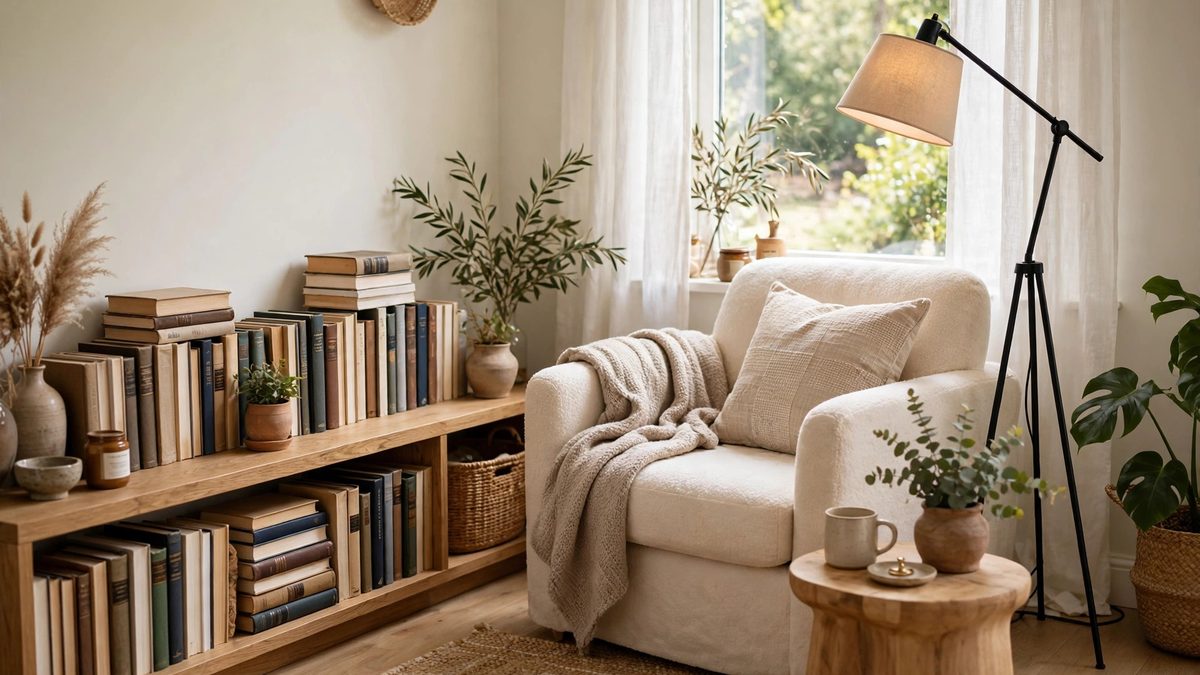
- A full library wall. Bookcases across one short wall turn the room’s focus to books and art; add a reading chair and lamp and you have a library corner.
- Behind the sofa. A low bookcase along the back of a floating sofa defines the seating zone in an open plan and adds a display surface.
- On either side of a window. Two narrow towers frame the light and use wall slivers that fit nothing else.
- A single statement bookcase. One beautiful piece — arched, walnut, or painted a color — can anchor an otherwise simple room.
In open-plan homes, tall shelving also works as a gentle room divider, an approach that connects nicely with the zoning tricks in our living room storage ideas, where bookcases hide games, blankets, and media gear behind their styled fronts.
Bookshelf Decor Rules That Keep Shelves Looking Styled
Styling is where good shelves go right or wrong. These are the rules stylists actually use:
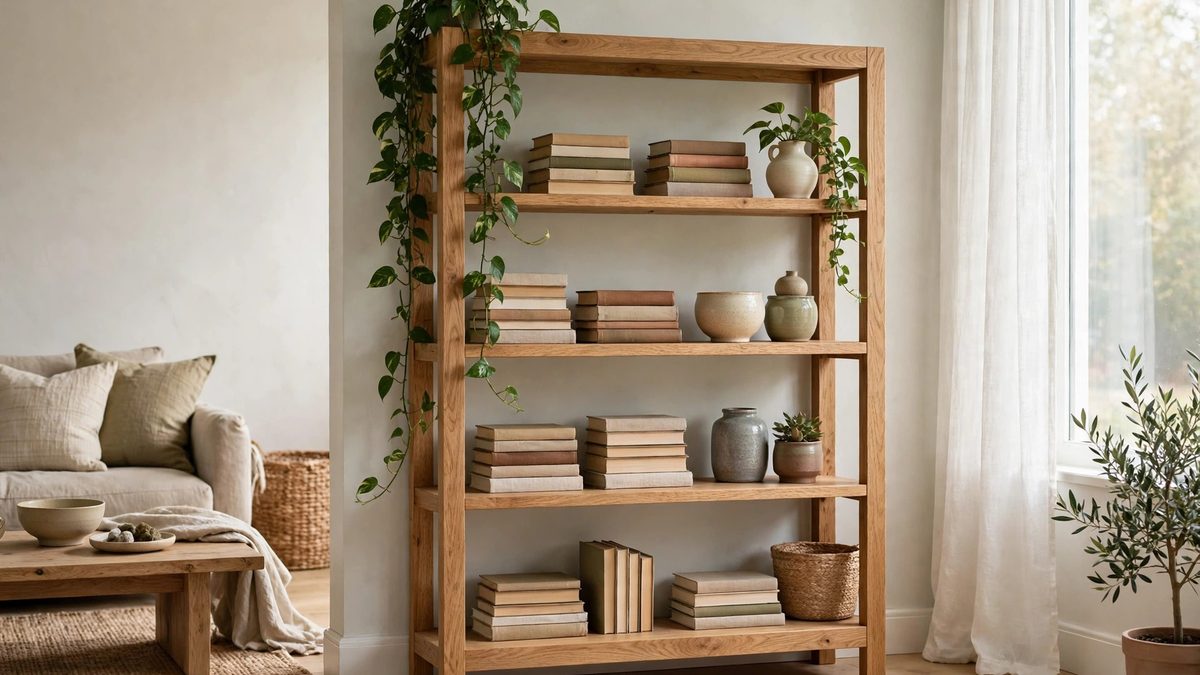
Work in odd numbers and triangles. Group objects in threes and vary their heights so the eye travels in a loose triangle: tall vase, stack of books, small bowl. Repeat similar triangles across shelves for rhythm.
Mix vertical and horizontal books. Rows of upright books read as library; short horizontal stacks of two or three books act as pedestals for objects. Aim for roughly two-thirds books, one-third objects across the whole unit.
Leave breathing room. Shelves filled edge to edge look like storage, not decor. Leaving about 20 to 30 percent of each shelf empty is the single fastest way to make shelves look styled.
Vary texture and finish. Combine book cloth and paper with wood, ceramic, metal, glass, and one woven or natural element like a small basket. Same-y shelves look flat.
Add one living (or lifelike) thing. A trailing pothos or a small potted plant softens all those straight lines. Put a cork mat or tray under real plants to protect the shelf from water.
Edit by color, loosely. You do not need a rainbow-sorted library (unless you love it), but spreading colors evenly — rather than parking all the red books on one shelf — keeps the unit balanced.
For even more shelf-specific arrangements, including mantels and floating shelves, see our shelf decor ideas — the same grouping rules apply at every scale.
Lighting and Finishing Touches for Bookcases
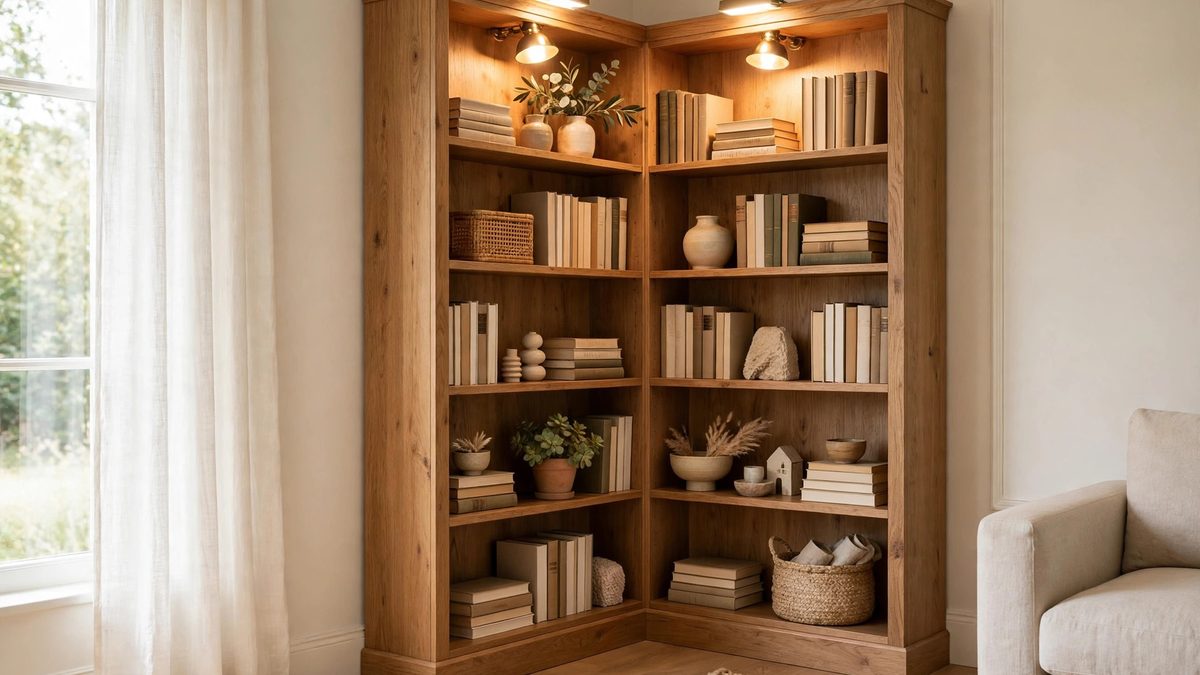
Shelves look twice as expensive with a little light. Battery-powered LED picture lights or slim light bars mounted under a shelf wash the row below in a warm glow and make evening reading corners feel special. A small table lamp on a low bookcase adds the same effect at surface level.
Finish the tops of tall bookcases sparingly: one large basket, a horizontal art piece, or nothing at all. Crowded bookcase tops collect dust and visual noise. Finally, step back and photograph your shelves — a quick phone photo reveals clutter and imbalance your eyes have stopped seeing, and it is the stylist’s oldest trick.
One last habit keeps styled shelves styled: the swap shelf. Designate one low shelf or a closet box as the holding zone for new books and objects you have not placed yet. Everything new waits there until you deliberately restyle, instead of being wedged into the nearest gap. Restyling two or three times a year — spring cleaning, a holiday refresh — takes an hour once the system exists, and it is genuinely enjoyable: books you forgot you owned resurface, and the shelves evolve with your reading instead of freezing the day you arranged them.
Bookshelf Mistakes to Avoid
- Buying before measuring your biggest books. Art books and atlases are the usual casualties of 10-inch shelves.
- Pushing every book to the back. Aligning spines near the front edge looks tidier and keeps shelves feeling shallow and bright.
- Skipping the anti-tip strap. Heavy, tall, and climbable is a bad combination without an anchor.
- Overfilling. If every shelf is at capacity, the new book you buy has nowhere to go but a pile.
- Matching everything. A full suite of identical boxes and objects reads as a store display; personal, varied pieces read as a home.
Frequently Asked Questions
How tall should living room bookshelves be?
Standard freestanding bookcases are 72 to 84 inches tall, which suits 8- to 9-foot ceilings. Low bookcases of 30 to 36 inches work under windows and behind sofas.
How deep should a bookshelf be for hardcover books?
Ten to twelve inches of shelf depth fits most hardcovers comfortably. Deeper shelves invite double rows that hide books and gather dust.
How do I style bookshelves without making them look cluttered?
Group objects in threes with varied heights, mix upright books with short horizontal stacks, spread colors evenly, and leave 20 to 30 percent of each shelf empty.
Can bookshelves work in a small living room?
Yes — choose tall, narrow, open-backed units in light finishes, and keep styling airy. Vertical storage uses wall space instead of floor space.
Should bookshelves match my other furniture?
They should coordinate, not match exactly. Echo one element — a wood tone, a metal finish, or a color — and let the shelves have their own character.
Conclusion
The best bookshelves for living room spaces are the ones sized for your real books, placed where the room needs a focal point, and styled with room to breathe. Pick a style that fits your budget and your walls, respect the standard sizes, then style in groups of three with a mix of books, objects, texture, and one green thing. Your library becomes storage, display, and the room’s personality all at once.
